More on refrigerated containers from Jagelo Haulage
What is a reefer container: essential guide for shippers

A reefer container is a refrigerated intermodal shipping container fitted with an integral refrigeration unit, purpose-built to maintain a precise internal temperature throughout the entire transit journey. Standard units can hold temperatures ranging from approximately −25°C up to +25°C, with specialist “super freezer” variants capable of reaching as low as −65°C, and certain units able to sustain temperatures as high as +40°C for warm-stable chemical cargos. Unlike a standard dry container, which is entirely passive, a reefer is an active system that depends on external electrical power — either from reefer points at ports and aboard vessels, or from a diesel-powered generator set (genset) during road and rail transit. The term “reefer” derives from “refrigerator,” and the distinction from a dry box is not merely technical: it carries direct implications for booking procedures, handling costs, and supply-chain risk. Primary uses span fresh produce, meat and seafood, dairy, pharmaceuticals, vaccines, and cut flowers — any cargo where temperature deviation means spoilage, regulatory non-compliance, or financial loss. In the UK, DEFRA phytosanitary requirements add a further layer of documentation and inspection that shippers of refrigerated imports and exports must account for from the outset.
- Typical standard temperature range: approximately −25°C to +25°C; specialist units can reach as low as −65°C, while some can maintain up to +40°C for specific cargos
- Power source: reefer points (port/vessel) or diesel gensets (road/rail)
- Common cargo: fresh produce, meat, dairy, pharmaceuticals, vaccines, flowers
- UK regulatory touch point: DEFRA phytosanitary checks on refrigerated imports and exports
Table of Contents
- What is a reefer container and how does it differ from a dry box?
- What are the core components inside a reefer container?
- How does a reefer container maintain temperature?
- Reefer container sizes, dimensions, and specifications
- What cargo can you ship in a reefer container?
- What are the common operational challenges with reefers?
- How long can a reefer run, and what maintenance does it need?
- What do modern telematics and smart reefers offer?
- UK-specific practicalities: ports, haulage, and regulatory requirements
- Key takeaways
- The operational reality most shippers underestimate
- Useful sources and further reading
What is a reefer container and how does it differ from a dry box?
The fundamental difference between a reefer and a standard dry container is active versus passive temperature management. A dry container is simply an insulated steel box; it offers no temperature control whatsoever. A reefer, by contrast, houses a built-in refrigeration unit that actively removes heat from the cargo space and maintains a precise setpoint regardless of ambient conditions outside.
That active system creates a direct operational dependency: reefers require external power at every stage of the journey. At port terminals and aboard container vessels, dedicated reefer points supply three-phase electrical power. On road or rail, a diesel genset attaches to the container to maintain continuous operation. This power dependency affects every aspect of booking — from terminal slot allocation and reefer-point reservation to vehicle specification and genset fuel planning.
Pre-cooling is another practical implication that dry-container shippers often underestimate. A reefer must be cooled to its target setpoint before loading begins; placing warm cargo into an uncooled unit forces the refrigeration system to work against a large thermal deficit, risking temperature excursions that can compromise cargo integrity before the vessel even departs.
Pro Tip: A dry container with dry ice or thermal liners can be acceptable for short transits of goods with wide temperature tolerances — chilled confectionery moving overnight by road, for example. However, for any cargo requiring a controlled setpoint below 0°C, or for pharmaceutical shipments subject to GDP (Good Distribution Practice) guidelines, a true reefer with documented temperature logging is mandatory. The cost saving on a passive solution is rarely worth the claims exposure.
What are the core components inside a reefer container?
Understanding the physical architecture of a reefer helps you specify the right unit and know what to inspect before accepting one from a depot or terminal.
- Refrigeration unit: Mounted at the front end of the container, this houses the compressor, condenser, and evaporator — the three core elements of the refrigerant cycle. The unit is ruggedised for 24/7 operation under marine and road vibration conditions.
- Insulation: Walls, ceiling, and floor panels are filled with polyurethane foam, providing the thermal barrier that reduces the load on the refrigeration unit.
- T-bar floor: The distinctive aluminium T-bar floor profile creates ventilation channels beneath the cargo, allowing cold air to circulate under pallets and return to the refrigeration unit. Blocking these channels is one of the most common causes of in-transit spoilage.
- Interior fans: Evaporator fans distribute conditioned air throughout the cargo space, maintaining temperature uniformity from front to back.
- Control unit and sensors: A digital controller manages temperature setpoints, alarms, and ventilation settings. Temperature probes (typically two or more) monitor supply and return air; door-open alarms flag unauthorised access or seal failures.
- Fresh-air vents: Adjustable vents allow controlled introduction of outside air, critical for produce that emits ethylene and CO₂ during transit.
- Drainage points: Condensation and meltwater drain through floor outlets, preventing moisture accumulation that could damage cargo or promote mould.
- Power cable and plug: A standard reefer uses a three-phase power connection; the cable and plug specification must match the reefer-point socket at the terminal or vessel.
How does a reefer container maintain temperature?
The refrigeration cycle inside a reefer mirrors the same thermodynamic principles used in commercial cold stores, but the components are engineered for transport environments. The compressor pressurises refrigerant gas, raising its temperature. That hot gas passes through the condenser, where heat is expelled to the outside air. The refrigerant then expands through an expansion valve, dropping sharply in temperature, before passing through the evaporator inside the cargo space. As warm air from the cargo space crosses the evaporator coils, heat transfers into the refrigerant and the now-cooled air returns to the container interior.
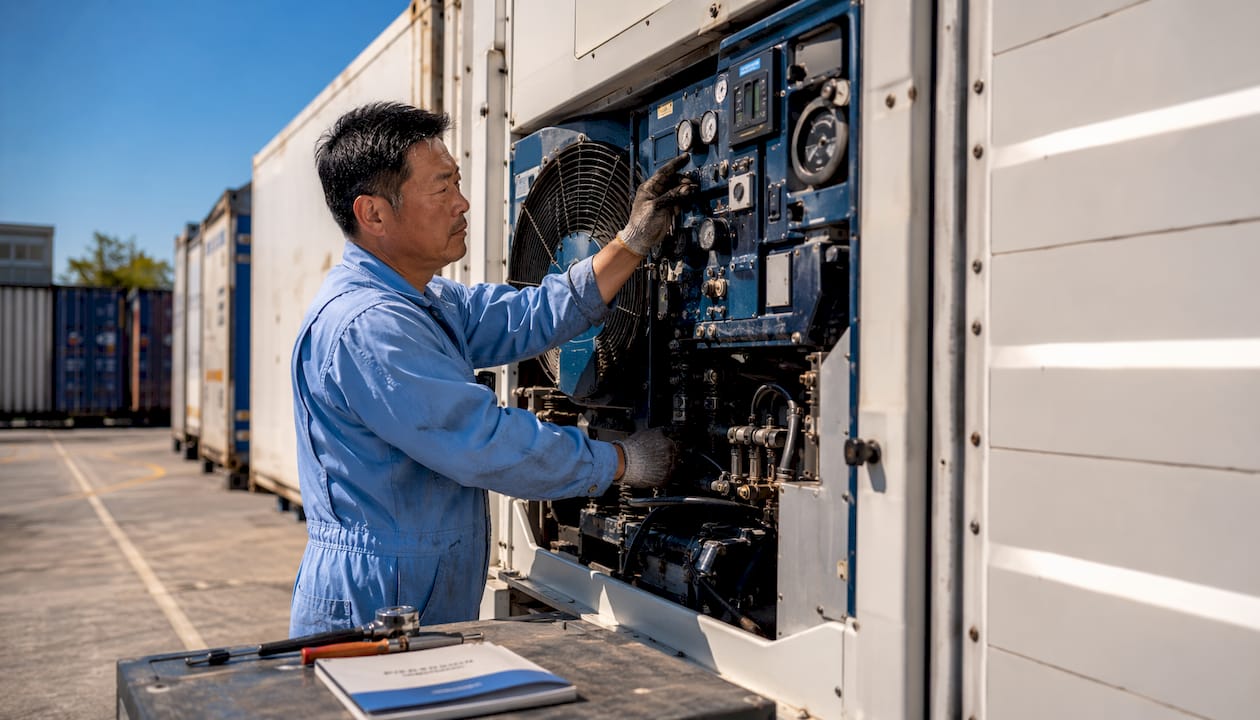
Airflow design is where theory meets operational reality. Cold air is pushed downward behind a front baffle, travels along the T-bar floor channels beneath the cargo, rises through and around the load, and returns warm to the evaporator fans at the top of the unit. This convection loop only functions correctly when the ventilation slots remain unobstructed. A single misplaced pallet can create a dead zone where temperatures drift well above the setpoint.
Temperature control logic distinguishes between three operational modes. Chilled operations (typically 0°C to +15°C) suit fresh produce, dairy, and certain pharmaceuticals. Frozen operations (typically −18°C to −25°C) cover meat, seafood, and frozen foods. Ultra-frozen or “super freezer” operations, reaching −60°C or below, serve specialist medical and biological cargos. Humidity control and controlled-atmosphere (CA) capability — where oxygen and CO₂ levels are actively managed — are available on higher-specification units and are particularly valuable for long-haul fresh-fruit shipments.
Pro Tip: Load cargo in uniform stacks with consistent spacing from the walls and ceiling. Never push pallets flush against the front baffle or stack goods above the load line marked on the container interior. Preserving the airflow path is more protective of cargo integrity than fine-tuning the setpoint by a single degree.
Reefer container sizes, dimensions, and specifications
The two dominant reefer sizes follow ISO intermodal standards. The table below provides typical metric dimensions and payload guidance for planning purposes; actual figures vary by manufacturer and unit age.
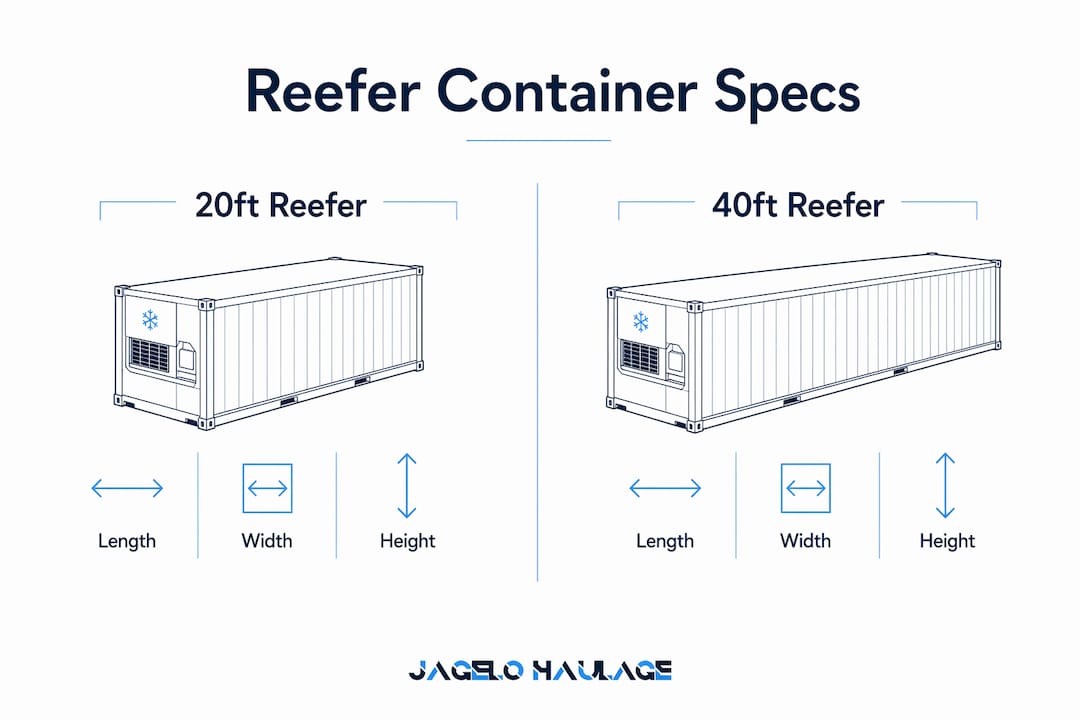
The 40ft high-cube reefer is the most widely used unit in global trade, offering the greatest volume-to-payload ratio for bulky, lightweight perishables such as fresh produce and flowers. The 20ft reefer suits higher-density cargos — meat, seafood, and pharmaceuticals — where weight rather than volume is the limiting factor.
On power requirements, standard reefers operate on three-phase 380–460V electrical supply. Voltage transformers are available where local supply differs, though this adds complexity and cost to terminal arrangements. Regarding purchase cost, industry guidance indicates that used or decommissioned units can be acquired for a few thousand US dollars, while new, fully featured 40ft high-cube reefers with advanced refrigeration and telemetry can cost many tens of thousands of US dollars — a spread that reflects unit age, refrigerant type, and telematics specification. These figures are indicative planning references, not firm market prices.
What cargo can you ship in a reefer container?
Temperature-sensitive cargo spans a wider range of industries than many shippers initially assume. The key question is not simply whether a product needs to be cold, but what temperature, humidity, and atmospheric conditions it requires throughout the entire transit.
- Fresh produce (fruit and vegetables): Typically shipped at 2°C to 13°C depending on variety. Many fruits emit ethylene gas, which accelerates ripening in neighbouring produce; fresh-air vents and CA capability help manage this. Humidity regulation prevents wilting and condensation-related mould.
- Meat and poultry: Chilled at 0°C to 2°C or frozen at −18°C to −25°C. Condensation on packaging is a significant quality risk; consistent airflow and correct packaging are critical.
- Seafood: Often shipped frozen at −18°C or below; some live shellfish require chilled, high-humidity conditions with controlled ventilation.
- Dairy products: Typically 2°C to 6°C for chilled; frozen dairy at −18°C. Tight temperature control prevents bacterial growth and texture degradation.
- Pharmaceuticals and vaccines: GDP-compliant shipments often require 2°C to 8°C (“cold chain”) with continuous, documented temperature logging. Some biologicals and plasma products require ultra-frozen conditions.
- Cut flowers and live plants: Typically 2°C to 8°C with high humidity and controlled ethylene levels to extend vase life.
- Certain chemicals and industrial goods: Some temperature-sensitive resins, adhesives, and biological reagents require warm-stable conditions; as noted, reefers can maintain up to +40°C for such cargos.
When controlled atmosphere or humidity control is required, confirm with the shipping line or container lessor that the specific unit is CA-equipped — not all reefers carry this capability as standard.
What are the common operational challenges with reefers?
The gap between a correctly specified reefer and a cargo arriving in good condition is filled by operational discipline. Pre-cooling is the single most important step that shippers overlook. The container itself must be cooled to the target setpoint before a single pallet enters it; loading warm cargo into a cold-set but thermally heavy steel box creates a temperature spike that the refrigeration unit may take hours to recover from. Equally, cargo should be pre-cooled in a cold store before loading — placing warm product into a reefer and expecting the unit to do the cooling work is a misuse of the system.
Loading patterns directly affect airflow. Pallets must be positioned to keep the T-bar floor channels clear, with uniform spacing maintained between stacks and the container walls. Overpacking above the load line restricts the return-air path to the evaporator fans and creates warm pockets at the top of the load. Correct stowage that preserves ventilation is often more protective than any marginal setpoint adjustment.
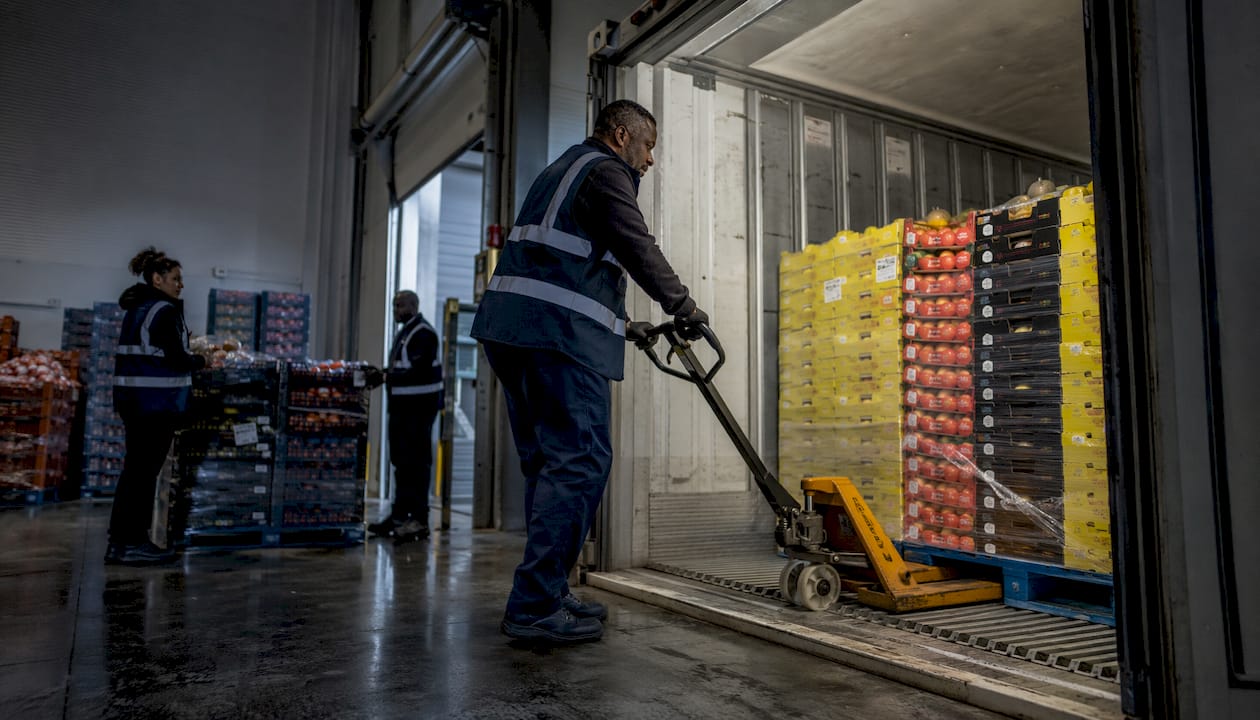
Power continuity planning is where many shipments encounter avoidable risk. At UK port terminals, reefer-point availability must be confirmed at the time of booking, not assumed. Genset fuel levels should be checked and logged before a container departs a depot, with sufficient runtime to cover the planned road leg plus a contingency margin. Phytosanitary and fumigation documentation required by DEFRA for refrigerated imports must be prepared in advance; missing paperwork at the port can delay clearance and leave a reefer without a power connection for hours.
Pro Tip: Build a contingency protocol into every reefer movement: identify the nearest alternative power source along the route, set alarm thresholds at 2°C above the target setpoint (not at the maximum permitted deviation), and ensure the driver or logistics controller has a direct contact number for the terminal reefer-point operator. A one-hour response window is often the difference between a recoverable temperature excursion and a total cargo loss.
How long can a reefer run, and what maintenance does it need?
A reefer connected to a shore power reefer point or vessel supply can run indefinitely, subject to routine maintenance. On a genset, runtime is fuel-limited: a standard genset unit carries enough diesel for approximately 24–72 hours of continuous operation depending on ambient temperature, load, and unit efficiency — though operators should treat the lower end of that range as the planning figure and schedule refuelling accordingly.
Routine maintenance items that should be verified before accepting a container from a depot include:
- Air filters: Clogged filters reduce airflow across the evaporator and increase energy consumption; check and clean or replace at each service interval.
- Door seals and gaskets: Deteriorated seals allow warm, moist air ingress, increasing the refrigeration load and risking condensation inside the cargo space.
- Refrigerant levels: Low refrigerant reduces cooling capacity; a pre-trip inspection (PTI) should confirm correct charge.
- Fan operation: All evaporator and condenser fans must spin freely and at correct speed; a seized fan creates a hotspot immediately.
- Drain points: Blocked drains cause water accumulation on the floor, which can freeze, damage cargo, and create a slip hazard during loading.
- Temperature probe calibration: Probes that read incorrectly will cause the controller to maintain the wrong setpoint; verify against a calibrated reference thermometer.
- Genset fuel level and oil: Confirm fuel quantity and engine oil level before departure; log both in the pre-trip documentation.
Common alarm causes during transit include door-ajar signals (often a seal issue rather than an open door), power-loss alarms when a reefer point trips, and high-temperature alarms triggered by blocked vents or a failed fan. Each alarm should be treated as a cargo-integrity event until confirmed otherwise.
What do modern telematics and smart reefers offer?
Modern reefer telematics have fundamentally changed the risk profile of cold-chain shipments. Where operators once relied on paper temperature records downloaded at destination, smart reefers now transmit continuous data streams covering internal temperature, humidity, GPS position, door-open events, and power-supply status. Some systems allow remote adjustment of setpoints and alarm thresholds without physical access to the unit.
The practical benefit is proactive intervention. When a temperature alarm triggers mid-ocean or during a road leg, a telematics-equipped reefer sends an alert to the operator’s monitoring platform within minutes. That window allows the logistics controller to contact the vessel’s reefer engineer, redirect a road unit to an emergency power point, or notify the cargo owner before the deviation becomes a loss. For cold chain visibility, continuous data logging also provides the documentary evidence needed to support or defend insurance claims — a temperature excursion that occurred before loading, for example, can be distinguished from one that occurred during transit.
Contractual responsibility for monitoring is a point shippers should clarify before booking. Shipping lines typically provide data access through their own portals; freight forwarders and hauliers may or may not have direct access to the same data stream. Confirm in writing who holds responsibility for alarm response at each stage of the journey, and ensure that data logs will be preserved and made available at destination.
Pro Tip: Request a full temperature log download at the point of delivery, not just at destination inspection. Logs should cover the entire journey from pre-trip inspection through to final plug-out. Any gap in the data record is itself a compliance issue for GDP-regulated pharmaceutical shipments.
UK-specific practicalities: ports, haulage, and regulatory requirements
The UK’s major container ports — Felixstowe, Tilbury, Southampton, and Liverpool — all operate reefer-point infrastructure, but capacity and booking procedures differ by terminal. At Felixstowe, the UK’s largest container port, reefer-point allocation is managed through the terminal’s Vehicle Booking System (VBS); shippers and their hauliers must confirm plug-in slot availability well in advance of vessel arrival, particularly during peak season when reefer-point demand can outstrip supply. Jhaulage’s operational experience across these major UK ports underscores that scheduling mismatches between terminal plug-in windows and truck ETAs are among the most frequent causes of avoidable power gaps.
On the road, UK haulage of reefer containers requires chassis rated for the additional weight of the refrigeration unit and genset, plus compliance with road-weight regulations that differ from standard container movements. Depot access windows, driver hours, and genset noise restrictions in certain urban areas are practical constraints that must be built into the transport plan. Jhaulage operates a fleet of over 40 GPS-tracked trucks and trailers configured for refrigerated container haulage across these ports, with 24/7 operational support to manage the timing precision that reefer movements demand.
From a regulatory standpoint, DEFRA phytosanitary requirements apply to refrigerated imports of plant-based products, including fresh fruit, vegetables, and cut flowers. Import Health Certificates (IHCs) and pre-notification through the Import of products, animals, food and feed system (IPAFFS) are mandatory for many categories; failure to submit documentation before vessel arrival can result in border inspection delays that leave a reefer container sitting without a confirmed power connection. For pharmaceutical imports, MHRA cold-chain import requirements add GDP documentation obligations that must be coordinated with the shipping line’s temperature-log access procedures.
Pro Tip: For UK reefer imports, align your IPAFFS pre-notification submission with your terminal slot booking — not with the vessel ETA. Terminals process documentation clearance on their own schedule, and a late submission can push your container into a secondary inspection queue that adds 12–24 hours to dwell time. That dwell time is power-dependent and, if a reefer point is not confirmed, it is a cargo-integrity risk.
Key takeaways
A reefer container is an active, power-dependent refrigerated unit that requires pre-cooling, correct loading, continuous power, and real-time monitoring to protect temperature-sensitive cargo throughout the cold chain.
| Point | Details |
|---|---|
| Active power dependency | Reefers require reefer points at port/vessel or a diesel genset on road; power gaps are the leading cause of in-transit temperature excursions. |
| Pre-cool both cargo and container | The container must reach its target setpoint before loading; cargo should arrive pre-cooled from a cold store. |
| Airflow determines cargo integrity | Keep T-bar floor channels and return-air paths clear; correct stowage protects cargo more reliably than setpoint adjustments alone. |
| Telematics enable proactive response | Real-time temperature, GPS, and door-event data allow operators to intervene before a temperature excursion becomes a cargo loss. |
| UK regulatory compliance is time-critical | DEFRA IPAFFS pre-notification and terminal slot booking must be aligned; late documentation triggers inspection delays and power-gap risk. |
The operational reality most shippers underestimate
The technical specification of a reefer container is, in practice, the easier part of the problem. The harder part is the handover: the moment a container moves from a vessel’s reefer point to a road chassis, or from a terminal stack to a depot, is where power continuity is most vulnerable and where the majority of temperature excursions actually occur.
Operators consistently see the same pattern: a shipper books a correctly specified reefer, loads it properly, and sets the right temperature — then assumes the logistics chain will manage itself. What actually happens is that terminal plug-in windows are missed because truck ETAs were not communicated to the terminal in advance, gensets are not pre-fuelled, and alarm notifications go to an inbox that nobody monitors outside business hours. The scheduling friction around terminal handovers is not a minor operational detail; it is the single point where the entire investment in a reefer shipment can unravel in under two hours.
The most effective mitigation is treating the power handover as a critical-path event in the transport plan, not an afterthought. That means confirming reefer-point availability at booking, communicating truck ETAs to the terminal at least 24 hours in advance, and having a named contact at the terminal reefer-point desk who can escalate if a slot is missed. For shippers moving refrigerated cargo through UK ports regularly, working with a haulier that has established operational relationships at Felixstowe, Tilbury, Southampton, and Liverpool — and that offers 24/7 support — is not a luxury. It is the practical prerequisite for consistent cold-chain performance.
Useful sources and further reading
The following references informed this guide and provide authoritative further reading on reefer container specifications, cold-chain operations, and UK regulatory requirements.
- Refrigerated container — Wikipedia): Technical overview of reefer container construction, temperature ranges, and power systems.
- How reefer containers are powered — CargoStore: Practical explanation of genset and reefer-point power logistics.
- How reefer containers work — CargoStore: Airflow mechanics, loading guidance, and operational best practices.
- Refrigerated shipping containers — HZ Containers: Component detail, insulation, humidity control, and indicative cost context.
- The engineering behind modern reefers — OSG Containers: Refrigerant cycle engineering and ruggedisation for transport environments.
- Smart containers — CMA CGM: Telematics capabilities and remote monitoring features on modern reefer units.
- Refrigerated container haulage UK — Jhaulage: UK-specific haulage considerations, port coverage, and operational guidance from Jhaulage.
- Cold chain logistics guide — Jhaulage: Broader cold-chain context, telematics, and supply-chain visibility.
- UK port logistics guide — Jhaulage: Strategic guidance on container handling and scheduling at UK ports.
- Bulk freight planning guide: Broader freight-planning context for shippers considering reefer versus other shipping modes.
When reviewing a supplier’s reefer specification sheet, confirm three things before booking: the unit’s verified setpoint range (not just the advertised range), the telematics data format and access method, and the power cable specification relative to the terminal’s reefer-point sockets. Those three details resolve the majority of booking complications before they become operational problems. For UK container haulage and refrigerated transport services, contact Jhaulage directly to discuss port coverage, genset availability, and scheduling support.
Recommended
- Refrigerated Container Haulage UK | Jagelo Haulage
- Shipping Container Transport: The Strategic Guide to UK Port Logistics | Jagelo Haulage
- How to Organise a Container Collection from Port: A Professional Guide | Jagelo Haulage
- How shipping containers are classified: the complete guide | Jagelo Haulage