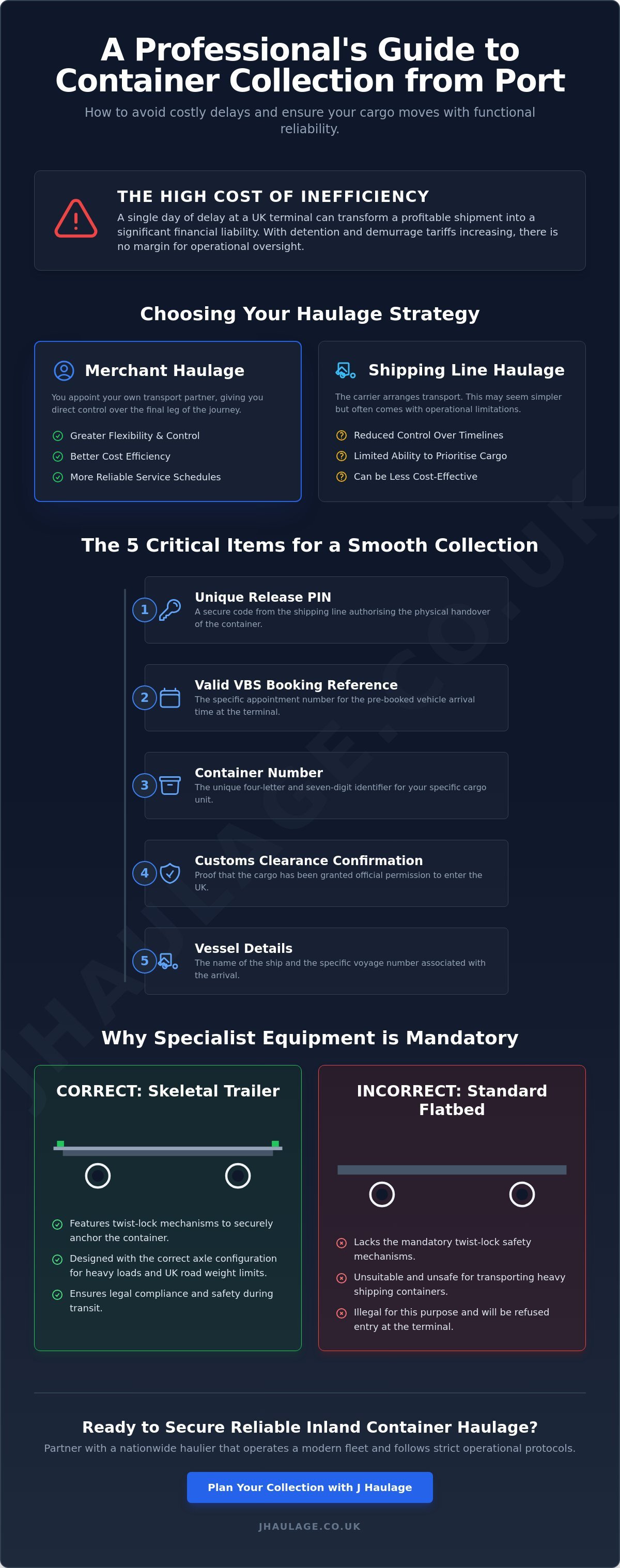
A single day of delay at a UK terminal can transform a profitable shipment into a significant financial liability. Effective container collection from port requires precise synchronisation between shipping lines, port authorities, and haulage partners. You likely understand that the final leg of the supply chain is often the most volatile stage of the journey. The complexity of customs clearances and vehicle booking slots creates a high-pressure environment where minor documentation errors lead to immediate and expensive demurrage charges. In an industry where major lines increased their detention and demurrage tariffs on 1 January 2026, there's no margin for operational oversight.
This professional guide provides a structured framework for managing your port logistics with absolute certainty. You will learn how to secure reliable inland container haulage whilst avoiding the common pitfalls that cause costly delays at the quayside. We will examine the essential documentation requirements, the critical milestones in the collection timeline, and the criteria for selecting a disciplined haulage partner. Our objective is to ensure your cargo moves with functional reliability and reaches its destination without unnecessary expenditure.
Key Takeaways
- Identify the mandatory documentation required for cargo release, including the Bill of Lading and container release notes, to prevent terminal delays.
- Understand how to coordinate a container collection from port to avoid the high costs associated with increasing demurrage and detention fees.
- Evaluate your delivery site to determine whether a standard skeletal trailer or specialised equipment is required for safe and efficient unloading.
- Learn the strategic benefits of partnering with a nationwide haulier that operates a modern fleet and follows strict operational protocols.
Understanding the Fundamentals of Container Collection from Port
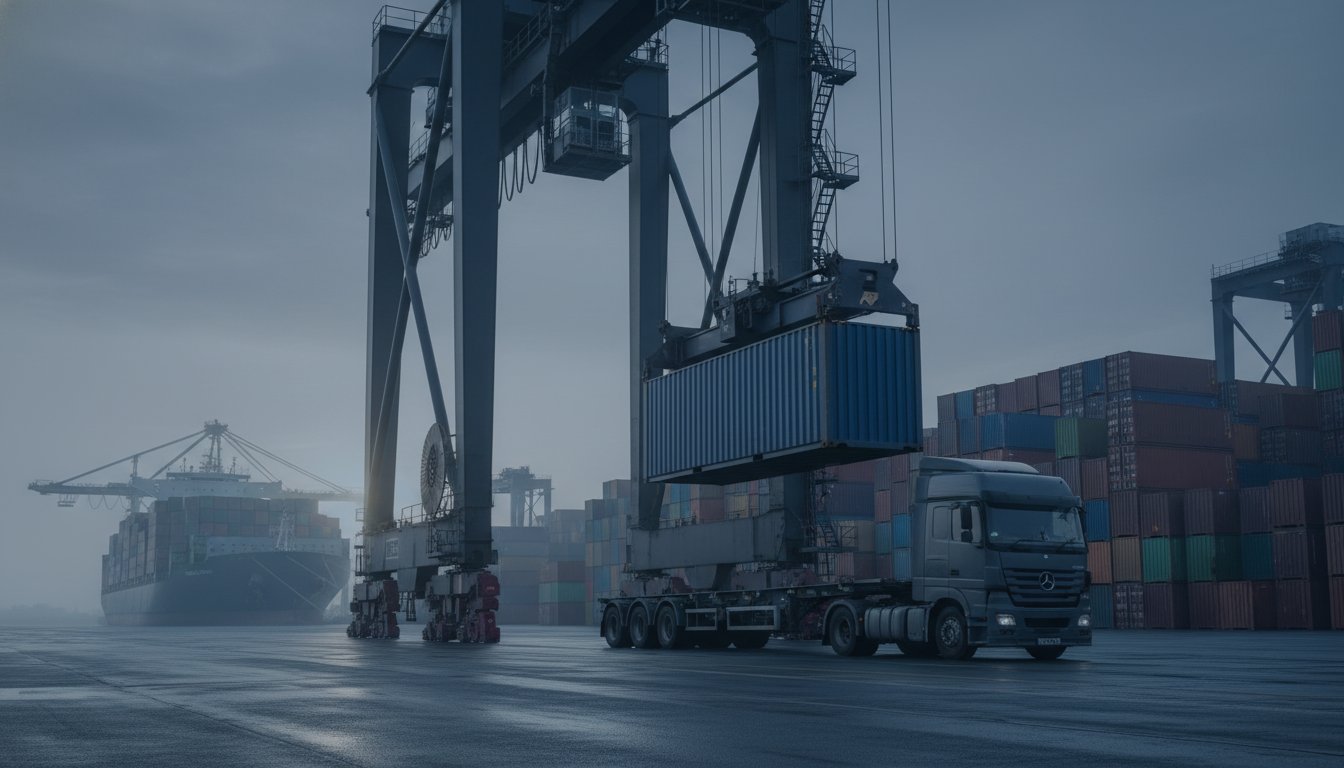
A container collection from port represents the final maritime leg of a complex international journey. This stage begins the moment a vessel berths and concludes when the cargo arrives at its final inland destination. It relies on a sophisticated system of intermodal freight transport that requires precise coordination between terminal operators and transport providers. A professional haulier acts as the essential bridge in this process; they manage the physical movement whilst navigating the administrative requirements of the shipping line and the warehouse.
Terminal security is rigorous. Ports operate under strict protocols that require every vehicle and driver to be pre-registered within a Vehicle Booking System (VBS). You don't simply send any truck to collect a container. Only hauliers with the correct credentials and terminal accounts can access the quayside. This disciplined approach ensures the safety of the port environment and the security of the cargo itself. It's a process where punctuality is mandatory and operational protocols are followed to the letter.
Merchant Haulage vs Shipping Line Haulage
Choosing between merchant haulage and shipping line haulage is a strategic decision that affects your operational control. Merchant haulage allows you to appoint your own transport partner, such as J Haulage, to manage a container collection from port. This model offers greater flexibility because you control the collection timeline and the delivery sequence. Conversely, shipping line haulage involves the carrier arranging the transport. Whilst this might seem simpler, it often limits your ability to prioritise specific containers or respond to urgent warehouse requirements. Professional importers frequently prefer merchant haulage to achieve better cost efficiency and more reliable service schedules.
Why Specialist Equipment is Mandatory
Standard flatbed trailers are unsuitable for this task. Secure container transport requires specialised skeletal trailers designed specifically to carry heavy steel boxes. These trailers feature twist-lock mechanisms that anchor the container at its four corners. It's a legal and safety requirement to ensure these locks are engaged before the vehicle leaves the terminal. Hauliers must also account for plated weights. Heavy loads, particularly 40ft or High Cube containers, require trailers with the correct axle configuration to remain within UK road weight limits. Using the right equipment isn't just about efficiency; it's about maintaining professional standards and ensuring the protection of the goods during transit.
Step-by-Step: Managing Documentation and Container Release
Organising a container collection from port is a process defined by administrative precision. Physical transport cannot commence until every document is verified and every fee is settled. The shipping line will only authorise the release of the cargo once they hold the Original Bill of Lading or have received a Telex Release. This proof of ownership is the cornerstone of the entire transaction. Once ownership is confirmed, the shipping line or their agent issues a container release note. This document contains the vital details required for the haulier to proceed with the collection.
A successful gate entry depends on a specific set of data. To ensure your driver isn't turned away at the terminal, you must provide a complete digital or physical documentation pack. Ensure your transport partner has these five items before the vehicle reaches the terminal gate:
- The unique release PIN: A secure code provided by the shipping line to authorise the physical handover of the box.
- A valid VBS booking reference: The specific appointment number for the pre-booked arrival time.
- The container number: The unique four-letter and seven-digit identifier for the specific unit.
- Customs clearance confirmation: Evidence that the cargo has been granted permission to enter the UK.
- Vessel details: The name of the ship and the specific voyage number associated with the arrival.
Administrative oversights are the primary cause of terminal bottlenecks. If any of these elements are missing, the truck will be refused entry. This leads to common delays and port charges that quickly erode profit margins. Professionals avoid these outcomes by verifying the clearance status hours before the vehicle dispatches. If you require assistance with these complex requirements, you can request a professional haulage consultation to ensure your documentation is handled correctly.
The Role of the Vehicle Booking System (VBS)
Ports manage traffic volume through a mandatory Vehicle Booking System. This software allocates specific timed slots to hauliers to prevent terminal congestion. Missing a VBS window usually results in a financial penalty and the loss of the collection opportunity for that day. Reliable hauliers maintain active accounts on all major UK port platforms, such as Destin8 or CNS, to secure these slots as soon as the container collection from port becomes possible.
Customs and Tax Documentation
Customs clearance must be finalised before the haulier arrives at the terminal. This process involves verifying that all Import VAT and Customs Duty have been paid or deferred through a duty deferment account. The C88 document, also known as the Single Administrative Document, serves as the official evidence that HMRC has cleared the goods. A disciplined haulier will always check the clearance status on the port's internal system to ensure the container is "green-cleared" before sending a vehicle to the quayside.
Choosing the Right Vehicle for Your Container Delivery
Selecting the correct vehicle for a container collection from port is a technical decision determined by your site infrastructure. You must evaluate the destination before the truck leaves the terminal. If your facility features dock-level loading bays, the requirements differ significantly from a site requiring ground-level placement. A professional transport partner ensures the equipment matches the task to avoid failed deliveries or unsafe unloading conditions. This strategic approach prevents operational bottlenecks and protects the integrity of the cargo during the final leg of its journey.
Standard Skeletal Trailers
These trailers are the most cost-effective and common solution for container haulage. They are designed specifically for the transport of 20ft, 40ft, and High Cube ISO containers. Because they lack integrated lifting machinery, they offer a higher payload capacity and better fuel efficiency. This makes them the primary choice for warehouses equipped with loading docks or heavy-duty forklifts capable of entering the container whilst it remains on the trailer. Reliability is a core benefit of this equipment; the simple, robust design minimises the risk of mechanical failure during transit.
Hiab and Sidelifter Options
Sites without loading bays require specialised lifting equipment to facilitate a successful container collection from port. A Hiab vehicle features an integrated crane. This makes it ideal for placing containers in restricted spaces or over obstacles such as fences or walls. Alternatively, a sidelifter uses hydraulic arms to drop a container directly onto the ground parallel to the trailer. This is essential for longer loading periods where the container must stay on-site for several days. Safety is paramount during these operations. Lifting requires a designated safety zone and a level, stable surface to support the combined weight of the vehicle and its cargo.
Operational reliability in port logistics stems from a commitment to fleet modernisation. Older vehicles are prone to mechanical failure, which disrupts the tight schedules required for port collections. A modern fleet of over 40 trucks ensures consistent service delivery and adheres to the latest environmental standards. By matching the specific vehicle to the site requirements, you protect the efficiency of your supply chain. This professional coordination ensures a seamless transition from the quayside to the warehouse floor.
Avoiding Common Delays and Additional Port Charges
Financial liability in port logistics is frequently the result of poor scheduling rather than unavoidable circumstances. When you organise a container collection from port, you enter a strict timeline dictated by the shipping line and the terminal operator. Failure to move the cargo within the agreed "free time" period triggers substantial penalties. These costs are not merely administrative; they are designed to ensure terminal fluidity. Understanding the distinction between different charge types is essential for protecting your operational budget.
Demurrage refers to the charges applied to containers that remain inside the port terminal beyond the allotted free days. This typically occurs when customs clearances are delayed or when a haulier cannot secure a VBS slot before the deadline. Detention occurs outside the port. These fees are charged for the late return of the empty container to the shipping line's designated depot. Both penalties can escalate daily, often reaching hundreds of pounds per unit if not managed with professional discipline.
Strategies to Prevent Demurrage
Proactive planning is the only reliable method for eliminating demurrage. You should aim to book your inland transport at least 72 hours before the vessel arrives. This lead time allows your haulier to monitor the vessel's berthing schedule and secure the most advantageous VBS slots. Clean paperwork is equally vital. Any discrepancy in the Bill of Lading or a pending customs hold will prevent the haulier from completing the container collection from port. By utilising a partner with a large, modern fleet, you gain the flexibility to adjust to sudden port congestion or vessel delays without losing your position in the collection queue.
Managing the Empty Return Loop
The logistical process does not end when the container arrives at your warehouse. You must coordinate the prompt "unstuffing" of the goods to ensure the empty box is ready for collection. For businesses in the health, supplement, and dry food sectors, Simplepack Ltd offers specialist contract packing services to prepare these goods for the UK market. Shipping lines operate on high-utilisation models and expect their equipment back within a narrow window. A professional haulage firm tracks these return deadlines as part of their core service. They synchronise the delivery of a full container with the collection of an empty one, creating an efficient loop that minimises "empty miles" and prevents detention charges.
Communication is the foundation of this synchronisation. You must inform your haulier immediately if unloading takes longer than anticipated. This transparency allows the transport planner to reschedule the return leg and avoid wasted vehicle movements. If you want to eliminate the risk of unexpected terminal fees, you can get a fixed haulage quote that prioritises punctuality and professional oversight.
Partnering with a Professional Nationwide Haulier
A successful container collection from port is not a one-off transaction; it's a strategic operation that requires a partner with deep industry roots. Professional haulage firms with over 15 years of experience in the UK sector understand the nuances of terminal behaviour and shipping line protocols. This longevity provides a foundation of trust and operational stability that less established carriers cannot replicate. When you choose a partner, you are investing in their ability to manage the high stakes of your supply chain with quiet confidence and disciplined execution.
Operational reach is a critical factor for businesses managing multiple distribution centres across the country. A haulier with nationwide coverage ensures that your cargo moves seamlessly from any major UK maritime hub to its final destination, regardless of the distance. This reach is supported by a modern fleet of over 40 trucks. Large fleets provide the redundancy needed to maintain service levels during peak periods or when vessel delays cause a sudden surge in collection requirements. It's this level of functional reliability that distinguishes a strategic partner from a simple service provider.
Responsive customer support is the final component of a secure logistics framework. In an industry prone to sudden shifts in terminal availability and vessel berthing schedules, you need immediate access to accurate information. A professional transport office monitors every stage of the container collection from port, providing real-time updates and resolving issues before they impact your warehouse schedule. This proactive communication ensures that your operations remain steady and predictable, even when external conditions become volatile.
Professional Standards and Compliance
Safety is the primary metric of a successful transport operation. You must vet a haulier's safety record and insurance coverage to protect your business from liability. Jagelo Haulage maintains rigorous standards to ensure every container collection from port is completed safely and in full compliance with UK road laws. Our operations integrate directly with major maritime hubs through established software platforms. This level of professional management is essential for maintaining the security of the supply chain and providing a protected outcome for every shipment.
Securing Your Logistics Future
A strategic haulage partnership focuses on long-term stability and the ability to respond to urgent cargo requirements through same-day delivery capabilities. This responsiveness is vital in an industry where vessel schedules and terminal availability can change without warning. By moving from a transactional service to a strategic partnership, you ensure your logistics remain resilient against market fluctuations. You don't have to manage these complexities alone. You can Contact Jagelo Haulage to discuss your nationwide container requirements and secure a dependable partner for your future operations.
Securing Your Supply Chain Through Professional Coordination
Efficient port logistics depend on the precise alignment of documentation, specialised equipment, and terminal scheduling. You now understand that avoiding terminal penalties requires proactive planning and a disciplined approach to vehicle booking. By prioritising documentation accuracy and selecting the correct vehicle for your site, you protect your cargo and your operational budget from unnecessary risk. A successful container collection from port is the result of methodical preparation and the strict execution of established protocols.
Reliable results are best achieved through a partnership with a seasoned transport provider. Jagelo Haulage offers over 15 years of industry experience and operates a modern fleet of over 40 trucks and trailers. Our professionally managed nationwide transport operations provide the stability your business requires to navigate the complexities of UK maritime hubs. You can request a professional container haulage quote from Jagelo Haulage to ensure your next shipment is handled with absolute competence. We look forward to supporting your logistical objectives with functional reliability and steadfast service.
Frequently Asked Questions
How long do I have to collect a container from the port before charges start?
Most shipping lines provide a standard "free time" period of five to seven days from the date the vessel berths. This window allows you to organise a container collection from port without incurring terminal storage fees known as demurrage. You should verify the specific terms with your carrier as these windows vary between different shipping lines and UK terminals. Once this period expires, daily penalties apply immediately.
What is the difference between a release note and a delivery order?
A release note is an electronic authorisation issued by the shipping line to the port terminal to permit the physical handover of the container. A delivery order is a separate document issued to the haulier or warehouse that provides specific instructions for the inland transport leg. Whilst the release note confirms the cargo is free to leave the quayside, the delivery order defines the final destination and timing requirements.
Can I collect a container from the port using my own van or trailer?
You cannot collect an ISO shipping container using a standard van or a general-purpose trailer. Port terminals require specialised skeletal trailers fitted with twist-locks to ensure road safety and legal compliance. Additionally, the vehicle and driver must be registered within the port's security system and have a valid Vehicle Booking System account. Professional hauliers maintain these credentials to ensure secure and disciplined transport operations.
What happens if my container is selected for a customs inspection?
HMRC will move the container from the stack to a designated examination area within the port terminal. This process results in unavoidable delays to your container collection from port and often involves additional terminal handling fees. Your haulier cannot collect the cargo until the customs status is officially updated to "cleared" on the port's internal inventory system. Disciplined hauliers monitor this status to reschedule collection as soon as the hold is lifted.
How is the cost of container haulage from the port calculated?
Haulage costs are calculated based on the total distance between the port terminal and the delivery destination. Other factors include the container weight, current fuel surcharges, and any specific tolls or road user charges encountered on the route. Specialised equipment requirements, such as Hiab or sidelifter trailers for ground-level delivery, also influence the final operational cost. Professional firms provide fixed quotes based on these specific logistical variables.
What is a VBS booking and why is it necessary for my collection?
A Vehicle Booking System (VBS) is a mandatory software platform used by major UK ports to manage truck traffic and terminal flow. It is necessary because it assigns a specific timed slot for a vehicle to enter the terminal and collect a container. Without a confirmed VBS appointment, a haulier is refused entry at the terminal gate. This system prevents terminal congestion and ensures a methodical, predictable collection process.
Do I need to be VAT registered to collect goods from a UK port?
You don't need to be VAT registered to import goods, but you must possess an Economic Operator Registration and Identification (EORI) number. This unique identifier is mandatory for all customs declarations when moving commercial goods into the UK. Whilst VAT registration allows for the use of postponed VAT accounting, non-registered entities must pay any due Import VAT and duties before the port will authorise the release of the cargo.
What information does my haulier need to book a collection slot?
Your haulier requires the unique container number and the release PIN or reference provided by the shipping line. They also need the name of the arriving vessel and the specific voyage number to identify the correct stack location. Providing this information at least 72 hours in advance allows the transport planner to secure a suitable VBS slot and maintain a reliable delivery schedule for your warehouse.