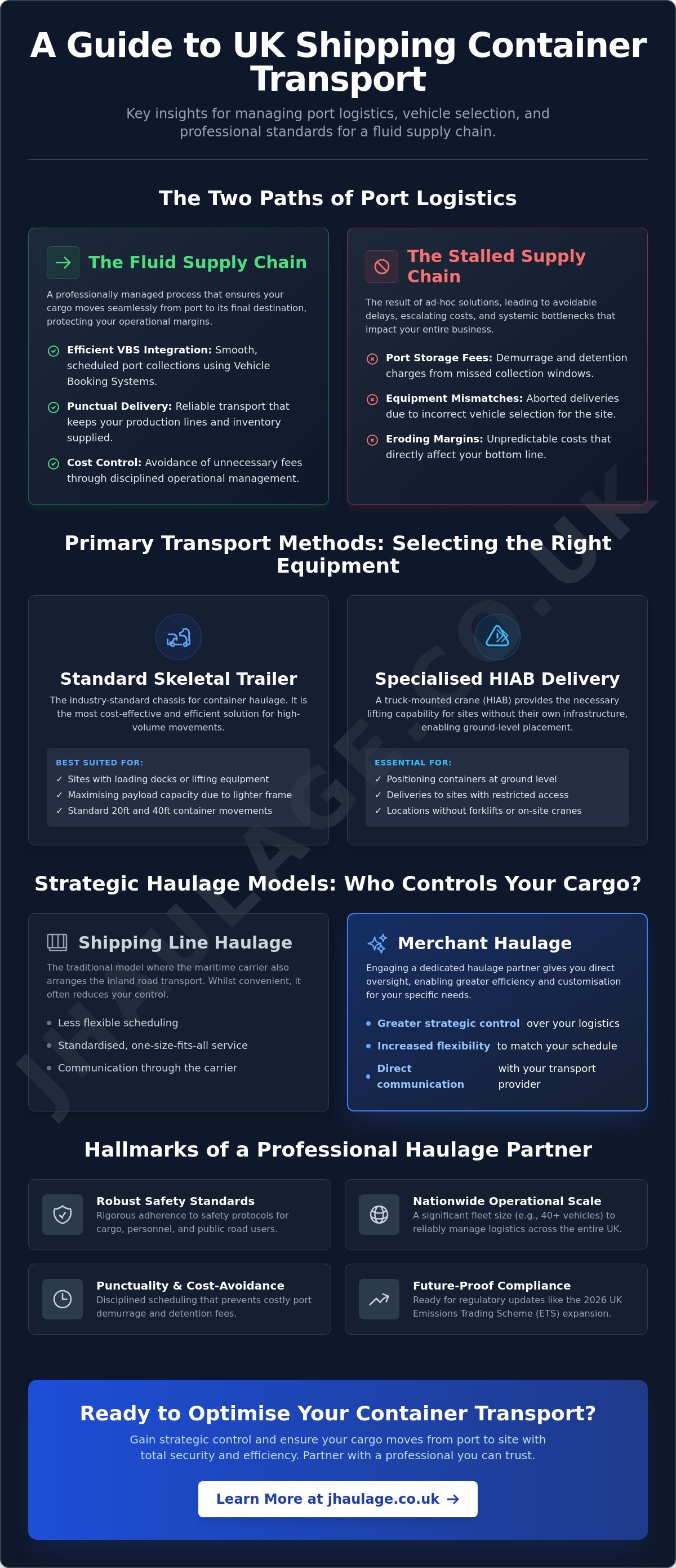
A shipping container is more than a steel box; it represents a critical unit of global trade that requires precise management the moment it reaches a UK quay. Effective shipping container transport is the difference between a fluid supply chain and one stalled by avoidable port storage fees or equipment mismatches. You likely recognise the logistical complexity of coordinating arrivals at major hubs like Felixstowe or London Gateway, where minor delays often result in escalating costs that erode your operational margins.
This guide provides a comprehensive framework for navigating UK port logistics with professional discipline and functional reliability. You will gain a clear understanding of the distinctions between merchant and shipping line haulage, alongside the specific technical requirements for skeletal and HIAB deliveries. We examine the essential operational standards and 2026 regulatory updates, including the expansion of the UK Emissions Trading Scheme to the maritime sector, to ensure your cargo moves from port to site with total security and efficiency.
Key Takeaways
- Understand how the integration of road haulage and Vehicle Booking Systems (VBS) maintains supply chain fluidity at major UK ports.
- Compare the cost-efficiency of standard skeletal trailers with the specialised capabilities of HIAB crane vehicles for complex site deliveries.
- Discover why merchant haulage offers greater strategic control and flexibility for your shipping container transport than traditional shipping line models.
- Identify the professional safety standards and emission compliance requirements necessary for a dependable nationwide haulage partner.
- Learn how to manage the transition from quayside to terminal effectively to avoid unexpected port storage charges and delays.
Understanding the Fundamentals of Shipping Container Transport
Container haulage is the disciplined movement of ISO standard containers between major maritime hubs and inland destinations. This process forms the basis of Fundamentals of Shipping Container Transport, ensuring that goods arriving by sea reach their final commercial or industrial site. Road haulage remains the primary method for maintaining the fluidity of the UK supply chain. It requires a significant scale of operations, often involving fleets of 40+ vehicles, to manage nationwide movements across a network of motorways and local infrastructure. Without this dedicated road link, the efficiency of the UK's largest ports would rapidly deteriorate, leading to systemic bottlenecks that affect everything from retail inventory to manufacturing components.
Logistics providers like Jagelo Haulage offer port-to-door solutions that streamline the transition from quayside to warehouse. This strategic approach removes the burden of coordination from the cargo owner. Instead of managing multiple touchpoints, the client receives a single, protected outcome where the container is delivered precisely when and where it's needed. Professional shipping container transport relies on this level of integration to maintain high operational standards. It provides a seamless logistics solution that bridges the gap between international shipping lines and local distribution centres, ensuring that every container is handled with the required technical competence.
The Importance of Professional Logistics Management
Ad-hoc transport solutions often fail to meet the rigorous demands of modern commerce. When a haulier lacks a structured operational framework, the risk of delays increases. Punctuality is a financial necessity; port demurrage and detention charges accrue quickly when containers aren't collected or returned within agreed windows. A professional haulier acts as a stable bridge between maritime arrivals and inland manufacturing, ensuring that the movement of goods remains a predictable and safe component of the business model.
Key Terminology for Logistics Managers
Understanding sector language is essential for effective communication. "The Box" typically refers to standard 20ft or 40ft ISO containers used for secure global transit. A "Port-to-Door" service covers the entire journey from the quay to the final inland site, whilst "Port-to-Port" only handles the maritime leg. In the UK, Inland container haulage describes the road transit phase connecting the port terminal to the delivery point, requiring precise scheduling and route planning to navigate urban centres and industrial estates.
Primary Methods for Moving Containers: Skeletal vs HIAB
Selecting the correct vehicle for shipping container transport is a fundamental operational decision. It directly affects the cost, safety, and physical feasibility of the delivery. While skeletal trailers are the standard for most port-centric movements, HIAB vehicles provide necessary lifting capabilities for sites without independent infrastructure. Managers must evaluate their site's physical constraints before booking to prevent aborted deliveries or unexpected surcharges. Each method offers distinct advantages depending on the volume of cargo and the destination's equipment.
Standard Skeletal Trailer Operations
The skeletal trailer, or "skel," is the primary equipment used to maintain Professional Standards in Nationwide Container Haulage. It's a lightweight chassis designed specifically to carry 20ft or 40ft units. The container is secured using four heavy-duty twist-locks, ensuring it remains stationary during transit. This method is the most cost-effective solution for high-volume operations where the destination has a loading dock. Because the frame is lighter than a HIAB, it allows for a higher payload capacity, making it the preferred choice for long-distance inland haulage.
Specialised HIAB and Crane-Assisted Delivery
Not every site has the infrastructure to lift a container off a trailer. In these instances, a HIAB (truck-mounted crane) is required for ground-level positioning. These vehicles are essential for placing units in restricted environments or temporary locations. However, a HIAB's lifting capacity decreases significantly as the crane arm extends. Lifting a laden 40ft container requires a specialised heavy-lift vehicle, which is distinct from units used for empty boxes. Ground stability is a critical factor; operators must use outrigger pads to avoid sinking into soft ground.
Site access requirements must be assessed before any vehicle is dispatched. A standard 40ft container on a skeletal trailer requires a significant turning circle and clear overhead space. Obstructions like low-hanging branches or power lines can halt a delivery immediately. Consider the following before confirming your transport method:
- Confirm the ground is level and reinforced to support up to 44 tonnes.
- Identify any height or weight restrictions at the site entrance.
- Ensure there's sufficient space for the vehicle to exit without reversing onto main roads.
If you're uncertain which vehicle suits your specific site requirements, you can request a technical consultation and quote to ensure a safe delivery. Choosing the right partner ensures that your shipping container transport follows all safety protocols whilst maintaining your operational schedule.
The Logistics Infrastructure: Port Operations and Inland Deliveries
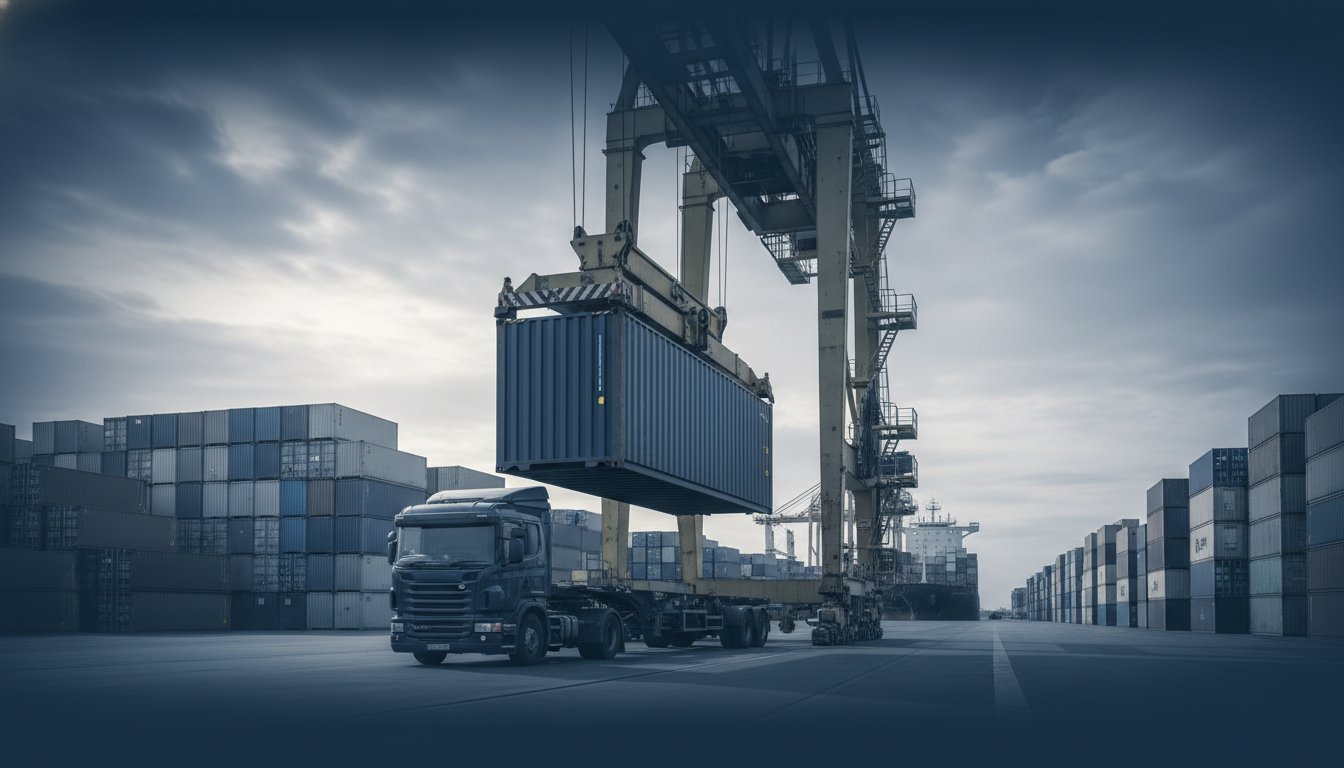
The transition from quayside to the haulage terminal is a highly regulated sequence that dictates the overall speed of the supply chain. Once a gantry crane offloads a unit, it enters a port's container yard for temporary storage. Professional shipping container transport requires a disciplined approach to the collection window to avoid escalating port fees. Ports like Felixstowe and London Gateway have introduced various operational surcharges in 2026, including Energy Adjustment Levies and Green Energy Transfer Levies. These costs make punctuality an economic necessity. A haulier must coordinate with port authorities to ensure the container is released and loaded onto the trailer without unnecessary dwell time.
A Vehicle Booking System (VBS) is the primary tool used to manage port congestion and maintain operational flow. Hauliers must secure a specific time slot to enter the terminal, a process that requires constant monitoring and rapid response. If a driver misses a VBS window due to traffic or delays, the container may remain at the port, triggering daily storage charges. Compliance with The Freight Containers (Safety Convention) Regulations 2017 ensures that every unit moved is structurally sound and safe for road transit. Maintaining a modern fleet is also essential for meeting the stringent environmental standards of major UK ports, especially with the expansion of the UK Emissions Trading Scheme (ETS) to the maritime sector in July 2026.
Major UK Port Hubs and Logistics Flow
Haulage operators function as the central link between shipping lines and port authorities. This coordination ensures that cargo moves predictably through maritime gateways. Successful transport depends on the haulier's ability to navigate the complex administrative requirements of each terminal. For a deeper analysis of specific terminal operations, you can consult our guide on port logistics services UK. This interface requires robust communication to manage the arrival of vessels and the subsequent availability of laden containers.
Managing Inland Container Deliveries
The "last-mile" phase of shipping container transport is often the most critical for the end user. Scheduled deliveries allow businesses to organise warehouse labour and equipment around the arrival of the cargo. This predictability prevents site congestion and ensures that containers are destuffed efficiently. For urgent or time-sensitive cargo, same-day delivery services provide a vital contingency, allowing businesses to maintain inventory levels despite global shipping disruptions. Reliable inland haulage provides the stability needed to manage complex warehouse schedules across the country.
Strategic Considerations: Merchant Haulage and Shipping Line Haulage
Selecting between carrier haulage and merchant haulage is a strategic choice that defines the level of control a business maintains over its supply chain. Carrier haulage, often referred to as shipping line haulage, is a model where the ocean carrier organises the road leg of the journey. While this appears convenient, it frequently places a layer of administration between the cargo owner and the physical transport operation. Merchant haulage allows the client to appoint an independent contractor directly. This model provides the transparency and flexibility required to manage complex delivery schedules without relying on a shipping line's broad subcontracting network.
A common misconception is that shipping lines provide the most efficient inland transport because they own the containers. In practice, shipping lines often prioritise their own operational convenience over the specific needs of the end user. Direct communication with an independent haulage contractor removes this conflict of interest. When you work with a dedicated partner, you gain a professional who is accountable for the specific timing and safety of your shipping container transport. This direct link ensures that instructions regarding site access or specialised equipment are followed precisely, reducing the risk of aborted deliveries or communication failures.
The Advantages of Merchant Haulage Solutions
Merchant haulage solutions provide tailored scheduling that aligns with a business's specific operational hours. Unlike shipping lines, which may operate on rigid, high-volume routes, an independent haulier can adjust collection times to suit warehouse availability. This model also provides greater transparency regarding container transport costs. By removing the shipping line as a middleman, businesses can avoid hidden administrative markups. This approach allows for the development of a long-term strategic partnership where the haulier understands the nuances of your cargo and site requirements.
When to Choose Independent Haulage Contractors
Independent haulage contractors offer a level of responsiveness that is essential when dealing with fluctuating port schedules. If a vessel is delayed at Felixstowe or Southampton, an independent haulier can reallocate resources more effectively than a large carrier network. These fleets often provide more specialised equipment, such as specific skeletal trailers or HIAB cranes, that standard shipping line subcontractors may not have readily available. For a deeper dive into these models, read our comparison of merchant haulage vs shipping line. This choice is vital for businesses that require high-precision delivery windows and a disciplined approach to logistics.
You can request a merchant haulage quote to gain full control over your inland logistics and ensure your cargo is handled by a dedicated professional team.
Professional Standards in Nationwide Container Haulage
Professional standards in nationwide container haulage are defined by a commitment to safety and operational discipline. Transporting heavy ISO containers on the UK road network requires more than just a vehicle; it necessitates a protocol-driven approach to ensure every load is secured and every route is planned with precision. A modernised fleet of 40+ vehicles is a critical indicator of a haulier's ability to maintain reliability whilst meeting the latest emission compliance standards. This scale of operation ensures that even during peak demand, your shipping container transport remains predictable and protected.
Fully insured haulage is a non-negotiable requirement for protecting your capital investment. Professional hauliers operate with comprehensive goods-in-transit insurance that reflects the high value of modern cargo. This financial security, combined with a disciplined adherence to transport protocols, ensures that the risks associated with long-distance inland haulage are systematically mitigated. Every statement of competence should be backed by a proven track record of delivering goods without incident or delay.
Safety and Security Protocols
Safety begins with regular vehicle maintenance and structured driver training programmes. Every driver must be proficient in the use of professional twist-lock systems and load monitoring techniques to prevent cargo shifts during transit. These mechanical safeguards are the primary defence against accidents on the road. For a detailed breakdown of operational best practices, consult our secure container transport checklist. This level of rigour ensures that every delivery meets the highest safety benchmarks and remains compliant with UK road regulations.
Selecting a Long-Term Logistics Partner
Evaluating a haulier’s experience in handling specialised or heavy container haulage is essential for businesses with complex cargo needs. A partner who understands the nuances of UK port logistics can navigate administrative hurdles that often stall less experienced operators. Professional reputation and operational reach should always take precedence over price alone. A dependable partner provides a strategic outcome, ensuring that your shipping container transport is managed by a master of the fundamentals. This long-term stability is what ultimately protects the integrity of your supply chain and maintains the fluidity of your operations.
Optimising Your Strategic Container Logistics
Successful shipping container transport relies on a disciplined integration of quayside coordination and inland road haulage. As we've examined, the transition from maritime hubs to final destinations requires a mastery of the fundamentals; from selecting between skeletal and HIAB vehicles to choosing the flexibility of merchant haulage. These decisions define the safety and efficiency of your supply chain. By prioritising professional standards and emission compliance, you ensure that your cargo movements remain predictable and protected against the volatile nature of global logistics.
Jagelo Haulage provides the operational reach and technical competence required to support your nationwide requirements. With over 15 years of industry-leading expertise in UK port logistics, our team manages complex movements across all major maritime hubs. We maintain a modern fleet of over 40 trucks and trailers to ensure a reliable and punctual service for every client. Our professionally managed operations are designed to deliver consistent, high-value outcomes that align with your broader commercial objectives.
Discuss your strategic transport requirements with Jagelo Haulage to secure a dependable logistics partner for your business. We look forward to facilitating your next successful delivery.
Frequently Asked Questions
What is the difference between merchant haulage and shipping line haulage?
Merchant haulage occurs when the cargo owner appoints an independent haulier to collect their container. Shipping line haulage, or carrier haulage, is managed by the ocean carrier using their own subcontractors. Merchant haulage typically offers greater flexibility and direct communication, allowing businesses to maintain tighter control over their delivery schedules and inland logistics costs.
How much does it cost to transport a 40ft shipping container in the UK?
Transport costs are determined by the distance from the port terminal to the delivery site and the current fuel surcharges. Additional variables include the type of vehicle required and any specific port levies, such as the Energy Adjustment Levy. Because these factors fluctuate, you should request a formal quote to receive an accurate price based on your specific route and requirements.
Do I need a crane or HIAB for my container delivery?
You require a HIAB vehicle if your site lacks independent lifting equipment to move the container from the trailer to the ground. A standard skeletal trailer only transports the unit; it doesn't have the capability to offload it. If you have a loading dock or a reach stacker on-site, a standard trailer is the more cost-effective choice for shipping container transport.
Can you transport loaded shipping containers nationwide?
Professional hauliers provide nationwide transport for both empty and laden ISO containers. This process requires heavy-duty vehicles capable of managing a gross weight of up to 44 tonnes. It's a standard service for the manufacturing and retail sectors, ensuring that goods move securely from major maritime gateways to any industrial or commercial location across the UK.
What are port demurrage charges and how can I avoid them?
Demurrage is a daily fee applied by shipping lines when a container remains at the port beyond the agreed free time period. You can avoid these charges by booking your haulage well in advance. Securing a Vehicle Booking System (VBS) slot as soon as the vessel is discharged ensures the container is collected before the free time expires.
Is the container transport fully insured during transit?
Standard professional haulage operations include Goods in Transit insurance to protect the cargo whilst it's on the vehicle. This cover is essential for safeguarding your capital investment against unforeseen incidents during road transit. Clients should always confirm that the haulier's insurance limits are sufficient to cover the total value of the goods being transported.
How much notice is required to book a container collection from a UK port?
Providing 5 to 7 days of notice is recommended to ensure vehicle availability and to secure a suitable VBS slot. Port terminals are highly regulated environments with limited booking windows. Early coordination allows the haulier to plan the route effectively and ensures your shipping container transport remains on schedule, preventing expensive port storage fees.
What access requirements are needed for a skeletal trailer delivery?
The delivery site must have a level, reinforced surface capable of supporting a 44-tonne vehicle. There should be ample space for a 40ft trailer to manoeuvre and turn without obstruction. You must also ensure there's sufficient overhead clearance, free from low-hanging branches or power lines, to allow the vehicle to enter and exit the site safely.