A low initial quote for container haulage often generates the highest final invoice after port inefficiencies and hidden surcharges are applied. Relying on shipping line haulage by default can strip away the control required to manage your supply chain effectively. Understanding container transport costs requires a disciplined approach to every line item, from the base rate to the latest intermodal fuel fee adjustments. You likely find that unpredictable fuel surcharges and opaque demurrage charges make it difficult to maintain a stable, professional logistics budget.
This guide provides a clear framework to evaluate haulage quotes and reduce logistics overheads through strategic merchant haulage. You'll learn how to identify hidden port fees and mitigate the impact of the February 2026 transition to the Customs Declaration Service (CDS). We examine current market trends and regulatory shifts to help you achieve predictable delivery schedules and functional reliability. By mastering these complexities, you position your operations as a master of the fundamentals in a volatile market.
Key Takeaways
- Learn to distinguish between fixed base rates and variable intermodal fuel fees to gain better control over your logistics budget.
- Identify how specific route factors and container dimensions directly influence container transport costs across the UK road network.
- Evaluate the strategic advantages of choosing to organise your own merchant haulage to eliminate the hidden lack of control found in carrier-led arrangements.
- Discover professional methods to mitigate expensive demurrage and detention charges through disciplined inland container haulage planning.
- Master the essential data points required to secure firm haulage quotes from dependable partners with established port proximity.
The Components of UK Container Transport Costs
Inland container haulage represents the final, essential leg of the supply chain. It connects the quay side to the warehouse floor. In 2026, calculating container transport costs is no longer a simple matter of mileage. Professional logistics managers must account for a complex array of fixed base rates and fluctuating surcharges. These costs reflect the high standards of safety and efficiency required to move intermodal containers across the UK's infrastructure. Every quote begins with the "hook" cost. This is the operational expense of collecting the unit from the port terminal before the road journey begins.
Base Rates vs. Surcharges
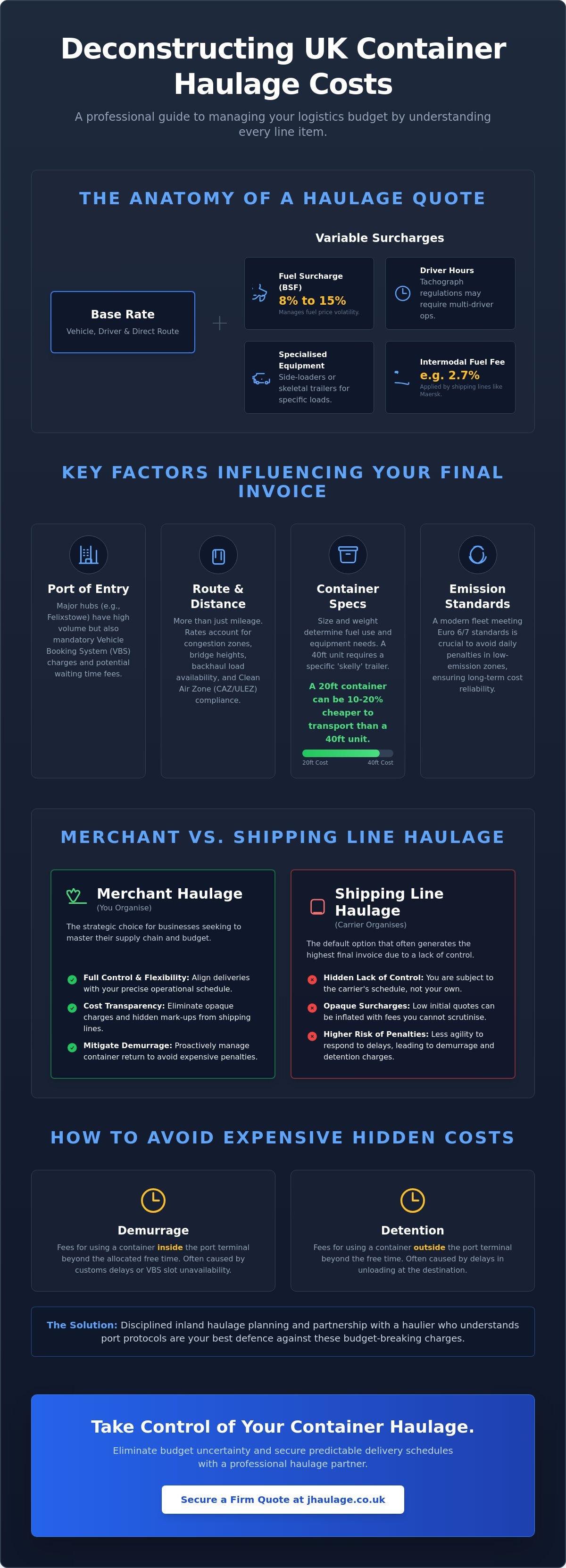
The core of any haulage quote is the base rate. This figure covers the vehicle, the driver's expertise, and the direct route from the port to your facility. Hauliers calculate this using a disciplined assessment of mileage and expected transit time. However, the base rate is rarely the final figure. Variable surcharges are applied to protect the stability of the operation against external market shifts. The most significant of these is the Fuel Surcharge (BSF). As of early 2026, several UK transport operators have applied fuel surcharges ranging from 8% to 15% to manage price volatility. You should also account for specialised equipment costs if your delivery requires side-loaders or skeletal trailers for heavy loads.
- Driver Hours: Strict adherence to tachograph regulations means that longer routes may require multi-driver operations or overnight stops, increasing the base price.
- Fuel Fees: Industry leaders like Maersk implemented a 2.7% Intermodal Fuel Fee in April 2026, illustrating the need for monthly rate reviews.
- Equipment Type: Moving a 40ft unit requires different chassis configurations compared to a 20ft unit, which directly influences the core rate.
The Influence of Port of Entry
The choice of port significantly dictates the initial container transport costs. Major maritime hubs like Felixstowe or Southampton offer high volume but often come with complex Vehicle Booking System (VBS) charges. These fees are mandatory for hauliers to secure a collection slot. They are frequently passed through as a direct cost to the client. Whilst smaller regional ports might offer lower VBS fees, they often lack the infrastructure or terminal capacity of the major hubs. This can lead to longer waiting times, which hauliers charge at hourly rates after an initial free period. Professional haulage from UK ports requires a partner who understands the specific gate-in and gate-out protocols of each terminal to avoid unnecessary delays.
Effective logistics management requires a clear understanding of these components. By separating the base rate from the variable surcharges, businesses can build more predictable delivery schedules and reduce overall overheads. This structured approach ensures that your logistics spend remains disciplined and transparent.
Key Factors Influencing Nationwide Container Haulage Rates
Distance is the primary variable in any logistics calculation, yet professional container transport costs aren't determined by a simple pence-per-mile formula. Route optimisation must account for urban congestion zones, bridge height restrictions, and the availability of backhaul loads. According to the Road Haulage Association, the UK road freight industry is a critical pillar of the economy, moving the vast majority of all consumer products. Within this network, haulage rates fluctuate based on the technical requirements of the cargo and the seasonal pressure on the fleet. Maintaining a modern fleet that meets Euro 6 standards, and preparing for the first phase of Euro 7 emissions standards in November 2026, is essential for long-term cost reliability. This discipline ensures vehicles avoid the daily penalties associated with Clean Air Zones (CAZ) and the London ULEZ.
Container size and weight significantly impact operational overheads. Statistically, a 20ft container is typically 10-20% cheaper to transport than a 40ft unit on the same UK route, provided the weight remains within standard limits. Whilst a 20ft container is smaller, it often carries denser, heavier goods that increase fuel consumption and vehicle wear. 40ft units are the industry standard for high-volume retail goods. These larger units require specific skeletal trailers, often called "skelly" trailers, to ensure the weight is distributed safely across the axles. Professional inland container haulage providers prioritise these equipment standards to protect the integrity of the delivery.
Equipment and Cargo Specialisation
Specialised cargo demands a more disciplined logistical approach. Refrigerated (reefer) containers require constant power and monitoring, which adds a premium to the standard rate. Heavy container haulage might necessitate the use of low loaders or reinforced trailers if the weight exceeds standard limits. Many businesses now utilise "drop and swap" operations to improve efficiency. In this model, a haulier leaves a full container at the site and immediately collects an empty one. This reduces waiting time and helps to stabilise container transport costs by keeping the vehicle in motion.
Operational Timing and Scheduling
Timing is a critical factor in price stability. Same-day deliveries or last-minute bookings often incur a price premium because they disrupt planned vehicle routes. Scheduled transport, booked several days in advance, allows for better fleet utilisation and more competitive rates. During the "Golden Quarter" from October to December, demand for container haulage peaks, leading to tighter availability across the UK. You can often find efficiencies through night trunking. Moving goods during off-peak hours avoids daytime congestion and ensures more predictable delivery windows. To secure a reliable slot for your next shipment, it's advisable to request a formal haulage quote well in advance of your vessel's arrival.
Merchant Haulage vs. Shipping Line Haulage: A Cost Comparison
Choosing between merchant haulage and shipping line haulage is a strategic decision that directly dictates your total container transport costs. In the carrier haulage model, the shipping line organises the inland leg of the journey. This approach often results in a lack of visibility and control. The line selects the haulier and determines the delivery schedule, which may not align with your warehouse capacity. Merchant haulage allows you to take direct control of the transport process. You contract a dedicated haulier to collect the unit from the port, ensuring the delivery matches your operational requirements. This direct relationship eliminates the "black box" of carrier-led logistics.
Carrier haulage often hides inefficiencies within an "all-in" freight rate. When delays occur at the port or the warehouse, the shipping line applies standardised surcharges that are difficult to dispute. By contrast, merchant haulage provides a transparent breakdown of every charge. You see the base rate, the fuel surcharge, and any specific terminal fees as separate line items. This clarity is essential for businesses seeking to maintain a disciplined logistics budget in 2026.
The Financial Benefits of Merchant Haulage
The primary financial advantage of merchant haulage is the removal of shipping line administrative mark-ups. Shipping lines often charge fees for managing the inland leg, such as the £6 administrative fee listed by CMA CGM for detention and demurrage tasks as of January 2026. Merchant haulage bypasses these intermediary costs. It also allows for more efficient "restitution," which is the process of returning the empty container to the port or a designated depot. A dedicated haulier can often negotiate more favourable restitution points, reducing empty mileage and associated fuel fees.
- Bespoke Pricing: Direct contracts with hauliers allow for volume-based discounts and fixed-rate agreements that shipping lines rarely offer to smaller importers.
- Reduced Surcharges: Direct control over the schedule helps avoid the port storage fees that often accrue when a shipping line's chosen haulier is unavailable.
- Asset Utilisation: Merchant haulage enables "dual-tasking," where a vehicle delivers a full container and immediately reloads an export unit, significantly lowering the cost per move.
Strategic Outcomes and Reliability
Professional merchant haulage offers superior responsive support compared to the rigid structures of major shipping lines. When port congestion or customs delays occur, a direct haulage partner can pivot quickly to adjust schedules. This agility is vital for maintaining container transport costs during peak demand periods. Jagelo Haulage acts as a strategic partner in this framework, providing the disciplined operational reach required to manage complex inland routes. By establishing a direct link with a specialist provider, you secure a dependable partner that prioritises your specific delivery windows. This level of service reduces the risk of supply chain bottlenecks and ensures that your logistics operations remain both safe and efficient.
Avoiding Hidden Costs: Demurrage, Detention, and Surcharges
Whilst many importers focus on the base sea freight leg, the most volatile elements of container transport costs often occur after the vessel has berthed. These ancillary charges are frequently preventable through disciplined planning and clear communication. The clock starts immediately upon arrival. Understanding the distinction between port-side and inland penalties is essential for maintaining a professional logistics budget. In 2026, the complexity of UK customs and port logistics means that even a minor delay in documentation can trigger significant daily fees that erode your operational margins.
Demurrage and detention are the primary drivers of unexpected spend. Demurrage refers to the storage fee charged by the terminal when a container remains on the quay beyond the agreed free period. Verified rates at UK ports typically range from £75 to £150 per container per day, and these costs can escalate the longer the unit sits. Detention charges apply when the container is kept outside the port for too long. These rates are similar, often between £75 and £150 per day. You must also account for waiting time at your delivery point. Most inland container haulage quotes include one to two hours of free waiting time. Any duration beyond this is typically charged at £30 to £50 per hour.
Practical Strategies to Minimise Fees
The full transition to the Customs Declaration Service (CDS) in February 2026 makes accurate data submission a prerequisite for cost control. Ensuring your customs clearance is pre-lodged allows the haulier to collect the unit as soon as it's released, maximising the shipping line's "free time" window. You should also ensure your warehouse is ready for the vehicle's arrival. Precise delivery windows prevent driver waiting time penalties and ensure the vehicle remains within its legal tachograph hours. Clear communication with your haulier regarding site access and offloading equipment is a fundamental requirement for a protected outcome.
Infrastructure and Regulatory Costs
UK port logistics services are also shaped by regional infrastructure fees. Vehicle Booking System (VBS) charges are mandatory at major hubs to manage terminal congestion. These fees are a standard component of container transport costs and are essential for securing collection slots. Furthermore, fleet operators must navigate tightening environmental standards. The Direct Vision Standard (DVS) in London and the proliferation of Clean Air Zones (CAZ) across UK cities influence the rates charged by hauliers who maintain compliant, high-specification fleets. These regulatory costs reflect a commitment to safety and environmental responsibility within the sector.
To ensure your logistics budget remains protected from these variables, you should request a comprehensive haulage quote that accounts for all potential surcharges before your cargo arrives at the port.
Securing Accurate Quotes for Professional Container Haulage
Stabilising your 2026 logistics budget requires a transition from vague estimates to firm, actionable quotes. A disciplined quoting process protects your operations from the volatility of container transport costs by ensuring all technical variables are accounted for upfront. When you engage with a haulier, providing a complete data set is the only way to secure a fixed rate that won't fluctuate upon delivery. This professional exchange of information allows the haulier to allocate the correct vehicle and driver hours to your specific route, ensuring functional reliability from the port to your warehouse.
Evaluating a haulier based on fleet size and port proximity is a fundamental step in securing your supply chain. A provider with a significant presence near major hubs can respond more effectively to vessel delays or terminal congestion. This proximity reduces empty mileage and helps to maintain a more consistent pricing structure. It's also essential to consider the age of the fleet. A modern fleet, maintained to high standards, significantly reduces the risk of breakdown-related costs and ensures compliance with the latest environmental regulations across the UK road network.
The Information Checklist for a Quote
To receive a professional quote, you must provide specific operational details. Incomplete information often leads to "subject to" clauses in contracts, which can result in unexpected surcharges later. Your checklist should include the following data points to ensure a protected outcome:
- Container Data: The container number, gross weight, and ISO type (for example, a 20ft standard or 40ft high cube unit).
- Terminal Details: The specific vessel arrival time and the port terminal to account for varying Vehicle Booking System (VBS) fees.
- Site Access: Specific restrictions at the delivery destination, such as narrow access roads or weight limits that might prohibit 44-tonne vehicles.
- Cargo Type: Whether the goods are hazardous or require specialised equipment like side-loaders for ground-level offloading.
Accurate weight data is non-negotiable for safety and cost management. For industrial operations requiring precise calibration of their weighing systems, Independent Scale Service offers the professional expertise needed to ensure all container measurements meet strict global standards.
Why Reliability Outperforms the Lowest Price
A headline rate that sits significantly below the market average often signals a lack of operational depth. When you calculate the true cost of a failed delivery, including lost warehouse labour and potential port demurrage, it's clear that a professional service is the more cost-effective choice. You should always verify that the provider holds comprehensive Goods in Transit (GIT) cover and appropriate insurance to protect your assets during containers deliveries.
Long-term strategic partnerships offer more price stability than chasing spot-market rates. A dependable partner understands your site's specific requirements and can offer more predictable delivery schedules. This consistency is a hallmark of professional merchant haulage. For a disciplined approach to your logistics spend, contact Jagelo Haulage for a professional port haulage quote today. Our commitment to the fundamentals ensures your supply chain remains secure and efficient throughout 2026.
Strategic Management of Your 2026 Logistics Spend
Mastering container transport costs in a volatile market requires a shift from passive shipping line arrangements to active merchant haulage. Taking direct control of your inland logistics helps you eliminate the lack of transparency that often leads to excessive demurrage and detention charges. A disciplined approach to documentation ensures your supply chain remains resilient against the regulatory changes of 2026. It's essential to prioritise functional reliability over the lowest headline rate to protect your operational margins. This strategic focus ensures that your goods move through the UK infrastructure without unnecessary delay or expense.
Jagelo Haulage provides the steadfast professionalism required to manage these complexities. We offer over 15 years of specialist port logistics experience and maintain a modern fleet of more than 40 trucks and trailers. Our team operates from all major UK ports, including Felixstowe and Southampton, ensuring secure outcomes for every shipment. To secure a dependable partner for your operations, request a professional container haulage quote from Jagelo Haulage. We look forward to helping you build a stable and efficient transport strategy.
Frequently Asked Questions
What is the average cost to transport a shipping container in the UK?
The cost to transport a shipping container within the UK is determined by the distance from the port and the specific requirements of the route. Factors such as fuel price volatility and terminal booking fees ensure that rates are calculated on a case-by-case basis. You'll find that 40ft units typically incur higher charges than 20ft units due to the specialised skeletal trailers required for their movement.
How is the fuel surcharge calculated for container haulage?
Fuel surcharges are calculated as a percentage of the base haulage rate and are reviewed monthly to reflect current market prices. This mechanism protects the operational stability of the fleet against sudden fluctuations in diesel costs. In 2026, many operators use a transparent index to ensure that these surcharges remain fair and consistent with industry benchmarks.
What is the difference between demurrage and detention?
Demurrage refers to the storage fees applied by the port terminal when a container stays on the quay beyond the permitted free period. Detention charges are separate and apply when the container is held outside the port for too long. These penalties ensure the swift return of equipment to the shipping line and prevent terminal congestion at major hubs.
Does the weight of the container affect the transport price?
Container weight significantly influences container transport costs because heavier loads increase fuel consumption and vehicle maintenance requirements. If a container exceeds standard weight limits, it may require specialised heavy-duty trailers or specific route planning to avoid weight-restricted bridges. Providing an accurate gross weight during the quoting process is essential for a firm and protected price.
Why is merchant haulage often preferred over shipping line haulage?
Merchant haulage is preferred by businesses that require direct control over their delivery schedules and greater transparency in their logistics spend. This model allows you to establish a direct relationship with a professional haulier rather than relying on the shipping line's chosen partner. It often results in more responsive customer support and the ability to mitigate port-side delays more effectively.
What are VBS charges and who pays them?
Vehicle Booking System (VBS) charges are mandatory fees paid to the port terminal to secure a specific time slot for container collection or delivery. These charges are used by major hubs like Felixstowe to manage traffic flow and terminal efficiency. Whilst the haulier pays these fees initially to gain entry to the port, they are typically passed through as a direct cost to the client.
How much notice is required for a container collection from a UK port?
Securing a collection slot typically requires 48 to 72 hours of notice to ensure vehicle availability and a confirmed VBS booking. During peak periods, it's advisable to book even further in advance to guarantee a slot. Providing early notice allows your haulage partner to optimise the route and ensure that the delivery aligns with your warehouse schedule.
Are there extra costs for transporting hazardous materials in containers?
Transporting hazardous materials involves additional container transport costs due to the specialised training and equipment required for ADR shipments. Drivers must hold valid certifications, and vehicles must be equipped with specific safety kits to comply with UK regulations. These shipments also require more complex insurance coverage and disciplined route planning to ensure a safe and protected outcome.