More on overweight containers from Jagelo Haulage
Why should your operation absorb the cost of devanning at the port when the right equipment can eliminate that step entirely? It's a common pressure point for logistics directors who face the daily risk of DVSA inspections and the complexity of heavy container haulage regulations. You know that an overweight load isn't just a safety concern; it's a significant financial risk to your bottom line.
This strategic guide provides the technical framework required to manage overweight loads with precision. You'll learn how to secure compliant transport for heavy goods while reducing the need for expensive port-side unpacking. We'll detail the latest 2026 regulatory updates, including Smart Tachograph Version 2 requirements and the specific trailer configurations that ensure reliable port-to-door delivery. This structured approach protects your margins and maintains a stable, efficient supply chain.
Key Takeaways
- Understand the 44-tonne gross vehicle weight limit for six-axle combinations so you don't fall foul of UK road regulations.
- Learn how ultralight skeletal trailers increase payload capacity and help you avoid the expense of port-side devanning.
- Master the strategic differences between merchant and shipping line haulage to gain better control over your heavy container haulage costs.
- Follow a structured process for Verified Gross Mass (VGM) documentation to ensure your cargo is ready for safe, legal collection.
- Recognise the operational advantages of using a provider with over 15 years of expertise and a modern fleet of over 40 specialised vehicles.
Heavy Container Haulage and UK Road Regulations
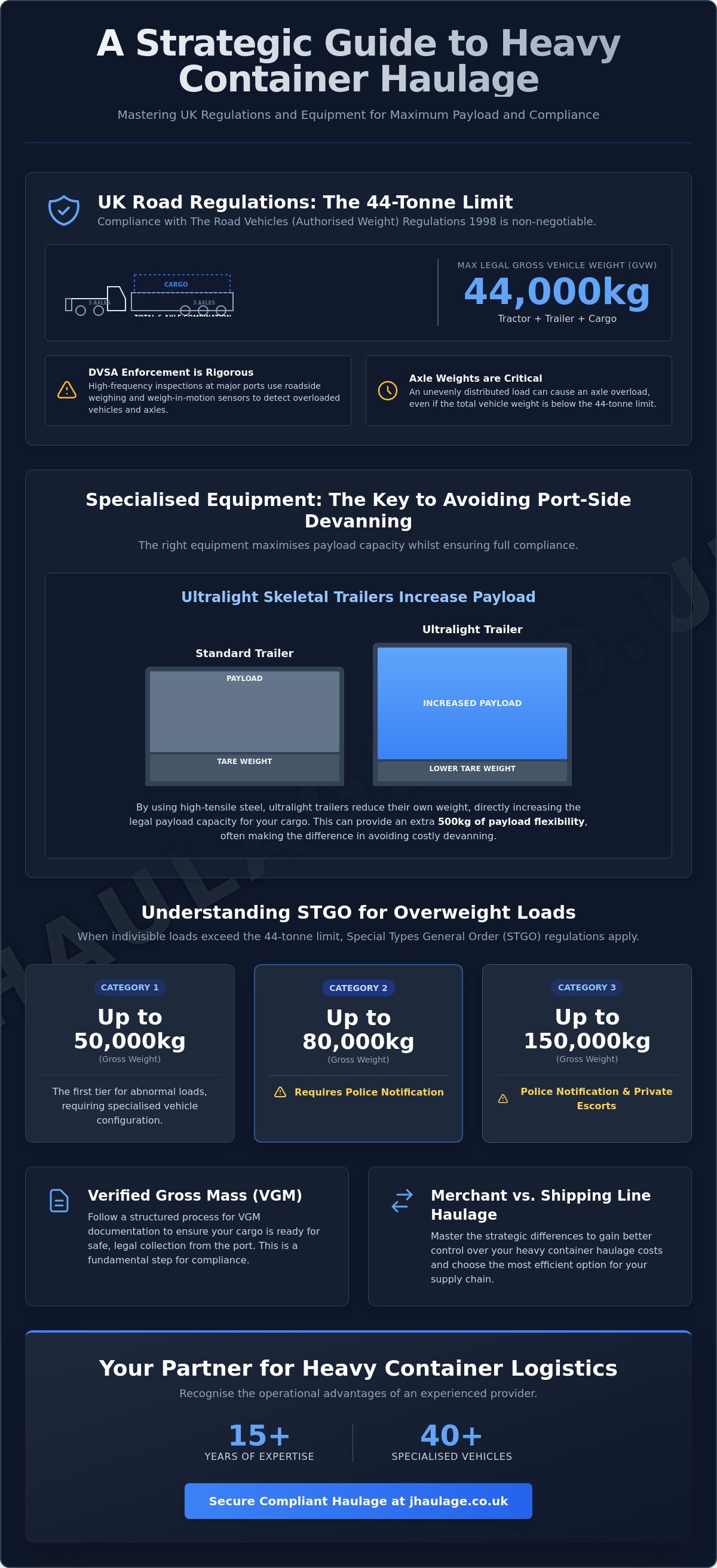
The Road Vehicles (Authorised Weight) Regulations 1998 provide the legal framework for heavy container haulage in the UK. These regulations establish the maximum mass allowed for different vehicle configurations to prevent road damage and ensure braking efficiency. For most port-to-door operations, the primary benchmark is the 44-tonne gross vehicle weight (GVW) limit. This limit is strictly applied to six-axle articulated vehicle combinations. A container requires STGO status the moment it cannot be divided into smaller loads and causes the vehicle to exceed the 44,000kg limit or standard width and length dimensions.
The DVSA enforces these rules with high-frequency inspections at major ports like Felixstowe and Southampton. They utilise roadside weighing equipment and advanced sensors to detect overloaded axles in real-time. The DVSA's enforcement strategy is data-driven; they use weigh-in-motion technology to screen vehicles at speed. It's not just the total weight that matters. An unevenly distributed load can lead to an axle overload even if the total GVW is under 44 tonnes. Precise weight management is a fundamental requirement for any professional haulage partner.
The Legal Thresholds for UK Container Transport
Logistics managers must distinguish between the container's plated capacity and the UK's road legal limits. A 20ft container might have a structural capacity of 28,000kg, but loading it to this maximum often makes the vehicle illegal for standard road use. The weight of the tractor unit and trailer must be subtracted from the 44-tonne limit to find the true payload capacity. Lightweight tractor units can sometimes provide an extra 500kg of payload flexibility. The maximum legal gross vehicle weight for a standard 6-axle articulated vehicle in the UK is 44 tonnes. Operators don't just look at the total mass; they also consider the specific weight of the equipment being used.
Understanding STGO Categories for Overweight Loads
STGO regulations categorise vehicles based on their total weight and axle configuration. These categories dictate the operational requirements for the move:
- Category 1: For loads up to 46,000kg or 50,000kg, depending on the specific axle count.
- Category 2: Covers gross weights up to 80,000kg.
- Category 3: Manages exceptional loads up to 150,000kg.
Each category demands specific operational protocols. For example, Category 2 and 3 movements require police notification and, in some cases, private escorts. Speed limits are also significantly reduced for these tiers to maintain safety. Utilising specialised heavy haulage equipment is the only way to manage these loads legally. Multi-axle trailers and heavy-duty tractor units ensure that the weight is spread across the road surface, which prevents structural damage and maintains vehicle stability whilst in transit.
Specialised Equipment for Managing Heavy Payloads
Reliable heavy container haulage depends on the technical capability of the fleet. A modern fleet reduces the risk of mechanical failure and ensures that every movement complies with the latest environmental standards. For operators managing merchant haulage, the equipment choice determines whether a load stays legal or requires expensive transhipment. High-performance trucks provide the necessary torque and braking power to manage significant masses safely across the UK's road network.
Ultralight skeletal trailers are designed specifically to maximise payload capacity. By using high-tensile steel and streamlined designs, these trailers reduce the tare weight of the vehicle combination. This weight saving allows for heavier cargo to be carried whilst remaining under the 44-tonne gross vehicle weight limit discussed in the previous section. Multi-axle trailers provide additional support by spreading the load over a larger surface area. This distribution protects road infrastructure and is a core standard promoted by the Heavy Transport Association. It's a technical solution that ensures the safety and longevity of both the vehicle and the highway.
Integration of on-board weighing systems provides real-time data to the driver. These systems prevent axle overloads before the vehicle even leaves the port gate. When combined with advanced telematics, transport managers can monitor load stability and vehicle performance throughout the journey. This level of oversight ensures a disciplined and safe operational environment. It allows for proactive management of the fleet and provides peace of mind for the cargo owner.
Ultralight Trailers vs. Heavy-Duty STGO Chassis
Choosing between an ultralight trailer and a heavy-duty STGO chassis depends entirely on cargo density. Ultralight equipment is the preferred choice for maximising payload within standard road limits. However, when the cargo is exceptionally dense and exceeds the 44-tonne threshold, a specialised STGO plated vehicle becomes necessary. In 2026, equipment choice also impacts the carbon footprint. Modern, lightweight configurations improve fuel efficiency, which helps operators meet the UK's tightening emissions targets. If you need to determine the best equipment for your specific cargo, you can request a technical consultation to review your requirements.
Safety Features in Modern Heavy Haulage Fleets
Safety is the primary priority in heavy container haulage operations. Modern trucks feature advanced electronic braking systems and stability control to manage high-centre-of-gravity loads. These systems are vital during emergency manoeuvres or on uneven road surfaces. High-utilisation fleets require strict maintenance cycles to ensure every safety component functions perfectly. Following a secure container transport checklist helps maintain these standards across the entire supply chain. This disciplined approach to maintenance protects the cargo and the public.
Merchant vs. Shipping Line Haulage for Heavy Cargo
Choosing between merchant haulage and shipping line haulage is a strategic decision that directly impacts the efficiency of your supply chain. Merchant haulage gives the importer direct control over the transport provider. This model allows you to select a partner based on their specific technical competence and fleet capabilities. In contrast, shipping line haulage involves the carrier organising the inland movement as part of a through-rate. While this might appear convenient, it often lacks the specialised focus required for complex heavy container haulage assignments. Carriers frequently utilise a broad pool of subcontractors who may not have the specific equipment needed for overweight loads at the required time.
The cost implications of carrier-controlled haulage for overweight containers can be significant. Shipping lines often apply standardised surcharges for heavy units that don't reflect the actual operational requirements. By opting for merchant haulage, you can negotiate terms that align with your specific cargo profile. This approach provides transparency and prevents the unexpected fees often found in standard carrier contracts. It's a more disciplined way to manage your logistics budget whilst ensuring the safety of your goods.
Why Merchant Haulage Favours Heavy Load Specialisation
Merchant haulage allows you to partner with a specialist who understands the nuances of heavy payloads. General carriers often apply generic rates that penalise containers exceeding typical weight thresholds. By choosing a dedicated partner, you avoid these broad surcharges. Independent contractors provide a more responsive level of support and possess the specialised trailers necessary for safe transport. This expertise ensures that your cargo moves without the delays often associated with standard carrier networks. It's about matching the right equipment to the specific mass of the cargo to maintain operational stability.
Strategic Outcomes: Reducing Supply Chain Friction
Direct control over transport improves the synchronisation between the port and the warehouse. Heavy containers often require specific devanning equipment or additional labour at the destination. Merchant haulage enables you to coordinate arrival times with precision. This direct communication with the haulage operator reduces the risk of vehicles arriving when the site is unprepared. It also helps in minimising port storage charges. By prioritising the collection of heavy units through a dedicated partner, you can move goods off the quay before expensive penalties accrue. This methodical approach transforms heavy container haulage from a simple delivery into a strategic outcome for your broader operations.
Preparing Heavy Containers for Port Collection
Port readiness is a critical phase in the logistical chain. It prevents delays at the terminal and ensures that heavy container haulage remains compliant with UK safety standards. Proper preparation begins before the vehicle arrives at the port gate. It requires a disciplined approach to documentation and physical load management to ensure a seamless transition from the quay to the road.
The VGM Process and Weight Verification
Under SOLAS (Safety of Life at Sea) regulations, every packed container must have a Verified Gross Mass (VGM) before it can be loaded onto a vessel or transported by road. There are two approved methods for this verification. Method 1 involves weighing the entire packed container using calibrated and certified equipment. Method 2 requires weighing all individual items and packing materials, then adding the tare weight of the container itself. An accurate VGM is a mandatory legal requirement that ensures the safety of port workers, vessel stability, and road haulage operations.
Internal Securing and Weight Distribution
Internal weight distribution is as vital as the total mass. An uneven load can lead to axle overloads even if the total weight is legal. You must distribute the weight evenly across the container floor to maintain the vehicle's centre of gravity. Nose-heavy or tail-heavy containers create significant stability risks during transit, especially during braking or cornering. Ensuring your cargo is secured correctly is a fundamental part of reliable container haulage from Felixstowe and other major UK hubs.
To ensure your container is ready for collection, follow this professional checklist:
- Confirm the VGM has been submitted to the shipping line and port terminal.
- Ensure the container seal is intact and the number matches all transport documents.
- Verify that the internal load is balanced and secured with appropriate lashing.
- Check that the container's structural integrity is sound for heavy lifting.
This systematic preparation reduces the risk of DVSA fines and operational downtime. It ensures that your logistics provider can collect the unit and commence delivery without administrative or safety delays. If you require assistance with your port logistics planning, you can request a professional transport quote to secure your supply chain.
Jagelo Haulage: Your Partner for Heavy Container Logistics
Jagelo Haulage provides a stable foundation for your logistics through more than 15 years of professional expertise. This experience allows us to manage the specific challenges of heavy container haulage with a level of precision that smaller or less specialised operators cannot provide. We understand that the movement of heavy goods is a high-stakes operation. Our team focuses on delivering functional reliability and safety at every stage of the inland transit process. This commitment to competence ensures that your cargo is handled with the discipline required for modern supply chain management.
We operate a modern fleet of over 40 trucks and trailers. This equipment is maintained to the highest standards to ensure consistent performance and protection for your cargo. Each vehicle in our fleet is selected for its technical capability to handle significant payloads whilst remaining within the legal frameworks discussed earlier in this guide. This disciplined approach to equipment management makes us a dependable partner for corporate clients who value operational integrity. By choosing a partner with a dedicated fleet, you gain the security of knowing the right tools are always available for your specific assignment.
A Disciplined Approach to Complex Logistics
Our service is rooted in a commitment to the fundamentals of the haulage industry. We value punctuality, safety, and a strict adherence to all DVSA and STGO regulations. This focus ensures that your supply chain remains uninterrupted by compliance issues or mechanical failures. We provide comprehensive coverage across the UK's major maritime hubs, including Southampton, Tilbury, and Liverpool. This wide operational reach allows us to support your requirements regardless of the arrival port. Our presence in these key locations ensures that we can respond quickly to your collection needs.
There are clear benefits to partnering with an independent contractor for your merchant haulage needs. Unlike the standardised solutions offered by shipping lines, we provide a bespoke service tailored to your specific heavy haulage requirements. This flexibility allows us to schedule the most appropriate equipment for your load, reducing the risk of axle overloads and port-side delays. Our transport managers act as strategic partners. They provide the technical oversight necessary for complex logistical tasks, ensuring that every delivery is executed with professional precision.
Securing Your Supply Chain for 2026
The logistics landscape is becoming increasingly complex. Our continuous investment in the latest vehicle technology supports the evolving demands of the UK transport sector. We ensure that our fleet meets the necessary Direct Vision Standards and Smart Tachograph requirements to operate without restriction. This forward-thinking approach protects your supply chain from the risks of regulatory change and environmental penalties. It is a proactive strategy designed to maintain the long-term stability of your operations.
We invite you to contact our team for a strategic consultation on your upcoming transport needs. Our staff provides the quiet confidence and competence required to manage your most valuable cargo. You can discuss your heavy haulage requirements with Jagelo Haulage to secure a compliant and efficient delivery solution. We remain dedicated to providing the steadfast professionalism that your business requires for consistent, protected outcomes.
Strategic Management of Your Heavy Payloads
Effective heavy container haulage requires a disciplined focus on technical compliance and equipment selection. You've seen how staying within the 44-tonne limit or managing STGO categories protects your operations from DVSA intervention. Choosing merchant haulage provides the flexibility to use specialised trailers. This approach reduces double-handling costs and ensures your cargo moves directly from the port to its destination without administrative friction. Accurate weight verification and internal load balancing remain the final critical steps for a safe transit.
Jagelo Haulage brings 15 years of specialised port logistics experience to your supply chain. Our modern fleet of over 40 trucks and trailers provides the technical capacity needed for complex movements. We offer nationwide coverage from all major UK maritime hubs, ensuring your goods are protected throughout their journey. This professional oversight allows you to focus on your core business whilst we manage the logistical details. You can request a professional quote for heavy container haulage to secure your 2026 transport requirements. We look forward to supporting your operational goals with functional reliability and quiet competence.
Frequently Asked Questions
What is the maximum legal weight for a shipping container on UK roads?
The maximum legal gross vehicle weight for a 6-axle articulated vehicle combination in the UK is 44 tonnes. This total mass includes the weight of the tractor unit, the trailer, and the container with its contents. You must ensure that the payload doesn't cause the vehicle to exceed this threshold or individual axle weight limits to remain compliant with the Road Vehicles (Authorised Weight) Regulations.
Does a heavy container always require an STGO plated vehicle?
A heavy container doesn't always require an STGO plated vehicle if the total gross weight remains at or below 44 tonnes. Operators often use ultralight tractor units and specialised trailers to maximise payload within standard road limits. STGO status is only mandatory when a load is indivisible and causes the vehicle to exceed 44,000kg or standard width and length dimensions.
What is the difference between SOLAS VGM and road weight limits?
SOLAS VGM is a verified mass required for maritime safety and vessel stability before a container is loaded onto a ship. Road weight limits are separate regulations enforced by the DVSA to protect highway infrastructure and ensure vehicle braking efficiency. It's possible for a container to be legal for sea transit under its VGM but illegal for UK road transport if the total vehicle weight exceeds 44 tonnes.
How can I avoid devanning costs for overweight containers?
You can avoid devanning costs by utilising heavy container haulage partners who operate ultralight skeletal trailers. These specialised trailers reduce the tare weight of the vehicle, which allows for a higher cargo payload whilst staying under the 44-tonne legal limit. This technical solution eliminates the need for expensive port-side unpacking and secondary transport arrangements.
Do I need to notify the police for heavy container haulage?
Police notification isn't required for standard movements up to the 44-tonne limit. However, if your cargo is exceptionally heavy and falls under STGO Category 2 or 3, you must provide advance notice to the police and highway authorities. The notification requirements vary depending on the total weight and dimensions of the load, following a disciplined regulatory process to ensure safe passage.
What equipment is best for transporting heavy 20ft containers?
Heavy 20ft containers are best managed using sliding skeletal trailers that allow the load to be positioned optimally over the vehicle's axles. This configuration ensures correct weight distribution and prevents drive axle overloads. Multi-axle trailers also provide a strategic advantage by spreading the concentrated mass of a dense 20ft unit across more contact points with the road surface.
How does merchant haulage improve heavy cargo management?
Merchant haulage improves heavy container haulage by allowing you to select a partner with specific expertise and lightweight equipment. Shipping lines often use general subcontractors who may not have the specialised trailers required for heavy payloads. Direct control over your transport provider ensures that the vehicle arriving at the port is technically capable of moving your specific cargo legally and efficiently.
What happens if a container is found to be overweight at a port?
If a container exceeds legal limits, the port terminal will refuse to release the unit for road transport. You'll face immediate costs for port storage and the high expense of devanning the cargo into multiple smaller loads. If the DVSA detects an overweight vehicle at a port exit, they'll issue a prohibition notice and significant fines, which causes severe disruption to your supply chain.