How to track container shipments in real time
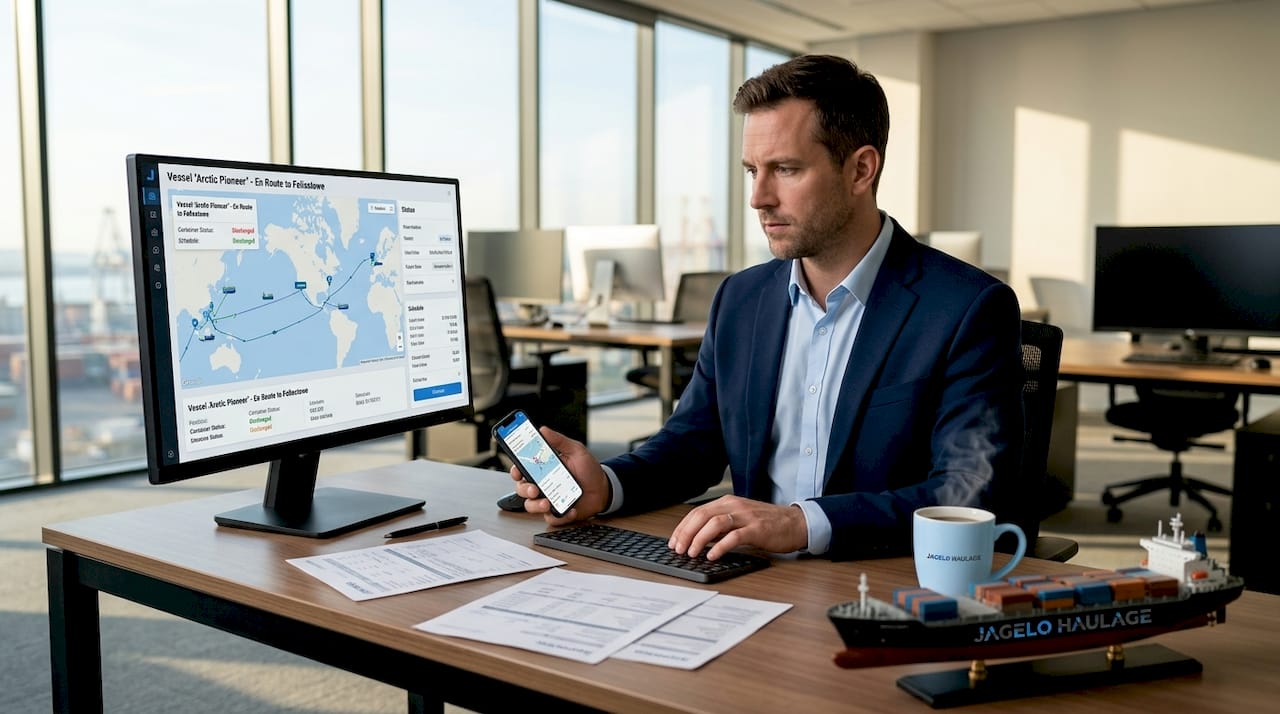
Real-time container shipment tracking is defined as the use of container numbers, AIS vessel data, and integrated logistics software to obtain frequent, accurate updates on cargo location and status throughout the entire transport chain. For logistics and supply chain professionals managing intermodal movements through ports such as Felixstowe, Tilbury, Southampton, and Liverpool, the difference between a 24-hour data gap and an hourly position update can translate directly into demurrage charges, missed Vehicle Booking System slots, and cascading warehouse delays. Platforms such as Vizion and Codeison, combined with carrier portals from Maersk and Hapag-Lloyd, now make it possible to consolidate ocean, port, and inland telematics data into a single operational picture. This guide covers the technologies, integration methods, and practical steps that deliver genuine end-to-end visibility.
What data sources and technologies enable real-time container shipment tracking?
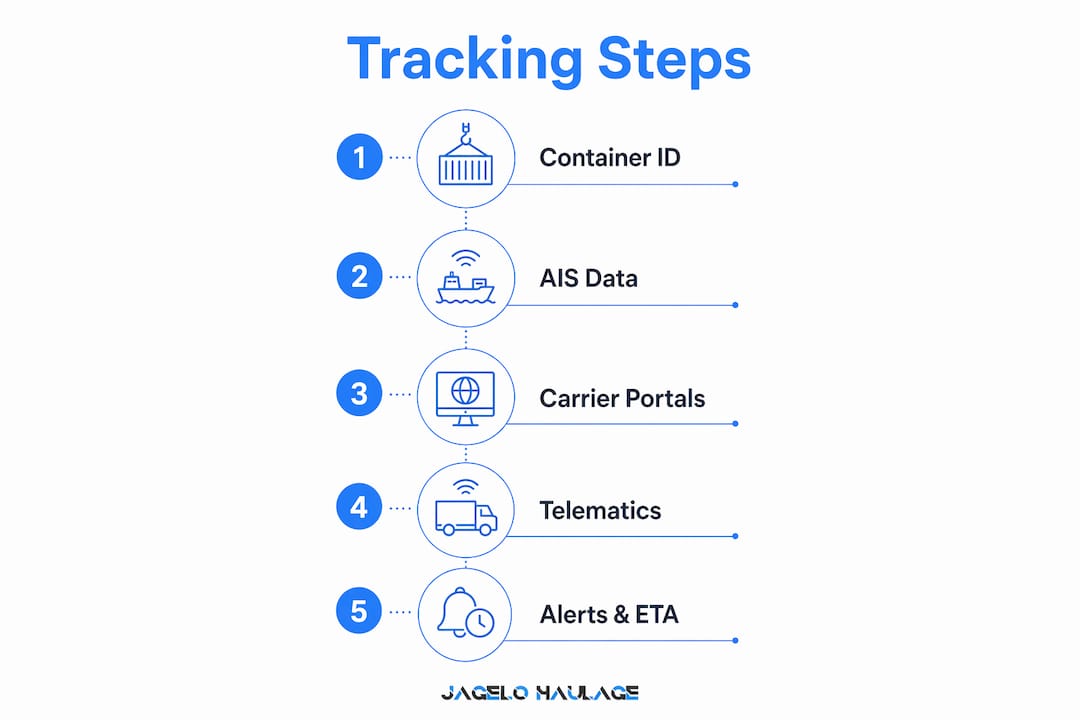
The term “real-time” in container logistics is relative, and understanding that distinction is the first step toward building a reliable tracking architecture. AIS data provides hourly updates on vessel GPS coordinates, speed, and heading, making it the closest approximation to live sea-position data available to logistics professionals. Carrier portals, by contrast, update statuses every 24 to 72 hours depending on the shipping line and the operational stage of the voyage. That gap is significant when you are planning just-in-time drayage from a UK port.
The principal data sources available to logistics professionals fall into four categories:
- Carrier portals (Maersk, Hapag-Lloyd, MSC, CMA CGM): provide gate-in/gate-out, vessel departure/arrival, and transshipment events, but update frequency is limited by terminal scan intervals.
- AIS vessel tracking: delivers near-continuous GPS position data for vessels at sea, enabling precise ETA calculations independent of carrier-reported milestones.
- Dedicated GPS container trackers: solar-powered devices attached directly to containers that provide continuous location data even in areas where carrier scan frequency is low, such as during transshipment dwell periods.
- EDI and API integrations: direct data feeds into your ERP or TMS system that translate carrier milestones and port events into automated status updates without manual portal lookups.
| Data source | Update frequency | Best use case |
|---|---|---|
| Carrier portal | 24 to 72 hours | Milestone confirmation (gate in/out, vessel departure) |
| AIS vessel tracking | Hourly or better | Sea-leg ETA calculation and deviation detection |
| GPS container tracker | Continuous | High-value cargo, transshipment monitoring |
| EDI/API integration | Near real-time | Automated TMS/ERP exception management |
Combining AIS, carrier EDI, port, and telematics data is the only method that eliminates blind spots across the full intermodal journey. No single source covers the sea-to-land interface adequately on its own.
Pro Tip: When selecting a container tracking system, confirm whether the platform aggregates AIS data independently or relies solely on carrier-reported milestones. The distinction determines how quickly you receive deviation alerts during the ocean leg.
How can logistics professionals integrate multiple tracking systems for end-to-end visibility?
Integration is where most logistics operations either gain a competitive advantage or lose hours to manual reconciliation. The starting point is choosing the correct shipment reference. Tracking by container number is generally more reliable than tracking by bill of lading, because the container ID links directly to carrier operational events without the latency introduced by BL integration processes. Use the container number as your primary reference wherever the platform permits.
A structured integration approach follows this sequence:
- Collect all shipment references at booking stage: container number, bill of lading number, and booking reference. Store these in your TMS or ERP immediately, not retrospectively.
- Connect carrier portals via API or EDI: carriers including Hapag-Lloyd offer direct API connections that feed milestones into internal systems automatically, removing the need for manual portal checks.
- Layer AIS data over carrier milestones: platforms such as Vizion and Codeison aggregate both feeds, allowing you to cross-reference vessel position against carrier-reported ETAs and identify discrepancies before they affect your planning.
- Integrate inland telematics: for the UK drayage leg, GPS data from your haulier’s fleet management system should feed into the same dashboard, closing the sea-to-door visibility gap.
- Configure exception alerts: set automated notifications for key deviations, including vessel delays exceeding a defined threshold, unexpected port dwell times, and missed gate-out windows.
Portal fatigue is a genuine operational risk. When planners are checking five or six carrier websites manually each morning, they miss exceptions that occur between checks. Consolidating feeds into a single platform with push notifications converts tracking from a reactive task into a proactive control function. Container fleet visibility tools designed for depot-level management apply the same principle at a larger scale.
Pro Tip: Avoid platforms that require manual CSV uploads to refresh tracking data. Any solution that cannot connect via API or EDI to at least the major carriers (Maersk, Hapag-Lloyd, MSC, CMA CGM) will create reconciliation gaps that undermine the value of the entire system.
What practical steps help you track container shipments effectively?
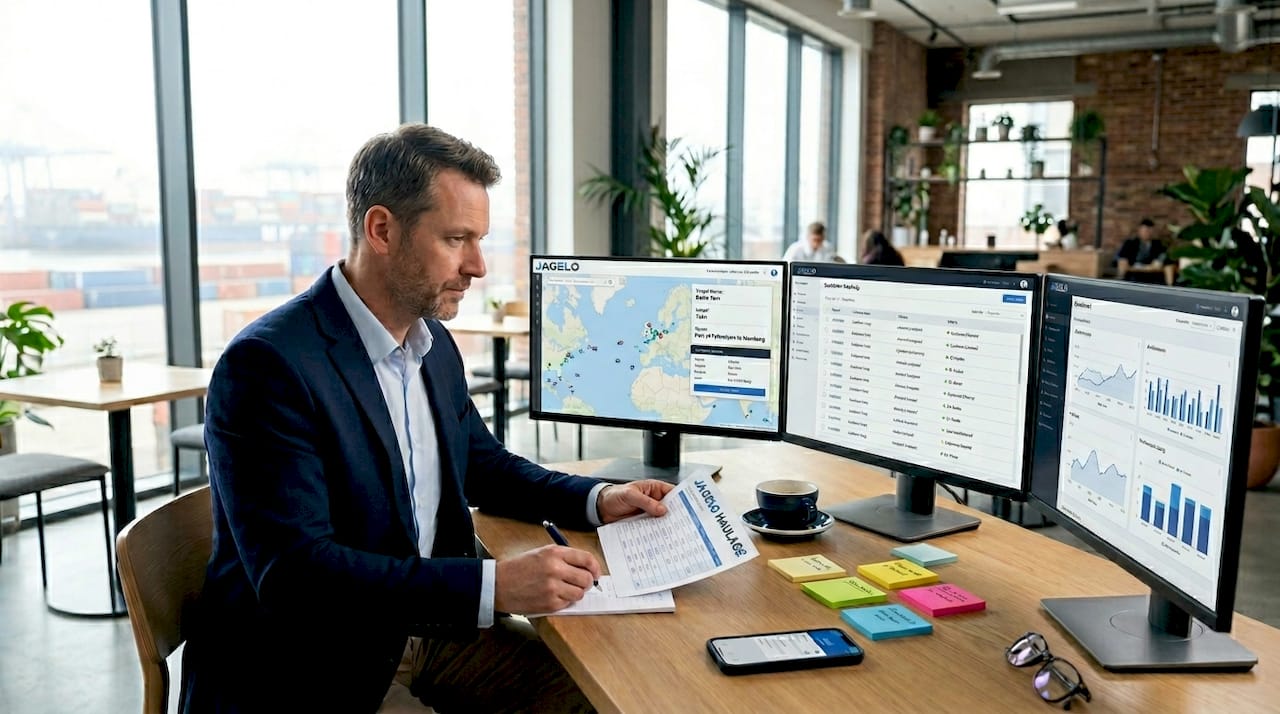
Implementing live cargo tracking in daily operations requires a defined process rather than ad hoc portal checks. The following steps reflect best practice for logistics teams managing regular container volumes through UK ports.
- Confirm container numbers at booking: do not rely on the bill of lading alone. Request the container number from the carrier or freight forwarder as soon as it is allocated, typically at gate-in.
- Access carrier portals and AIS services: for immediate visibility, Hapag-Lloyd and Maersk both provide browser-based tracking without software installation. This is adequate for low-volume operations but insufficient for professional-grade supply chain management.
- Deploy a consolidated tracking platform: Vizion and Codeison both offer API-based aggregation of carrier and AIS data, with configurable alert thresholds and TMS integration.
- Attach GPS trackers to high-value or time-sensitive containers: solar-powered trackers from providers such as Hanhaa deliver continuous position data that supplements carrier scan events, particularly during transshipment at intermediate ports.
- Monitor key milestones systematically: the milestones that carry the greatest operational consequence are gate-in at origin port, vessel departure, transshipment completion, vessel arrival at destination port, and gate-out to inland haulage.
- Use tracking data to coordinate downstream logistics: accurate ETAs from AIS allow you to schedule container delivery appointments and warehouse receiving slots with precision, reducing costly waiting time at port.
Key milestones to monitor for operational planning:
- Gate-in at origin terminal (confirms container is in carrier custody)
- Vessel departure (triggers sea-leg ETA calculation)
- Transshipment events (highest risk period for delays and data gaps)
- Vessel arrival at UK destination port (Felixstowe, Tilbury, Southampton, Liverpool)
- Gate-out to inland haulage (confirms container is available for collection)
- Final delivery confirmation
Pro Tip: Set your ETA alert threshold at 12 hours rather than 24 hours. A 24-hour warning of a vessel delay is often insufficient to reschedule a Vehicle Booking System slot at a major UK port without incurring additional fees.
What challenges affect real-time container tracking and how do you overcome them?
The most persistent limitation in live cargo tracking is the gap between what carriers report and what is actually happening. Carrier portals update every 24 to 72 hours, which means a vessel that diverts due to port congestion may not reflect that change in your tracking dashboard for over a day. By that point, your drayage booking and warehouse slot may already be misaligned.
Common challenges and their practical mitigations include:
- Slow carrier update frequency: supplement carrier data with AIS vessel tracking, which provides hourly position updates independent of terminal scan events.
- AIS blind spots during port stays: AIS transponders are designed for vessels in transit. Once a vessel is berthed, position data becomes static and less informative. Use terminal event feeds and port community systems (such as the Port of Felixstowe’s own notifications) to fill this gap.
- Inland transport visibility gaps: the sea-to-land interface is where most tracking architectures break down. Integrating haulier telematics into your TMS closes this gap, particularly for the final leg from port to distribution centre.
- Data quality inconsistencies across carriers: container numbers, vessel names, and voyage references are not always standardised across carrier systems. A consolidation platform that normalises data formats before feeding your ERP prevents mismatches.
- Reactive rather than proactive exception management: automated systems detect exceptions immediately, whereas manual portal checks discover problems hours or days after they occur.
“Treat shipment tracking as a data stream monitored continuously for deviations, not as a reporting function reviewed at the end of the day. The operational value lies entirely in the speed of the response, not the completeness of the record.”
How does real-time tracking data reduce costs and improve operational efficiency?
Accurate, timely tracking data has a direct financial impact on container logistics operations, primarily through the avoidance of demurrage and detention charges. Demurrage accrues when a container remains at the terminal beyond the carrier’s free time allowance, typically two to five days at UK ports. If your vessel arrival data is 48 hours out of date, you may not realise the container is available for collection until demurrage has already begun.
AI-powered logistics platforms reduce operational time by approximately 22% through automated tracking and exception alerts. That efficiency gain reflects the elimination of manual portal checks, faster exception response, and more accurate resource scheduling across drayage and warehousing.
| Operational area | Tracking data application | Cost impact |
|---|---|---|
| Drayage scheduling | AIS-based ETA used to book haulage slots precisely | Reduces waiting time and failed collections |
| Demurrage avoidance | Gate-out alerts trigger immediate collection booking | Eliminates free-time overruns |
| Warehouse receiving | Accurate arrival windows allow just-in-time staffing | Reduces overtime and idle capacity |
| Exception management | Automated alerts enable same-day response to delays | Prevents cascading supply chain disruption |
Integrating tracking data into your ERP or TMS via API also enables automated exception management, where the system generates a task or notification the moment a defined threshold is breached, without human intervention. This is the operational model that separates high-performing logistics teams from those perpetually reacting to problems they could have anticipated.
Pro Tip: Map your demurrage free-time windows for each carrier and port at the start of every shipment. Feed these dates into your tracking platform as hard deadlines, so that gate-out alerts carry an automatic urgency flag when free time is within 24 hours of expiry.
Key takeaways
Effective real-time container tracking requires combining AIS vessel data, carrier EDI integrations, and inland telematics into a single consolidated platform, with automated exception alerts replacing manual portal checks.
| Point | Details |
|---|---|
| Use container number as primary reference | Container ID tracking is more reliable and timely than bill of lading tracking for professional operations. |
| Layer multiple data sources | AIS, carrier portals, GPS trackers, and inland telematics together eliminate blind spots across the full intermodal journey. |
| Automate exception alerts | AI-powered platforms reduce operational time by approximately 22% by detecting deviations immediately rather than retrospectively. |
| Prioritise demurrage avoidance | Gate-out alerts and accurate ETAs allow you to book drayage before free-time windows expire, avoiding avoidable charges. |
| Integrate via API, not manual lookups | Direct EDI and API connections into your TMS or ERP remove portal fatigue and enable real-time automated status management. |
The case for treating tracking as infrastructure, not administration
Having worked across UK port logistics for a considerable period, the shift I find most significant is not the technology itself but the change in how operations teams perceive tracking data. For years, tracking was treated as an administrative task, something a coordinator checked once a day and filed. The consequence was that exceptions were discovered after the fact, demurrage had already accrued, and the haulier was being called with 30 minutes’ notice.
The operations that perform consistently well are those that have reclassified tracking as infrastructure, on a par with their TMS or their Vehicle Booking System access. They invest in API integrations rather than tolerating manual portal checks. They configure alert thresholds that reflect their actual operational constraints, not generic defaults. And they use fleet management technology to close the inland visibility gap that most ocean-focused platforms ignore.
The volume of data available today is not the constraint. The constraint is the architecture that converts that data into a decision within the window where the decision still matters. A vessel deviation detected six hours before arrival gives you time to reschedule a VBS slot. The same deviation detected 18 hours later gives you a demurrage invoice. The technology to achieve the former is accessible and, relative to the cost of a single demurrage event at Felixstowe, inexpensive. The barrier is organisational, not technical.
— Vytautas
How Jhaulage supports your container haulage and tracking needs
Jhaulage operates as a specialist container haulage provider across the UK, covering major ports including Felixstowe, Tilbury, Southampton, and Liverpool with a modern fleet of over 40 GPS-tracked trucks and trailers. Every movement is monitored in real time, giving you the inland visibility that ocean tracking platforms cannot provide on their own. Whether you require same-day port collections, full container load deliveries, or scheduled port-to-door haulage, Jhaulage integrates with your supply chain processes to close the final-leg tracking gap. Visit Jhaulage’s container haulage services to discuss your requirements with a specialist.
FAQ
How often do carrier portals update container tracking statuses?
Standard ocean carriers update container tracking statuses every 24 to 72 hours, depending on the shipping line and operational stage. This frequency is determined by terminal scan intervals rather than continuous monitoring.
What is the most reliable reference for tracking a container shipment?
Tracking by container number is more reliable than tracking by bill of lading, because the container ID links directly to carrier operational events without the latency introduced by BL data integration processes.
How does AIS data improve container shipment visibility?
AIS provides hourly GPS-based updates on vessel position, speed, and heading, giving logistics professionals accurate ETA data independent of carrier-reported milestones. This is particularly valuable for detecting route deviations during the ocean leg.
Can GPS trackers be used alongside carrier portal data?
Yes. Solar-powered GPS trackers attached directly to containers provide continuous location data that supplements carrier scan events, particularly during transshipment dwell periods where carrier update frequency is lowest.
How do AI-powered tracking platforms reduce operational costs?
AI-powered logistics platforms reduce operational time by approximately 22% through automated exception alerts and real-time milestone monitoring, enabling teams to respond to delays before demurrage or detention charges begin to accrue.