Logistics fleet management best practices: 2026 guide

Running a logistics fleet in the UK demands more than operational efficiency. Compliance with operator licence conditions, driver hours regulations, and vehicle roadworthiness standards forms the legal bedrock on which every fleet decision must rest. Logistics fleet management best practices in 2026 centre on combining structured compliance systems with data-driven tools to protect uptime, reduce costs, and keep drivers safe. This guide covers the most impactful practices available to UK fleet operators and logistics managers, from maintenance scheduling and telematics to strategic fuel management and driver behaviour policy.
Table of Contents
- Key takeaways
- 1. Establish a documented maintenance and safety inspection programme
- 2. Shift from reactive to preventative maintenance
- 3. Optimise fuel efficiency through data-driven routing and driver behaviour
- 4. Implement clear driver behaviour policies linked to compliance and safety
- 5. Leverage fleet management software to consolidate operational data
- 6. Apply a cyclical strategic framework to drive ongoing improvement
- My perspective on the gap between theory and practice in fleet management
- How Jhaulage supports UK fleet operators in container logistics
- FAQ
Key takeaways
| Point | Details |
|---|---|
| Compliance is non-negotiable | UK O-licence conditions require documented maintenance and defect reporting at prescribed intervals. |
| Preventative beats reactive | Planned maintenance protects uptime and reduces long-term repair costs compared to reactive fixes. |
| Fuel savings are measurable | Combined routing and driver coaching changes can deliver fuel efficiency gains of over 20%. |
| Data must drive decisions | Telematics data is only useful when embedded into manager reviews and driver feedback routines. |
| Formal systems protect licences | Operator licence reviews frequently fail due to absent systems, not lack of intent. |
1. Establish a documented maintenance and safety inspection programme
The foundation of effective fleet management in the UK is a legally compliant maintenance and safety inspection programme. Under the Standard Operator Licence, scheduled safety inspections are mandatory, with inspection intervals typically falling between every 6 and 13 weeks depending on vehicle type, age, and operational use. This is not discretionary. A heavy goods vehicle covering high daily mileage on port runs warrants a shorter inspection cycle than a lightly used support vehicle.
Your programme must assign clear responsibility for each stage of the inspection process. That means named individuals accountable for pre-use checks, formal defect reporting, and sign-off on repairs before a vehicle returns to service. The paperwork trail matters as much as the inspection itself. Operator licence reviews by UK Traffic Commissioners frequently result in enforcement action not because operators ignored compliance, but because their records were incomplete or inconsistent.
Key elements of a compliant inspection programme include:
- Written inspection schedules with defined intervals for each vehicle in the fleet
- Standardised defect report forms completed by drivers at every pre-use check
- A documented repair and sign-off process with timestamped records
- Centralised filing of all safety inspection records, accessible during audits
- Periodic internal audits to verify the programme is being followed in practice
Pro Tip: Digital maintenance management systems such as fleet management software with scheduling modules automatically generate inspection reminders and store records electronically, making audit preparation significantly less burdensome than paper-based filing.
Informal inspection processes are one of the most common causes of compliance failures. Inconsistent defect reporting undermines an otherwise well-intentioned operation. Build data generation into the daily workflow rather than treating it as an administrative task added after the fact.
2. Shift from reactive to preventative maintenance
Reactive maintenance, where repairs are made only after a breakdown or defect emerges, is an increasingly expensive approach for UK fleet operators. The complexity of modern heavy goods vehicles, combined with rising parts and labour costs, means that an unplanned off-road event carries far greater financial and operational consequences than it did a decade ago. Preventative planning shifts maintenance from a cost to be absorbed into a controllable operational activity designed around protecting uptime.
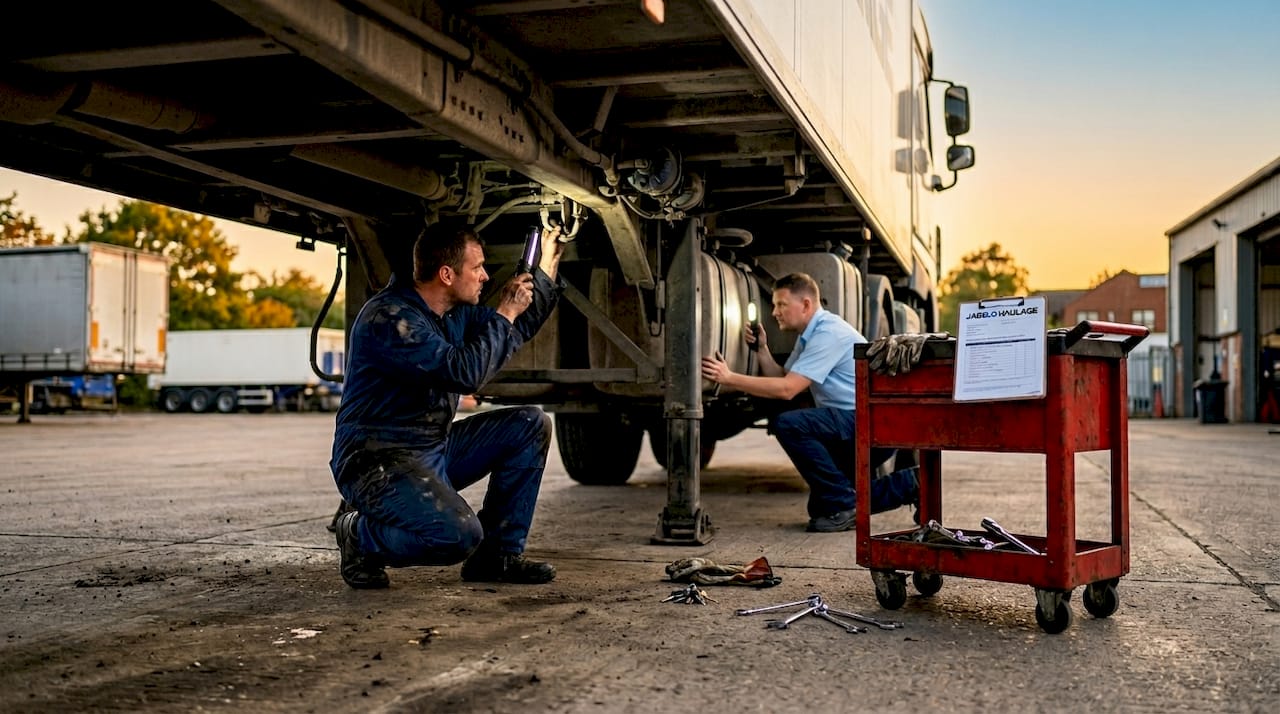
In practice, preventative maintenance means using warranty data, manufacturer aftercare schedules, and telematics-generated alerts to anticipate when components are likely to require attention. Tyres, brake linings, and transmission components all exhibit predictable wear patterns when vehicle usage data is properly tracked. A telematics system that monitors mileage, engine hours, and load cycles gives your maintenance team the information needed to schedule interventions before failures occur, rather than responding to them.
The benefits of preventative maintenance are substantial:
- Reduced frequency of unplanned breakdowns and roadside assistance call-outs
- Lower average repair costs through early-stage component replacement
- Predictable maintenance expenditure that supports accurate budgeting
- Extended vehicle lifespan through consistent servicing discipline
- Fewer delays to customer deliveries caused by vehicle unavailability
Statistic: Maintenance shifting to planned interventions consistently demonstrates lower long-term costs and higher operational uptime compared to reactive approaches across UK haulage operations.
3. Optimise fuel efficiency through data-driven routing and driver behaviour
Fuel remains one of the largest controllable costs in any logistics operation. The good news is that the data needed to reduce it significantly is already available in most modern fleets through onboard telematics. The challenge lies in turning that data into consistent operational change. Combined routing improvements and driver coaching have demonstrated fuel efficiency gains exceeding 20% in fleet operations where both elements are applied consistently.
Route optimisation reduces total distance travelled and eliminates unnecessary empty-mile running, which is particularly relevant in container haulage where repositioning movements can account for a significant proportion of total mileage. Data-driven routing tools identify the most fuel-efficient paths, accounting for road gradients, traffic patterns, and vehicle load characteristics. Paired with GPS fleet tracking technology, operators can monitor planned versus actual routes in real time.
Driver behaviour metrics are equally important. The key indicators to monitor include:
- Speeding above posted limits, which increases fuel consumption disproportionately at higher speeds
- Excessive idling, particularly during loading and unloading operations at port facilities
- Harsh braking and aggressive acceleration, which indicate poor anticipation and increase tyre and fuel costs
- Engine revving above optimal RPM ranges for the load being carried
Pro Tip: Fuel efficiency KPIs collected by telematics are only useful when they are reviewed regularly by managers and communicated directly to drivers. Embedding results into feedback loops rather than leaving them as raw dashboard data is what produces sustainable behavioural change.
Driver incentive programmes tied to fuel performance scores have shown strong results in UK haulage contexts. A monthly league table or bonus structure aligned to telematics KPIs gives drivers a concrete reason to engage with the data rather than ignore it.
4. Implement clear driver behaviour policies linked to compliance and safety
Telematics data alone does not create safer drivers. What creates safer drivers is a clearly articulated policy that defines expected behaviour, explains the rationale behind monitoring, and sets out the consequences of repeated infringements. UK fleet operators are bound by specific legal requirements around speed limits, driver hours under the Working Time Directive, and mandatory rest break obligations under EC Regulation 561/2006. Your driver behaviour policy must reflect these standards explicitly.
Effective driver behaviour management follows a structured approach:
- Define the specific behaviours being monitored and link each one to a legal standard or internal safety objective
- Set telematics alert thresholds that align with UK speed limits and your internal risk policy rather than generic defaults
- Conduct daily tachograph analysis and driver hours monitoring to identify infringements before they accumulate into licence-threatening patterns
- Use incident reports from telematics events as the basis for structured coaching conversations rather than disciplinary actions
- Train drivers on what the monitoring system captures and how the data is used, which reduces resistance and improves buy-in
- Review aggregate driver behaviour data monthly at management level to identify fleet-wide trends requiring policy adjustment
Audit-ready tachograph analysis and active infringement management are critical because UK Traffic Commissioners treat unmanaged tachograph records as evidence of systemic non-compliance. A missed rest break recorded once is an error. Repeated infringements with no management response is a pattern that risks licence curtailment.
You can find practical guidance on monitoring driver behaviour as part of broader sustainability and compliance considerations for UK haulage operators.
5. Leverage fleet management software to consolidate operational data
The best fleet management tools available to UK logistics operators do far more than track vehicle locations. Modern fleet management software features typically include vehicle tracking with real-time positioning, automated maintenance scheduling, fuel management reporting, driver safety monitoring dashboards, and API integration capabilities that allow data to flow between fleet systems and wider transport management platforms.
The consolidation of data across these functions is where real operational gains are made. When vehicle tracking data, maintenance records, fuel consumption figures, and driver behaviour scores are held in separate systems with no connection between them, managers are forced to make decisions based on incomplete information. API integration removes those silos and gives fleet managers a single operational picture.
When evaluating fleet management software, prioritise the following capabilities:
| Feature | Why it matters for UK logistics |
|---|---|
| Real-time vehicle tracking | Supports port timing, customer ETAs, and driver hours compliance |
| Maintenance scheduling | Automates inspection reminders and generates audit-ready records |
| Fuel management reporting | Identifies consumption trends and flags outlier vehicles or drivers |
| Driver behaviour monitoring | Feeds coaching conversations and supports policy enforcement |
| API integration | Connects fleet data with TMS, WMS, and customer portals |
| Tachograph data management | Automates hours analysis and flags infringement patterns |
Selecting software that lacks API integration is a common mistake among growing UK fleets. The short-term cost saving is quickly outweighed by the administrative burden of reconciling data manually across disconnected systems.
6. Apply a cyclical strategic framework to drive ongoing improvement
Individual best practices produce limited results when applied in isolation. What separates high-performing fleets from the rest is the application of a structured management framework that turns fleet data into strategic decisions and translates those decisions into targeted operational changes. The approach advocated by the FEMP fleet management framework provides a useful model, built around three repeating stages: collect, strategise, and implement.
The collect stage requires comprehensive, accurate vehicle and telematics data across the entire fleet. This includes mileage, fuel consumption, maintenance history, driver behaviour scores, and route data. Gaps in data quality at this stage undermine every decision that follows.
The strategise stage involves analysing the collected data against your fleet’s specific operational profile. A container haulage fleet running between Felixstowe and the Midlands has a different mission profile to a regional distribution fleet, and the strategies chosen must reflect that. Successful fuel optimisation begins with quality data collection followed by tailoring reduction initiatives to the fleet’s actual mission rather than applying generic benchmarks.
The implement stage converts strategy into targeted action: route changes, maintenance schedule adjustments, driver training programmes, or fleet right-sizing decisions. Critically, implementation is not the end of the cycle. Progress must be monitored against baseline metrics, and the strategy refined accordingly. This cyclical discipline is what separates fleets that improve continuously from those that make one-off changes and revert to previous patterns.
My perspective on the gap between theory and practice in fleet management
I’ve spent a considerable amount of time working with UK logistics operations of varying sizes, and the pattern I see most consistently is this: managers understand what good fleet management looks like in principle, but the gap between that understanding and the day-to-day reality of their operation is wider than they realise.
The most common failure I observe is treating compliance processes as administrative tasks rather than operational systems. A driver completing a defect report at the end of a shift because it’s required is not the same as a well-designed process that makes defect reporting the natural output of an organised pre-use check routine. The difference between those two things shows up in the quality of the data, and it shows up during Traffic Commissioner reviews.
I’m also sceptical of the assumption that new technology solves management problems. Telematics, fleet software, and GPS tracking systems are genuinely powerful tools, but I’ve seen operations spend significantly on technology and then fail to embed it into management routines. The data sits in dashboards that nobody reviews on a consistent schedule. Drivers receive alerts but no coaching. The system becomes a cost rather than an asset.
What actually works, in my experience, is the combination of clear systems, consistent management attention, and genuine driver engagement. Drivers who understand why monitoring exists and who receive meaningful feedback from it perform better than those who feel surveilled without purpose. That relationship takes time to build, but it is the difference between a telematics system that changes behaviour and one that merely records it.
— Vytautas
How Jhaulage supports UK fleet operators in container logistics
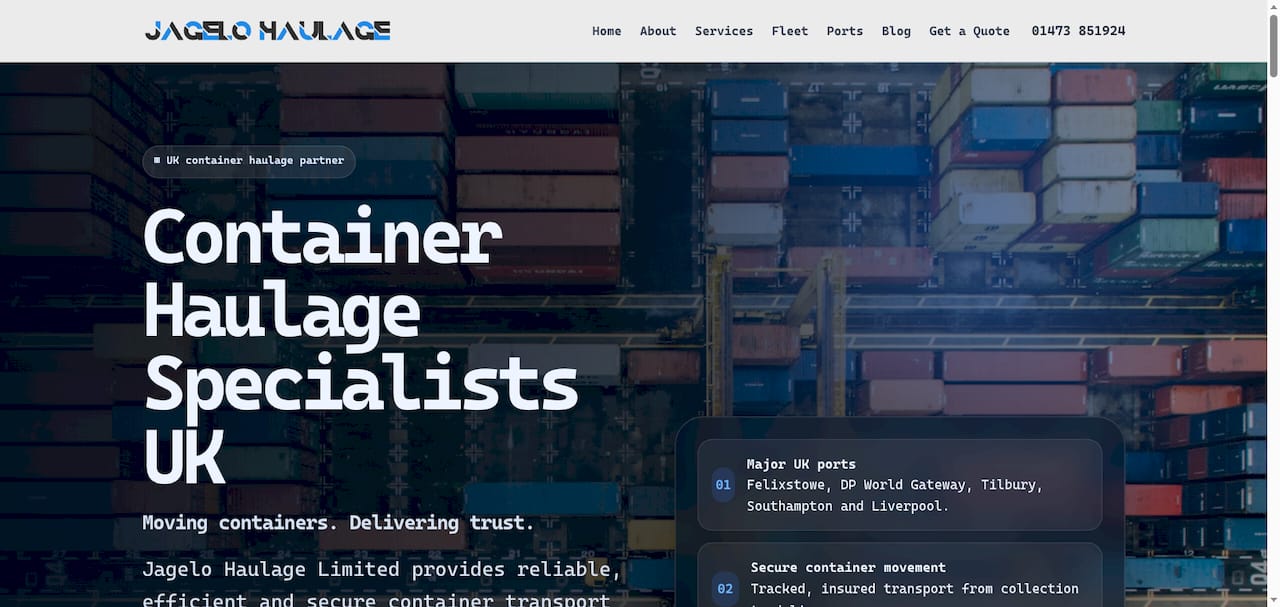
Applying logistics fleet management best practices across a container haulage operation requires both the right systems and the right operational partner. Jhaulage operates a modern fleet of over 40 GPS-tracked trucks and trailers serving major UK ports including Felixstowe, Tilbury, Southampton, and Liverpool, with 24/7 support and full compliance with UK operator licence requirements built into every movement.
For logistics managers seeking a reliable haulage partner with demonstrable compliance credentials and real-time cargo visibility, Jhaulage provides port-to-door container transport that meets the standards your supply chain demands. You can also explore the Jhaulage blog for further guidance on UK container haulage operations, compliance, and logistics management.
FAQ
What are the legal maintenance requirements for UK fleet operators?
UK Standard Operator Licence holders must maintain a documented safety inspection programme with vehicle inspection intervals typically set between every 6 and 13 weeks, determined by vehicle type and operational use. Defect reporting and repair records must be kept in an audit-ready format.
How much can telematics and driver coaching reduce fuel costs?
Combined operational changes including data-driven routing and structured driver coaching have demonstrated fuel efficiency improvements exceeding 20% in fleet operations where both are consistently applied.
What is the most common reason UK fleets fail operator licence reviews?
Operator licence reviews frequently result in enforcement action due to incomplete or inconsistent maintenance and driver compliance records rather than deliberate non-compliance. Formal, well-documented systems are the primary defence.
What should fleet management software include for UK logistics?
Effective fleet management software for UK logistics should include real-time vehicle tracking, automated maintenance scheduling, tachograph data management, driver behaviour monitoring, fuel reporting, and API integration to connect with transport management systems.
How does preventative maintenance differ from reactive maintenance?
Preventative maintenance uses telematics data, mileage records, and manufacturer schedules to plan component replacements and servicing before failures occur. Reactive maintenance responds to breakdowns after they happen, resulting in higher repair costs, unplanned downtime, and greater operational disruption.
Recommended
- How to Organise Efficient Container Delivery Scheduling in 2026 | Jagelo Haulage
- The Professional Guide to Cost-Effective Container Haulage in 2026 | Jagelo Haulage
- UK haulage sustainability practices: a logistics manager’s guide | Jagelo Haulage
- Reliable Container Haulage from Felixstowe: A Guide to Port Logistics | Jagelo Haulage