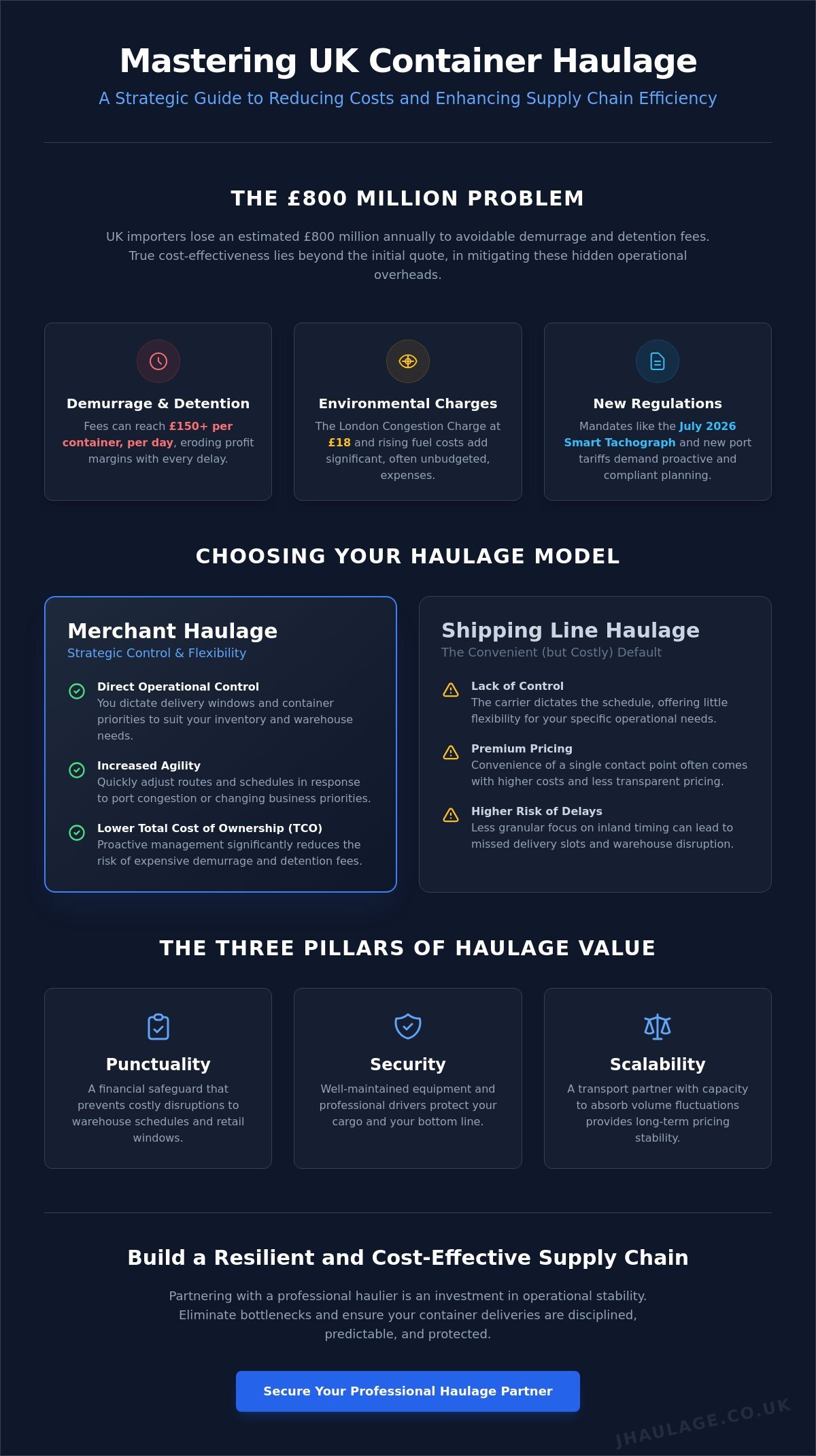
UK importers lose an estimated £800 million annually to demurrage and detention fees, often because of avoidable operational friction. You've likely recognised that securing cost-effective container haulage involves more than just selecting the lowest initial quote. With the London Congestion Charge rising to £18 and the end of the full electric vehicle discount in 2026, operational overheads are under significant pressure. These rising costs, coupled with revised 2026 tariffs at major hubs like the Port of Southampton and London Gateway, make precision planning an operational necessity.
We understand the frustration of unexpected port penalties and the administrative burden of managing unreliable transport links. This guide demonstrates how to reduce logistical overheads and improve supply chain efficiency through strategic container transport planning. You'll learn to manage the latest HGV regulations, such as the July 2026 Smart Tachograph mandate, whilst maintaining predictable transport costs across your merchant haulage operations. We provide a structured framework to eliminate bottlenecks and ensure your container deliveries remain both disciplined and protected.
Key Takeaways
- Identify the core components of cost-effective container haulage by balancing initial pricing with operational security and punctuality.
- Evaluate the functional differences between merchant haulage and shipping line haulage to select the most efficient transport model for your cargo.
- Implement proactive transport planning to eliminate the financial risk of port demurrage and detention charges.
- Utilise route optimisation and consistent fleet performance to mitigate the rising costs of fuel and environmental surcharges.
- Build long-term operational stability by partnering with professional hauliers who follow strict safety and performance protocols.
Defining Cost-Effective Container Haulage in the UK Market
True cost-effective container haulage is defined by the successful integration of three pillars: price, security, and punctuality. Many operators focus solely on the initial quote, yet this approach often ignores the financial risks associated with poor service. A value-driven logistics strategy prioritises functional reliability over the lowest possible price point. This ensures that cargo moves through the national supply chain without friction. In the UK market, where port congestion and regulatory changes are constant, choosing a haulier based on a headline rate alone is a risky strategy. It often leads to supply chain bottlenecks that damage your reputation with end customers.
Professional haulage serves as a critical component of Intermodal freight transport. By utilising standardised containers across ships, trains, and HGVs, businesses reduce handling risks and improve transit speeds. However, the efficiency of this system relies on disciplined execution at the port-to-road stage. Professional management is essential here to protect cargo value. It prevents the physical damage or delays that often plague "cheap" transport providers who lack the necessary infrastructure or professional oversight.
The Core Components of Haulage Value
Reliability remains the most important factor in logistics value. Punctuality is a financial safeguard. If a container arrives late, it disrupts warehouse schedules and retail windows. These downstream costs quickly exceed any savings gained from a low-cost haulier. Security is equally vital. Well-maintained equipment and experienced drivers reduce the likelihood of transit incidents. Secure operations protect your bottom line by ensuring goods arrive in the exact condition they left the port. Finally, scalability ensures that your transport partner can grow with you. Hauliers with established fleets provide better long-term pricing stability because they have the capacity to absorb volume fluctuations without compromising on safety protocols.
Total Cost of Ownership vs. Headline Rates
In the context of port-to-door logistics, the Total Cost of Ownership (TCO) includes every expense from the moment a container hits the quay until it's returned empty. A slightly higher haulage rate often results in a lower TCO by avoiding port penalties. For instance, efficient merchant haulage planning prevents demurrage fees that can reach £150 per day. Transparent pricing structures are vital for corporate clients. They allow for accurate budget forecasting and eliminate the hidden surcharges that often accompany cut-price quotes. By focusing on TCO, businesses can ensure their logistics spend is an investment in stability rather than a recurring operational headache.
Merchant Haulage vs. Shipping Line Haulage: Choosing the Right Model
Selecting the appropriate transport model is a critical decision that impacts both your operational control and your bottom line. Shipping Line Haulage, where the ocean carrier manages the final leg of the journey, is often the default choice for new importers. It provides a single point of contact for the entire transit. However, this convenience often comes at a premium. Carriers frequently lack the granular focus required for precise inland timing, which can lead to inefficiencies at your warehouse or distribution centre. The carrier dictates the schedule, not you.
Merchant haulage offers a strategic alternative. By arranging your own inland container haulage, you gain direct access to the transport provider. The UNCTAD Review of Maritime Transport illustrates how global supply chains are becoming increasingly complex, requiring more responsive land-side operations. Independent hauliers are generally more agile than large shipping lines. They can adjust routes or delivery sequences quickly in response to port congestion or changing warehouse priorities. This level of responsiveness is essential for maintaining cost-effective container haulage in a volatile market.
The Benefits of Merchant Haulage
Control is the primary advantage of the merchant model. You decide the delivery windows and prioritise specific containers based on your inventory needs rather than the carrier’s equipment requirements. Direct communication with a dedicated transport office ensures you receive real-time updates without navigating the automated layers of a global shipping line. This transparency allows for better resource planning at your facility. Businesses moving significant volumes can often negotiate more favourable rates and consolidated billing through a direct partnership. If you're looking to transition to a more controlled model, you can request a merchant haulage quote to identify potential cost savings in your current route network.
When to Stick with Shipping Line Haulage
Shipping Line Haulage remains a viable option for certain business profiles. If your import volumes are low or infrequent, the administrative effort of managing separate transport contracts might outweigh the potential savings. It's a simplified solution for businesses that don't have a dedicated logistics team to oversee daily transport movements. The trade-off is a loss of operational control and a higher vulnerability to carrier-imposed surcharges. Whilst it simplifies the booking process, it rarely provides the same level of long-term value as a professionally managed merchant haulage agreement. Deciding when to switch depends on your growth trajectory and the importance of delivery precision to your operations.
Avoiding the Hidden Costs: Demurrage, Detention, and Delays
Hidden costs often undermine the perceived savings of a low-cost transport quote. UK importers lose an estimated £800 million annually to demurrage and detention fees. Demurrage occurs when a container remains at the port terminal beyond the agreed free period. These daily rates typically range from £75 to £150 per container. Detention charges apply when the empty equipment is not returned to the shipping line within the specified timeframe. Failing to manage these windows effectively can result in thousands of pounds in unforeseen expenses. Professional cost-effective container haulage acts as a financial insurance policy by ensuring containers move precisely within these contractual windows.
The impact of a transport delay extends far beyond the port gates. It creates a ripple effect throughout your entire operation. When a delivery is missed, warehouse staff remain idle whilst production schedules stall. These internal overheads often exceed the cost of the haulage itself. Reliable container deliveries prevent these downstream disruptions. By maintaining a disciplined transport schedule, businesses protect their operational rhythm and avoid the administrative burden of resolving port-related disputes. Strategic planning, as outlined in frameworks like the National Freight Strategic Plan, emphasises that reliability is the foundation of a truly efficient freight system.
Strategies to Minimise Port Penalties
Proactive capacity management is the most effective way to avoid port penalties. You should organise your haulage capacity well before the vessel docks. This allows the transport office to secure vehicle booking system (VBS) slots during peak periods. With DP World ISPS fees at Southampton rising to £30.30 per import laden container in 2026, every movement must be intentional. Constant communication between the haulier and the terminal prevents "lost" slots and ensures containers are cleared before demurrage rates escalate. High-priority cargo requires a disciplined approach to ensure transit occurs immediately upon quay release.
Managing the Empty Return Process
Efficient inland container haulage must prioritise the return of empty equipment. Detention fees accumulate quickly if the return leg is neglected. A "drop and swap" operation is often the most cost-effective method. The driver delivers a laden container and immediately removes an empty one from your site. This maximises vehicle utility and ensures equipment is returned to the shipping line on time. A haulier’s fleet size is a critical factor here. Larger fleets provide the operational flexibility required to manage multiple return legs simultaneously, reducing the risk of equipment-related penalties and protecting your total logistics budget.
Practical Strategies for Optimising Container Transport Efficiency
Operational efficiency is the primary driver of cost-effective container haulage. It requires a disciplined approach to every mile travelled. By reducing transit times and fuel consumption, businesses can stabilise their logistical overheads despite rising external costs. A professional transport strategy prioritises fleet modernisation and route precision. This approach ensures that your containers deliveries remain punctual and protected from unnecessary surcharges. Strategic scheduling also plays a vital role. Moving containers during off-peak windows reduces the time vehicles spend idling in port queues, which directly lowers the operational cost per unit.
A port-centric haulage partner provides a distinct advantage through established terminal relationships. These partners understand the specific operational rhythms of hubs like Southampton or London Gateway. They can navigate the 2026 tariff structures and terminal procedures with greater speed than general hauliers. This expertise allows them to secure priority slots and resolve gate issues immediately. This level of professional oversight ensures that every container movement contributes to your broader strategic outcomes.
Route Optimisation and Fuel Efficiency
Advanced planning tools identify the most efficient paths across the UK road network. These systems integrate real-time traffic data to avoid road hazards and congestion. This is particularly important for managing the London Congestion Charge, which rose to £18 in early 2026. Well-maintained trucks are essential for fuel efficiency. Newer vehicles, designed to meet the 2026 EU Direct Vision Standard requirements, offer better safety and lower fuel consumption. By using modern fleet technology, hauliers provide more reliable service whilst minimising environmental surcharges. This technical capability ensures your cargo moves through the most economical route possible without compromising on security.
In addition to transport efficiency, logistics companies can also improve their green credentials and lower fixed overheads by choosing to explore Solar PV System Installation with a renewable energy specialist like Jelvis for their distribution centres.
Scheduling for Maximum Throughput
Effective scheduling aligns transport movements with your warehouse labour availability. It ensures that containers arrive when your team is ready to unload, preventing costly vehicle standby time. Non-urgent movements should be organised during off-peak hours to bypass peak terminal congestion. This methodical approach improves throughput and maintains a steady flow of goods. For time-critical requirements, integrating same-day delivery protocols ensures that urgent supply chain needs are met with precision. If you require a disciplined transport partner to manage your 2026 logistics, you can request a professional haulage quote to optimise your current schedule.
Why Professional Haulage Partnerships Drive Long-Term Value
Long-term value in logistics is rarely the result of a single transaction. It's built through a strategic partnership that prioritises operational stability. Whilst many businesses focus on individual delivery costs, a disciplined partner looks at the resilience of the entire supply chain. Achieving cost-effective container haulage requires a haulier who understands the high stakes of your cargo movements. This level of security comes from years of following strict protocols and maintaining high standards of functional reliability. It's about moving from a reactive mindset to a proactive, solution-oriented strategy.
Working with an established haulier with over 15 years of experience provides an essential layer of protection for your operations. This experience translates into a deep understanding of UK port dynamics and inland infrastructure. A modern fleet of 40+ vehicles serves as a critical buffer against supply chain shocks. If port congestion or vehicle availability issues arise, a larger fleet provides the necessary capacity to maintain your delivery schedule. Responsive customer support further strengthens this partnership. When logistical challenges occur, having direct access to a professional transport office ensures rapid resolution and clear communication. This rhythmic stability helps build long-term trust.
The Jagelo Haulage Approach to Cost-Effectiveness
Jagelo Haulage prioritises professionally managed operations that anchor the movement of goods in safety and competence. Our approach focuses on providing a reliable link between major UK ports and your inland destinations. We combine extensive merchant haulage expertise with a communication style that values clarity and directness. Every container movement is treated as a strategic outcome. We ensure that your logistics framework remains steady and predictable, mirroring the methodical nature of our physical operations. This consistency is what defines our role as a strategic partner rather than a simple service provider.
Securing Your Logistics for the Future
Corporate risk management requires transport that's fully insured and compliant with the latest safety standards. Choosing a specialist haulier reduces the administrative burden on your internal team. You don't need to micromanage every booking when you work with a partner who understands the fundamentals of the sector. This allows your team to focus on broader business goals whilst we manage the complexities of port-to-door transport. A disciplined partner understands that your success depends on the safety and efficiency of the operation. To secure your supply chain with a dependable partner, enquire about our cost-effective container haulage solutions today.
Securing Your Supply Chain Stability for 2026
Achieving cost-effective container haulage requires a transition from reactive bookings to disciplined transport planning. You've identified how precise scheduling and merchant haulage control eliminate the financial risk of port-related penalties. True value resides in the balance of functional reliability and operational security. By prioritising a partnership with an established haulier, you protect your cargo from the volatility of the 2026 logistics market. This strategic approach ensures your supply chain remains resilient against rising operational overheads.
Jagelo Haulage delivers this stability through over 15 years of industry-leading expertise in port logistics. We operate a modern fleet of 40+ trucks and trailers to ensure consistent national coverage and cargo protection. Our team specialises in major UK hubs including Felixstowe and Southampton, providing the technical knowledge required to navigate terminal congestion efficiently. Contact Jagelo Haulage for a professional container transport quote to secure your inland deliveries. We look forward to strengthening your logistical framework.
Frequently Asked Questions
What is the most cost-effective way to transport a shipping container in the UK?
The most cost-effective container haulage is achieved by using merchant haulage to gain direct control over delivery windows. This model allows you to prioritise specific containers and avoid the high storage fees associated with carrier-managed transport. By organising transport through a dedicated partner, you eliminate the operational friction that often leads to port penalties. Precise planning ensures that every movement is intentional and aligned with your warehouse capacity.
How much does container haulage typically cost per mile?
Haulage rates are calculated based on a combination of distance, fuel prices, and port-specific surcharges. Factors such as the 2026 London Congestion Charge of £18 and the end of electric vehicle discounts influence the final operational cost. You should check current market indices or request a specific quote to understand the total cost of ownership for your specific route. Professional hauliers provide transparent structures that account for these variables without hidden fees.
What is the difference between merchant haulage and shipping line haulage?
Merchant haulage involves the cargo owner arranging their own inland transport, whilst shipping line haulage is managed by the ocean carrier. The merchant model offers greater flexibility and direct communication with the transport office for real-time updates. Shipping line haulage is often simpler to book but typically results in less control over delivery timing and a higher risk of carrier-imposed detention fees.
How can I avoid demurrage and detention charges at UK ports?
Avoiding these charges requires pre-booking haulage capacity and ensuring containers are cleared before the port's free period expires. You should implement a "drop and swap" strategy to return empty equipment to the shipping line within the detention window. Efficient cost-effective container haulage depends on constant communication between your haulier and the port terminal to secure vehicle booking slots before demurrage rates escalate.
Does the size of the haulier’s fleet affect the cost of transport?
Fleet size significantly influences a haulier's ability to provide pricing stability and operational reliability. A haulier with a fleet of 40+ vehicles can better absorb supply chain shocks and manage equipment returns simultaneously. This scale provides a buffer that protects your business from delays caused by vehicle shortages or port congestion. Larger operations often deliver better value by maintaining higher vehicle utility across multiple routes.
What are the benefits of same-day container delivery for my business?
Same-day delivery provides a critical link for time-sensitive supply chains and urgent production requirements. It ensures that cargo moves immediately upon quay release, preventing assembly line stoppages or retail stockouts. This service level reduces the administrative burden of managing backlog and helps you meet strict customer deadlines. It's a disciplined solution for high-priority goods that require immediate inland transit.
How does route optimisation help in reducing haulage rates?
Route optimisation identifies the most efficient paths to reduce fuel consumption and transit times across the UK. By integrating real-time traffic data, hauliers avoid road hazards and high-cost zones such as the expanded London Congestion Charge area. This methodical approach lowers the operational overheads per trip. Efficient routing ensures that your cargo arrives safely whilst minimising the impact of environmental surcharges and fuel price volatility.
Is it cheaper to use road haulage or rail for inland container transport?
Road haulage remains the most flexible option for door-to-door container deliveries because it eliminates the need for additional handling. Whilst rail can be efficient for long-distance transport between major terminals, it still requires a road haulier for the final leg. Road transport allows for precise scheduling that aligns with specific warehouse opening hours. This flexibility often makes road the more cost-effective choice for time-critical inland movements.