More on refrigerated containers from Jagelo Haulage
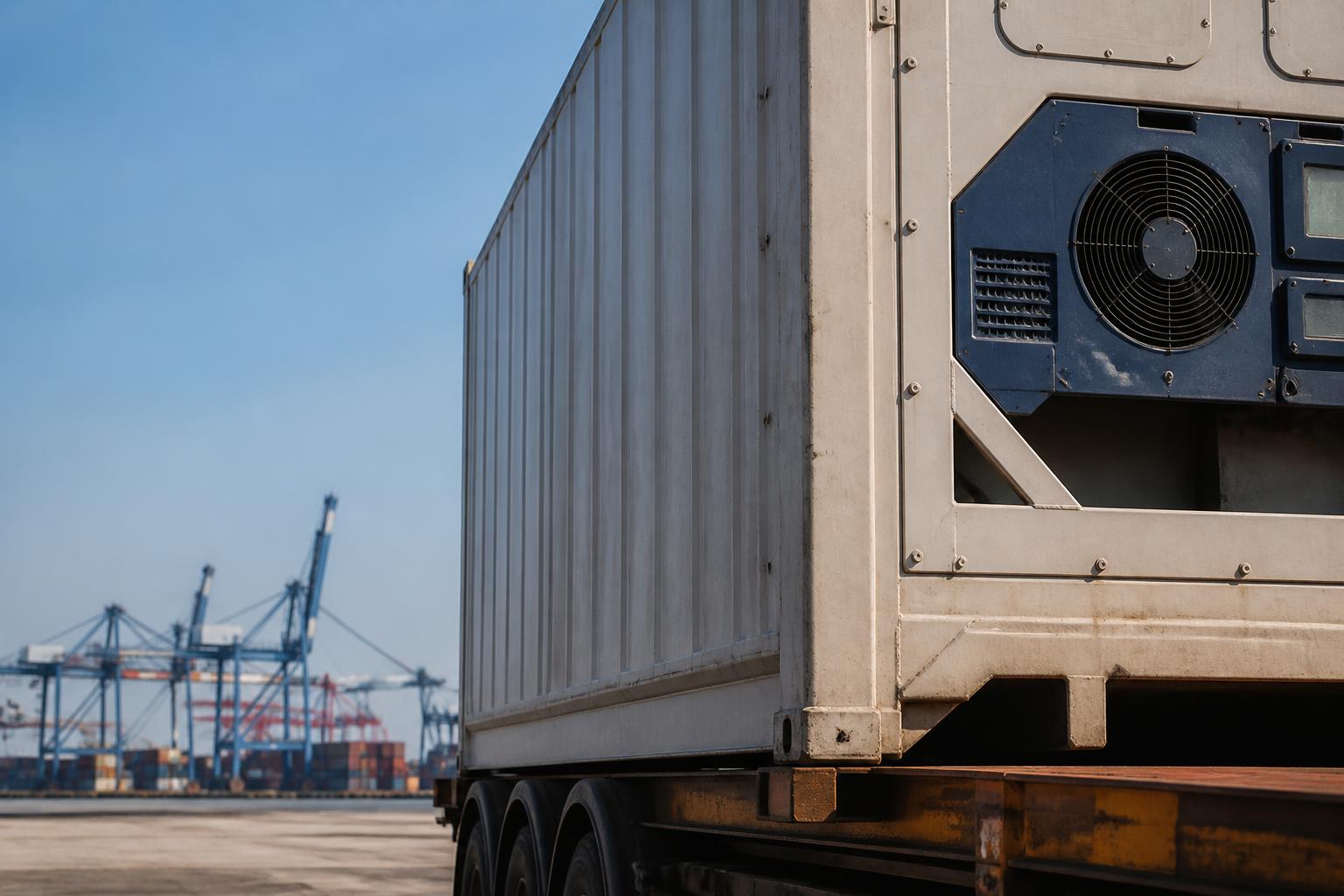
If you want to avoid avoidable quay rent, storage, wasted runs and last minute premium haulage, choose on operating discipline, not on broad claims about service. A reefer move is not just a standard port collection with a temperature set point. The haulier needs to work the booking around release status, customs position, line free time, port slot availability, delivery restrictions, trailer suitability and the real risk of a box not being collectable when the driver arrives.
That is what we plan for every day at Jagelo Haulage Limited. We collect from Felixstowe, London Gateway, Tilbury, Purfleet, Southampton and Liverpool, mainly on merchant haulage instructions from importers and forwarders who want control of the inland leg. For a Refrigerated Container, the right question is not simply who can pull the box. It is who will spot early where extra port cost is likely to start, book around it, and tell you in time to change the plan.
What matters most when comparing a reefer container haulier
For reefer work, the first comparison point is whether the haulier is genuinely set up for container operations, not just general road transport. That means experience with port systems, shipping line release procedures, customs status checks, VBS booking, driver compliance at the terminals, and planning around line free time. A good operator should be able to explain its collection process in those terms without reverting to generic promises.
The second point is whether the haulier understands that a Refrigerated Container often carries cargo with less tolerance for delay at the delivery end. Even where the unit remains powered in port, inland timing still matters. Delivery sites may have fixed intake windows, hygiene controls, product checks, or labour booked against arrival. If collection slips because nobody checked release, customs or slot availability properly, the cost is not only at the port.
Ask how the haulier handles exceptions. A useful answer is operational, not sales-led. For example:
- Do they check whether the container is actually released before booking?
- Do they verify whether customs is clear, under documentary check, or held for examination?
- Do they review line free time before proposing a collection date?
- Do they flag weight or delivery access issues before the slot is booked?
- Do they have enough own vehicles to cover routine volume, rather than relying entirely on the spot market?
We run 40 vehicles and 40 trailers of our own under operator licence OF2023521, with vetted partner hauliers on their own operator licences for overflow and peak demand. That matters because reefer collections are often less forgiving of missed timing than dry FCL. You need a haulier with enough direct control to recover when a port plan changes.
Another useful comparison point is whether the operator is comfortable with the cargo types commonly moved in reefer equipment. In our case, we are an upper tier waste carrier and dealer, CBDU471791, and we are registered with APHA to carry Category 3 animal by-products, animal feed in shipping containers, quay to premises, U1433815/TRANS. If your traffic includes food related or regulated products, these details are not peripheral. They are part of whether the move can proceed cleanly.
Port booking, free time and where extra cost usually starts
Most unnecessary cost on reefer collections starts before the truck leaves the yard. The common pattern is simple. Someone assumes the box is collectable, books too late or too early, misses a hold, or leaves the move until the last free day when the available slot no longer matches the delivery window.
At the port end, slot booking is a live operational task. Felixstowe uses CARGOES VBS. Other ports have their own booking workflows and cut offs. A haulier should be working inside those systems every day, because the practical question is not only whether a slot exists, but whether a slot exists that still allows compliant driver hours, delivery timing and any same day return requirement.
Free time needs separate attention. Shipping line free time is not a general estimate. It is the line’s allowed period before demurrage or detention starts under the line’s own terms. The UK position is not harmonised in the way some people assume from broader European trade practice. Free time, release timing, and charge triggers depend on the carrier and the port process involved. For that reason, we always want the actual release and line details, not an assumption based on the last shipment.
Release checks come before the booking is treated as secure. A container can appear ready from one angle but still be blocked by missing line release, customs intervention, unpaid charges, or an administrative mismatch on the collection reference. If nobody checks those points before the port slot is taken, the result is often a failed collection and immediate extra cost exposure.
Customs holds are another regular source of delay. Inbound status may be clear, selected for documentary review, or held for inspection. The difference matters because it changes whether the box is collectable at all, and if not, when it might become collectable. A good haulier will not simply say the port refused the move after the event. They will tell you early that the collection is at risk and that you may need to rebook before free time expires.
The same applies to terminal and line cut off timing. If release arrives late in the day, the practical collection window may move even though, on paper, the container is now available. We plan reefer collections around what can actually be executed, not around the first theoretical date on the screen.
If your traffic is regularly through Felixstowe, our guidance on choosing Felixstowe container delivery without extra port cost sets out the same principle in more detail. For urgent quay collections, our notes on fast container collection from Felixstowe when timing matters are also relevant.
Coverage and equipment for UK reefer container work
Coverage is often described too loosely. “UK-wide” tells you very little if your regular traffic is split across Felixstowe, London Gateway, Tilbury, Purfleet, Southampton and Liverpool, and you need predictable lead times from each. Real coverage means the haulier is already collecting from those ports, understands the booking systems and local pinch points, and can price and schedule on known operating conditions rather than one-off guesswork.
That matters because these gateways behave differently in practice. Felixstowe volumes and VBS pressure can make timing discipline critical. London Gateway and Tilbury may suit some inland routes better depending on consignee location, but the booking and delivery planning still need to reflect the actual terminal workflow. Purfleet traffic may involve different patterns again. Southampton and Liverpool both require proper distance planning for inland delivery and for any same day expectation. None of that is solved by saying “we cover the whole country”.
For reefer work, ask what equipment the haulier routinely moves and whether there are any restrictions by size, gross weight or delivery point. The practical minimum is clarity on:
- 20ft ISO Container moves
- 40ft ISO Container moves
- 45ft ISO Container moves
- likely gross weight range
- whether the delivery point can accept the vehicle and trailer combination
- whether the container needs to remain on wheels for unloading or can be tipped off promptly
ISO containers of different sizes create different planning issues. A 20ft ISO Container often raises the weight question first. A 40ft ISO Container may be straightforward on weight but still problematic on site access. A 45ft ISO Container can create turning, bay and overhang concerns at older premises or tight RDC layouts. Reefer traffic adds the need to line up delivery timing with receiving readiness.
Weight should be discussed early. If the box is close to legal road limits, the route, tractor unit, trailer specification and delivery location all need checking before the booking is fixed. If you regularly receive heavy food grade imports, it is worth reading our piece on moving overweight containers without port delays.
Coverage also needs to mean capacity through peaks. We have moved more than 75,000 containers since 2019, about 13,000 a year, using our own fleet backed by vetted partners when volume spikes. For a forwarder or importer, that matters more than a map with pins on it. You need to know whether the haulier can still cover the job when several boxes all turn green on the same day.
Merchant haulage versus a line-arranged move
For many importers and forwarders, merchant haulage is the better fit because it gives direct control over the inland move. You choose the haulier, you receive the operational updates directly, and you can decide quickly how to respond if a release, hold or delivery issue changes the plan.
With a carrier-arranged inland leg, communication can be more layered. That does not mean it is always wrong, but it often means the consignee or forwarder has less visibility of the actual road plan and less influence over exception handling. If the box is urgent, temperature sensitive, tied to labour booking, or likely to need a delivery adjustment at short notice, that loss of control can be expensive.
For reefer traffic, merchant haulage is often preferred because the importer or forwarder wants one conversation about release, slot, ETA and delivery restrictions, rather than separate conversations through the line and then through the line’s nominated carrier. When there is a customs hold, a late release, or a missed warehouse intake, direct control becomes more valuable.
This is the model we mainly work on. Importers and forwarders book us directly for merchant haulage, and we plan the collection against line free time, terminal booking availability and delivery constraints. That gives you a cleaner route for problem solving. If the box is not collectable, we can tell you what is blocking it. If the slot has to move, we can discuss the next workable option with the delivery site while there is still time to avoid further cost.
That said, the right choice depends on what you need to control. If the line-arranged move already fits your process and you do not need direct oversight, it may be adequate. If you need a UK haulier for reefer containers who will work directly with your team on exceptions, merchant haulage is usually the more practical structure.
Liability, subcontracting and how to compare risk properly
One of the easiest mistakes in haulage procurement is to compare rates without comparing freight liability. For reefer and other higher value cargo, that can leave a large gap between the cargo value and the haulier’s contractual exposure.
Do not assume all hauliers carry the same limit. Under standard RHA terms, the limit is often lower than shippers expect. Our freight liability cover is £6,500 per tonne under RHA 2024 conditions, which is five times the RHA standard of £1,300. The same limit applies on subcontracted loads, and higher cover up to £10,000 per tonne is available by arrangement for high value freight.
That is the right way to compare risk, by asking specific questions:
- What terms apply, exactly?
- What is the freight liability limit per tonne?
- Is the same limit maintained on subcontracted work?
- Are there cargo exclusions or conditions that matter for reefer traffic?
- Can a higher limit be arranged before movement if the cargo value requires it?
Subcontracting itself is not the problem. Poorly controlled subcontracting is the problem. In container haulage, sensible use of vetted partners is normal, especially around peaks, but the customer should know whether partner carriers operate on their own licences, whether the booking stays under the lead haulier’s control, and whether the same liability terms apply.
Our position is straightforward. We use vetted partner hauliers on their own operator licences when extra volume requires it, and subcontracted loads carry the same freight liability limit as our own fleet movements. That consistency matters. It means the risk profile does not silently change because the load moved on a peak day.
For higher value reefer cargo, agree the liability point before the move, not after a problem. If the cargo value needs escalation, arrange it in the booking stage so the terms match the exposure.
What a good reefer haulage brief should include before booking
A clean reefer collection starts with a complete brief. Most avoidable delay comes from missing one of the basics and discovering it after the slot is booked.
Before we book, we want the following:
- port of collection, such as Felixstowe, London Gateway, Tilbury, Purfleet, Southampton or Liverpool
- container number
- size and type, whether 20ft ISO Container, 40ft ISO Container or 45ft ISO Container
- whether it is FCL or, if relevant to the movement planning, connected with an LCL process before or after
- shipping line
- release status and collection reference
- customs status, including whether clear, held, under check, or pending
- last free day and any other line timing that affects cost
- gross weight
- commodity description
- whether the cargo falls under any APHA or related movement requirements
- delivery postcode and full site name
- site access restrictions, including narrow approach roads, bay booking, height limits, waiting time rules, or whether a 45ft unit can enter and turn
- required delivery date and time window
- whether the container must remain on wheels for unloading
- contact details for the delivery site
- any special instruction on seals, paperwork or POD return
If weight is uncertain, say so early. If the delivery site has a tight bay booking system, say so early. If the release is expected but not yet live, say so early. Good planning depends more on accurate constraints than on optimistic timing.
For some shipments, additional details help. If the consignee works intake by pallet count, carton count or CBM allocation, include that if it affects unloading preparation. If there is a warehouse rule on late arrivals, or a booking reference needed before the truck is accepted, include it in the first brief rather than after the collection is under way.
A good haulier should then turn that information into a practical plan. That means checking collectability, booking the port slot, matching the collection to free time and delivery readiness, and warning you early if the move is at risk. If your traffic regularly comes inland from Essex terminals, our article on moving containers from London Gateway to the Midlands may also help with route and planning considerations.
Choosing the right haulier for reefer work is mostly about avoiding the costs that start when nobody owns the detail. Release, customs, free time, slot booking, weight, site access and liability all need to be checked before the truck is committed. That is the difference between a routine collection and a container that starts charging while everyone works out what was missed.
At Jagelo Haulage Limited, that is the work we do. We collect reefer and other container traffic from the main UK ports, plan it as merchant haulage, and tell customers early when a box is at risk of delay or extra port cost. If you want the inland leg managed by a team that works in port systems every day and plans around the real constraints of Refrigerated Container movements, we are ready to take the brief.
What is the main difference between a general container haulier and one suitable for reefer work?
For reefer work, the key difference is operational control. You need a haulier that checks release and customs status, books the port slot, plans around free time and flags risk early if the box may miss collection.
Does Felixstowe still use VBS for container collections?
No. At Felixstowe, collections are booked on the Container Booking System (CBS). CBS replaced the Vehicle Booking System in January 2025.
Why does merchant haulage often suit importers and forwarders better?
merchant haulage usually gives the importer or forwarder more control over collection timing, delivery planning and communication. That matters when release, customs status or free time changes need a quick decision.
What liability should I check before booking a reefer container haulier?
Check the haulier’s freight liability limit, the terms it sits under and whether the same limit applies to subcontracted loads. If the cargo value is high, ask whether a higher limit is available by arrangement.
What shipment details should be ready before asking for a quote?
Have the port, container size, collection reference, release position, customs status, delivery postcode, cargo type, gross weight and any site restrictions ready. For any controlled cargo, send the exact handling details early.