Part of our guide to container haulage from Felixstowe
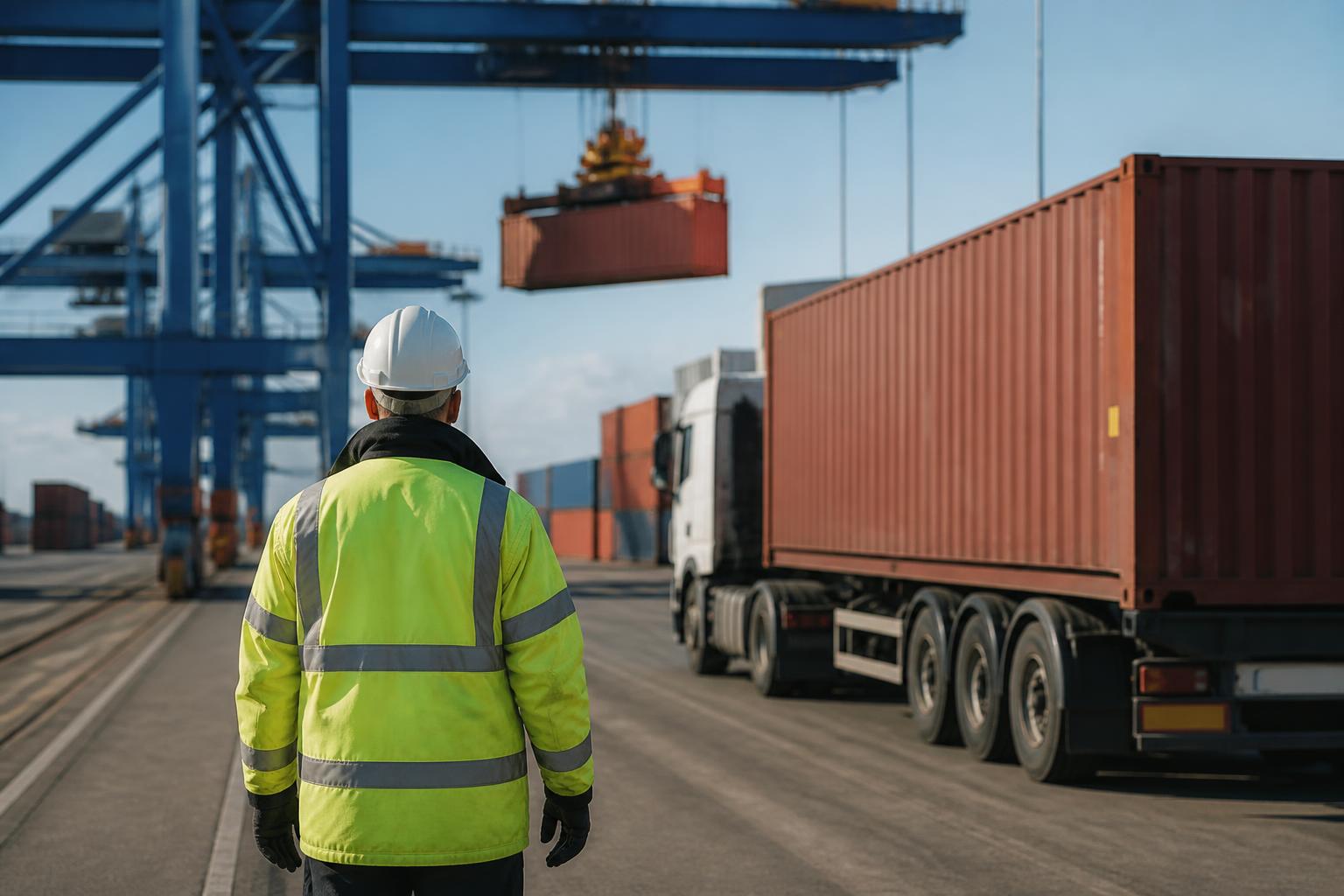
If you want a Felixstowe container delivery in the UK without avoidable port cost, the main decision is who controls the move. The cheapest-looking option on paper is not always the one that gives you the best result once free time, booking windows, line holds and failed collections are taken into account. In practice, control over the port booking, the release position and the delivery slot at the receiving end is what prevents demurrage, wasted driver time and missed collections.
For most importers and forwarders, that points to merchant haulage when timing matters and when the delivery needs to be planned around the real port position rather than a generic line instruction. We handle Felixstowe collections this way every day, booking the slot, checking the release and calling out risks early, so the inland move is planned against what the box is actually doing, not what it was expected to do.
Merchant haulage or line-arranged delivery: which gives you more control?
There are two common ways to move an import container inland from Felixstowe. One is merchant haulage, where you or your forwarder appoint us directly. The other is line-arranged delivery, where the shipping line controls the inland leg through its own nominated network.
The difference is not just commercial. It affects who can make decisions when the job moves off plan.
With merchant haulage, we can usually work directly from the live delivery requirement. That means checking whether the container is released, whether customs is clear, whether a port booking is available, and whether the delivery point can actually receive the box when the vehicle arrives. If there is a problem, we can normally deal with the importer, forwarder or customs agent straight away. That shortens the chain and gives you a better chance of collecting inside free time.
With line-arranged delivery, the shipping line keeps more of the operational control. That can suit straightforward shipments where the inland leg is routine and timing is flexible. It is less useful when the delivery has narrow receiving hours, a storage or production dependency, or a release position that may change late. If the line’s haulier cannot collect when you need, or if the line’s internal process delays the booking, you may have less room to intervene.
Control matters most when the shipment is any of the following:
- close to the end of line free time
- likely to be customs checked or held pending clearance
- delivering to a site with strict booking slots
- a 45ft ISO Container or specialist unit needing the right trailer and route planning
- a time-sensitive FCL arrival linked to stock availability
- a job where a failed collection would create demurrage or storage exposure
For many of our customers, the reason for choosing direct Felixstowe port container delivery in the UK is simple. They want the haulier handling the road move to also manage the practical collection steps, not wait for instructions to filter through several parties first.
What actually changes the cost of a Felixstowe delivery
The total cost of a Felixstowe delivery is set by operations, not just mileage. Distance matters, but it is only one part of the job.
The first cost driver is free time. If the container is not collected and returned within the relevant line allowance, demurrage can start. Depending on the movement, detention may also become relevant once the box is off dock. In the UK, these charges come from the shipping line tariff and the shipment terms, not from a standard national rule, so the practical answer is always to plan to the actual free time on that box.
The second is waiting risk. A collection that looks simple can become expensive if the vehicle arrives and the release is not live, customs is not cleared, or the port booking does not line up with the container’s availability. The same applies at the delivery end. If the consignee cannot tip or receive the unit, driver and vehicle time is lost and the container may need to be held or rebooked.
The third is inland distance and route profile. A short Suffolk delivery is a different job from a long run into Scotland or the South West. Distance affects fuel, driving hours, planning, and whether the move can be completed in one shift or needs a different vehicle schedule. Congestion risk around the port corridor and the destination area also matters.
The fourth is container type. A 20ft ISO Container, 40ft ISO Container and 45ft ISO Container do not create the same planning requirement. Weight distribution, delivery site access, and trailer availability all change by unit type. A heavy 20ft import may need a different approach from a light 40ft, even if both are going to the same postcode. If weight is tight, axle planning matters before the vehicle even enters the port. We cover that in more detail in our guide to moving overweight containers without port delays.
The fifth is failed collections and abortive moves. These are among the most avoidable costs in container haulage. Common causes include:
- release not in place
- customs entry not accepted or selected for intervention
- line hold still active
- wrong or incomplete collection reference
- no valid port booking in CBS
- consignee not ready to receive
- site restrictions not disclosed in advance
Container type and cargo status can also add cost. A Refrigerated Container may need genset planning or temperature management considerations depending on the exact movement. Waste movements, APHA-related cargo and high-value freight all need checks before booking, not after the vehicle is on the road.
If you want a fuller breakdown of the operational points that affect price, our article on what changes the cost of Felixstowe container haulage sets them out in more detail.
How port booking and release handling affect collection success
A Felixstowe collection succeeds when four things line up at the same time. The container must be released by the line, customs must permit movement, the port booking must be secured, and the driver must arrive with the right collection details for the correct box.
At Felixstowe, port access for container collection is managed through the Container Booking System, commonly referred to as CBS. In day-to-day language, many operators also refer to the booking environment as CARGOES VBS. Whatever term is being used in the traffic office, the practical point is the same. The collection needs a valid booking in the system, for the right time, against a container that is actually collectable.
That means release handling is not an admin extra. It is part of whether the job can happen.
Before we commit a collection, we need to know that the line release is in place or due to be in place in time for the booked slot. If the release is delayed, the booking may need to move. If customs clearance is not complete, the box may still be blocked. If there is a shipping line hold, whether for documentation, charges or another operational reason, the container may show in the port but still not be available to leave.
The same applies to customs status. In the UK, customs release is governed by UK systems and procedures, not EU customs processes. Since the UK is outside the EU customs union, import clearance for Great Britain needs to be assessed on the actual UK entry position for that shipment. A box that has physically arrived is not automatically ready for collection. If the declaration is not accepted, or if the consignment is selected for checks, the road move has to follow that reality.
Where collections fail, it is often because one of these points was assumed rather than checked:
- the line has issued arrival information, but not the final release
- customs documents were submitted, but not yet cleared
- the booking was requested, but no CBS slot was confirmed
- a hold was lifted on one system, but not yet reflected where needed for collection
- the collection reference or container number was wrong
This is why early warning matters. If a box is at risk, it is better to say so before the free time clock tightens. Our customers do not need a generic update. They need to know whether the container can be collected as planned, and if not, what the blocker is.
If timing is tight, our guide to fast container collection from Felixstowe when timing matters covers the practical steps that make the difference.
Comparing hauliers on coverage, equipment and communication
When comparing hauliers for Felixstowe work, start with what they can actually control and what fleet they are running, not just whether they say they cover the port.
First, check port coverage. If you regularly route containers through more than one UK gateway, it helps to work with a haulier that also collects from London Gateway, Tilbury, Purfleet, Southampton and Liverpool. That gives you consistency across your import programme and reduces the need to brief different operators on the same delivery rules.
Second, check what container formats they handle as standard. A haulier should be comfortable with the normal ISO containers used in deep sea and short sea work, including 20ft ISO Container, 40ft ISO Container and 45ft ISO Container movements. If your traffic includes specialist units, ask directly how often they handle them and what pre-checks they require.
Third, look at fleet capacity and whether the operator is relying entirely on subcontract. There is nothing wrong with using partner hauliers for overflow, but you should know whether the company has its own vehicles, its own traffic control and its own operator licence. That affects resilience when volumes rise or when there are multiple urgent boxes to collect on the same day.
Fourth, ask how they communicate risk. Good container haulage is not just turning up when everything is already in order. It is identifying the jobs that may fail and saying so early enough for the importer or forwarder to act. That means flagging at-risk boxes before the last day of free time, not after a missed collection.
Fifth, check cargo liability and terms. Standard RHA conditions in the UK often provide a lower default limit than customers expect. If the cargo value is material, ask what freight liability cover is in place and whether a higher limit is available by arrangement.
Finally, look at how they handle both FCL and the onward implications of LCL-related timelines. Even where the road move itself is straightforward, a delay can affect unpack plans, warehouse labour and stock booking. In sectors where inventory is measured tightly, even a modest number of CBM arriving late can create a larger cost further down the chain.
When a Felixstowe job needs more than a basic road move
Some Felixstowe jobs need checks that go beyond a standard import collection and delivery. If those checks are left until after booking, the risk of delay rises quickly.
Refrigerated Container work is the first obvious example. Before booking, we need to know whether the unit is moving as a standard road leg or whether any active temperature support is required during the inland movement. Delivery point readiness matters as well. If the site cannot receive promptly, the operational implications for a reefer are different from those for a dry box.
Waste movements need their own compliance check. In the UK, the haulier carrying controlled waste must hold the right registration. The cargo description and movement details need to be clear before the collection is planned, especially where the load status affects where and how it can be delivered.
APHA-related cargo also needs checking in advance. That includes certain animal by-products and animal feed movements in containers. The relevant UK requirements are not just a matter of turning up at the port with a booking. The shipment may need the correct destination approvals, paperwork and movement conditions before it can be handled as planned.
Higher-value freight needs a separate conversation as well. If the cargo value exceeds the normal liability expectation, the right freight liability arrangement should be agreed before the move. Security instructions, route planning and delivery protocol may also need tightening, depending on the goods and consignee.
Other examples where we would want details before confirming include:
- overweight or axle-sensitive loads
- difficult delivery sites with restricted access
- timed production deliveries
- containers requiring same-day quay to premises planning
- shipments where customs inspection risk is already known
The point is straightforward. Not every container is a basic road move, even if it is still a standard port collection on paper.
How Jagelo Haulage Limited fits a Felixstowe delivery requirement
We are based at Bridge Farm, Woolpit, Suffolk, IP30 9PQ, around 35 miles by road from Felixstowe, and we collect containers from Felixstowe for delivery across Great Britain. Most of that work is merchant haulage booked directly by importers and freight forwarders, which suits customers who want direct control over collection timing, delivery planning and port cost risk.
Jagelo Haulage Limited was founded in 2019, and the people running the business have worked in container haulage since 2015. We run 40 vehicles and 40 trailers of our own under operator licence OF2023521, and we manage our logistics using Haulier.AI. Where volume requires it, we also use vetted partner hauliers operating on their own licences. Since 2019 we have moved more than 75,000 containers, around 13,000 a year.
For customers comparing cover and compliance, we carry freight liability at £6,500 per tonne under RHA 2024 conditions, with the same limit applying to subcontracted loads. That is five times the usual RHA standard level of £1,300. For higher-value freight, up to £10,000 per tonne is available by arrangement. We are also an upper tier waste carrier and dealer, registration CBDU471791, and we are registered with APHA to carry Category 3 animal by-products and animal feed in shipping containers, quay to premises, under U1433815/TRANS.
If you need a haulier for Felixstowe port container delivery in the UK, and you want the booking, release handling and delivery planning managed on a practical basis, our guide to choosing a Felixstowe container haulier fast is a useful next step. If your shipment is already time-critical, our article on urgent container haulage from Felixstowe without delays sets out what we need to act quickly.
What is the difference between merchant haulage and line haulage from Felixstowe?
With merchant haulage, the importer or forwarder books the haulier directly and controls the inland move. With line-arranged delivery, the shipping line controls the haulage. Merchant haulage usually gives clearer control over cost, timing and communication.
Does Felixstowe still use VBS for container collections?
No. At Felixstowe, collections are booked on the Container Booking System, or CBS. It replaced the Vehicle Booking System in January 2025.
What should I check before booking a Felixstowe container delivery?
Check that the container has a valid release, customs clearance is in place, the shipping line free time is understood, and the haulier can secure the CBS booking needed for collection.
Can one haulier cover Felixstowe and other UK container ports?
Yes, some operators cover multiple ports. Jagelo Haulage Limited collects from Felixstowe, London Gateway, Tilbury, Purfleet, Southampton and Liverpool for deliveries within Great Britain.
Why does freight liability matter on container haulage?
It sets the haulier’s liability limit if cargo is lost or damaged under the agreed conditions. Jagelo Haulage Limited provides freight liability of £6,500 per tonne under RHA 2024 conditions, with up to £10,000 per tonne by arrangement.