Part of our guide to container haulage from Felixstowe
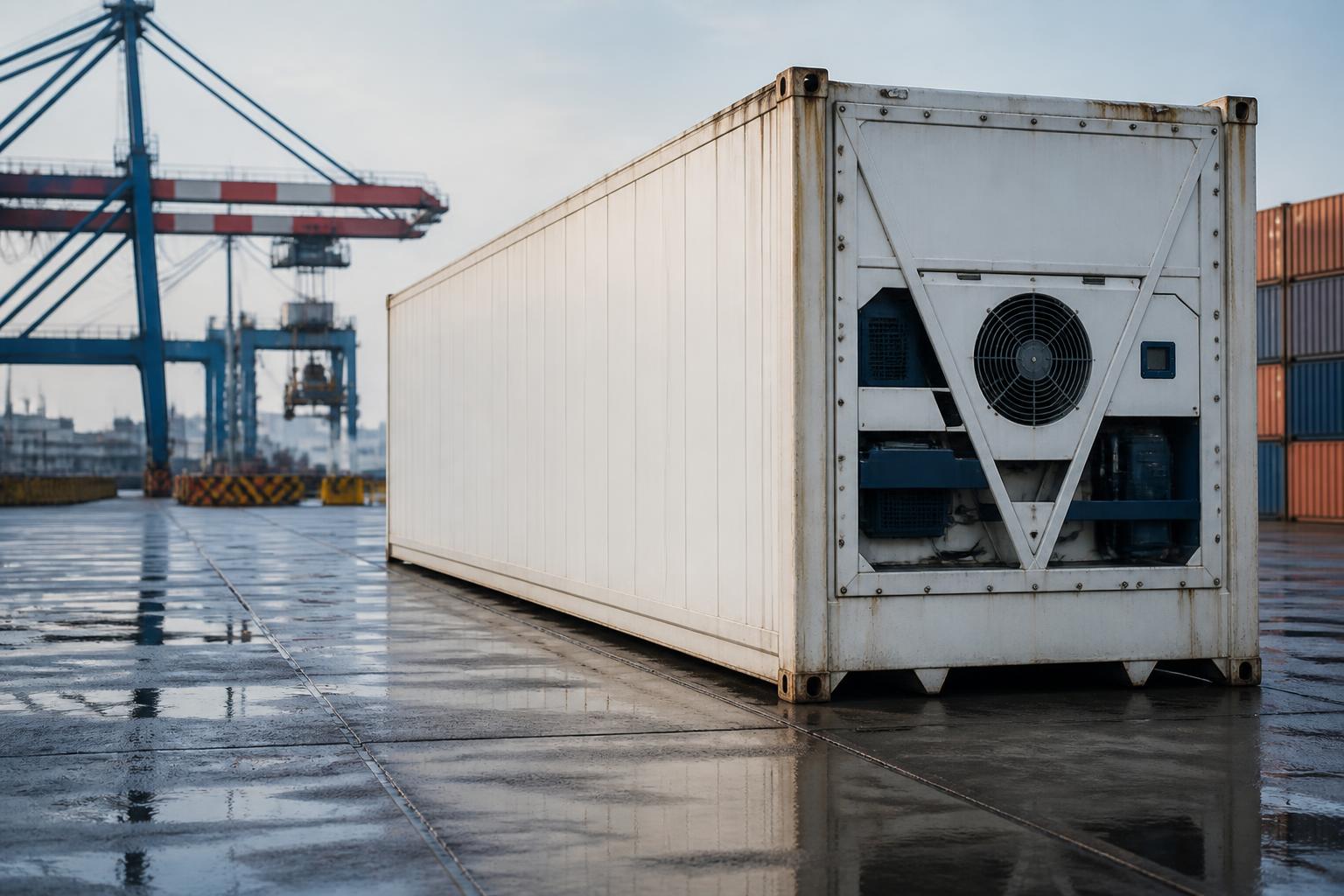
If you are moving a Refrigerated Container from Felixstowe to a depot, most avoidable port cost comes from one of four things: the box is not actually clear to collect, the slot is booked too late for the line’s free time, the receiving depot is not ready to accept it, or the haulier only finds out about a problem when the driver is already at the port. Reefer work is less forgiving than a standard dry box move because there are more parties involved, tighter timing, and a real risk of delivery refusal if temperatures, product status or depot booking details do not line up.
At Jagelo Haulage Limited, we handle this as merchant haulage, with the port booking, release checks and delivery planning done before the driver is committed. For importers and forwarders, that is what keeps a routine quay to depot move from turning into demurrage, failed booking charges, storage pressure or a wasted journey.
What reefer container haulage from Felixstowe to depot actually involves
A reefer move from Felixstowe to depot is the collection of a Refrigerated Container from the quay or terminal stack and delivery to a nominated receiving point inland. In practice, that receiving point may be a cold store, an import depot, a food production site, a distribution centre, a veterinary or inspection location, or a customer’s own premises if it is set up to receive the unit.
Most of these jobs are booked by the importer, the freight forwarder acting for the importer, or the customs agent coordinating release and onward delivery. In merchant haulage, we book the collection slot ourselves and manage the road leg directly, rather than the shipping line nominating a carrier under carrier haulage. That gives the customer more control, but it also means the customer and haulier must get the operational detail right.
A reefer collection differs from a standard dry box collection in a few important ways.
First, the container itself needs more checking. A 20ft ISO Container carrying frozen product is not planned in the same way as a 40ft ISO Container with chilled produce, and neither is treated like a standard dry FCL import. We need to know the set temperature, commodity, whether the cargo is chilled or frozen, whether there are any special handling instructions, and whether the receiving site can take the box straight away.
Second, the delivery point matters more. With a dry import, a short delay at the consignee may be inconvenient. With a Refrigerated Container, it can mean refusal, queueing problems, or a site saying no because the booking reference, intake slot, hygiene paperwork or unloading plan is missing. Some depots accept loaded reefers only within defined windows. Others require pre-booking, temperature details, seal checks, pallet counts, or product references before the lorry leaves Felixstowe.
Third, customs and commodity status can be more sensitive. Food, feed and animal by-product traffic often brings extra checks. In the UK, if the load falls within controls that need inspection, documentary clearance or specific handling, we need to know before we plan the move. We are registered with APHA to carry Category 3 animal by-products, animal feed in shipping containers, quay to premises (U1433815/TRANS), which matters for some reefer consignments and not for others. The point is not that every reefer is regulated in the same way, but that reefer work has more scope for a hidden hold or receiving restriction than a dry box collection.
That is why reefer container haulage from Felixstowe to depot is not just a port pickup. It is a timed handover between shipping line, terminal, customs status, road haulage and depot acceptance.
What has to be ready before the collection is booked
Before we book a collection, we check that the container can actually be collected and delivered. That sounds obvious, but many avoidable costs start with someone assuming the box is clear because the vessel has discharged.
The first point is release. We need the shipping line release in place and the container available to the collecting haulier. Depending on the line and the move, that may mean the release is shown electronically, the PIN or release reference has been issued, and any outstanding line requirements have been dealt with. If the line still has a hold on the unit, there is no point booking a road slot.
The second point is customs status. For an import move from Felixstowe to a depot, we need to know whether the box is customs cleared for delivery, moving under transit, going to a temporary storage facility, or subject to any documentary or physical hold. In the UK, the practical question is simple: can the container legally leave the port for the nominated destination, on the basis intended? If not, the road plan waits.
The third point is line and terminal holds. These can include unpaid charges, documentation issues, customs interventions, line instructions not to release, or internal status mismatches between parties. A haulier can have a valid booking and still fail at the gate if the unit is not genuinely released.
The fourth point is depot acceptance. We need confirmation that the receiving depot will accept the container, on that day, in that time window, with that commodity. For reefer work, this often means having the depot booking reference, intake slot, site contact, and any specific instructions on arrival procedure. If the depot only accepts loaded reefers until a certain hour, collecting too late from Felixstowe can create a refusal and leave the box on the road with nowhere lawful or practical to go.
The fifth point is the operating detail from the customer. Before we commit a vehicle, we need the container number, size and type, collection port, shipping line, release status, customs status, delivery address, delivery contact, commodity, gross weight, and any site restrictions. If the load is a 45ft ISO Container, we also need to know that the delivery point can physically take it. If there are booking references, temperature requirements, seal instructions, or product-specific notes, we need those up front.
For some traffic, we also need to know whether the move is FCL or part of a wider arrangement that involves devanning, cross-docking or onward distribution. If someone talks in CBM because the underlying shipment began as LCL before consolidation or onward handling, that is fine, but for the road move we still need the actual container and site details, not just the shipment summary.
This is also where we check whether the customer is asking for quay to depot only, or whether there is a wider timing risk around free time. If the line’s free period is already tight, we plan the earliest workable collection rather than waiting for a theoretical perfect slot. We cover Felixstowe day in, day out, and that planning discipline matters more on reefers than on many dry imports. We set out the collection requirements in more detail in our guide to who can collect your Felixstowe container and what they need.
How the Felixstowe booking process works now
Felixstowe collections are now booked through the Container Booking System, usually referred to as CBS. This replaced CARGOES VBS in January 2025. For customers who only need the container moved, the main practical point is that the booking still needs to be made against a live, collectable unit, but the booking workflow and slot management now sit in the new system.
In practice, that means we do not treat a reefer collection as a driver dispatch first and an admin task second. We check availability, release position, and timing before the vehicle is committed, then secure the collection through CBS for the planned day and window. If the job is urgent, we work the slot search around the line’s free time and the receiving depot’s acceptance window, not just around when a truck happens to be nearest the port.
The move from CARGOES VBS to CBS matters because any change in booking platform changes day to day operating habits. Booking references, amendments, cancellations and rebookings all need to be handled correctly. If a slot fails or needs moving, that has a direct effect on whether the container can still be collected within free time and delivered inside the depot’s intake window.
For reefer planning, the key points are:
- the container must be in a collectable status before the slot is relied on
- the booking time must work for both the port collection and the depot delivery
- if there is a customs or line issue, the booking may need to be changed quickly
- if free time is tight, failed or missed bookings are more expensive than on a routine dry move
Because Felixstowe slot availability and delivery timing are linked, we plan these jobs from the back end forward. We start with the delivery requirement, then work back to the latest safe collection slot. That is often the difference between a clean quay to depot move and a box that technically got collected, but only after the easy options had gone.
If timing is compressed, our approach is the same as on other urgent port work, which we cover in fast container collection from Felixstowe when timing matters.
Where delays and extra cost usually arise on reefer moves
The most common source of avoidable cost is free time pressure. A container sits until the paperwork is nearly complete, then everyone tries to move it on the last workable day. If the release is delayed, the slot is missed, or the depot cannot receive late in the day, demurrage exposure appears immediately. On reefers, there is less room to recover because the delivery point may not take an out of hours arrival or next day drop.
Failed bookings are another regular cause. A booking can fail in practice because the container is not released, the customs status is not right, the line has a hold, the reference is wrong, or the slot no longer fits the delivery plan. If the problem is only discovered when the driver is heading in, the result can be wasted journey cost, a lost collection opportunity, and another day against free time.
Customs holds are a separate issue. If the unit is under hold, not yet cleared for the intended movement, or subject to intervention, a road slot does not solve it. The right response is to identify the hold early and avoid booking a move that cannot lawfully happen. This sounds basic, but the real cost comes from partial information, where one party assumes another has dealt with customs and nobody confirms the actual status.
Delivery refusals are common on reefer work and often preventable. Typical reasons include the depot not having a booking, the booking being for the wrong day, the site not accepting that commodity at that time, the site not taking loaded reefers after a cutoff hour, or the delivery vehicle arriving without the references the gatehouse expects. A refused dry box can sometimes sit and be reworked. A refused reefer delivery is usually a more serious operational problem.
Site access problems also create cost. We always want to know in advance about narrow approach roads, weight limits, booking-only yards, strict PPE rules, forklift dependency, waiting time sensitivity, and whether the site can handle a 40ft ISO Container or 45ft ISO Container without shunting difficulty. The same applies to whether the site can receive a loaded Refrigerated Container promptly on arrival. If that information comes out after collection, the risk sits with the road move.
Another source of cost is poor communication when something changes. If the release is delayed, the depot intake moves, or the container is selected for checks, the haulier needs to know early enough to protect the slot plan. Silence is expensive. Early warning gives options.
For a broader look at where reefer cost builds up before delivery, see our article on choosing a reefer container haulier without extra port cost.
What to check when choosing a haulier for Felixstowe reefer work
Start with actual Felixstowe coverage. A haulier handling reefer work from Felixstowe needs routine access to the port, experience with merchant haulage, and enough daily presence to react when a slot or release position changes. If a carrier only dips in occasionally, that usually shows up when a job needs rebooking or a same day adjustment.
Check whether the haulier is used to merchant haulage booked directly by importers and forwarders. That matters because the job is not just driving from A to B. It includes checking release position, understanding free time pressure, booking through CBS, and coordinating with customs agents and receiving depots.
Ask about fleet depth. We run 40 vehicles and 40 trailers of our own on operator licence OF2023521, with vetted partner hauliers on their own operator licences for overflow volume. That gives us direct capacity and extra resilience when demand is uneven. If a haulier relies on subcontracting, ask how that is controlled, whether subcontractors are vetted, and whether the same insurance and operating standards apply.
Operator licence details should be checkable. In our case that is OF2023521. A proper container haulier should also be clear about what equipment it runs and what sizes it handles, including 20ft ISO Container, 40ft ISO Container and 45ft ISO Container movements.
Communication matters more than presentation. You want a haulier that says early if the box is at risk, if the release is not in place, if the slot no longer works, or if the depot window is too tight. Reefer jobs go wrong when people avoid difficult messages until the last minute.
Check freight liability properly. Our freight liability cover is £6,500 per tonne under RHA 2024 conditions, which is five times the standard RHA level of £1,300 per tonne. The same limit applies on subcontracted loads, and up to £10,000 per tonne is available by arrangement for high value freight. That is a practical point, not a marketing one. If the cargo value is sensitive, the liability limit needs to be understood before the move.
For regulated or specialist food chain traffic, ask about the relevant registrations. We are an upper tier waste carrier and dealer, CBDU471791, and registered with APHA for the categories noted above. That will matter for some reefer consignments and not for others, but it is the sort of detail a buyer should check rather than assume.
Finally, ask how the haulier handles exceptions. Anyone can quote a straightforward quay to depot move. The real test is what happens when the release is late, the depot pushes the intake back, or the first booking fails. That is where experience shows.
Jagelo Haulage Limited is based at Bridge Farm, Woolpit, Suffolk, IP30 9PQ, about 35 miles by road from Felixstowe. We also collect from London Gateway, Tilbury, Purfleet, Southampton and Liverpool, but for reefer work out of Felixstowe the principle is always the same. We make sure the box is clear, the slot works, the depot will receive it, and the customer hears early if any part of that chain is under pressure. That is how reefer container haulage from Felixstowe to depot stays routine, instead of becoming port cost that nobody needed.
What information does a haulier need to collect a reefer from Felixstowe?
Usually the container number, release, shipping line, customs status, delivery depot, contact details, and any booking reference or site restrictions. If anything is missing, the collection can be delayed or refused.
Is reefer haulage different from moving a standard container?
Yes. A Refrigerated Container move usually needs tighter planning around release, free time, depot readiness and delivery acceptance. The operational margin for error is smaller than with many dry box moves.
Does the haulier book the Felixstowe slot?
On merchant haulage, that is commonly part of the job. At Felixstowe, the collection is booked on the Container Booking System (CBS), so the haulier plans the slot against release and delivery requirements.
Can a reefer be collected if customs is not cleared?
Not usually. If the box is under a customs hold or another release issue, the collection cannot normally proceed until that status is resolved.
What if the delivery depot cannot accept the container?
That should be checked before collection. If the depot refuses the box because of timing, paperwork or site limits, the move can incur delay, storage or rebooking cost.