Part of our guide to container haulage from Felixstowe
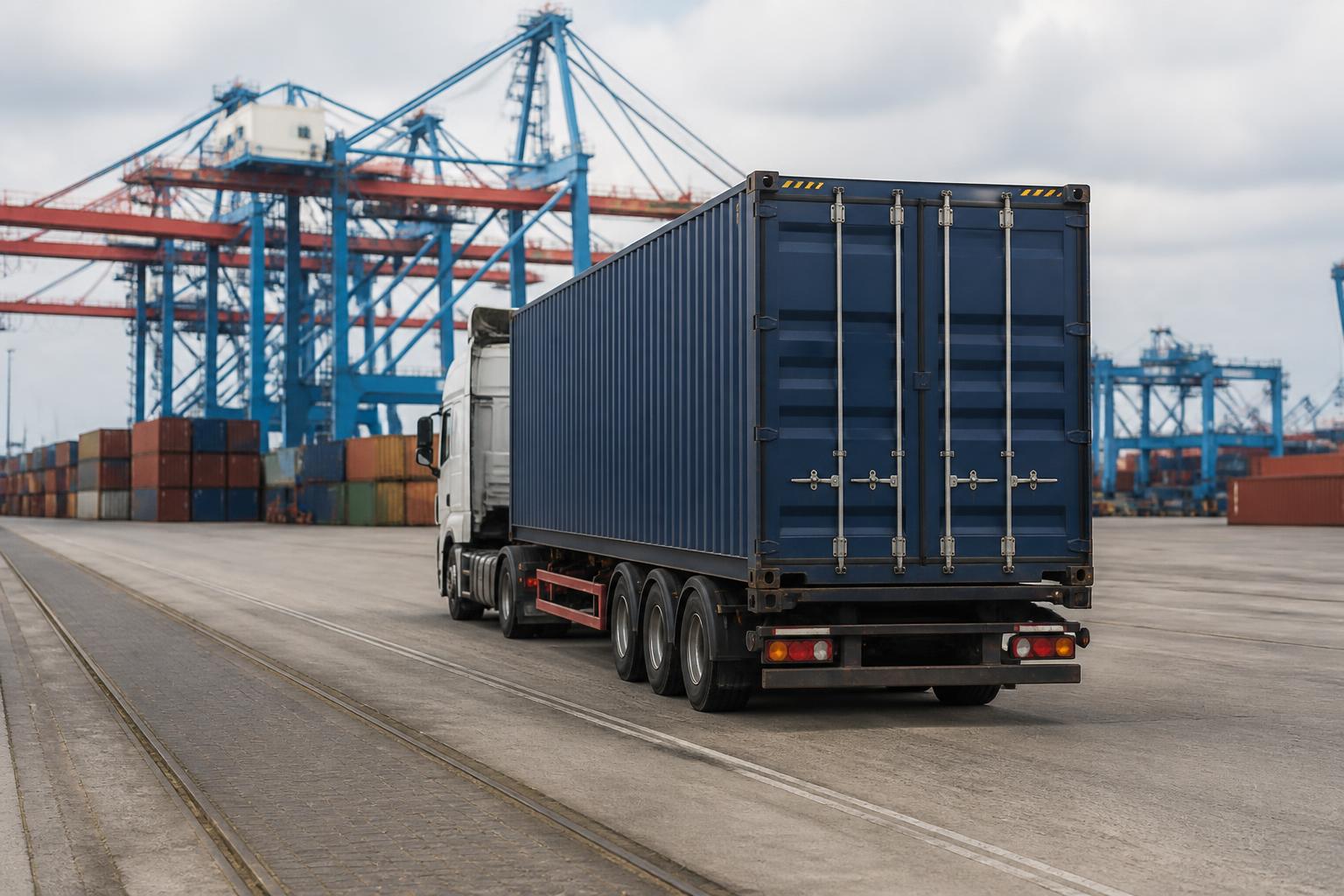
If you are asking whether a haulier can collect your container from Felixstowe, the short answer is yes, provided the container is actually clear to move. In practice that means the shipping line has released it, customs and any other controls are cleared, the port booking can be secured, and the haulier has the right equipment and information to collect it.
That is the point where merchant haulage either runs smoothly or starts losing time. At Jagelo Haulage Limited, we collect from Felixstowe every week for importers, freight forwarders and customs agents, so we work backwards from the real blockers, not the ideal version of the job. If the box is free to move and the details are in place, we can book the slot, collect, and deliver within Great Britain.
Yes, a haulier can collect from Felixstowe if the box is clear to move
A haulier does not need to be the shipping line, the consignee, or the customs broker to collect a container from Felixstowe. A merchant haulage operator can collect it on your behalf, but only once the container is in a collectable state in the terminal and the collection can be booked through the port system.
For a standard import collection, the minimum conditions are usually these:
- the container has discharged from the vessel
- the shipping line or line agent has issued release
- customs status allows the container to leave the port
- any port, carrier or inspection holds have been lifted
- the haulier has enough information to make the booking correctly
- the right vehicle and trailer can be assigned for the unit and commodity
If any one of those is missing, the haulier may be able to prepare the job, but not complete the collection.
That is why the better question is not only, “Can a haulier collect my container from Felixstowe?”, but “Is my container actually clear to move from Felixstowe today?” The answer changes hour by hour when release, customs entries, inspections and free time are all moving at once.
For UK import work, this is operational rather than theoretical. A container may appear available on one system while still being blocked by a line release issue, a customs status, or a terminal hold. The UK process also differs from some EU port routines. In Great Britain, customs clearance, line release and terminal booking have to line up for road collection. Having one of the three is not enough.
We handle collections from Felixstowe, London Gateway, Tilbury, Purfleet, Southampton and Liverpool, and the same principle applies across all of them. The box has to be available in the real operational sense, not just expected to be available.
What your haulier needs before booking the collection
The cleaner the handover, the faster the booking. Before we or any other haulier can plan a Felixstowe collection properly, we need the core operational data, not just a container number sent over with “please collect”.
At minimum, your haulier should have:
- container number
- shipping line
- port of collection
- size and type, such as 20ft ISO Container, 40ft ISO Container, 45ft ISO Container, or Refrigerated Container
- gross weight
- commodity
- collection reference or release details
- customs status
- delivery postcode and any delivery restrictions
- required delivery date
- whether the move is live unload, grounded, or requires a return later
Depending on the cargo, we may also need:
- seal number
- temperature settings for a Refrigerated Container
- whether genset support is needed after collection
- whether the unit is overweight for a standard road move
- whether the delivery site can accept a loaded articulated vehicle
- whether waste registration or APHA registration is relevant to the load
Document flow matters just as much as the basic shipment data. For Felixstowe import collections, the usual paperwork and status checks include:
- arrival notice or shipping line notice
- line release confirmation
- customs entry status, where applicable
- delivery order or line reference, if used on that traffic
- quay rent, detention or other charge status if there is a dispute holding release
- collection instructions from the forwarder or importer
- any special handling notes for food, feed, waste, or controlled goods
The exact document names vary by shipping line and forwarder process, but the operational requirement is the same. We need enough information to prove that the right party has authorised the move and that the container can lawfully and practically leave the port.
Weight is one of the points that gets missed most often. A 20ft ISO Container with dense cargo can be straightforward at booking stage and impossible on delivery day if the gross weight is not declared accurately. A 40ft ISO Container or 45ft ISO Container may fit the road route but not the unloading point. If the delivery site has a narrow access, soft standing, low branches, forklift limits or fixed booking windows, we need that before we secure the port slot, not after the driver is on the road.
For FCL work, this information normally comes from the importer or forwarder at the time the job is placed. For LCL deconsolidation or devanning arrangements, the handover can involve additional warehouse instructions and timing constraints. If the cargo description is vague, the risk sits with the road plan. “General cargo” does not tell us what we need if the box is in fact heavy paper reels, animal feed, bagged product, pallets with overhang, or high value stock.
Where volume and cargo planning are relevant upstream, CBM can matter too, particularly when an importer is deciding whether to move as FCL or LCL or whether a devanning point is more suitable than direct delivery. By the time the container is ready at Felixstowe, though, the road collection depends more on release, weight, equipment and site conditions than on booked CBM.
How Felixstowe collection bookings work now
Felixstowe road collections are managed through the Container Booking System, commonly shortened to CBS. In practice, that means a haulier does not simply turn up at the gate when the container is ready. A booking has to be made into an available slot, and that slot has to match the container status, the driver plan and the delivery schedule.
The Container Booking System is central to how collections are sequenced. It affects whether a same day collection is possible, whether the box rolls into the next day, and whether free time is likely to be protected or lost. A shipment can be fully released, but if suitable CBS availability is tight, the job still needs careful handling.
This is where timing matters. Felixstowe slot pressure changes through the day and through the week. Vessel bunching, yard conditions, peak import periods, late releases and end of free time all push more jobs into fewer workable collection windows. If the release arrives late in the day, there may not be a practical slot left that still allows collection, line-out, and on-time delivery.
A good merchant haulage plan for Felixstowe therefore includes:
- checking whether the unit is actually available to book
- securing a CBS slot that matches the delivery plan
- allowing for driver hours and road time
- checking trailer and equipment suitability
- monitoring whether the slot needs to be amended if release timing changes
Some readers will know other systems such as CARGOES VBS from different ports or terminals. The key point is that Felixstowe collections are managed through CBS, so the planning discipline has to fit that environment. The port booking is not an admin afterthought. It is part of the transport job itself.
This is one reason customers use us for port slot booking that helps avoid demurrage. The haulage booking and the port booking have to be treated as one workflow. If they are split between too many people, delays appear in the gaps.
What usually stops a container being collected
Most failed or delayed collections from Felixstowe come down to a short list of causes. None of them are unusual, but each one can cost a day if spotted too late.
The first is release not being in place. The vessel may have arrived and the container may be shown in the terminal, but without the shipping line release the box is not collectable. This can happen because charges are outstanding, documents are incomplete, or the release message simply has not been processed yet.
The second is customs status. If the customs entry is not accepted, is selected for checks, or is otherwise not in a status that permits removal, the haulier cannot complete the collection. In Great Britain, this has to be treated according to UK customs processes, not assumed from EU port practice. A box that is commercially urgent is still immobile if customs have not cleared it.
The third is a terminal or inspection hold. That may relate to customs examination, port health, documentary checks, or other controls linked to the commodity. For food, feed and related cargoes, the practical question is whether the container is released for road movement, not whether the paperwork looked close to completion earlier in the day.
The fourth is free time pressure. A container can be technically collectable but operationally at risk because the free period is ending before a workable slot can be secured. That is where early booking matters most. If the release lands late and the next CBS availability is after free time expires, demurrage becomes a real risk. We cover that timing issue in more detail in our guide to fast container collection from Felixstowe when timing matters.
The fifth is equipment mismatch. Common examples are:
- a heavy 20ft ISO Container needing the right payload planning
- a 45ft ISO Container needing suitable trailer allocation and route planning
- a Refrigerated Container needing a live reefer-capable plan
- a high cube unit needing delivery site checks
- a driver arriving for a job that turns out to need special handling or site equipment
The sixth is destination constraint. The box may be clear at Felixstowe, but the delivery point may not be ready to receive it. If the warehouse can only take deliveries in a narrow booked window, if unloading equipment is unavailable, or if the site cannot handle an articulated vehicle, the container may need to stay in port longer or be redirected.
The seventh is incorrect or incomplete job data. One wrong digit in a container number, an old release reference, the wrong line, or a missing delivery postcode can be enough to lose the workable booking window for that day.
These are the reasons we push for complete instructions early and say early when a box is at risk. A good haulier is not just asking whether the container can be collected. We are checking whether the collection can be completed without creating a second problem on costs, delivery timing or compliance.
When to book merchant haulage and what to ask your haulier
The best time to place merchant haulage is before the vessel arrives, or as soon as the ETA is firm enough to start planning. That does not mean the port booking will always be made immediately, because the container still needs to be in the right status, but it gives time to line up equipment, review the delivery point and watch the release and free time position properly.
Leaving the booking until the container is already available is where avoidable risk starts. You may still get the collection away, but your options are narrower. If the box is urgent, the line release is late, or the destination has strict booking times, the margin disappears quickly.
When you place the job, ask your haulier these practical questions:
- Will you make the Felixstowe CBS booking for us?
- What do you need from us before you can book?
- When do you expect to know if the container is at risk of missing free time?
- Can you handle the size and type of unit, including 45ft ISO Container or Refrigerated Container if relevant?
- Do you deliver direct, or can you also arrange temporary storage or repositioning if the delivery site is not ready?
- What is your freight liability limit?
- Do subcontracted loads carry the same freight liability terms?
- How do you flag release or customs issues when they appear?
- Are you using your own vehicles, partner hauliers, or both?
- Can you support specialist cargo categories if the shipment requires them?
Those questions matter because the difference between one haulier and another is usually in execution, not in the headline promise to collect from port.
At Jagelo Haulage Limited, we run 40 vehicles and 40 trailers of our own on operator licence OF2023521, with vetted partner hauliers on their own operator licences for additional volume. We have moved more than 75,000 containers since 2019 and handle collections from Felixstowe as part of daily UK port work. Our standard freight liability cover is £6,500 per tonne under RHA 2024 conditions, including subcontracted loads on the same limit, with up to £10,000 per tonne available by arrangement for higher value cargo. We are also an upper tier waste carrier and dealer, CBDU471791, and APHA registered for Category 3 animal by-products and animal feed in shipping containers, quay to premises, U1433815/TRANS.
For many importers and forwarders, the right service points are simple. They want a haulier that books the slot, watches free time, checks the release position, and says quickly if the box is going to slip. If that is what you need, our guidance on who can collect containers from Felixstowe port and how to find a container haulier that avoids port charges goes into the next step in more detail.
So, can a haulier collect your container from Felixstowe? Yes, if the container is clear to move, the booking can be secured, and the job has been set up properly. That is the real threshold, and it is the one we work to every day.
Can any UK haulier collect my container from Felixstowe?
Any haulier that is properly licensed and set up for port container work can collect, provided the container is released, customs-cleared or authorised to move, and a CBS slot is booked.
What details does a haulier need to collect from Felixstowe?
Usually the container number, size, weight, release status, shipping line, collection reference, delivery point, customs position and any deadline around free time or quay rent.
Does Felixstowe still use VBS?
No. At Felixstowe, collections are booked on the Container Booking System (CBS), which replaced the Vehicle Booking System (VBS) in January 2025.
How early should I book a Felixstowe collection?
As early as you can once the shipment is firm. Early booking gives more room to plan around release timing, CBS availability, delivery constraints and free time.
Can a haulier collect if customs is not cleared?
Not unless the movement is authorised under the relevant customs process. If there is a hold or the entry is not in the right state, the container may not be collectable.