Part of our guide to container haulage from Southampton
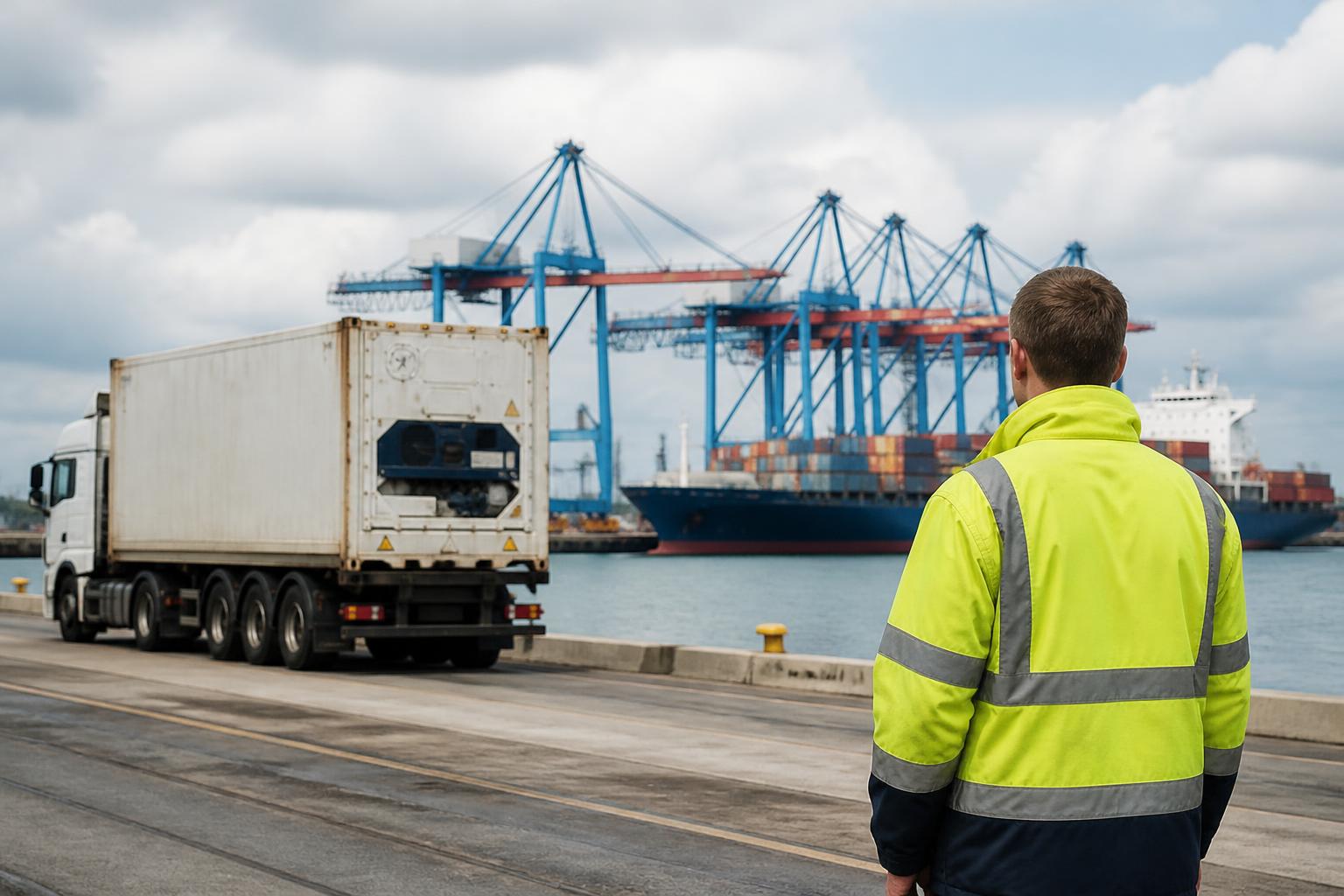
If you are comparing options for reefer work out of Southampton, the main risk is usually not the linehaul rate. It is avoidable port cost. A low quote stops looking cheap very quickly when a Refrigerated Container misses its collection window, runs into demurrage, or is delivered late because the destination was not ready to take a live reefer unit.
For most importers and forwarders, the right comparison for reefer container transport from Southampton Port is simple. Ask which haulier is most likely to collect within free time, spot release or customs problems before the truck is on the road, confirm the delivery site can handle the unit properly, and keep control if plans change on the day. That is the work that protects margin.
What this comparison should focus on for Southampton reefer work
With reefer imports, headline haulage price is only one line on the job. The bigger exposure often sits in demurrage, detention, wasted driver time, failed deliveries, and storage that could have been avoided with better planning. That is why we compare Southampton reefer haulage on operational control, not just on the initial quote.
Southampton is a practical reefer gateway for many GB deliveries, but the port only works smoothly if the collection is lined up against the actual status of the box. That means checking whether the shipping line release is in place, whether customs has cleared or whether a hold remains, whether the port booking has been made, and whether the consignee can receive a Refrigerated Container at the required time.
A dry import can sometimes absorb a little more variation. A reefer import often cannot. If the commodity needs prompt unloading, chilled handling, or onward movement into a temperature-controlled site, every hour matters more. The comparison should therefore focus on whether the haulier manages the collection to the free time on the unit and tells you early if that timing is no longer realistic.
We see a lot of jobs where the issue is not the port itself, but the handover between parties. The forwarder assumes the delivery point has power. The delivery point assumes the box will arrive on a genset. The customs entry is submitted, but the release is not yet visible. The line gives free time, but nobody checks whether the chosen collection day still leaves enough margin if the slot moves. Those are the details that separate a clean merchant haulage move from a costly one.
If you want a broader view of where port haulage cost really comes from, our guide to what sets UK container haulage costs from the ports covers the cost drivers beyond the linehaul itself.
How reefer collections from Southampton differ from standard dry boxes
A Refrigerated Container is still an ISO container, but the collection and delivery process is not the same as for a standard dry unit. The extra checks are not optional admin. They are what prevents failed collections and failed deliveries.
First, release status needs to be confirmed properly. On reefer imports, we do not assume that because customs has progressed, the box is physically ready to leave. We check that the shipping line release is in place and that there is no mismatch between line status, port status and the collection instruction. On merchant haulage jobs, this matters because the importer or forwarder is booking us directly to act on a box that may still be moving through several control points.
Second, the customs position must be clear before the truck is committed. In Great Britain, import formalities follow UK rules, not EU procedures generally, and the practical issue for haulage is whether the container can actually be collected without a stop caused by an uncleared entry or another hold. If there is a customs query, an inspection requirement, or a documentary gap, it is better to know before the slot is booked than when the driver is already at the port.
Third, the destination must be checked for power and handling arrangements. A reefer delivery is not only about getting the box to site. The receiving site needs to be ready for that exact unit and that exact handover. Can they unload on arrival? Do they have a bay plan? If the box needs to remain live on site for a period, do they have suitable power and the right arrangement to take it? If not, the delivery timing may need to change or the job may need a different plan.
Fourth, timing sensitivity is usually tighter. A dry FCL move can sometimes wait overnight with little commercial effect beyond storage and planning inconvenience. A reefer import carrying temperature-sensitive goods often cannot. If the unit is delayed at the port, delayed on the road, or delayed at destination because unloading is not ready, the operational consequences escalate faster.
Trailer fit also matters more than some buyers realise. With ISO containers, the nominal length does not tell the whole story. A 20ft ISO Container, 40ft ISO Container or 45ft ISO Container may each require the right trailer setup for legal and practical movement, and reefer equipment can add its own handling considerations. A haulier who checks this at booking stage is reducing risk, not creating admin.
The same applies where the shipment is part of a larger movement pattern. Some businesses receive a mix of FCL and LCL cargo, or use reefer boxes for one product line and dry boxes for another. If your internal planning is built around pallet space, CBM, unloading windows and warehouse labour, the haulier needs to work with that reality rather than treating every box as a standard road move.
Which checks separate a dependable haulier from a cheap quote
A dependable reefer haulier does not just wait for a collection order and send a truck. They actively check the points that most often create avoidable cost at Southampton.
The first is the port slot. If the collection requires a booking through the relevant system, the haulier should make that booking and manage it. For Southampton work, buyers should ask directly who is responsible for the booking, when it will be made, and how changes are handled if the release or customs status moves. In other ports the booking tool may differ, for example CARGOES VBS or another Container Booking System, often shortened to CBS, but the principle is the same. Someone must own the booking and keep it aligned with the box status.
The second is free time review. A dependable haulier checks the last free day for demurrage exposure and plans the collection accordingly. That does not mean promising the impossible. It means telling you early if the job is at risk, so you can decide whether to prioritise the collection, change the delivery plan, or deal with the line before charges build.
The third is early escalation. Cheap quotes often stay cheap by staying quiet until there is a problem. That is exactly the wrong approach on reefer imports. If a release is missing, if customs is not clear, if the destination cannot take the unit when requested, or if the trailer requirement changes, we would rather flag it immediately than let the issue surface at the port gate or at the consignee yard.
The fourth is confirmation of equipment and site fit. Buyers should ask whether the haulier has checked container size, gross weight, delivery restrictions, and any special receiving requirement. A reefer move can fail for ordinary reasons, low bridges, restricted access, no unloading labour, no powered position available, but those reasons are only ordinary if someone bothered to ask.
The fifth is direct communication with the right party. On merchant haulage, there may be an importer, a freight forwarder, a customs agent and a receiving site involved. A dependable haulier knows who holds the release, who is handling customs, who signs off the delivery window, and who can authorise a change if the plan slips. If those lines are blurred, the truck ends up waiting while everyone tries to work out who can make the decision.
We have set out the same principle in our article on choosing a reefer container haulier without extra port cost. The detail varies by job, but the buying test is consistent. Ask who checks the risk points, not just who offers the lowest rate.
How fleet, coverage and subcontracting affect delivery risk
For Southampton reefer work, delivery risk is shaped by the haulier’s actual operating model. Buyers should verify whether the fleet is owned and controlled, where the haulier covers directly, and what happens when extra volume is moved by partner hauliers.
At Jagelo Haulage Limited, we run 40 vehicles and 40 trailers of our own on operator licence OF2023521. We also use vetted partner hauliers on their own operator licences when volume requires it. For a buyer, the important question is not whether subcontracting exists at all. It is whether the standards and liability stay consistent when it does.
That matters because some operators quote nationally but rely heavily on ad hoc subcontracting without giving the customer much visibility. On reefer work, that can create gaps in communication and execution. The collecting driver may not have the full site brief. The delivery ETA may not update cleanly. The person who booked the job may not be the person managing the issue when the box is held up.
When you compare hauliers, ask these points directly:
- Do they have their own vehicles and trailers, or are they mainly broking the work out?
- Do they cover Great Britain as a routine operating area, or only selected lanes?
- If they use a partner haulier, does the same freight liability apply?
- Are the partner hauliers working under their own operator licences and properly vetted?
- Who remains responsible for communication from release through to POD?
Freight cover is a practical buying point, not small print. Our freight liability is £6,500 per tonne under RHA 2024 conditions, with the same limit applying to subcontracted loads. For higher value cargo, up to £10,000 per tonne is available by arrangement. That consistency matters when you are comparing a direct fleet move with a subcontracted one. The risk should not quietly shift because the transport plan changed behind the scenes.
Coverage matters too. We collect from Felixstowe, London Gateway, Tilbury, Purfleet, Southampton and Liverpool and deliver throughout Great Britain. For importers and forwarders booking across several ports, that helps keep process consistent. The same matters if your Southampton reefer move is one part of a wider programme of ISO containers into GB depots, food sites or distribution centres.
Special registrations can also be relevant depending on cargo type. We are an upper tier waste carrier and dealer, CBDU471791, and we are registered with APHA to carry Category 3 animal by-products, animal feed in shipping containers, quay to premises, U1433815/TRANS. If your reefer import falls into a controlled goods category, those checks should be made before the collection is planned, not after the truck is booked.
When Southampton reefer haulage is the better fit than another port option
Southampton is not automatically the right answer for every reefer import, but it is often the better fit when vessel routing, final delivery geography and collection timing line up. The comparison should be practical, not theoretical.
If the delivery point is in the Midlands, South, South West or along corridors that are better served from Southampton than from East Coast ports, Southampton can make sense even if another port looks attractive on paper. The road leg, collection timing and depot plan need to be looked at together. A cheaper ocean routing into a different port can lose its advantage if the inland move becomes slower, less predictable, or more exposed to charges.
By contrast, if your import programme is concentrated around East Anglia, the East Midlands or destinations naturally better served from Felixstowe, the overall balance may favour that route instead. We cover that separately in our article on moving a reefer from Felixstowe without avoidable port cost.
There are also cases where another port is chosen because the cargo type or service pattern points that way. Some importers run mixed flows through London Gateway, Tilbury or Liverpool for network reasons. Others want to align the reefer move with the rest of their FCL programme, warehouse booking pattern, or customs process. The key is not to compare ports only on the sea leg or only on road miles. Compare the full chain, including how likely you are to collect within free time and deliver first time.
For Southampton specifically, the better fit usually shows up when three things are true. The vessel and release timetable are workable, the delivery geography suits a Southampton road leg, and the receiving site can take the Refrigerated Container at the right time without extra handling risk. If one of those three is weak, another port option may work better.
Where Southampton is the chosen gateway, the practical next step is not another generic comparison article. It is route and delivery planning against the actual consignee requirement. If your load is heading inland, our page on Southampton to Birmingham container haulage without avoidable port cost shows the kind of planning points that matter once the port has been selected.
For buyers comparing reefer container transport from Southampton Port, the soundest decision is usually the haulier who controls the collection properly, checks the destination properly, and says early when the plan is drifting toward charges. That is what protects the shipment. That is also what keeps a sensible haulage rate from turning into an expensive import.
What matters most when comparing reefer container transport from Southampton port?
The main test is whether the haulier helps prevent avoidable port cost. Check slot booking, free time control, early risk warnings, trailer suitability, delivery planning and freight liability, not just the quoted rate.
Is reefer haulage from Southampton different from a standard container move?
Yes. A Refrigerated Container usually needs tighter planning around release, customs status, collection timing and the delivery point's ability to receive it without delay.
Should the haulier book the Southampton port slot?
For many importers and forwarders, yes. A haulier that books the slot and plans around free time can reduce the risk of missed collections and avoidable charges.
Does subcontracting increase risk on reefer container work?
It can if capacity and liability are unclear. Ask whether partner hauliers are vetted, whether they work on their own operator licences and whether the same freight liability applies to subcontracted loads.
What company facts are relevant for Jagelo Haulage Limited on this topic?
Jagelo Haulage Limited was founded in 2019, runs 40 vehicles and 40 trailers of its own on operator licence OF2023521, and collects from Southampton as one of six UK ports it serves.