Part of our guide to container haulage from Southampton
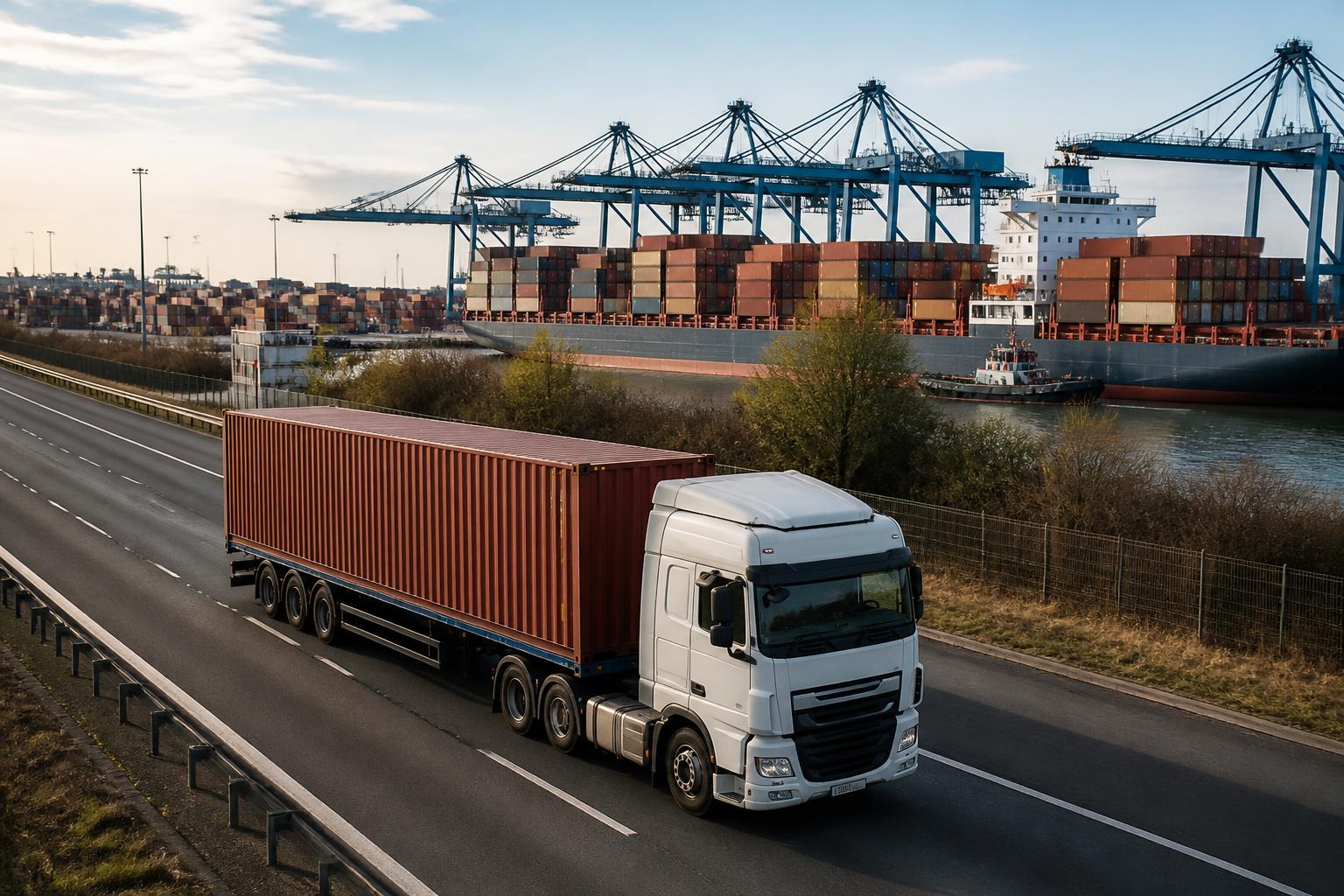
If you are comparing Southampton container deliveries into UK warehouses, the quoted haulage rate is only one part of the decision. The real difference between one booking and the next usually comes from who controls the port collection, who is watching release and customs status, how free time is being managed, and whether the haulier can actually deliver the box with the right trailer, on the right day, to the right site conditions.
For importers and forwarders booking container haulage from Southampton to a warehouse in the UK, the safest comparison is operational, not just commercial. We see the same pattern across Southampton, Felixstowe, London Gateway, Tilbury, Purfleet and Liverpool. A low initial figure can become an expensive move if the container is not customs cleared, the line release is not in place, the port slot is booked too late, or the delivery point cannot take the container that arrives.
What importers are really comparing on Southampton warehouse deliveries
When customers compare Southampton warehouse deliveries, they are usually comparing five things at once, even if the first conversation is only about rate.
First, they are comparing control of the move. With direct booked merchant haulage, we book the collection, monitor the release position, check whether the container is actually collectable, and plan the warehouse delivery around the line's free time and the receiving site's restrictions. That gives the importer or forwarder a clearer line of responsibility.
Second, they are comparing delay risk. Two bookings with the same route can behave very differently depending on whether the box is already released, whether customs have cleared it, whether the port slot can be secured at the right time, and whether the warehouse can receive that day. A Southampton collection that looks straightforward at 9am can still fail if the release has not landed, if a hold is still active, or if the driver arrives with equipment the delivery point cannot unload.
Third, they are comparing communication. The useful question is not whether a haulier says they cover Southampton. The useful question is whether they will tell you early that the booking is exposed to storage, demurrage, wasted run risk, or a missed delivery window. We find that most avoidable cost comes from late visibility, not from the road leg itself.
Fourth, they are comparing equipment and operating model. Not every haulier running port work has the same access to trailers, drivers, partner coverage or planning discipline. For some warehouse deliveries, the difference between a smooth job and a failed one is as simple as whether the haulier has the correct trailer for a heavy 20ft ISO Container, a 45ft ISO Container, or a Refrigerated Container that needs genset planning or a specific delivery arrangement. We cover this in more detail in our guide to choosing the right trailer for port container work.
Fifth, they are comparing who carries the paperwork burden. In practice, warehouse deliveries from Southampton depend on accurate references and statuses being available before the vehicle is committed. If the line release, customs position, container number, weight, warehouse booking reference or delivery restrictions are wrong or incomplete, the move is at risk before the truck leaves the yard.
That is why a proper comparison of container haulage Southampton to warehouse UK work should focus on the whole chain from quay release to warehouse handover, not just the mileage between the two points.
Merchant haulage versus line haulage from Southampton
The biggest structural choice is between merchant haulage and line haulage.
With merchant haulage, the importer or forwarder books us directly to collect from Southampton and deliver to the warehouse. We control the inland move, subject to the container being properly released and available. That usually gives better visibility of planning, clearer communication on risks, and more flexibility over delivery timing, equipment choice and receiving instructions.
With line haulage, the shipping line arranges the inland move through its own nominated network. That can suit some shipments, especially where the inland leg is bundled commercially with the sea freight. But control is different. The importer may have less visibility of who is physically moving the box, when the collection is actually booked, and how exceptions are being managed. If there is a delivery site problem, a customs issue, or a time-sensitive free time position, the communication chain can be longer.
The cost comparison is not always obvious at the booking stage. A line haulage rate may look attractive because it is packaged into the ocean move, but the operational flexibility can be narrower. A merchant haulage booking may look more exposed because the inland charge is shown separately, but it often gives better control over timing, delivery conditions and escalation when something changes.
Responsibility also differs. Under merchant haulage, we are directly accountable to the customer for the inland execution. We can confirm whether the box is collectable, whether a slot is realistic, and whether the warehouse delivery plan works. Under line haulage, the shipping line remains the contracting party for the inland move, and the importer often has to work through the line or its appointed operator for updates or changes.
This matters most when the move is not simple. If the container is on customs hold, if the release has not been issued, if the warehouse can only take delivery in a narrow window, or if the cargo is sensitive or high value, direct control usually matters more than the headline rate. For customers deciding which model suits them, our article on who to book for Southampton merchant haulage sets out the practical differences.
For Great Britain deliveries, this is mainly an operational decision rather than a customs union question. Since the UK is outside the EU customs framework, import clearance, release timing and inland planning need to be handled as UK processes, not assumed to follow EU port-to-door norms.
How port booking and free time management affect the final cost
A Southampton collection is only real once the container can be collected and the port slot can be secured. That sounds obvious, but many avoidable costs start with planning a delivery before those two points are confirmed.
The first check is release status. If the shipping line has not issued release, or the release instructions are incomplete, the container may not be collectable even though the vessel has discharged. The second check is customs status. If customs have not cleared the box, or if there is an active hold, collection may be blocked or commercially pointless. The third check is the terminal booking position. At Southampton, slot availability affects whether the move can happen within free time or slips into chargeable days.
Port booking systems matter because they turn a theoretical collection into an actual one. Different ports use different systems. For example, Felixstowe uses CARGOES VBS. Elsewhere, you may see a Container Booking System or CBS referenced in planning discussions. The name of the system matters less than the discipline around it. We need the release, the customs position, the container details and the delivery plan aligned before we commit the slot.
Free time management is where costs change quickly. Shipping line free time can cover different things and can expire whether or not the delay was caused by the road leg. If the box sits because release was late, customs were unresolved, or the warehouse could not receive, the demurrage exposure may still fall on the importer. If the container is collected but cannot be returned within the line's terms, detention may also become relevant. Those charging structures are set by the line, not by the haulier, so the practical job is to prevent avoidable overrun.
That means planning backward from the last safe collection day, not forward from the preferred delivery day. If the warehouse can only unload on Thursday, but free time expires on Wednesday, the right answer may be to collect earlier with a pre-agreed plan, or to change the warehouse arrangement, or to challenge whether the box should move that week at all. The wrong answer is to assume the problem will solve itself once the truck is booked.
This is also where early warning matters. We would rather tell a customer on day one that a container is at risk than stay quiet and watch storage build. The same principle applies whether the shipment is FCL or whether an LCL movement has been devanned and is now moving inland separately. The labels differ, but the cost pressure still comes from timing, status and receiving readiness.
Comparing hauliers for warehouse deliveries across Great Britain
If you are comparing hauliers for Southampton deliveries into warehouses across Great Britain, there are a few checks worth making early.
Start with fleet and operator model. Ask whether the haulier runs its own vehicles, how much work is subcontracted, and whether subcontractors are operating under their own operator licences. Jagelo Haulage Limited runs 40 vehicles and 40 trailers on operator licence OF2023521, with vetted partner hauliers on their own operator licences used for additional volume. That matters because capacity claims are only useful if there is a real operating base behind them.
Then check port coverage and planning depth. A haulier that works Southampton regularly should also be able to support overflow or comparative planning across Felixstowe, London Gateway, Tilbury, Purfleet and Liverpool where your wider programme needs it. We collect from all of those ports and deliver throughout Great Britain, so customers with mixed import programmes do not need a separate process for each gateway.
Next, check equipment fit. Not every warehouse delivery is the same. We need to know whether the move is a standard 40ft ISO Container, a heavy 20ft ISO Container, a 45ft ISO Container, a Refrigerated Container, or another type of ISO containers movement with special handling requirements. Trailer choice, weight distribution, delivery access and unloading method all sit behind that. If hazardous cargo is involved, the question becomes even more specific, and our guide to who can collect a hazardous container from Southampton explains what needs checking before the booking is accepted.
Communication is another dividing line. A good port haulier does not just confirm the booking. They tell you what could stop the move, what document is missing, whether the slot is realistic, and when the warehouse plan is weak. For customs agents and forwarders, that is often the difference between being able to intervene in time and learning about the issue after free time has gone.
Also check liability terms. Many customers assume all hauliers carry the same cover. They do not. Our standard freight liability cover is £6,500 per tonne under RHA 2024 conditions, including subcontracted loads, with up to £10,000 per tonne available by arrangement for high value freight. That is materially different from the standard RHA limit and should be checked where cargo value is sensitive.
Finally, look at regulatory fit where the cargo requires it. We are an upper tier waste carrier and dealer, CBDU471791, and we are registered with APHA to carry Category 3 animal by-products and animal feed in shipping containers, quay to premises, U1433815/TRANS. Those details matter only when the cargo needs them, but when it does, they matter before the truck is booked, not after.
Which container and cargo details matter before the box leaves Southampton?
A clean Southampton warehouse delivery depends on getting the right details up front. Most failed collections and awkward deliveries can be traced back to missing or inaccurate shipment information.
At minimum, we need the container number, shipping line, port of collection, delivery postcode, contact details for the receiving site, and the required delivery date or booking window. We also need to know whether the container is a 20ft ISO Container, 40ft ISO Container, 45ft ISO Container or Refrigerated Container, because that affects trailer planning and delivery suitability.
Weight is critical. We need the gross container weight, not a rough cargo estimate. A heavy container can change the route, the trailer allocation and whether the receiving site is workable. If the shipment details only show cargo volume in CBM, that is not enough for road planning. CBM helps with commercial understanding of the load, especially where customers are comparing FCL and LCL flows, but the road move depends on the actual loaded weight and unit type.
We also need status information. Has the line release been issued? Has customs cleared the movement? Are there any holds? Is the port collection reference active? Has the warehouse given a firm booking reference? If the warehouse has restrictions such as limited vehicle access, no side waiting, fixed unloading times, or a requirement for a specific vehicle presentation, that needs to be known before the port slot is booked.
Site conditions matter more than many importers expect. We need to know whether the warehouse can accept a full-length artic, whether there is room to manoeuvre, whether the container will be live unloaded or left only long enough to tip, and whether there are any height, surface or queueing constraints. If the warehouse is on a retail park, narrow estate, farm site or shared yard, that should be stated at booking stage.
Cargo characteristics also matter. Is it palletised, floor loaded, overweight on one end, temperature controlled, waste-related, feed-related, or otherwise sensitive? Is there any risk that the receiving site will reject the load because seals, paperwork or product identification do not match expectation? Those are not edge cases. They are common reasons why a port move that looked simple becomes an expensive exception.
For customs agents and forwarders, the best handover is a complete instruction set, not a partial release with the rest to follow. If the box is urgent, say so. If the free time is tight, say so. If delivery cannot happen after a certain hour, say so. The earlier we have the operational facts, the more options we have to protect the move.
That is the practical basis on which we plan container haulage from Southampton to warehouses across the UK. The comparison that matters is not only who can quote the lane, but who can collect the right box at the right time, manage the slot and release position properly, and deliver into the warehouse without creating avoidable cost on the way.
Is merchant haulage usually better than line haulage from Southampton?
For many importers and forwarders, yes. merchant haulage usually gives more control over booking, timing and communication. It can also make free time risk easier to manage, provided the haulier is told early about release, customs status and delivery constraints.
What should I send a haulier before booking a Southampton collection?
Send the container number, size, weight, release position, customs status, delivery postcode, delivery restrictions and target date. If the cargo has any special handling point, include that at the start so the collection plan matches the job.
Can a haulier book the Southampton port slot for me?
Yes, that is commonly part of the job. The key point is whether the haulier is actively managing the booking against release and free time, rather than waiting until the box is already close to storage or demurrage exposure.
How do I compare haulage quotes from Southampton fairly?
Check what is included: port booking, waiting assumptions, delivery area, container size, weight limits, and whether the quote is based on a clean release with no customs or line issues. A lower rate is not cheaper if delays create avoidable port cost.
Does Jagelo Haulage Limited cover only Southampton?
No. Jagelo Haulage Limited collects from Felixstowe, London Gateway, Tilbury, Purfleet, Southampton and Liverpool, delivering within Great Britain.