Part of our guide to container haulage from Southampton
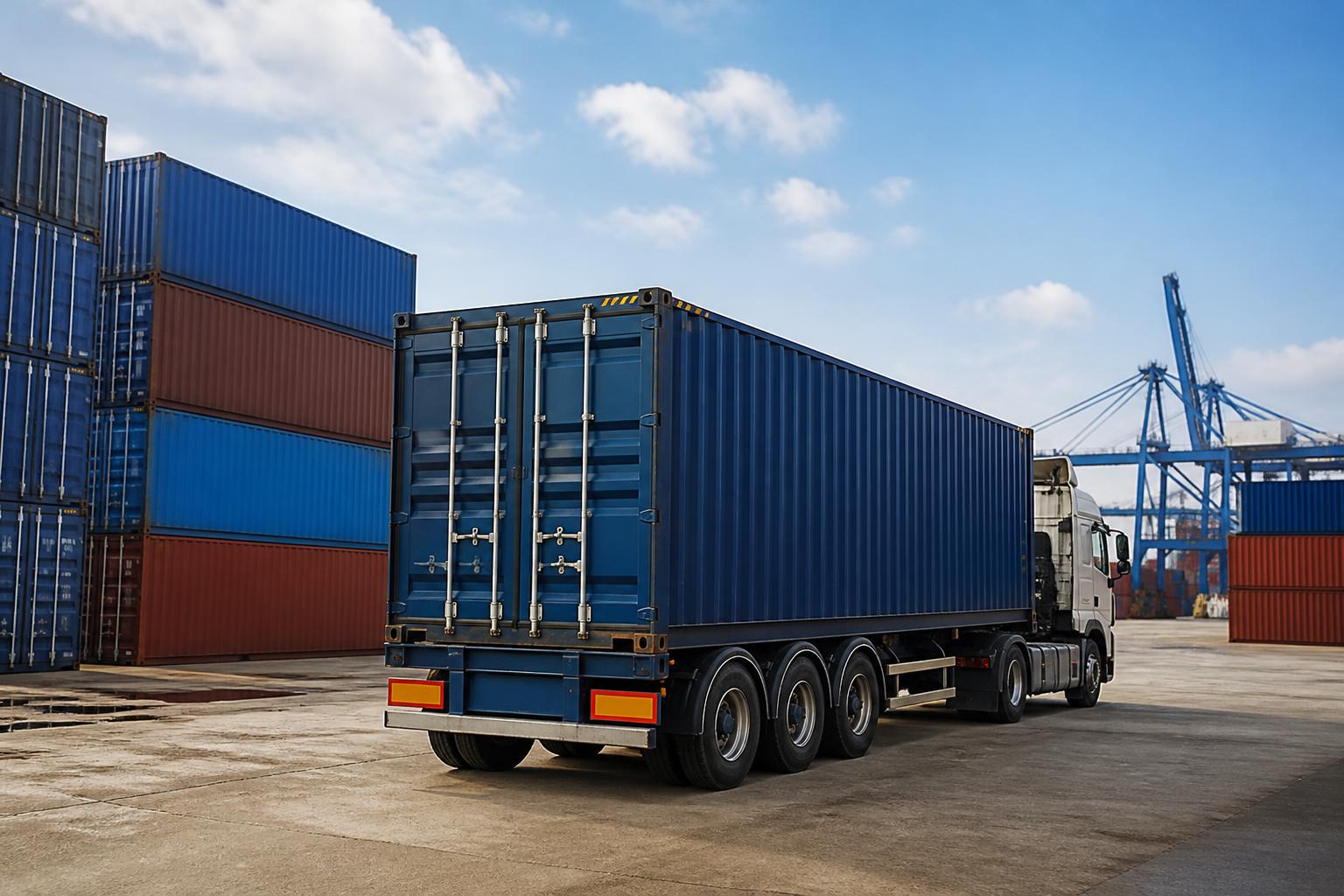
If you are deciding who to book for merchant haulage from Southampton, the short answer is this. Book a container haulier that can take responsibility for the collection from release through to inland delivery, not just send a driver to the port. For Southampton work, that means a haulier that can check the box is actually cleared to move, secure the port booking, work within free time, plan the delivery around site constraints, and tell you early if a hold or delay is likely to turn into storage or demurrage.
In practice, importers, freight forwarders and customs agents usually want one party to manage that chain. At Southampton, that is normally a merchant haulage provider collecting full import containers from the port and delivering them across Great Britain. The right booking is not simply the cheapest truck on the day. It is the haulier that can get the container out cleanly, with the paperwork, timing and communication handled properly.
What readers usually mean by merchant haulage from Southampton
In the Southampton container trade, merchant haulage usually means the inland container move is booked directly by the importer, freight forwarder or customs agent, rather than by the shipping line as carrier haulage. The port arrival may still be under the ocean carrier's control until release, but the road leg from Southampton to the final delivery point in Great Britain is arranged by you or by your forwarder.
That distinction matters because the party booking the haulage controls the choice of haulier, the delivery plan and often the responsiveness when something changes. If the customs entry is delayed, if the line has not released the unit, if the consignee cannot take delivery on the planned day, or if free time is running out, you need a haulier that will react around the container, not around a generic line schedule.
This is usually what people are asking when they search for who does merchant haulage from Southampton port. They want to know who can collect a full import container from Southampton once the line has released it, get the port booking in place, and deliver inland without avoidable cost building up at the quay.
Merchant haulage is most often used for FCL imports. That is where a single consignee is taking the whole container, whether it is a 20ft ISO Container, 40ft ISO Container, 45ft ISO Container, or a Refrigerated Container if the haulier and delivery site are suitable. LCL is different. With LCL, the line or consolidator usually moves the box to a deconsolidation point before the cargo is unpacked and delivered as separate consignments. A road haulier may still be involved, but not in the same way as a direct merchant haulage collection to the importer.
The commercial reason for booking merchant haulage is straightforward. You keep control of the inland leg, you choose the service level, and you can align collection and delivery with your customs clearance, warehouse labour and stock priorities. Done properly, it also helps reduce unnecessary port charges because the collection is planned around release and free time, not left waiting for someone else to fit it in. We cover that in more detail in how merchant haulage helps cut port cost and delay.
Who can collect containers from Southampton
Not every road haulier is a practical choice for Southampton port collections. A firm may run general haulage, curtainsiders or pallet networks and still not be set up to collect shipping containers from the quay. For Southampton imports, the starting point is whether the haulier is genuinely experienced in port container work and in the booking systems and release procedures that go with it.
First, check that the haulier regularly handles ISO containers from the main UK container ports, not only occasional jobs. Southampton is one of several ports where familiarity with releases, terminal bookings and inland planning makes a real difference. A haulier used to container work will ask the right operational questions early, including the container number, shipping line, availability status, customs position, delivery postcode, cargo weight and any site restrictions.
Second, check equipment and fleet suitability. For standard merchant haulage, the haulier should be able to move the common import box sizes, including 20ft ISO Container, 40ft ISO Container and 45ft ISO Container. If the cargo is heavy, the gross weight and likely axle distribution matter. If it is a Refrigerated Container, the question is not only whether the box can be moved, but whether any temperature, plug-in or timing requirements affect the plan. If the delivery point has tight access, low canopies, uneven ground or limited turning space, that should be addressed before the port booking is made.
Third, check coverage. Southampton collections often go to warehouses, factories, mills, feed sites and distribution points across Great Britain. The haulier does not need to have a depot in every region, but it does need reliable national delivery capability and enough planning control to avoid the usual problem where a box can be collected from the port but not delivered promptly inland.
Fourth, check compliance and specialist registrations where relevant. Some cargoes need more than a standard container movement. If the import is animal feed in containers, or Category 3 animal by-products, the haulier needs the right registration to carry it legally from quay to premises. Waste movements may also require the correct waste carrier status. These are not details to discover after the vessel has arrived.
Finally, check whether the haulier actually manages the port collection process itself. Southampton work is not just road transport from A to B. A suitable haulier should be able to handle the booking through the port system, understand how the Container Booking System and CBS process affects the collection window, and coordinate around release and customs status. If you are comparing firms generally, our guide on how to compare UK import container hauliers without delay risk sets out the practical checks.
What a haulier should manage before the box leaves the port
Most avoidable cost on an import container does not begin on the road. It begins before the unit leaves Southampton. That is why the best merchant haulage providers do more than accept a collection order.
The first check is release. A container should not be booked for collection on the assumption that release will appear in time. The haulier needs confirmation that the shipping line or nominated release party has authorised the box to move. Depending on the line and process, that may involve checking line release status, equipment interchange conditions, or any outstanding line requirements. If the release is not in place, the booking should be timed accordingly rather than risking a failed collection.
The second check is customs status. In the UK, customs clearance for an import container must match the point at which the goods are being removed from the port. If the goods are not yet customs cleared, the movement may still be possible under the correct procedure, but only if that has been properly arranged. Where a rule differs between Great Britain and the EU generally, this matters. Great Britain import formalities are not handled simply by applying an EU-wide assumption. The customs agent, forwarder and haulier need to be aligned on whether the box is cleared for delivery to the consignee, moving under transit, or subject to any hold. If there is a documentary, customs or port hold, the haulier should know before the driver is dispatched.
The third check is terminal booking. For Southampton collections, the port slot is not an administrative extra. It is part of the job. The collection needs to be booked in the relevant system, and the haulier should understand how that booking sits with cut off times, available collection windows and any changes caused by line release or terminal status. In UK container work, people often refer to the Container Booking System or CBS generically, but the practical point is the same, the haulier must be able to secure and manage the correct collection slot. On some routes and ports, customers will also know systems such as CARGOES VBS. The exact platform matters less than the operational competence to use it properly.
The fourth check is free time and exposure to charges. Before the box leaves Southampton, the haulier should know the last free day and whether the current plan is realistic. That means looking at line free time, whether the container is likely to be delivered and unloaded within that period, and whether any issue at the consignee site could push the move into storage, detention or demurrage exposure. If the risk is visible, it should be raised early, not after the free time has expired. We set out that planning approach in port slot booking that helps avoid demurrage.
The fifth check is delivery planning. A good Southampton haulier will confirm the delivery point can actually receive the unit booked. That includes vehicle access, unloading arrangements, whether the container stays on wheels or is live unloaded, booking in times, and whether the receiver has the labour and equipment ready. A 20ft ISO Container carrying dense cargo may be simple at the port and difficult at the warehouse if the site is not prepared. The same goes for loads measured by CBM that look moderate on paper but still require a long unload slot because of product type or handballing.
How to compare Southampton hauliers without wasting time
The quickest way to waste time is to compare Southampton hauliers on a single line rate before you know whether they are comparing the same job. For merchant haulage, the operational fit comes first.
Start with coverage and lane strength. Ask where they regularly collect, where they regularly deliver, and whether Southampton is part of their routine work or an occasional add-on. A haulier that knows Southampton but has weak inland coverage may still create delay once the box is through the gate. Equally, a strong inland fleet with little port experience may miss release, booking or free time issues.
Then check fleet and equipment depth. Ask how many vehicles and trailers they operate themselves, and what happens when volume spikes. A firm relying entirely on ad hoc subcontracting may struggle when several imports land together or when vessel bunching affects the week. There is nothing wrong with using partner hauliers, but you want to know whether overflow is planned and vetted, or simply bought in at the last minute.
Communication is the next filter. For Southampton imports, you need a haulier that confirms what is missing, what is booked, what is collected and what is at risk. The right communication is specific. Release pending. Customs hold in place. Slot secured for tomorrow morning. Delivery moved because consignee cannot tip until Thursday. Those messages save money because they let you act while there is still time.
Liability should also be checked properly. Do not stop at "goods in transit covered". Ask what the actual freight liability limit is, what terms apply, and whether the same limit applies to subcontracted loads. If you move higher value cargo in containers, ask whether an increased limit can be arranged in advance. This is especially relevant where the cargo value per tonne is well above ordinary consumer goods.
Special cargo capability can be a deciding factor. If your imports include feed products, controlled waste streams or regulated goods, check the registrations before the first job, not after a problem. The same applies if you need a haulier comfortable with repeated FCL work into the same site, where local knowledge of unloading times and access restrictions becomes part of the service.
Finally, compare how they deal with exceptions. Any haulier can quote a straightforward Southampton to warehouse move. The better test is what happens when the release is late, the customs agent flags a hold, the line free time is short, or the consignee suddenly cannot receive the box. That is where a proper merchant haulage operator earns its place.
When Jagelo Haulage Limited is a fit for Southampton work
Jagelo Haulage Limited is a fit for Southampton work when you want a container haulier to manage the port collection as merchant haulage, not just provide a truck after everything else is already lined up.
We collect shipping containers from Southampton and deliver across Great Britain, alongside regular work from Felixstowe, London Gateway, Tilbury, Purfleet and Liverpool. Most of our work is booked directly by importers and freight forwarders who want one haulier to handle the practical chain from collection planning through to delivery.
Our base is at Bridge Farm, Woolpit, Suffolk, IP30 9PQ. We were founded in 2019, and the people running us have worked in container haulage since 2015. Since 2019 we have moved more than 75,000 containers, about 13,000 a year. We run 40 vehicles and 40 trailers of our own on operator licence OF2023521, with vetted partner hauliers on their own operator licences taking extra volume when needed.
For Southampton imports, that matters in a few specific ways. We are used to working with release status, customs position, port bookings and free time, and to planning deliveries so the box can move when it should, not after cost has started to build. We carry standard import containers including 20ft ISO Container, 40ft ISO Container and 45ft ISO Container, and we handle inland deliveries throughout Great Britain.
Where liability matters, our freight liability cover is £6,500 per tonne under RHA 2024 conditions, five times the standard RHA level of £1,300. The same limit applies to subcontracted loads, and up to £10,000 per tonne is available by arrangement for higher value freight. That gives importers and forwarders a clearer basis for comparing risk, not just rate.
Where the cargo requires it, we also hold the registrations that matter operationally. We are an upper tier waste carrier and dealer, CBDU471791, and we are registered with APHA to carry Category 3 animal by-products and animal feed in shipping containers, quay to premises, U1433815/TRANS.
If your Southampton import needs a haulier that can book the collection, work around release and customs status, and deliver inland with direct communication when timing is tight, that is where we fit. If you are also weighing route economics, our guide to what sets UK container haulage costs from the ports explains the factors that affect the job beyond the headline mileage.
What is merchant haulage at Southampton?
It means the importer, freight forwarder or customs agent books the haulier directly to collect the container from Southampton and deliver it inland, rather than using the shipping line's nominated carrier.
Who does merchant haulage from Southampton port?
UK container hauliers with the right operator licence, port access and planning capability do it. Jagelo Haulage Limited collects from Southampton and the other ports it serves, delivering within Great Britain.
What should I send a haulier before booking?
Usually the container number, collection reference or release details, delivery postcode, cargo type, weight, required date and any customs or line status that could affect collection.
Can the haulier book the port slot?
Yes, that is commonly part of merchant haulage. The haulier should book the port slot, plan around free time and tell you early if release or customs issues put the collection at risk.
Does freight liability matter for container haulage?
Yes. Check the haulier's freight liability limit and whether the same cover applies to subcontracted loads. Jagelo Haulage Limited states £6,500 per tonne under RHA 2024 conditions.