More on merchant haulage from Jagelo Haulage
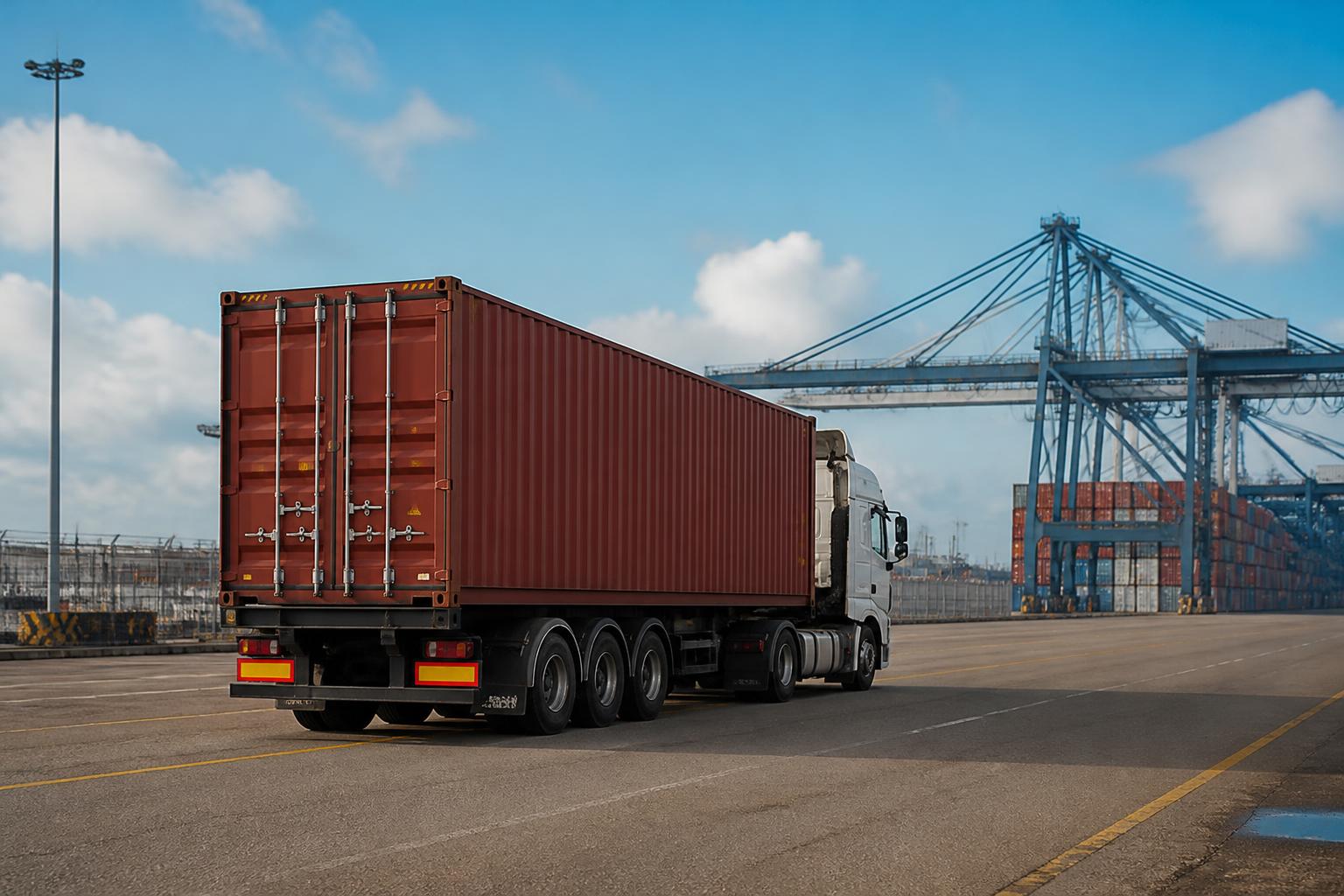
Port cost and delay usually build up in the gap between release and collection. The vessel has arrived, customs is not fully clear, the line’s free time is already running, and nobody has firm control of the road move. Merchant haulage cuts that risk because the importer, forwarder or customs agent chooses the haulier directly and can line up the collection around the actual release position, delivery booking and empty return plan.
In practice, that means fewer surprises at the port gate, earlier warnings when a box is drifting toward demurrage, and better control of where time is spent. For UK container imports, especially through Felixstowe, London Gateway, Tilbury, Purfleet, Southampton and Liverpool, the difference between a smooth move and an expensive one is often not the sea freight at all. It is the planning of the first road leg.
What merchant haulage means in practice
Merchant haulage means the road move is booked by the cargo side, not by the shipping line. On a UK import, that usually means the importer, freight forwarder or customs agent instructs us directly to collect the container from the port or terminal and deliver it to the consignee, warehouse, de-vanning site or another inland point in Great Britain.
That is different from carrier haulage. With carrier haulage, the shipping line arranges the inland move under its own network and conditions. The importer may receive a delivery date, but has less direct control over the haulier, the delivery sequence, the communication flow and often the response when plans need to change quickly.
With merchant haulage, we work to the release and customs position as it actually stands. We can coordinate directly with the party handling customs clearance, with the receiving site, and with the person who knows whether the box must move immediately or can wait for a better delivery slot. That direct line matters when a container is close to the end of free time, when a warehouse can only tip in a narrow window, or when a line has strict empty return instructions.
For UK imports, the practical distinction is simple. Under merchant haulage, the port collection, vehicle allocation, delivery booking and empty return planning sit under the importer’s or forwarder’s control. Under carrier haulage, those decisions sit much more with the ocean carrier.
Most of the work we handle is booked on that basis. Jagelo Haulage Limited collects containers from Felixstowe, London Gateway, Tilbury, Purfleet, Southampton and Liverpool and delivers across Great Britain, mainly as merchant haulage for importers and freight forwarders who want direct control of the move.
That approach is particularly useful on FCL traffic, where one box is moving intact to the consignee or to an unpack point chosen by the cargo owner. It can also matter on LCL-related collections where a customs-cleared container needs to move to a devanning warehouse under a tight booking window. The commercial terms of the ocean freight may differ, but the operational advantage is the same, direct control over the road leg.
When merchant haulage is the better option
Merchant haulage is usually the better option when timing at the port is uncertain but the cost of delay is real. A common example is an import that is expected to clear, but the line release and customs status do not land at the same time. If the road move is under direct control, we can watch for the point when both are in place and book the port slot accordingly, instead of having the delivery sit in a queue behind other carrier-planned work.
It also helps when the delivery point has restrictions. Many consignee sites have fixed booking windows, limited offloading equipment, driver induction rules, or no tolerance for failed deliveries. If a box can only be tipped at 08:00 the next day, there is no value in pulling it from the port too early unless that protects free time. Equally, if a same-day collection is needed to avoid demurrage, we need to know that before the free period expires, not after.
Freight forwarders benefit because they can match the haulage plan to the rest of the file. If customs entry has been pre-lodged but is still awaiting final status, if the shipping line has not yet issued full release, or if a quay to warehouse move needs to align with unpack labour, direct booking avoids a lot of avoidable chasing. Customs agents benefit for the same reason. When we are instructed directly, we can work from the actual customs position instead of assumptions.
There is also a straightforward cost reason. Carrier-arranged inland moves can be suitable for standard deliveries, but they are less flexible when the consignee changes, when the delivery slot moves, or when the importer wants a specific delivery sequence across several containers. Merchant haulage gives the cargo side more control over those decisions and often more visibility of where port and road costs are arising. Our article on what sets the price of UK container haulage goes into that in more detail.
Another strong case is when the box is at risk of storage or line charges. If the line’s free time is short, or if the release lands late in the day, the move has to be planned around terminal booking cut-offs and realistic road timing. We regularly flag containers that are drifting toward charge exposure so that the importer or forwarder can decide whether to collect immediately, rebook delivery, or change the unpack plan. The earlier that decision is made, the more options there are. We have covered that separately in how UK importers cut demurrage before charges start.
How the move is planned from release to delivery
A clean container move starts with release. Before we book collection, we need to know that the shipping line or its agent has made the container available for haulage and that customs status allows the box to leave. In UK practice, that means checking the line release, the terminal position and whether there are any customs holds or other blocks on the unit.
The line release alone is not enough if customs is not clear. Equally, customs clearance alone does not help if the shipping line has not released the container. On many files, the critical job is making sure those two statuses meet in time for collection.
Once release is confirmed, we book the port slot through the relevant system. At Felixstowe that means CARGOES VBS. Other terminals use their own vehicle booking process, including the Container Booking System, often shortened to CBS, or terminal-specific booking portals. The point is not the name of the software, it is getting a workable slot against the actual release position, driver hours, road timing and delivery plan.
We then match the box to the right equipment. A 20ft ISO Container may need different planning from a 40ft ISO Container or 45ft ISO Container, especially where payload, axle weight, site access or unloading equipment are tight. If the move involves a Refrigerated Container, we also need to know whether the unit is moving for live temperature maintenance or as a non-operating reefer, and whether the receiving site can handle it. Our guide on how temperature control works in a Refrigerated Container explains the operating side.
Delivery planning then turns on the consignee site. We confirm address details, booking reference if required, opening hours, contact name, unloading method and any restrictions such as tail swing limits, narrow access, PPE rules, waiting time limits or whether the site can accept a full-length artic. If the container is going for live unload, we need a realistic unloading window. If it is being grounded or left on a trailer for later work, that has to be agreed in advance.
The empty return plan matters from the start, not at the end. Different lines nominate different depots or terminals for empties, and those instructions can change. If the unloading point is remote from the return location, detention exposure can build quickly if the empty is not turned in within the line’s free period. That is why we look at the full cycle, collection, delivery, unload timing and empty return, before the loaded box has even left the port. We set out the charge mechanics separately in how detention charges build up on UK container moves.
Communication through the move should be simple and early. If the box is not yet released, we say so. If the terminal slot available is later than ideal, we say so. If delivery restrictions mean the collection should wait until the next day, we say so. Importers and forwarders do not need vague updates. They need to know whether the container can move, when it can move, and what cost risk sits behind each option.
What affects cost and risk on a container move
The biggest cost driver on many import moves is time, not miles. Free time at the terminal, line demurrage, detention on the equipment, port waiting, delivery waiting and failed delivery risk can all overtake the linehaul charge if the plan is wrong.
Free time is the first checkpoint. Terminal demurrage and shipping line detention are often discussed together, but they are not the same. Demurrage usually relates to the container sitting in the terminal beyond the free period. Detention usually relates to the use of the line’s equipment outside the free period after collection, until empty return. The exact charging basis depends on the line and the terminal arrangements, so we always plan against the actual release terms on the file.
Port waiting is another factor. A booked slot does not guarantee a perfect turnround. Traffic, stack delays, customs interventions and terminal congestion can all affect collection time. That is why realistic scheduling matters. If the plan assumes an ideal port visit every time, it will fail on the day that matters.
Container type changes cost and risk as well. A 20ft ISO Container can carry high weight on a short footprint, which raises payload and axle planning issues. A 40ft ISO Container often gives easier weight distribution but may face site access limits. A 45ft ISO Container needs even more care on delivery access and unloading space. ISO containers carrying waste-related material or specific regulated goods may also require the right registrations and operating controls.
Cargo type matters too. If the freight is high value, fragile, temperature-sensitive or regulated, the haulage arrangement should reflect that. We carry freight liability cover of £6,500 per tonne under RHA 2024 conditions, which is five times the standard RHA level of £1,300 per tonne. The same limit applies on subcontracted loads, and up to £10,000 per tonne is available by arrangement where needed. That matters because many importers assume all container haulage carries the same liability limit. It does not.
Delivery restrictions are a common source of avoidable cost. If the receiving site cannot unload promptly, waiting time starts. If the site cannot take the vehicle at all, a failed delivery can trigger redelivery cost, extra detention exposure and a return-to-port or storage problem. We would rather be told early that a site has a tight yard, a booking-only policy, or no means to lift than discover it with a loaded container on the trailer.
Volume and cargo measurement can affect planning even when the move is straightforward. A box with low CBM but high weight needs a different operational check from a light but full-volume load. Whether the shipment is FCL or linked to LCL handling, the road risk sits in the actual unit weight, the site capability and the timing of unload and empty return.
What to check before you book a haulier
Start with port coverage. A haulier may say it handles UK ports, but you need to know which ones it collects from routinely and under its own planning. We collect from Felixstowe, London Gateway, Tilbury, Purfleet, Southampton and Liverpool, so the booking, release and delivery issues at those ports are familiar ground for us.
Check the fleet and equipment. Ask whether the haulier runs its own vehicles and trailers, what container sizes it handles as standard, and how extra volume is covered. We run 40 vehicles and 40 trailers on operator licence OF2023521, with vetted partner hauliers on their own operator licences taking overflow where needed. That matters because resilience on busy weeks depends on actual operating capacity, not just a sales promise.
Confirm the operator licence position. For a UK road haulier, this is basic due diligence. The licence should be current and appropriate to the work. If subcontracting is used, ask how subcontractors are selected and whether they operate on their own licences. A good answer is specific, not general.
Ask how communication works from release to delivery. Who books the port slot. Who checks release. Who flags customs blocks. Who tells you if the box is at risk of demurrage or if the delivery booking is no longer realistic. If the answer is vague, the service usually will be too. We prefer a direct operational line, because container haulage problems are solved by quick decisions, not by layered call handling.
Insurance and liability limits need a proper look. Do not assume that all hauliers offer the same freight liability cover, and do not assume your cargo value fits inside a standard RHA limit. Ask for the limit in pounds per tonne, ask which trading conditions apply, and ask whether the same limit applies on subcontracted work.
Check whether the haulier can handle the cargo type lawfully. If the move involves waste, feed, or animal by-products, the relevant registrations matter. We are an upper tier waste carrier and dealer, CBDU471791, and are registered with APHA to carry Category 3 animal by-products, animal feed in shipping containers, quay to premises, U1433815/TRANS.
Finally, look at track record in the work itself. Container haulage is not general pallet distribution with a port collection added on. The haulier should understand release, customs holds, terminal bookings, free time, empty return instructions and consignee constraints as one joined-up process. Since 2019 we have moved more than 75,000 containers, around 13,000 a year, and that experience is what allows us to call out risk early, not after the charges have started.
Merchant haulage works best when the road move is treated as part of the import control process, not as an afterthought once the vessel has berthed. If release, customs status, slot booking, delivery timing and empty return are managed together, port cost usually falls and delay becomes easier to avoid. That is the real value of direct control.
Who usually books merchant haulage?
Usually the importer, freight forwarder or customs agent books merchant haulage directly with the haulier. That gives them direct control of collection timing, delivery planning and communication if a container is at risk of storage or demurrage.
Is merchant haulage cheaper than carrier haulage?
Not always on the headline rate. The value is often in control: choosing the haulier, planning around free time, spotting holds early and reducing avoidable port cost. The best option depends on the shipment, port and delivery point.
What information does a haulier need before collection?
Normally the haulier needs the container number, release status, port, delivery address, container size, weight, commodity, customs position and any site restrictions. If the load may be regulated, send the UN number and class so the haulier can confirm whether it can take it.
How are Felixstowe collections booked?
At Felixstowe, collections are booked on the Container Booking System (CBS). This replaced the Vehicle Booking System (VBS) in January 2025.
Can merchant haulage cover FCL and LCL movements?
Yes. merchant haulage is commonly used for FCL imports and can also support LCL moves where a full container is collected for devanning at a warehouse or distribution point. The planning still depends on release, customs status and port booking availability.