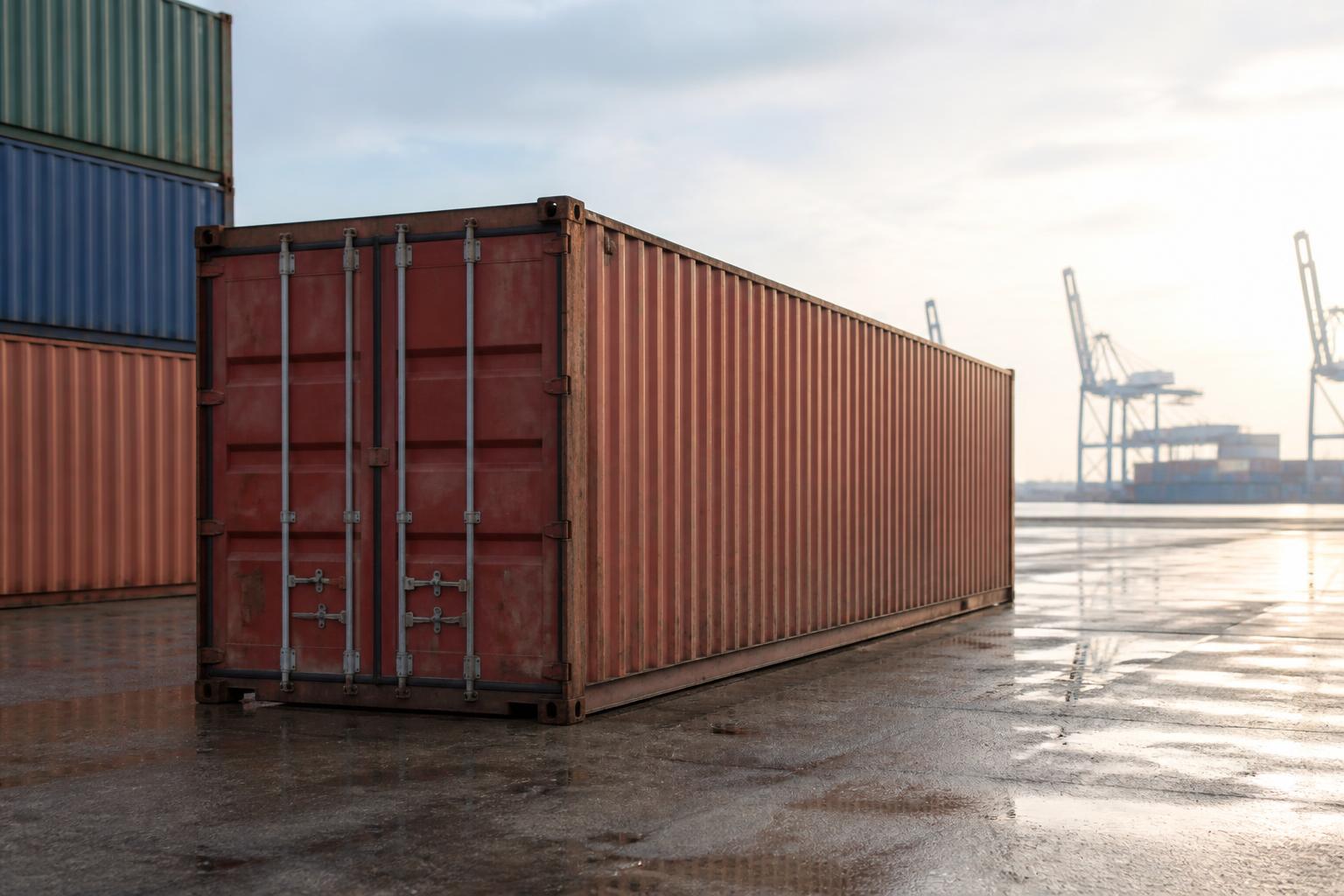
A detention fee builds up when the shipping line’s container has been collected from the port, but not returned empty within the free time allowed under that line’s terms. In UK container haulage, that usually means the box has left the quay, gone to the delivery point, and then stayed out too long before an empty return was accepted at the nominated depot or terminal.
For importers and forwarders, the important point is that detention is not really a road haulage charge. It is equipment use charged by the shipping line. We can help plan around it, book the collection and return, and flag risk early, but the clock and tariff sit with the line’s release and return terms. On merchant haulage jobs from Felixstowe, London Gateway, Tilbury, Purfleet, Southampton and Liverpool, that distinction matters because many disputes start when people mix up port costs, line costs and haulage costs.
What detention means in container haulage
A detention fee is charged for keeping the shipping line’s container outside the port or depot beyond the agreed free time. In plain terms, the line is saying, “you have had use of our box for longer than allowed, so extra days are chargeable”.
That is different from demurrage. Demurrage applies while the container is still inside the terminal, before collection, after the free days at the port have expired. If a box is uncleared, unreleased or simply not collected in time at Felixstowe or Southampton, demurrage is the charge that usually starts first.
It is also different from storage. Storage is a terminal or depot charge for occupying space at that facility. Depending on the port and the contract terms, storage can sit alongside demurrage, or be shown separately. In practice, people often use the terms loosely, but when a charge needs checking, the exact label matters.
For import moves, the usual sequence is simple:
- The container arrives.
- Port free time runs while the box is still in the terminal.
- If collection is delayed, demurrage and possibly storage can arise.
- Once the box is collected out, detention free time runs while the container is on the road, at the delivery point, or waiting to be returned empty.
- If the empty is not returned in time, a detention fee starts to accrue.
That applies whether the load is FCL or an LCL movement that has been devanned into another arrangement later on. It also applies across common equipment types, including a 20ft ISO Container, 40ft ISO Container, 45ft ISO Container and Refrigerated Container. The exact free time and return rules can differ sharply by line and by equipment type, especially for specialist or temperature controlled equipment.
When detention starts and how it is charged
Detention starts when the shipping line’s free time for use of the container outside the terminal expires. The trigger point is usually tied to the date the full container is collected, not the date the vessel discharged. That is why two boxes on the same vessel can end up with very different outcomes if one is collected promptly and turned round quickly, while the other sits at the customer’s site for several extra days.
Free time is set by the line, sometimes by service contract, sometimes by tariff, and sometimes by a specific quotation or booking arrangement. One importer may have more free days than another on the same service. A freight forwarder may also have negotiated terms that differ from the consignee’s assumptions. We always need the actual line terms, not a guess based on what happened last month.
Charges are normally daily, but they are not always a flat daily rate. Many lines use stepped tariffs. For example, the first block of overdue days may be charged at one rate, then later days at a higher rate. Some lines count calendar days rather than working days. Some treat weekends and bank holidays as chargeable days. Some apply different rules to standard dry boxes and a Refrigerated Container.
Line terms also matter on empty return location and acceptance. A container may be released from one port but required to return to a different inland depot or terminal. The nominated return point can change during the move. If the line’s system updates late, or the depot is not accepting that equipment, the practical return window can narrow very quickly.
In the UK, this is managed according to the shipping line’s commercial terms and the relevant terminal or depot booking rules. It is not a general EU rule applied uniformly across all ports. UK ports and UK line arrangements are operationally similar to many European ports, but the booking systems, free time practice and depot acceptance rules are specific to the line and location in question.
For port collections, booking access also affects whether detention can be avoided in real life. At Felixstowe, collections are slot controlled through CARGOES VBS. Other locations have their own process, including local terminal booking tools or a Container Booking System, sometimes shortened to CBS. If a box is technically within free time but no workable collection or return slot can be secured, the operational risk still lands on the shipment.
Who usually pays and where disputes come from
In most merchant haulage jobs, the importer or the freight forwarder contracting the move carries the commercial exposure to detention, because they control or arrange the release, customs clearance, delivery instructions and empty return planning. The shipping line invoices according to its contract position, which may sit with the consignee, the forwarder, or another named party in the chain.
The customs agent does not usually “own” detention just because customs formalities are involved. But customs delays can still be the reason the free time is lost, which is where arguments start. If a box is held because entries were not completed, instructions were late, or documents did not match, the importer may look to the agent, while the line still expects payment from the party on the hook under the transport contract.
We see disputes come from a few repeat patterns:
- The line’s free time was assumed, not checked.
- The release was not available when the delivery booking was made.
- Customs was not cleared in time for the intended collection.
- The delivery site could not tip on the agreed day.
- The consignee thought the haulier could hold the box until convenient without cost.
- The empty return point changed after collection.
- The line or depot would not accept the empty on the day planned.
- A forwarder and importer each thought the other was monitoring the clock.
Another common issue is responsibility for decisions at site. If the receiving warehouse asks the driver to leave the container for unloading the next day, or rejects the booking on arrival because labour is not ready, that can use up the remaining free time immediately. From the line’s point of view, the box is still out. From the haulier’s point of view, the planned turnround has been interrupted by site conditions outside road control.
This is one reason we prefer clear written instructions and realistic delivery dates. The more handoffs there are between importer, forwarder, customs agent, warehouse and line, the easier it is for detention risk to go unowned until the invoice arrives.
The operational reasons boxes run into detention
Most detention problems are not caused by one dramatic failure. They build from ordinary delays.
Late release is one of the main causes. If the vessel has discharged but the line has not issued a usable release, or a release is held pending payment or document completion, the planned collection day can be lost. That may not create detention immediately, but it compresses the time left to deliver, unload and return the empty.
Customs holds are another regular cause. A documentary check, routeing issue, missing data point or physical examination can stop a collection or delay onward delivery. Even where the hold is lifted quickly, the original slot may be gone and the revised plan may fall into a tighter return window.
Delivery site delays are just as common. Warehouses may have limited booking windows, no available fork lift, no tipping labour, or restrictions on when a 40ft ISO Container or 45ft ISO Container can be accepted. Some sites can ground a 20ft ISO Container promptly but struggle with longer equipment. Others can unload only one container per day. If those limits are known too late, the box can sit on hire while everyone tries to rebook.
Rejected bookings also cause avoidable exposure. A site may reject the delivery because the PO is not live, stock space is not ready, or the nominated day no longer suits operations. If the container has already been collected from the port, those changes matter far more than they would on a general pallet load.
Missed return windows are another major factor. The empty return may require a depot booking, a terminal slot, or acceptance at a location that is already full for that equipment type. We may be able to collect and deliver on time, but if the line’s nominated depot is not accepting empties until the next day, the detention clock does not stop for that.
Reefer and specialist movements can be tighter still. A Refrigerated Container may have more specific return requirements, and some depots limit what they will accept. The same applies where the cargo itself brings extra controls, such as animal feed or certain regulated products. At Jagelo Haulage Limited, we are registered with APHA to carry Category 3 animal by-products, animal feed in shipping containers, quay to premises, but those cargo permissions do not alter the line’s equipment free time.
Weight and unloading method can also affect the timetable. If a box is legal on the road but the receiver cannot unload it promptly because of site equipment limits, the container remains out. For heavy cargoes, how much a 44 tonne artic can legally carry often needs checking early, especially where declared cargo weight, packaging and actual unloading capability do not line up.
How to reduce detention risk on UK port collections
The simplest way to reduce detention is to plan the whole move backwards from the empty return, not forwards from the vessel arrival.
Start with the line terms. Before collection, confirm:
- free time for detention
- whether days are calendar or working days
- the current empty return location
- whether return booking is needed
- any equipment-specific restrictions
Then line up the operational milestones. Is customs cleared? Is the release live? Is the delivery site booked? Can the site unload the same day? If not, is there enough free time left to allow overnight hold and next day return?
For UK imports, we recommend avoiding “collect first, sort the warehouse later” unless there is a clear reason. Once the container is out, the line’s clock is running. A delayed warehouse booking can cost more than waiting one more day to collect under a controlled plan.
It also helps to check practical port access early. Felixstowe collections depend on CARGOES VBS availability. Other ports may require their own slot or depot arrangements. If a job is tight on free time, we would rather say so before booking than discover after collection that the return plan was optimistic.
Where delivery plans may move, build some tolerance into the programme. How to keep container deliveries moving when plans change sets out the sort of operational adjustments that help when a site date slips or unloading arrangements change late.
For importers handling regular FCL traffic, it is also worth separating demurrage control from detention control. A box can be collected in time to avoid port charges and still run into a detention fee later because unloading and return were not planned tightly enough. We cover the port side of that in how UK importers cut demurrage before charges start.
The same discipline applies to empty returns. Before the delivery day, we want to know whether the consignee will live-unload, strip over one day, or hold the box longer. If the plan is to keep the container on site, the detention exposure should be understood and accepted before the move starts, not argued about afterwards.
What a haulier can do when free time is tight
When free time is tight, our job is to make the road side as clean as possible and to flag risk early enough for somebody to act on it.
On merchant haulage, we book the port collection, monitor the practical timing against the release and customs position, and coordinate delivery with the receiving site. We also plan the empty return around the current line instructions. If the margin is narrow, we say so. If the return point changes, or the available slot pushes the box close to chargeable days, we escalate that quickly.
What we cannot do is override the shipping line’s tariff, force a depot to accept an empty, or guarantee that customs, release or warehouse availability will fall in line. Those are outside a haulier’s control. But there is still a lot we can do before a box becomes expensive.
That includes:
- checking that collection is realistic before dispatch
- matching the delivery date to the actual free time left
- warning when a same day turnround is the only safe option
- keeping communication direct between transport desk, forwarder and site
- using alternative vetted capacity where needed to protect the plan
Jagelo Haulage Limited runs 40 vehicles and 40 trailers of its own on operator licence OF2023521, with vetted partner hauliers on their own operator licences taking extra volume when required. Since 2019 we have moved more than 75,000 containers from ports including Felixstowe, London Gateway, Tilbury, Purfleet, Southampton and Liverpool. That volume matters because detention risk is managed through platforms like logivo.ai that focus on the details of release timing, slot booking, site readiness and empty return coordination, rather than broad promises.
We also know when a tight plan is no longer workable under drivers’ hours rules. If a job can only avoid detention by assuming a driver can wait indefinitely, tip late and still reach the empty return in time, that needs to be challenged early. Drivers’ hours rules for UK container haulage are a real operating limit, not a theoretical one.
Where the move involves unusual cargo or higher value goods, the same planning discipline applies. Our standard freight liability cover is £6,500 per tonne under RHA 2024 conditions, including subcontracted loads, with up to £10,000 per tonne available by arrangement. That protects the road leg. It does not replace proper management of the line’s container clock.
In practice, the best results come when everyone treats detention as a live operational risk from the moment the ETA firms up. Check the release. Check customs. Check the delivery booking. Check the return point. If any one of those is uncertain, assume the free time is already under pressure and plan accordingly. That is how most avoidable detention charges are prevented on UK container moves.
Is detention the same as demurrage?
No. Demurrage usually applies while the container is still sitting in the port or terminal. Detention usually applies after the container has left and is kept outside the line's allowed free time.
When does detention start?
It normally starts when the shipping line's free time expires after collection. The exact start point depends on the line's terms, the movement and sometimes the equipment type.
Who pays detention on merchant haulage?
Usually the party responsible to the shipping line under the booking or shipment terms pays it. On merchant haulage, that is often the importer or freight forwarder rather than the haulier.
Can detention be waived if customs delayed the box?
Sometimes a shipping line may review supporting evidence, but there is no automatic waiver. It depends on the line's policy and the documents provided.
Does the type of container affect detention?
Yes. A 20ft ISO Container, 40ft ISO Container, 45ft ISO Container or Refrigerated Container may have different free time or return conditions depending on the shipping line.