More on refrigerated containers from Jagelo Haulage
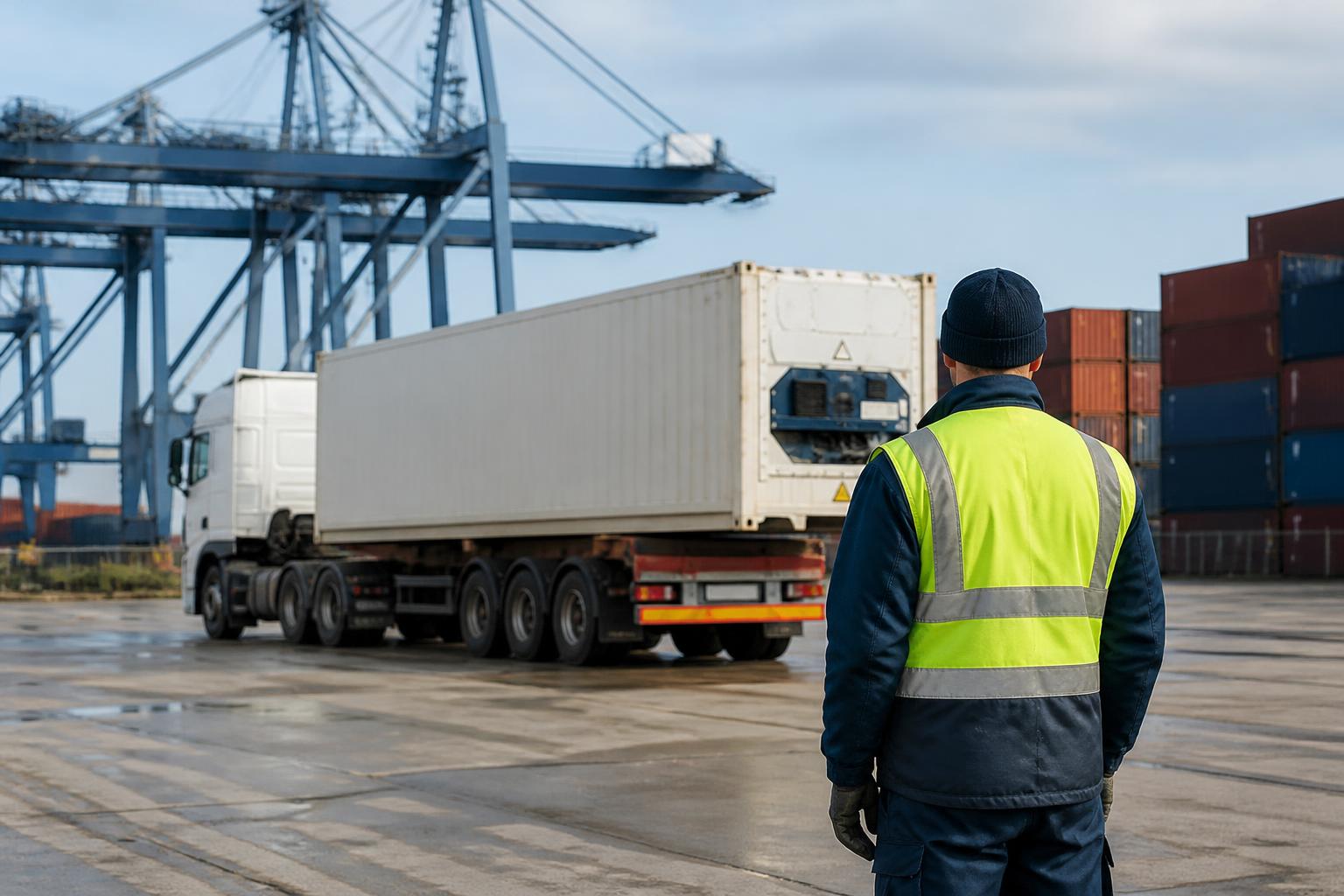
Choosing UK port haulage for refrigerated containers is mostly about avoiding costs that arise before the box even leaves the quay. For a Reefer import, the difference between a smooth collection and an expensive one is usually not the road leg itself. It is whether the haulier controls release status, books the port slot at the right time, understands reefer handling requirements, and flags risk early enough for someone to act.
When we handle reefer collections, we look at the whole chain from vessel discharge to final delivery in Great Britain. That means checking whether the line has released the unit, whether customs is clear, whether the terminal booking can actually be secured, what free time applies, and whether the delivery point is ready to receive a Refrigerated Container. If any of those points are left vague, port storage, demurrage, wasted journeys and missed delivery windows follow quickly.
What matters most when comparing reefer port haulage
When importers and forwarders compare providers for UK port haulage for refrigerated containers, the first question should be operational control, not just day rate. A low quoted move can become the most expensive option if the haulier does not manage bookings, free time and exceptions properly.
For reefer work, we would look at six practical points.
First, who actually controls the port collection. Some operators expect the customer to secure the slot and feed over a booking reference. Others will take responsibility for checking release, obtaining the port booking and planning the collection against vessel discharge and free time. For most importers, especially on regular FCL flows, the second model gives better control because there is one party accountable for the move from quay to delivery point.
Second, how the haulier handles exceptions. Reefer collections often fail for ordinary reasons, line release not in place, customs stop, terminal system delay, or the box not yet grounded and available. What matters is whether the haulier identifies the issue early, says what is needed to clear it, and replans before charges start to build. A provider that simply reports “not ready” without context is not giving enough control.
Third, whether the fleet and process are set up for container work at the ports you use. Reefer haulage is still container haulage. You need a haulier that works daily with terminal systems, PIN releases, VBS slots and quay collection procedures at Felixstowe, London Gateway, Tilbury, Purfleet, Southampton and Liverpool. Familiarity with each port’s routine matters because the practical causes of delay differ by terminal.
Fourth, equipment coverage. You need to know whether the haulier can move the box types you actually import, not just standard dry boxes. That includes a 20ft ISO Container, 40ft ISO Container and 45ft ISO Container, and whether the receiving site can accept that configuration. A 45ft delivery can fail for access reasons even where 40ft traffic is routine.
Fifth, communication. Reefer importers usually need updates tied to real milestones, released, booked, collected, delayed at port, delivered. We find that clear updates matter more than volume of messages. A short message saying the box is customs held, free time expires tomorrow, and the next available slot is at 14:00 is more useful than a long generic status note.
Sixth, liability and compliance. Reefer cargo can be high value and time sensitive. If something goes wrong, you need to know the haulier’s freight liability position, whether subcontractors are used, and whether the same cover and compliance standards apply to those subcontracted moves.
Port booking and free time control
For reefer collections, avoidable port cost usually starts with timing errors. A box can be physically on the terminal, but not collectible because the shipping line has not released it, customs has not cleared it, or the booking window has not opened. If the haulier is not checking those points actively, free time disappears fast.
At Felixstowe, booking is managed through CARGOES VBS. Other ports use their own systems, but the principle is the same. A collection needs the box to be available, the release to be valid, and the slot to be booked for a time when the unit can actually be pulled. Booking too early can waste effort if the unit is not yet grounded. Booking too late can mean no usable slot before free time expires.
This is where the distinction between simply taking an instruction and actually managing the move matters. We plan collections around release status, terminal availability and the line’s free time. If there is risk, we say so early. That gives the importer or forwarder a chance to act with the line, customs broker, consignee or cold store before charges become unavoidable.
For reefer imports, free time control should cover four checks as standard:
- Is the line release in place and matched to the right container number?
- Is customs status clear for collection?
- Is the terminal showing the unit as available?
- Is there a realistic booking slot before the end of free time?
If the answer to any of those is no, the move is at risk. The right response is not optimism. It is escalation and replanning.
Port systems also matter in practical ways. At some ports, booking availability can tighten sharply around vessel peaks, weekends or bank holidays. A haulier with regular activity on the terminal will usually spot that sooner and book accordingly. That is one reason regular container operators tend to outperform occasional port users on reefer work.
The receiving point matters too. A Reefer import collected in time can still incur avoidable cost if delivery fails because the site is not ready, there is no unloading slot, or the consignee cannot receive at the agreed time. We therefore treat delivery readiness as part of free time planning, not as a separate issue to discover after the box is already on the road.
We have covered that planning approach in more detail in our guide to moving a reefer from Felixstowe without avoidable port cost and in our article on container haulage that cuts port storage risk.
Coverage, equipment and container types
A reefer haulier does not need to serve every UK port to be useful. It does need to cover the ports you actually import through, with enough own-fleet capacity and partner capacity to stay responsive during peaks.
We collect from Felixstowe, London Gateway, Tilbury, Purfleet, Southampton and Liverpool, then deliver across Great Britain. For many importers and forwarders, that port spread is important because reefer routings can change with line service patterns, vessel delays or space constraints. If your haulage provider only works one gateway comfortably, every change in port rotation becomes a service risk.
Container type coverage is another area where assumptions cause problems. Not every operator handles all common ISO containers with the same ease, and not every customer site can receive them all. A 20ft ISO Container may present weight concentration issues. A 45ft ISO Container may present access or turning issues. A 40ft ISO Container may be straightforward at one site and not at another if unloading equipment or yard layout has changed.
When comparing providers, ask directly:
- Which ports do you collect from regularly?
- Can you move a 20ft ISO Container, 40ft ISO Container and 45ft ISO Container?
- Do you handle both FCL and port to depot moves linked to onward LCL devanning?
- How do you manage peak volume when vessel bunching affects reefer arrivals?
- What proportion of work is covered by your own fleet, and what goes to partners?
Those questions matter because volume peaks are where service quality is tested. A provider may perform well on steady weekly flows but struggle when several boxes land together and all need collection before free time expires.
Our model is a 40 vehicle and 40 trailer operation, supported where needed by vetted partner hauliers operating on their own operator licences. That gives us flexibility without losing control of the booking and planning side. Since 2019 we have moved more than 75,000 containers, about 13,000 a year, so our process is built around daily container work rather than occasional port jobs.
For reefer imports, we also pay attention to what happens after collection. Some deliveries go direct to cold store. Others go to production sites, food premises or distribution centres. Those sites often work to narrow intake windows, and if a booking is missed the cost lands back on the import. A haulier that understands the delivery side as well as the port side will reduce that risk.
Merchant haulage versus line haulage for refrigerated imports
For Refrigerated Container imports into Great Britain, the choice between line haulage and merchant haulage affects control more than many shippers expect.
With line haulage, the shipping line appoints or controls the inland move. That can work well where the inland leg is simple and the consignee has little need for visibility or flexibility. It can also suit imports where the line’s package rate is commercially attractive and the delivery point can accept the line’s timing.
But line haulage has limits. The importer or forwarder may have less visibility of booking progress, less say over delivery timing, and less flexibility if plans change. Where the consignee needs a specific intake window, where customs timing is uncertain, or where free time is tight, those limits can become expensive.
That is where merchant haulage often gives better control. With merchant haulage, we are booked directly by the importer or freight forwarder, so the party responsible for the cargo controls the road move. That usually means clearer communication, more direct decision making, and faster response when a release or booking issue appears.
For reefer imports, merchant haulage is often the better choice when:
- the consignee has strict delivery booking requirements
- the cargo is time sensitive
- the line’s free time is tight
- customs clearance is being managed close to arrival
- the importer wants one direct point of contact for port collection and delivery
- there is a realistic risk that the collection plan will need to change after vessel arrival
It also helps where the importer wants consistency across multiple ports. If one week the box lands at Southampton and the next at London Gateway, a merchant haulage model keeps the inland process under the importer’s control rather than handing it back to whichever line or terminal arrangement applies on that shipment.
In Great Britain, that direct control is often especially useful because port procedures, booking systems and delivery geography vary significantly by gateway. A one-size-fits-all inland arrangement rarely performs as well as a planned merchant haulage move tailored to the container, the port and the receiving site.
We have set out the wider control benefits in our article on Choosing port haulage cover that cuts avoidable port costs.
Freight liability, subcontracting and compliance checks
Before booking any reefer move, check the haulier’s freight liability position in writing. Do not assume the level of cover, and do not assume subcontracted moves carry the same protection as own-fleet work.
Many operators work on RHA conditions at the standard liability limit, which may not be enough for chilled or frozen cargo of high value. Our freight liability cover is £6,500 per tonne under RHA 2024 conditions, which is five times the usual RHA standard of £1,300 per tonne. Where needed, up to £10,000 per tonne is available by arrangement for high value freight. Just as important, subcontracted loads carry the same £6,500 per tonne limit.
That second point matters. Some businesses quote on the basis of strong own-fleet standards, but when volume rises they pass work to subcontractors on weaker terms. For the customer, that creates hidden exposure at exactly the point where service pressure is highest. Ask plainly whether subcontracted loads carry the same freight liability limit, and ask who remains responsible for communication and exception handling.
Operator compliance should also be checked. In the UK, a legitimate container haulier should be operating under a valid goods vehicle operator licence. Our licence is OF2023521. If you are comparing providers, ask for the operator licence number and verify it. If a business says it has its own fleet, that should be easy to provide.
Sector-specific registrations matter too, especially on food-related reefer traffic. Depending on cargo type, you may need to know whether the haulier is registered to carry waste, feed or animal by-products. We are an upper tier waste carrier and dealer, CBDU471791, and we are registered with APHA to carry Category 3 animal by-products, animal feed in shipping containers, quay to premises, U1433815/TRANS.
Those checks matter because the UK position is not always identical to wider EU practice. Great Britain has its own domestic operator licensing and regulatory framework, and post-Brexit cargo flows can involve documentation and compliance checks that differ from EU internal movements. If your reefer import contains regulated food-related products, it is worth confirming that the haulier’s registrations fit the actual commodity, not just the container type.
Finally, ask how the haulier manages subcontracting in practice. “We use partners” is not enough on its own. The useful questions are:
- Are partner hauliers vetted before use?
- Do they operate on their own operator licences?
- Does the same freight liability limit apply?
- Who books the port slot?
- Who updates the customer if the load is delayed?
- Who is responsible if the delivery booking has to be changed?
Our approach is simple. We run our own fleet and use vetted partner hauliers on their own operator licences when extra capacity is needed. We keep control of the job, including booking, planning and communication, so the customer is not left trying to work out who is actually moving the box.
For importers and forwarders booking UK port haulage for refrigerated containers, that is the point to focus on. The road move itself is only one part of the risk. The real value is in how the haulier manages release, booking, free time, delivery readiness and exceptions before avoidable cost appears. If those controls are in place, reefer collections stay routine. If they are not, the charges start long before anyone sees the truck.
What should I ask a reefer haulier before booking?
Ask which ports they cover, how they book collections, how they monitor free time, what freight liability applies, and how they handle customs holds or release delays.
Is merchant haulage better for Refrigerated Container imports?
Often yes if you want direct control of collection timing, port booking and delivery planning. It can also make exception handling clearer when release or customs issues arise.
Does Felixstowe still use VBS for container collections?
No. At Felixstowe, collections are booked on the Container Booking System or CBS, which replaced the Vehicle Booking System in January 2025.
Why does subcontracting matter on reefer moves?
It matters because extra volume is often covered by partner hauliers. You should check that subcontracted loads sit under the same freight liability terms and are moved by operators on their own licences.
Which UK ports are most relevant when comparing reefer haulage?
For many importers, the key comparison is across Felixstowe, London Gateway, Tilbury, Purfleet, Southampton and Liverpool, especially if your inbound flows change by service or shipping line.