Part of our guide to container haulage from London Gateway
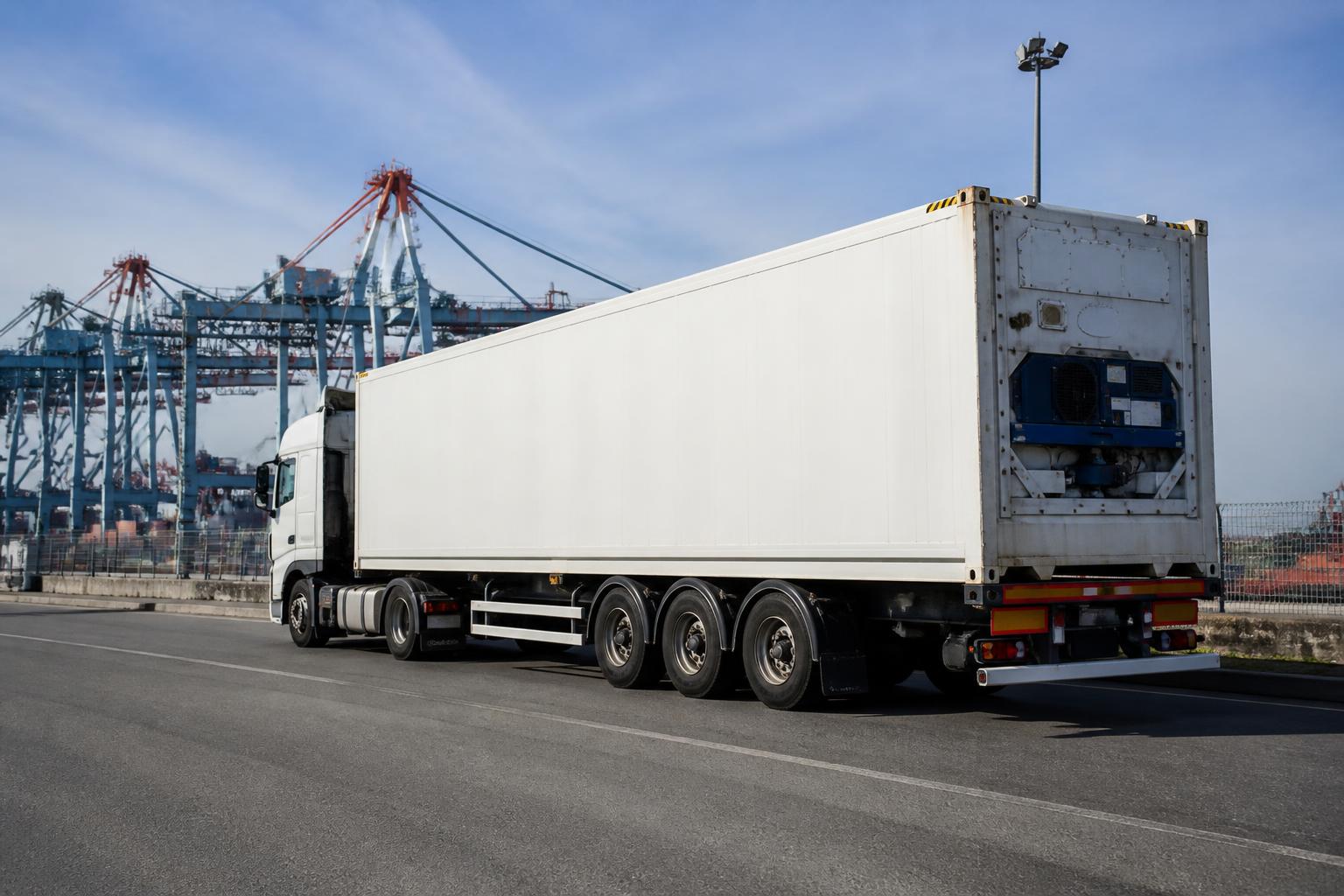
If you need to know who can collect a reefer container from London Gateway today, the short answer is that we often can, but only when the box is actually clear to move and there is a workable booking window at the port. Same day collection is not just a question of having a lorry nearby. For a Refrigerated Container, the release, customs position, shipping line status, terminal visibility, and delivery timing all need to line up.
At Jagelo Haulage Limited, we handle merchant haulage collections from London Gateway every week, alongside Felixstowe, Tilbury, Purfleet, Southampton and Liverpool. When a reefer is close to the end of free time, the difference between moving today and missing today is usually not transport capacity alone. It is whether the job comes to us with enough of the right information, early enough for us to check the box and secure the slot.
Can a reefer be collected from London Gateway today?
Sometimes yes, sometimes no. A same day collection from London Gateway is possible when five practical conditions are met.
First, the container must be released by the shipping line and visible as available for collection. If the line has not issued release, or there is an outstanding hold, we cannot book and collect no matter how urgent the instruction is.
Second, customs must be clear. For a UK import, that usually means the declaration has been accepted and there is no hold preventing removal. If there is an examination, documentary query, or another intervention, the box is not ready to move. This is one of the main reasons a reefer that looked collectable in the morning is still on the terminal in the afternoon.
Third, the terminal booking must be obtainable. London Gateway works on booked collections, and same day work depends on what is available in CARGOES VBS at the time we are checking. If the release lands late in the day, or if the collection windows are heavily used, there may simply be no practical slot left.
Fourth, the delivery point must be able to receive the unit. A Refrigerated Container cannot always be left standing in the same way as a standard dry box. We need to know whether the receiver can tip promptly, whether there is a live unload plan, whether the site has the right equipment, and whether the box needs to remain on power before unloading.
Fifth, the road move itself has to be legal and workable. That means the weight, equipment type, and destination all need to fit the job. A 20ft ISO Container at high gross weight needs checking differently from a 40ft ISO Container or 45ft ISO Container. Reefer dimensions and cargo weight can affect trailer choice, route planning, and whether the delivery can be done safely within drivers' hours.
So if you are asking whether somebody can collect your reefer from London Gateway today, the honest answer is yes, if the release chain is complete and we receive the job while there is still time to secure the booking and execute the delivery.
What your haulier needs before booking the collection
The fastest bookings are the ones that arrive complete. For a London Gateway reefer import, we need enough information to assess the move properly before we commit to collection.
In practice, send us:
- container number
- shipping line
- size and type, such as 20ft ISO Container, 40ft ISO Container or 45ft ISO Container
- confirmation that it is a Refrigerated Container
- port of collection, in this case London Gateway
- delivery postcode and site name
- cargo gross weight
- commodity, especially if it is food, animal feed, or another controlled load
- customs status
- release status
- free time position for line demurrage and terminal storage
- whether the delivery is live unload, grounded, or waiting time likely
- site restrictions, including booking in, forklift availability, and opening hours
- contact details for the delivery point
- any special handling instructions
For reefer work, a few extra points matter. Tell us whether the cargo is chilled or frozen, whether the set point must be maintained to destination, and whether there are any seal instructions or temperature record requirements. If the load is Category 3 animal by-products or animal feed in shipping containers, that needs to be identified from the start. We are registered with APHA to carry Category 3 animal by-products, animal feed in shipping containers, quay to premises (U1433815/TRANS), so we can assess those moves correctly.
It also helps if you send the line release reference, the customs entry number where relevant, and any note of known holds or recent status changes. If the box is an FCL import, the instruction is usually straightforward. If it is an LCL movement or part of a devanning plan, the timing and destination arrangements often need more checking. If the receiver is quoting cargo volume in CBM rather than container details, we still need the actual container data before we can book the port collection.
The more complete the first instruction, the less time is lost chasing details while the clock runs on free time.
The checks that decide whether the box can move
Before we commit a vehicle to a same day reefer collection, we run through the checks that actually determine whether the container can leave the port.
The first is line release. The shipping line must have issued release and there must be no commercial hold. A box can be physically sitting in the stack and still not be collectable. If release has not been processed into the terminal systems, the driver is not getting it out.
The second is customs clearance. In the UK, import customs status is the deciding point for removal from the port. If the declaration is under query, selected for an intervention, or otherwise not clear, the container stays put. Where a rule differs between the UK and the EU generally, the practical point is that UK imports move under UK customs processes, not EU import procedures, so the status must be checked against the UK entry and any instructions from HMRC or Border Force.
The third is terminal status. We check whether the container is showing in the terminal system as available and whether there are any operational restrictions affecting collection. Reefer boxes can also be affected by yard planning and handling priorities, so availability needs to be confirmed rather than assumed.
The fourth is equipment and weight. We need to know that the container can be moved compliantly on the proposed trailer and route. Heavy reefer imports can push axle planning into focus very quickly, especially on a 20ft ISO Container. If the gross weight supplied is wrong, the job can fail at the gate or become a legal problem on the road.
The fifth is delivery readiness. Same day collection only works if the destination can receive the unit when it arrives. If the warehouse closes before the collection slot is even likely to turn, or if there is no way to unload a reefer on arrival, taking the box out of London Gateway may simply move the problem from the port to the customer yard.
The sixth is cost exposure. If free time expires today, we check what can realistically be achieved before cut off. Sometimes the right call is to collect immediately. Sometimes the right call is to escalate the release issue first, because booking a truck without a clear release just burns time.
This is why we do not treat reefer work as a standard box with a different label. The checks are similar, but the consequences of getting one wrong are usually greater. For a broader view of how to avoid unnecessary port cost on temperature controlled imports, our guide on choosing a reefer container haulier without extra port cost sets out the main pressure points.
How slot booking and timing work at London Gateway
At London Gateway, same day collection depends heavily on booking windows. In simple terms, once the box is clear to move, we still need a usable slot in CARGOES VBS. That is the practical gate between a collectable container and an actual collection.
The timing issue usually falls into one of three patterns.
The first is the early clear box. Release and customs are already in place, the container is visible, and the instruction reaches us with enough time to book and route the move. These are the jobs most likely to go the same day.
The second is the late clear box. The paperwork catches up around midday or later, and by then the available slots in CARGOES VBS may be limited. In that case, the answer depends on what is left in the booking system and whether the delivery can still be completed inside site hours and drivers' hours.
The third is the not yet clear box. The customer asks us to stand by because release is expected today, but the line or customs position is still unresolved. We can monitor and prepare, but we cannot treat that as a guaranteed same day move until the status actually changes.
Importers and forwarders should expect us to ask direct timing questions. When did release land. Has customs definitely cleared. What is the last receiving time at delivery. Is there any flexibility if the collection slot turns later than planned. Those questions are not delay for the sake of process. They are how we avoid booking a collection that cannot complete.
Where timing is especially tight, early instruction matters more than anything else. Even if one element is still pending, sending the job in advance lets us line up the checks and move quickly once the final block is removed. The same principle applies at other ports too. If you also move boxes through Essex and Suffolk, our articles on can your container be collected from Tilbury today and fast container collection from Felixstowe when timing matters explain how the booking pressure differs by port.
How to reduce demurrage and storage risk on reefer imports
Reefer imports become expensive when people wait too long to escalate. The best way to reduce demurrage and storage risk is to work backwards from free time, not forwards from convenience.
Send the haulage instruction as soon as the ETA firms up and certainly before the last free day. Even if release is not yet in place, we can review the move, flag obvious issues, and be ready to book once the box clears. That matters when the line free time and terminal free time are both running down.
Be clear about what you want us to do if the box is not released by a certain hour. Some customers want us to keep checking and move the moment it clears. Others want a decision point, after which the customs agent or forwarder escalates with the line. That instruction should be explicit, especially where the box is already close to chargeable days.
Make sure the delivery point is genuinely ready. A common avoidable cost is collecting the container from port only to find the receiver cannot unload, has not booked the bay, or closes before arrival. For a Refrigerated Container, the knock on effect can be worse than with dry ISO containers because the handling conditions are tighter.
Give accurate weight and commodity details. Incorrect gross weight causes planning errors. Vague cargo descriptions slow down checks. If the load is food related, feed related, or otherwise controlled, call that out at the start.
Escalate release and customs issues early. If the line has not released, or the customs position is unclear, the best time to chase is before the last workable booking window has gone. Once the day is almost finished, there is less room for anyone to recover the move.
Use a haulier that will tell you early when the plan is slipping. We would rather tell you at once that a same day collection is unlikely than let the free time expire while everyone assumes somebody else is fixing it. That is a large part of what good merchant haulage looks like in practice.
Who to call when you need a London Gateway reefer collection
When you need a London Gateway reefer collection, send the job to us as soon as you have the container details and the expected release path. We handle merchant haulage from London Gateway and the other main UK container ports, including Felixstowe, Tilbury, Purfleet, Southampton and Liverpool.
Jagelo Haulage Limited operates 40 vehicles and 40 trailers of its own on operator licence OF2023521, with vetted partner hauliers on their own operator licences for additional volume. Since 2019 we have moved more than 75,000 containers, mostly for importers and freight forwarders booking direct. We are set up for port work, booking systems, delivery coordination, and the kind of early exception handling that reefer imports need.
For customers moving temperature controlled imports inland, we can assess whether the box is actually collectable, check the booking position, and plan the delivery against free time and site constraints. Our freight liability cover is £6,500 per tonne under RHA 2024 conditions, with the same limit on subcontracted loads, and up to £10,000 per tonne by arrangement for higher value freight.
If your delivery is heading inland from Essex, our guide to moving containers from London Gateway to the Midlands may also help with planning expectations after collection.
If you need us to look at a reefer at London Gateway today, send the container number, line, weight, delivery postcode, customs status, and release status first. We will tell you quickly whether the box can move, what still needs clearing, and whether there is still a realistic same day booking path.
Can a haulier collect my reefer from London Gateway on the same day?
Yes, if the release is in place, customs is clear, the terminal will allow collection and a suitable slot can be booked. If any of those are missing, the collection may need to move to the next available window.
What details should I send first?
Send the container number, collection release or PIN, shipping line, delivery postcode, commodity, gross weight and any deadline around free time. If the load has special handling points, include those at the start.
Does a Refrigerated Container need different planning from a dry box?
Usually yes. Reefer imports often have tighter timing, more delivery sensitivity and less room for avoidable delay. That makes early checks on release, customs and slot availability more important.
What can stop a same-day collection?
Common blockers are customs holds, missing release, line issues, terminal restrictions, no bookable slot, incomplete delivery details or instructions arriving too late to plan the move properly.
Does Jagelo Haulage Limited collect only from London Gateway?
No. Jagelo Haulage Limited collects from London Gateway, Felixstowe, Tilbury, Purfleet, Southampton and Liverpool for delivery within Great Britain.