Part of our guide to container haulage from London Gateway
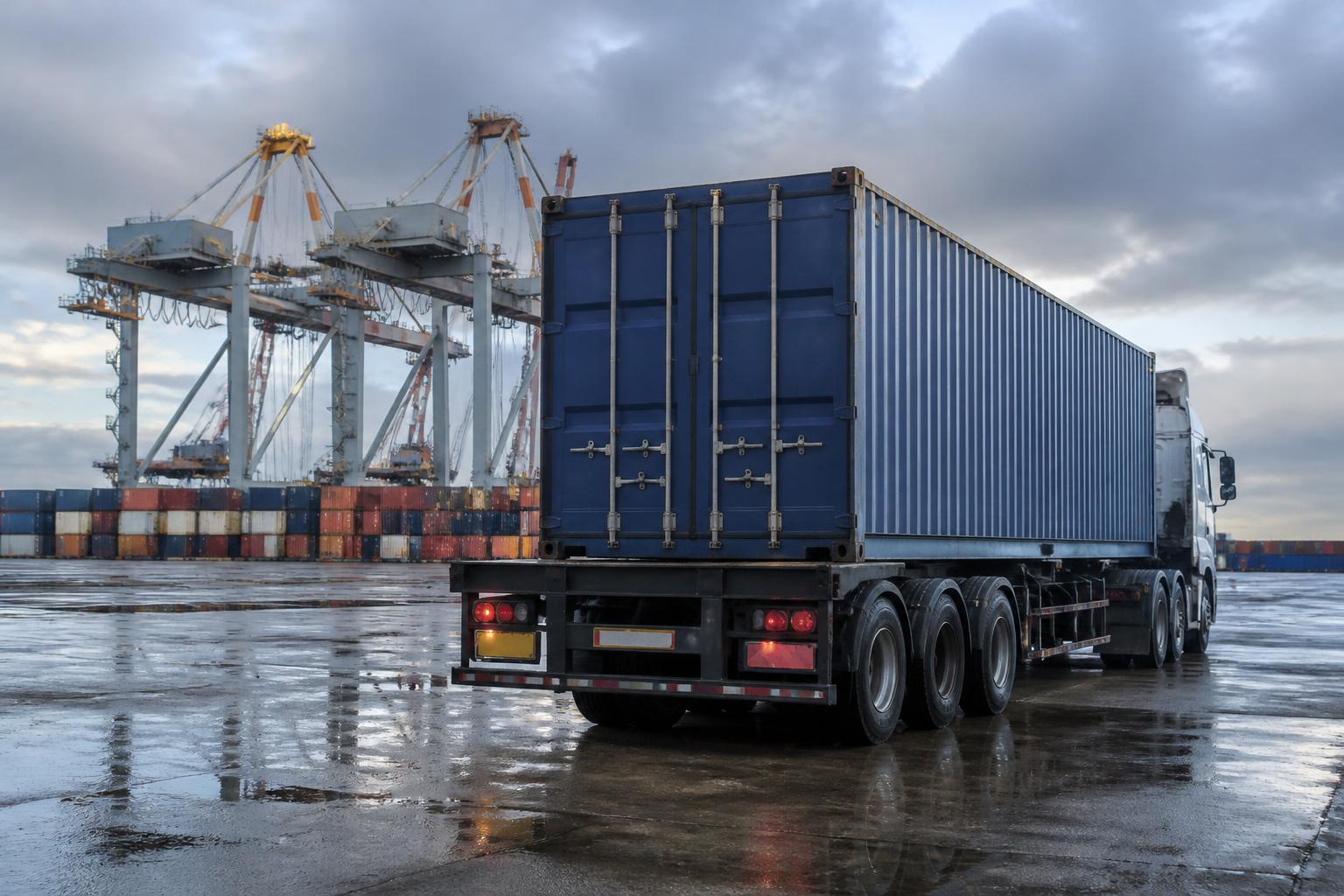
If you need an urgent collection from London Gateway, most delays do not start at the gate. They start earlier, when the release is not fully in place, the customs position is still unclear, the delivery point has not been checked, or the haulage booking reaches the port too late to secure a workable slot. Same day port haulage from London Gateway is usually possible, but only when the box is genuinely collectable and the delivery can still be executed within the available driving time, site restrictions, and port booking conditions.
At Jagelo Haulage Limited, we treat urgent London Gateway work as an operational exercise, not a sales enquiry. We check whether the container is actually released, whether the port booking can be made in time, whether the destination can receive it, and whether the move should go direct or via a night trunk or storage point. That is how avoidable delay is prevented.
What same day port haulage from London Gateway usually means
In practice, same day port haulage from London Gateway usually means collection from the terminal on the day the job is booked, with delivery either the same day or on the next workable leg if distance or site access makes same day delivery unrealistic. Readers in this market already know that “same day” can describe the collection leg, the delivery leg, or both. The important point is to define which one is required before the booking is placed.
For an import FCL move, same day collection is only realistic if the container has a valid release, customs clearance or a confirmed route to move, a bookable slot at London Gateway, and a delivery point that can actually receive the unit. If any one of those is missing, the urgency does not create capacity by itself.
The cut off is rarely just one thing. It is a combination of when the line releases the box, when the customs entry is accepted, when the terminal slot can be secured through the relevant booking process, and when a driver can lawfully complete the job. A 20ft ISO Container going to a flexible warehouse in the Midlands is a different proposition from a 45ft ISO Container going into a narrow urban site with afternoon access restrictions.
For export work, same day from London Gateway usually means positioning an empty or loaded unit against a vessel deadline, return window, VGM status, and booking reference that are already in place. If any export data is still missing, the same day target becomes difficult very quickly.
The phrase itself matters less than the sequence. Before we accept an urgent move, we want to know whether the job is same day collection only, same day collection and delivery, or same day recovery to avoid storage, quay rent, demurrage, or a failed handover. Those are different jobs and should be planned differently.
If you want a broader view of how urgent port work is usually secured, our guide on same-day port collection in the UK sets out the wider pattern across ports.
What has to be ready before a container can be collected
The fastest way to lose time is to ask a haulier to “go and get it” before the box is actually collectable. At London Gateway, we need the release position to be clear first.
For imports, that usually means the shipping line or carrier release is in place and any holds that prevent collection have been lifted. Depending on the move, we may also need the PIN, release reference, line reference, container number, and booking party details exactly as held in the terminal and line systems. A small mismatch in the container number or release data can stop the collection at the booking stage.
The customs status must also be clear. In the UK, import movements need to be in a status that allows the container to leave the port. If the entry is not accepted, if there is a customs hold, or if the movement requires a different discharge or inland routing arrangement, the haulier cannot solve that at the gate. A customs agent may still be working on the entry while the consignee is pushing for collection, but the driver needs a container that can legally move.
We also need proper delivery details. That means full delivery address, postcode, contact name, phone number, opening hours, booking reference if the warehouse uses one, whether the site has a forklift or needs a live unload, whether the unit is to be tipped immediately or grounded elsewhere, and whether the site can take the size and weight involved. A 40ft ISO Container or 45ft ISO Container can be refused on arrival if the yard layout, turning area, or unloading resource is unsuitable.
Container data matters just as much. We need the exact container number, size, type, gross weight, commodity if relevant to planning, whether it is standard dry freight or a Refrigerated Container, and whether there are any special handling points. For LCL-related collections, we also need to know whether the move is actually a full container collection to a devanning point, or whether someone is using “LCL” loosely to describe a shipment that is no longer moving as a port collection at all.
If the cargo is controlled, additional registrations may matter. We are an upper tier waste carrier and dealer, CBDU471791, and we are registered with APHA to carry Category 3 animal by-products, animal feed in shipping containers, quay to premises, U1433815/TRANS. Those points need to be checked before the truck is sent, not after it reaches the terminal.
On the export side, readiness usually means booking reference, return location, VGM status where required, container number, seal position if relevant, and vessel timing. If the box is being returned loaded, the handover documents and cut off need to be aligned. If the move involves empty repositioning first, that should be stated upfront.
Where same day jobs are won or lost
Urgent London Gateway work is usually won or lost in five places, the booking window, the release timing, the delivery restriction, the driver plan, and the type of move.
First, the booking window. If the release arrives too late in the day, the remaining slots may not support the delivery plan you want. Even if the terminal is operating, the right collection time may no longer be available. The practical issue is not just whether a slot exists, but whether it fits a legal and workable road move afterwards. We book against the live position, not against assumption.
Second, free time and cost exposure. If the box is already close to the end of line free time or terminal free time, the job becomes more urgent because a failed collection attempt can create avoidable cost. That is why we plan around release certainty before committing the truck. A rushed booking with incomplete paperwork can be more expensive than waiting one hour for the right release data.
Third, quay and terminal conditions. A container can be technically available but still delayed by congestion, stack position, or operational pressure. That is not unique to London Gateway, but it matters on urgent work because the margin for recovery is smaller. If the collection is time critical, we say early whether the risk is at the document stage or at the terminal stage.
Fourth, driver planning. A same day collection still has to fit drivers’ hours, route length, destination opening times, and equipment availability. A local or regional delivery may go direct. A longer movement may need a staged plan. We run 40 vehicles and 40 trailers of our own on operator licence OF2023521, with vetted partner hauliers on their own operator licences taking extra volume where needed. That matters because urgent work is often decided by whether there is real port capacity behind the promise.
Fifth, the type of move. Import FCL, export FCL, quay to depot, quay to warehouse, merchant haulage under direct importer control, and LCL-related devanning moves all behave differently. An import FCL to a flexible RDC is often simpler than a quay collection of a Refrigerated Container with temperature sensitivity and a strict receiving window. If your urgent box is reefer cargo, our note on getting a reefer box out of London Gateway without delay goes into the extra points that matter.
There is also a system point. Depending on the process in use, bookings may be made through the terminal’s own tools or through line and port interfaces that the booking party already knows, including references to CARGOES VBS, Container Booking System, and CBS. Whatever route is used, the principle is the same. The booking data has to be correct, and it has to be submitted early enough to leave a workable road leg afterwards.
How merchant haulage helps importers and forwarders move faster
For urgent port work, merchant haulage usually gives the booking party more control. That is why many importers and forwarders prefer it when the release and customs side are already being managed in house or by their own agent.
With merchant haulage, we are instructed directly by the importer, forwarder, or customs agent who actually knows the live status of the box. That shortens the communication chain. If the release changes, if customs clears, if the delivery point moves, or if the warehouse asks for a different ETA, the update comes straight to us rather than passing through several parties first.
That direct control matters most when a London Gateway container is at risk. If the line free time is ending, if the consignee is pushing for stock, or if the terminal booking options are tightening, the person holding the release and the person booking the truck need to be in step. Merchant haulage makes that easier.
It also improves escalation. If a box is urgent and there is a question over release wording, destination acceptance, or whether the move should go direct or be staged, we can resolve it quickly with the booking party. We do not need to wait for a relay through a third party that may not be watching the same deadlines.
For many customers, the practical benefit is visibility. We plan the job against the actual collection requirement, the free time, and the delivery conditions. If a box is at risk, we say so early. If it can still be recovered same day, we act on that. If it cannot, we give the next workable option. That is often what saves cost, not simply the word “urgent”.
This is also where scale across ports helps. Customers who book London Gateway often also move through Felixstowe, Tilbury, Purfleet, Southampton, and Liverpool. The same internal team may be handling all of them. We support those ports as part of the same operating model, which helps when cargo is being re-routed or when contingency planning is needed.
Choosing a haulier for urgent London Gateway work
If you are assessing a haulier for urgent London Gateway collections, the right checklist is operational.
Start with port coverage and actual fleet capacity. Ask how many vehicles and trailers the haulier runs directly, whether urgent work is covered by employed resource or only by ad hoc subcontracting, and how overflow is controlled. We run 40 vehicles and 40 trailers ourselves, and we use vetted partner hauliers on their own operator licences when volume requires it.
Check whether the haulier is used to ISO containers in all common sizes. That includes 20ft ISO Container, 40ft ISO Container, and 45ft ISO Container traffic, plus specialist movements such as a Refrigerated Container where the delivery timing and receiving arrangements are often stricter.
Ask who actually makes the port booking and monitors the collection risk. For urgent moves, this matters. You want a haulier that books the slot, plans around the release and free time, and flags problems early. If the answer is vague, the service will probably be vague when the box is under pressure.
Review port experience. A haulier used to London Gateway should understand release dependencies, booking timing, destination constraints, and the difference between a collectable box and a hopeful one. Experience across other major UK ports is useful too, because many forwarders want one carrier relationship for multiple import flows.
Freight terms matter as well. Check the freight liability limit, not just whether cover exists. Our freight liability cover is £6,500 per tonne under RHA 2024 conditions, five times the RHA standard of £1,300, and subcontracted loads carry the same limit. Up to £10,000 per tonne is available by arrangement for high value freight. If your cargo value is sensitive, ask the question before booking day, not after an incident.
Also check regulatory fit. If your containers involve waste streams, animal feed, or Category 3 material, the haulier should already hold the right registrations for the work it is taking on. That is a practical due diligence point, not a marketing detail.
Finally, look at communication discipline. On urgent port work, the best haulier is usually the one that says no early when the box is not truly ready, and yes quickly when it is. That is what prevents failed runs, missed slots, and avoidable port cost. Our article on how UK container haulage avoids port cost and delay covers that wider discipline in more detail.
Jagelo Haulage Limited was founded in 2019, and the people running it have worked in container haulage since 2015. Since 2019, we have moved more than 75,000 containers, around 13,000 a year. For urgent London Gateway work, that experience shows up in the basics, checking the release, confirming the customs position, booking the right slot, planning the road leg properly, and telling you early if the container is at risk. That is how delays are avoided.
Can every London Gateway container be collected the same day?
No. Same day collection depends on release, customs status, slot availability, container availability and whether delivery can be accepted that day.
What information should I send first for an urgent collection?
Send the container number, port, release status, customs position, delivery postcode, box size, weight and any delivery restrictions as early as possible.
Is merchant haulage better for urgent import moves?
Often yes. merchant haulage gives the importer or forwarder direct control of the haulage booking, communication and escalation against free time risk.
Do I need to think about free time before the box is available?
Yes. Free time risk should be checked early, especially if release or customs clearance may slip and push collection into a busier booking period.
Can one haulier cover London Gateway and other UK ports as well?
Yes, if it has the fleet, planning coverage and port booking experience. Jagelo Haulage Limited covers London Gateway, Felixstowe, Tilbury, Purfleet, Southampton and Liverpool.