Part of our guide to container haulage from London Gateway
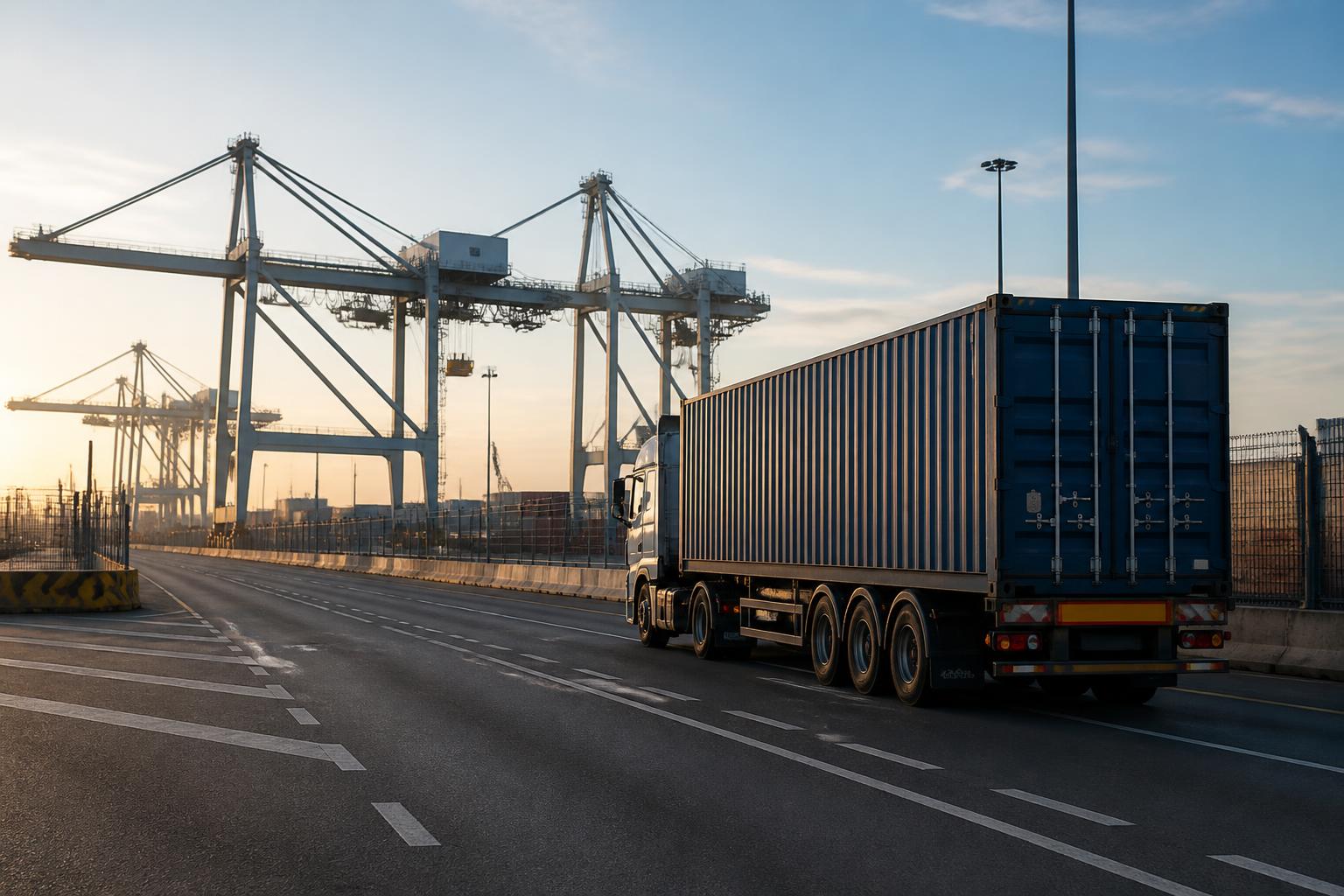
If you need to know whether a container can be collected from London Gateway tonight, the short answer is yes, but only if the box is genuinely clear to move and the haulier can still secure and execute the job within the terminal’s operating window. A container does not leave just because it has discharged. It needs the right release, the right customs position, a valid booking, and a haulier that is correctly set up to collect from London Gateway.
When people ask who can collect a container from DP World London Gateway tonight, the practical answer is this. The collecting haulier must be authorised for the move, able to book the collection in the terminal system, and able to put a compliant vehicle and driver under the box in time. If any one of those parts is missing, tonight becomes tomorrow very quickly.
What has to be in place before a container can leave London Gateway tonight
For a same evening collection from London Gateway, we first check whether the container is physically available and legally releasable. Those are two separate things.
Physical availability means the unit has discharged and is showing as available in the terminal environment, not still on vessel, not still being grounded, and not already tied up in another movement. Legal and documentary availability means the shipping line has released it and customs are not preventing removal.
In practice, the minimum position usually looks like this:
- the container has discharged at London Gateway
- the shipping line or line agent has issued release
- any relevant charges due before release have been settled
- customs status allows the box to leave the terminal
- the haulier can book the move in the relevant system
- the delivery point can actually receive the container tonight, or at least receive it on a legal and workable timetable after collection
If the container is moving as FCL, that often means checking line release and customs clearance against the port booking before we commit a vehicle. If it is LCL, the position can be different because the box may be moving under a deconsolidation or devanning arrangement rather than straight to the importer’s site.
The customs point matters more than many people realise. In the UK, a container cannot simply be collected because the consignee wants it moved. It has to be in the right customs state for removal from the terminal. Depending on the movement, that may mean customs clearance has been completed, or that the box is moving under an authorised onward procedure. If the unit is selected for an intervention or documentary query, that can stop a same-night collection even where everything else looks ready.
We also check whether the container itself is suitable for the intended move. A 20ft ISO Container, 40ft ISO Container, 45ft ISO Container, or Refrigerated Container each brings different planning points. Weight, destination access, power requirements for a reefer, and delivery site restrictions can all affect whether the box can sensibly be pulled tonight.
At this stage, speed comes from accuracy. If the release reference is wrong, if the container number is incomplete, or if the customs status is assumed rather than confirmed, time gets lost in avoidable checking. That is usually what turns an evening collection into storage risk the next day.
Who can actually collect the container
Not every party in the chain can physically collect a container from London Gateway. The collection has to be done by a road haulier that is set up for port container work, with the right operational credentials, booking access, equipment, and compliance in place.
That means the collecting party is normally a container haulier acting on behalf of the importer, freight forwarder, customs agent, or shipping line. The consignee cannot simply turn up and ask for the box, and a general courier or non-port operator cannot step into the move unless they are properly established for container haulage and accepted for the collection process.
For us, that means using our own fleet under operator licence OF2023521, or where agreed, vetted partner hauliers operating on their own licences for overflow volume. We move ISO containers from London Gateway, Felixstowe, Tilbury, Purfleet, Southampton and Liverpool, so the issue is not whether a port move is theoretically possible. The issue is whether the specific box is releasable and bookable in time.
The haulier must be correctly set up for the move because London Gateway collections are not just a driving job. They are a controlled interchange of an import unit from a secure terminal. The party collecting needs to be able to:
- identify the correct container and release
- make the terminal booking
- provide the right vehicle and trailer type
- comply with terminal and road legality requirements
- manage the move to the final delivery point or approved interim point
That is why, when somebody asks who can collect a container from DP World London Gateway tonight, the answer is not “anyone with a lorry”. It has to be a haulier that can complete the whole chain properly.
There is also a commercial distinction between line haulage and merchant haulage. With line haulage, the shipping line controls the inland move. With merchant haulage, the importer or forwarder appoints the haulier directly. When time is tight, merchant haulage usually gives clearer control because we can assess the release, the timing, and the delivery conditions directly with the customer, rather than waiting for instructions to pass through several parties.
If your movement is inland from the port to a regional delivery point, our piece on moving containers from London Gateway to the Midlands covers the practical planning issues in more detail.
Why a box that looks ready still may not move tonight
This is the part that catches most people out. A box can look ready on paper and still fail to move that evening.
The most common blocker is customs. If the declaration is not in the right state, if there is a hold, if a check is pending, or if the movement requires a different customs step before release, the terminal will not let the unit go. In the UK, that position depends on the actual customs status of the goods and the movement. It is not enough for somebody in the chain to say “customs is done” unless that can be verified against the move.
The next common blocker is missing or incomplete shipping line release. A container can be visible and grounded, but if line release has not been issued, or if there is an unresolved charge or document requirement, the haulier cannot complete collection. We see this where detention, demurrage-related issues, original document requirements, or internal release controls delay the handover.
Booking limits also matter. London Gateway operates on a controlled booking basis. Even with release and customs clear, the move still depends on an available collection slot and enough time to execute it. If the evening window is already heavily booked, there may simply be no workable slot left. The existence of a booking platform does not guarantee capacity at the moment you need it.
Driver hours and road legality are another hard limit. A container may technically be collectible tonight, but not by a driver who would then run out of legal hours before reaching the delivery point or secure parking. The same applies to weight. If the gross weight makes the intended route or vehicle plan unsuitable, the job may need a different allocation or a next-day move.
Delivery constraints are often the final blocker. Even if we can get the box out of London Gateway, your receiving point still has to be able to take it. If the site closes before the vehicle can arrive, has no night receiving, cannot offload a later arrival, or has booking restrictions of its own, collecting tonight may only move the problem from the port to the customer’s gate.
For Refrigerated Container moves, there is an added layer. Reefer collections need tighter coordination because power, monitoring, and delivery readiness are less forgiving. If that is your issue, see our note on getting a reefer box out of London Gateway without delay.
Other routine blockers include:
- incorrect container number or booking reference
- mismatch between release details and the intended collecting haulier
- VBS timing problems where the move depends on onward port or depot coordination
- destination restrictions for 45ft equipment
- hazardous or waste-related compliance points requiring confirmation before movement
- a box selected for examination after discharge
- terminal cut offs that leave too little margin for a realistic collection
The main point is simple. “Ready” needs to mean ready in the terminal system, ready in customs, ready with the line, and ready at destination.
What your haulier needs from you to try for a same-night collection
If you want us to assess a same-night collection quickly, we need the job information in one clean set, not piecemeal over ten emails. The faster we can validate the move, the more chance there is of getting it booked and executed.
At minimum, send us:
- container number
- size and type, such as 20ft ISO Container, 40ft ISO Container, 45ft ISO Container, or Refrigerated Container
- port, in this case London Gateway
- shipping line
- release reference or confirmation of line release
- customs status, including whether the box is cleared or moving under another authorised arrangement
- gross weight
- commodity
- collection address if different from the terminal reference chain
- delivery postcode and delivery contact
- delivery constraints, including opening hours, booking requirement, forklift or crane availability if relevant, and any site access issues
- whether the move is FCL or related to an LCL process
- target collection time and latest acceptable delivery outcome
If the goods are sensitive, tell us straight away. That includes foodstuffs, feed, animal by-products, waste, high value freight, or anything requiring a specific compliance position. We are an upper tier waste carrier and dealer, registration CBDU471791, and we are registered with APHA to carry Category 3 animal by-products and animal feed in shipping containers, quay to premises, U1433815/TRANS. That matters because some boxes can move only with the right operator setup behind them.
We also need clarity on the commercial instruction. Are we collecting as merchant haulage for the importer or forwarder, or are we acting under another party’s transport instruction? That affects how quickly we can book and who must provide release authority.
Where timing is tight, one missing item can stop the job. A common example is a customer sending the container number and delivery postcode, but not the release status. Another is having release, but no gross weight, so we cannot safely allocate the correct vehicle plan. The more complete the first message is, the more useful the answer will be.
If you regularly compare options across ports, our article on fast container collection from Felixstowe when timing matters explains the same principle from the Suffolk side.
How merchant haulage helps when time is tight
When the clock is running, merchant haulage usually gives the clearest route to action. That is because we are dealing directly with the party that needs the container moved, rather than waiting for transport instructions to filter through a shipping line process.
Direct appointment lets us look at the real risk points immediately. We can check release position, customs status, free time, delivery constraints, and equipment suitability in one pass. We can then say plainly whether the box is likely to move tonight, whether it is possible but tight, or whether there is a blocker that needs clearing first.
That direct control also helps with booking discipline. Port work is not just about finding a truck. It is about lining up the slot, the driver, the destination, and the free time exposure. When we are booked directly, we can make decisions around those factors without waiting for a separate transport chain to catch up.
This matters particularly where demurrage or storage risk is developing. If a box is close to the end of free time, a vague plan is not enough. We need to know whether the release is live, whether customs is clear, and whether the site can receive. If yes, we book and move. If not, we flag the exact blocker early so your team can work the right problem.
Merchant haulage also improves visibility on exceptions. If the terminal booking is not available, if the weight creates a routing issue, or if the delivery point is the real reason the move cannot happen tonight, we can say that directly. That is often more useful than a generic “awaiting collection” status that hides the real constraint.
At Jagelo Haulage Limited, most of our work is booked this way by importers and freight forwarders who want the haulier to own the practical side of the port move. We collect from London Gateway and the other main UK container ports, and we plan around the actual release and free time position, not around assumptions made earlier in the day.
We also carry higher freight liability than the standard RHA level. Our cover is £6,500 per tonne under RHA 2024 conditions, including subcontracted loads at the same limit, with up to £10,000 per tonne available by arrangement for high value freight. For some importers, that matters when deciding whether a late same-day port extraction should go ahead under time pressure.
If the question is whether your container can be collected from London Gateway tonight, the answer comes down to verifiable release, customs clearance or authorised movement, a workable booking, legal execution, and a receiving point that can actually take the box. If those align, we can move quickly. If they do not, the fastest route is to identify the blocker early and fix the right thing, rather than losing the evening chasing a box that was never truly clear to leave.
Can any haulier collect from DP World London Gateway tonight?
No. The haulier must be able to take the job, have the right collection details, and secure the required port booking. The container also needs release and any customs clearance needed for collection.
Is a shipping line release enough on its own?
Not always. A release is essential, but it does not override customs holds, port booking requirements, line instructions or delivery-site limits. All of those can still stop a same-night move.
What details should I send first?
Send the container number, size, collection port, delivery postcode, release status, customs status, cargo type, weight if known, and whether the delivery point can receive tonight.
If the container is customs cleared, can it definitely be collected tonight?
No. Customs clearance helps, but the move still depends on release, booking availability, driver and vehicle planning, and whether the delivery can be completed within legal and site limits.
Does Jagelo Haulage Limited collect from London Gateway?
Yes. Jagelo Haulage Limited collects containers from London Gateway as well as Felixstowe, Tilbury, Purfleet, Southampton and Liverpool for delivery within Great Britain.