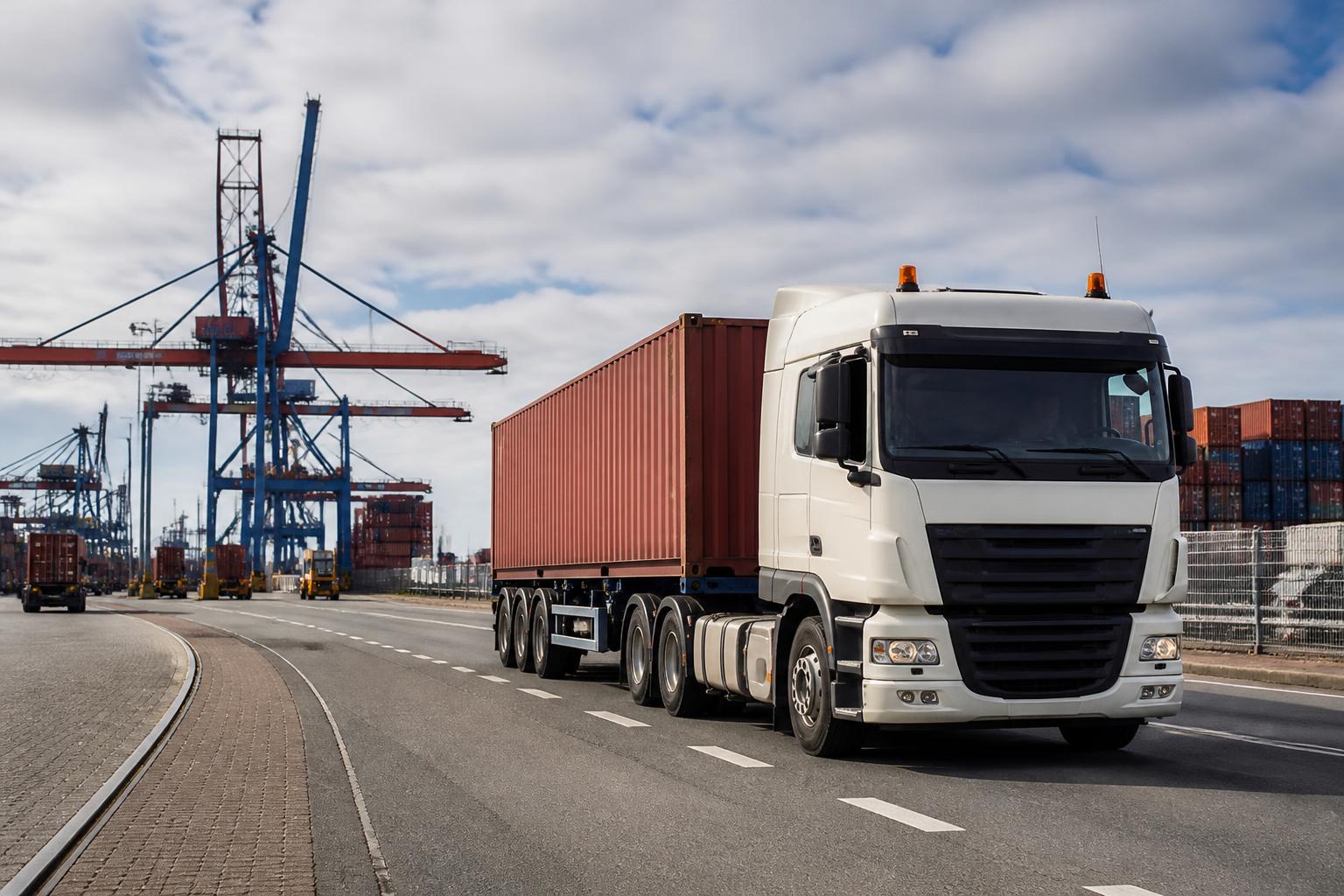
Choosing port haulage cover well means choosing a haulier that reduces the chance of avoidable port cost before the container is even collected. For importers, forwarders and customs agents, that usually comes down to one question. Will the haulier simply turn up when told, or will they actively manage release, customs status, free time, booking availability and site readiness so the box does not sit at port while charges build?
That is what buyers are usually looking for when they ask about round the clock port haulage support in the UK. They want a haulier that can book the slot, spot risk early, escalate when a collection is slipping, and keep control of FCL container moves across Great Britain. At Jagelo Haulage Limited, that is the practical job. We collect from Felixstowe, London Gateway, Tilbury, Purfleet, Southampton and Liverpool, mostly on a merchant haulage basis, and the point is not just to move the box. It is to help prevent avoidable demurrage, storage, failed collections and wasted delivery days.
What buyers usually mean by port haulage support
Port haulage support means more than having a truck and trailer available. In container work, support starts before the driver reaches the port.
Most buyers expect the haulier to check whether the container is actually collectable. That means confirming the release position, checking whether customs has cleared or whether there is a hold, reviewing free time, and making sure the port booking can be secured in time. If the move involves a delivery booking at the receiving site, support also includes checking that the site can accept the unit size, the gross weight and the likely arrival window.
For FCL imports, support often includes practical judgement on the sequence of events. A container may be physically discharged, but not yet released by the shipping line. It may be released, but not customs cleared. It may be customs cleared, but no slot may be available on the day that keeps the move inside free time. A basic haulier waits for instructions and then reports the problem after the collection fails. Proper support means identifying the issue before the failed trip happens.
That is why many importers and forwarders now ask for active, 24 7 port haulage support in the UK, not because they expect a truck to be moving at every hour, but because they need operational oversight around the clock when vessel discharge, customs updates and release information change outside a narrow office window.
Support also covers equipment suitability. A 20ft ISO Container at high payload is not the same planning exercise as a 40ft ISO Container or 45ft ISO Container. A Refrigerated Container may need power management and a tighter collection plan. Some traffic involves waste status or regulated cargo. In Great Britain, that can mean checking whether the haulier holds the right registrations for the work involved. We are an upper tier waste carrier and dealer, CBDU471791, and we are registered with APHA to carry Category 3 animal by-products and animal feed in shipping containers, quay to premises, U1433815/TRANS.
For buyers moving mixed traffic, support also means understanding where the line sits between haulage and forwarding. We are not replacing customs clearance or shipping line release functions. We are making sure that once those parts are in motion, the container collection is planned against reality, not assumption. That is the difference between a truck order and actual port support.
Comparing reactive cover with planned container collection
Reactive cover sounds acceptable until the first container misses free time.
A reactive haulier waits for the customer to say the box is ready, then tries to book and collect it. If the release is not in place, if customs is still pending, if the slot book is tight, or if the receiving site cannot take delivery that day, the issue appears late. By then the importer may already be into demurrage, port storage, or a knock-on delay to unloading and equipment return.
Planned container collection works differently. We want the container details early enough to check the likely pressure points before the last free day. That means vessel ETA and discharge status, shipping line release arrangements, customs status, terminal availability, and the delivery postcode and constraints. If there is a risk on any of those points, we flag it early.
The practical value is simple. If free time is short and the terminal booking position is tightening, we can say so before the box becomes urgent. If the release is likely to land late, we can plan the first viable collection window rather than losing time on an impossible same day request. If the delivery site cannot receive on the only collection day that protects free time, the customer can make a conscious decision about cost and priority.
At Felixstowe in particular, this matters because booking availability can change quickly under the Container Booking System, or CBS. A collection that looks straightforward at 09:00 can become difficult by the afternoon if the release comes through late and the preferred time bands are gone. The same principle applies at other ports even where the booking mechanics differ. The collection plan should be built around the real release and booking position, not around the original hope.
Planned work also reduces failed driver time. Sending a vehicle to collect a box that is not properly released, not customs cleared, or not bookable is not support. It is waste. For the customer, that can mean extra cost and less confidence in the next update. For the haulier, it uses capacity that should have been reserved for moves that can actually be executed.
This is one reason buyers compare hauliers on how they communicate risk, not just on whether they answer the phone. A useful update is specific. Release not yet in place. Customs still pending. No CBS slot available within free time. Delivery site cannot accept a 45ft ISO Container. Those are operational facts that let the importer or forwarder decide what to do next.
Which checks matter most when comparing UK hauliers
When comparing UK hauliers for container work, the practical checks are usually more useful than broad claims about service.
First, check actual port coverage. A haulier may say they cover the UK, but regular container collection from Felixstowe, London Gateway, Tilbury, Purfleet, Southampton and Liverpool is different from occasional work arranged through others. Port routines, booking rules, driver familiarity and escalation paths matter.
Second, check who is booking the collection and how they manage booking systems. If the haulier is handling the terminal slot booking, ask how they work around release timing, free time and changing availability. At Felixstowe, experience with CARGOES VBS and the wider Container Booking System matters because a poor booking decision can turn into avoidable storage risk.
Third, check fleet and equipment. Container haulage is not one format. The haulier should be able to move standard ISO containers across the common sizes used in import work, including 20ft ISO Container, 40ft ISO Container and 45ft ISO Container. If you move temperature controlled cargo, ask whether they handle Refrigerated Container traffic as a normal part of operations or only by exception.
Fourth, check overflow capacity. A haulier with only direct fleet may be tight in peak periods. A haulier relying heavily on unknown subcontractors may be hard to control. The better question is whether extra volume is covered through vetted partner hauliers on their own operator licences, with the same service and liability standards applied. We run 40 vehicles and 40 trailers of our own on operator licence OF2023521, and where extra volume requires support, we use vetted partner hauliers operating on their own licences.
Fifth, check communication discipline. You want updates early enough to act on them. That includes whether the haulier will tell you when a box is at risk before charges start, not after.
Sixth, check liability terms properly. Many buyers still assume all hauliers carry the same level of cover. They do not. Standard RHA terms do not automatically mean the same freight liability limit from one operator to another. Our freight liability cover is £6,500 per tonne under RHA 2024 conditions, which is five times the standard RHA level of £1,300 per tonne. The same limit applies on subcontracted loads, and up to £10,000 per tonne is available by arrangement for higher value freight. If your cargo value is sensitive, this should be checked before the first collection, not after a claim scenario appears.
Finally, check whether the haulier understands the difference between FCL and LCL risk. With FCL, the container itself is the transport unit and timing around collection, delivery and empty return is central. With LCL, the final movement profile is different and the haulier may not be controlling the same decision points. If your work is mainly full containers, shortlist operators who deal with FCL as a core activity.
For a wider view on reducing exposure between quay and delivery point, we have set out related points in our guide to reducing risk on port-to-site container moves.
How port coverage and booking systems affect risk
Port coverage is not just a map. It is operational familiarity with how each location behaves under pressure.
Felixstowe is the clearest example because booking discipline has a direct effect on cost risk. If the collection depends on a late release or a customs update that lands after the preferred windows have gone, the haulier needs to understand how to work within CBS and CARGOES VBS, and when to tell the customer that the box is moving into a risk position. Knowing the system name is not the point. Knowing how booking availability interacts with free time is.
London Gateway and Southampton bring their own booking and traffic patterns. Tilbury and Purfleet can look simpler on paper, but local access, delivery timing and vehicle utilisation still affect whether a collection is genuinely under control. Liverpool matters for northern and midlands distribution, but only if the haulier is treating it as part of normal planning rather than a one-off exception.
Direct experience at these ports matters because avoidable cost often starts with a small operational assumption. Someone assumes the release will be there by lunch. Someone assumes the slot can be booked later. Someone assumes the consignee can unload same day. When those assumptions fail, the bill appears at port first.
That is why buyers should ask not only whether a haulier covers a port, but what they actually do there. Do they routinely book collections themselves? Do they know when to challenge the timing of a request? Do they understand the practical difference between a same day possibility and a same day hope?
We are based in Woolpit, Suffolk, about 35 miles by road from Felixstowe, and that proximity helps in day-to-day container work through the East of England. But proximity alone is not enough. What matters is regular execution. Since 2019 we have moved more than 75,000 containers, about 13,000 a year, across the port network we work in. That volume builds the judgement that buyers usually need when a collection is technically possible but operationally fragile.
If your concern is specifically avoidable port charges, our article on container haulage that cuts port storage risk goes into that point in more detail.
When merchant haulage is the better fit
For many importers and forwarders, merchant haulage is the better fit because it gives clearer control of the collection decision.
With line-arranged haulage, the shipping line controls the inland move. That can suit some shipments, especially where simplicity matters more than visibility. But it also means the party paying the wider import cost may have less influence over the exact collection timing, the delivery sequence and the warning signs when a box is drifting toward chargeable days.
With merchant haulage, the importer or forwarder appoints the haulier directly. That changes the information flow. The party exposed to demurrage, storage, delivery booking pressure and customer commitments can speak directly to the operator booking and executing the move. In practice, that often means earlier decisions and clearer accountability.
Merchant haulage is especially useful where the delivery site has restrictions, where customs timing is variable, or where the shipping line free time is tight enough that every collection decision matters. It also helps where the consignee wants one operator handling repeat FCL work from several ports, rather than accepting whichever inland arrangement sits behind each ocean booking.
There is also a risk visibility point. With line-arranged haulage, a problem can sit inside the line's process until it becomes a late update. With merchant haulage, the customer can ask direct operational questions. Is the release in place? Has the slot been booked? Is the container at risk if customs does not clear today? That level of visibility is often what experienced import teams want.
This is not to say line-arranged haulage has no place. It can suit straightforward traffic where the inland leg needs little intervention. But if the shipment has time pressure, site constraints, regulated cargo requirements, or a realistic chance of booking friction at port, merchant haulage usually gives better control over the parts that drive avoidable cost.
What a practical shortlist should look like
A practical shortlist for FCL container work in Great Britain should be short enough to compare properly and detailed enough to expose weak points.
Start with four basic filters.
- Regular collections from the ports you actually use, not generic UK coverage.
- Direct handling of booking and release-sensitive planning.
- Suitable fleet and equipment for your normal container types.
- Clear liability terms and communication standards.
Then test each haulier against a simple operational checklist.
Can they collect routinely from Felixstowe, London Gateway, Tilbury, Purfleet, Southampton and Liverpool if your traffic pattern changes?
Do they handle standard ISO containers across the sizes you use, including 20ft ISO Container, 40ft ISO Container and 45ft ISO Container?
If you move temperature controlled cargo, do they handle Refrigerated Container work in a planned way?
Who books the port slot, and how do they manage CARGOES VBS, the Container Booking System and other terminal booking processes?
Will they ask for the right documents and references early, including container number, release position, customs status, delivery point and any site restrictions?
How do they flag risk before free time expires?
What happens if volume spikes? Is overflow covered through controlled partner capacity or left to ad hoc market sourcing?
What freight liability applies under their terms, and does the same limit apply if the load is subcontracted?
Are they set up for any specialist cargo categories you move, such as waste movements or APHA related traffic?
A shortlist should also reflect how you buy. If you are a freight forwarder, you may need a haulier who can work consistently across many consignee sites and report issues early enough for you to manage the customer relationship. If you are the importer or final receiver, you may care more about delivery booking discipline, unloading windows and whether the operator will challenge unrealistic collection instructions.
The final step is to test behaviour on a live movement. One or two trial jobs usually show more than a long sales conversation. Did the haulier ask the right questions? Did they warn early when the release or booking position created risk? Did they deliver updates that helped you make decisions?
That is the standard we work to at Jagelo Haulage Limited. We collect containers from the main UK deep sea and short sea ports we cover, book and plan around the real release and terminal position, and tell customers early when a box is moving toward avoidable cost. If you are comparing options for repeat FCL work, our guide to choosing a Suffolk haulier for UK port container work may also help sharpen the shortlist.
Good port haulage cover is not about promising that nothing will ever go wrong. It is about reducing the number of things that go wrong for avoidable reasons, and making the risks visible early enough to act. In container haulage, that is what saves money.
What should I ask a haulier before booking port collections?
Ask which ports they cover, who books the slot, how they monitor free time, what they need for release and customs clearance, and what freight liability applies, including subcontracted loads.
Why does booking system experience matter?
It affects whether collections are planned properly and whether slot availability is handled early. At Felixstowe, collections are booked on the Container Booking System (CBS), which replaced VBS in January 2025.
Is merchant haulage better than line haulage?
It depends on the shipment, but merchant haulage usually gives the importer or forwarder more control over timing, communication and escalation when a container is at risk of storage or demurrage.
What liability level should I look for?
Check the haulier's freight liability per tonne and whether the same limit applies to subcontracted loads. If the cargo is high value, ask whether a higher limit is available by arrangement.
Does wider port coverage reduce disruption?
Usually yes. A haulier already working across multiple UK container ports can often support routing changes, customer preferences and overflow planning more smoothly than a single-port operator.