More on out of gauge from Jagelo Haulage
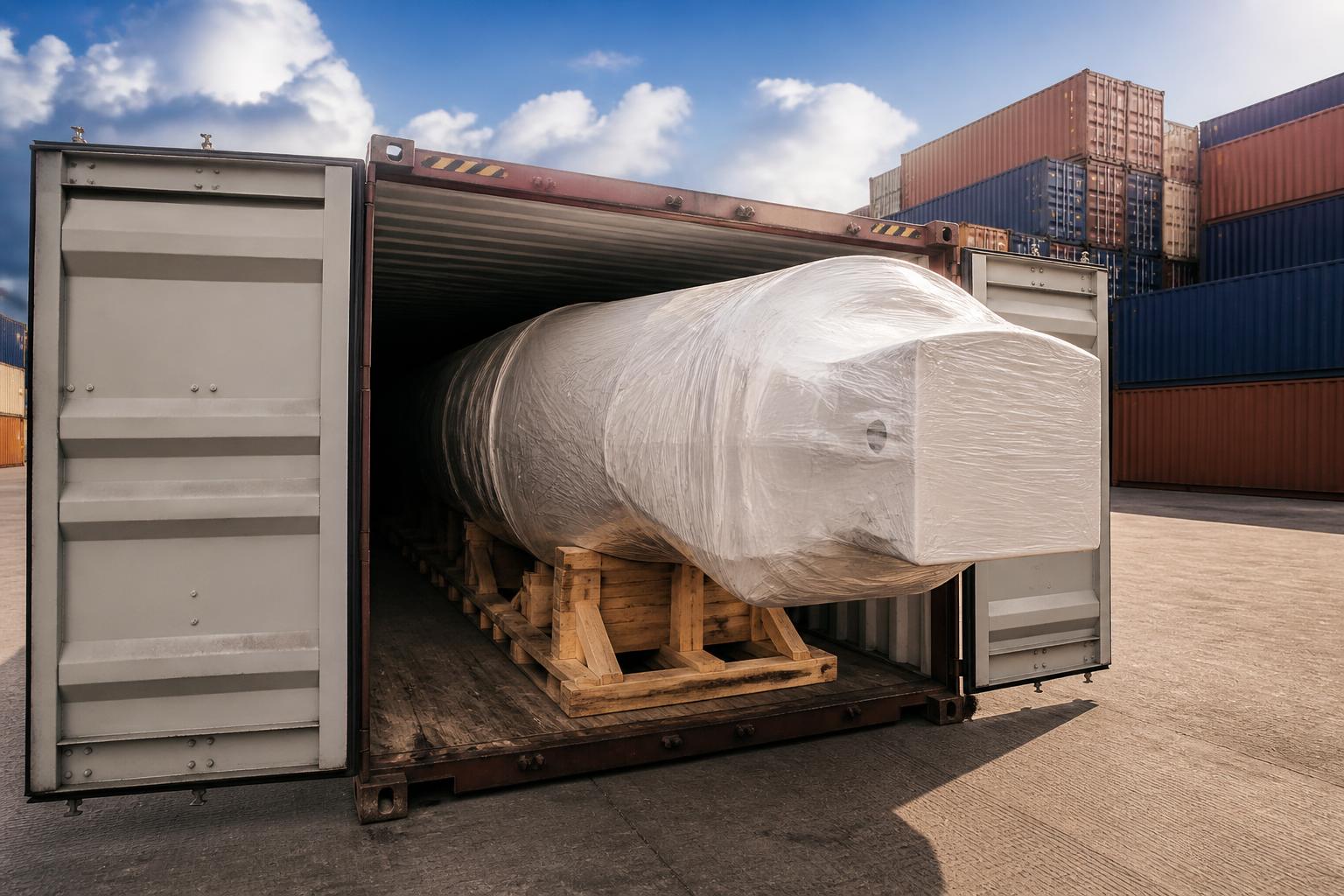
Moving an out of gauge container without avoidable delay comes down to getting the dimensions, equipment, release status and route checked early enough to act on them. Most problems are not caused by the cargo being unusual in itself. They come from somebody assuming a flat rack can move like a standard box, assuming the port will accept a late booking, or finding out too late that the line release, customs status or delivery point access does not match the unit on the quay.
At Jagelo Haulage Limited, we handle merchant haulage collections from Felixstowe, London Gateway, Tilbury, Purfleet, Southampton and Liverpool every day. For out of gauge work, the difference between a smooth move and storage, demurrage or a failed delivery is usually the quality of the information we receive before discharge, not after the free time has started to run.
What out of gauge means in container haulage
In UK container haulage, out of gauge means the cargo exceeds the internal or external dimensions that would allow it to travel within the profile of a standard container without protruding beyond it. In practice, that usually means the load is too wide, too high, too long, or a combination of these, for a normal enclosed unit.
A standard in-gauge load sits fully inside a 20ft ISO Container, 40ft ISO Container or 45ft ISO Container, with the doors closed and no part of the cargo extending beyond the roof line, side walls or end frame. It can usually be collected on a normal skeletal trailer, subject to weight, line release, customs clearance and booking.
An out of gauge load is different because the cargo profile affects the equipment choice and the road move. If the cargo projects above the top rail of an open top unit, beyond the ends of a flat rack, or outside the side profile, the road movement may need route checks, permit checks, escort assessment, or a different trailer arrangement. Even where the unit remains within legal road limits once loaded, the simple fact that it is out of gauge for shipping line purposes often changes how it is handled in the port, how it is stowed, and how much notice we need before collection.
That distinction matters. A shipment can be out of gauge for sea carriage but still road legal on a standard container trailer. Equally, it can be accepted by the shipping line in specialist equipment but still be unsuitable for a straightforward UK road delivery because of total running height, gross weight, axle loading, site access or local restrictions. We assess the road move on UK rules, not on the assumption that discharge from the vessel means it can go straight to site.
For importers and forwarders booking FCL moves, this is where early haulage input saves time. If the dimensions are marginal, we would rather check them before the vessel berths than explain after discharge why the booked delivery date cannot be met.
Which container types are used for out of gauge cargo
The most common equipment for out of gauge cargo is the flat rack. Flat racks are used where the cargo exceeds the width or height of a standard box, or where loading from the side or above is necessary. They can also be used for over-length cargo where the ends project beyond the platform. For road haulage, a flat rack changes the discussion immediately because we need the true loaded dimensions from ground to highest point, the overhang at each end, the cargo securing method and the verified gross weight.
Open top equipment is commonly used when the load can fit within the footprint of the container but not through the doors or under a standard roof. Machinery and tall fabricated items are often shipped this way. If the cargo remains below the top of the container and the tarpaulin or hard top can be fitted in accordance with the line's requirements, the road move may still behave much like a standard container collection. If the cargo projects above the top rail, it becomes a different planning exercise.
There are also cases where a load is booked in other ISO containers but still causes operational issues that need the same discipline as out of gauge work. A heavy 20ft ISO Container can be in gauge dimensionally but difficult to move because of weight distribution or delivery point access. A 45ft ISO Container can be within normal dimensions but be unsuitable for some sites because of turning space or unloading arrangements. A Refrigerated Container is not usually associated with out of gauge cargo, but reefer collections have their own time sensitivity and port handling requirements, and the same rule applies, check the practical delivery conditions before the slot is booked. We cover some of that in our guide to moving a reefer from Felixstowe without avoidable port cost.
For road haulage, the equipment choice affects more than just the trailer under the box. It changes whether the load can travel under normal construction and use limits, whether the route needs checking for low bridges or width constraints, whether the delivery point can unload safely, and whether waiting time on site is likely because a crane or forklift booking has not been matched to the vehicle arrival.
The measurements and documents a haulier needs before collection
Before we can assess an out of gauge move properly, we need the exact loaded dimensions. Not estimates, and not the cargo dimensions before packing if they differ once secured in the unit.
The key measurements are:
- overall loaded length
- overall loaded width at the widest point
- overall loaded height from the base of the container to the highest point
- any front or rear overhang beyond the container frame
- whether any part of the cargo over-sails the side profile
- cargo weight
- container tare
- verified gross mass, where applicable
- weight distribution, if the cargo is concentrated or offset
We also need the container number, size and type, for example flat rack, open top, 20ft ISO Container, 40ft ISO Container or 45ft ISO Container. If the shipment is moving as FCL, we need the shipping line, vessel details, ETA, port of discharge and the last free day if available. If it is part of an LCL arrangement degrouped into specialist equipment, we need to know exactly what form the collection will take, because the road planning is driven by the physical unit we collect, not the sales description.
For import work through UK ports, the document set usually includes:
- arrival notice or equivalent shipping line notice
- line release status
- customs status, including whether the unit is cleared, under hold, or pending examination
- port location details
- booking reference requirements for the relevant port system
- delivery address with site contact details
- unloading method and booking requirements at destination
Depending on the port, collection may require a slot through CARGOES VBS, a Container Booking System, or another CBS process used by the terminal. We need the correct references in time to secure a workable collection window. If the shipment has customs issues, we need clarity on whether the unit is on hold with HMRC, Border Force, DEFRA related controls, or a documentary stop from the line or agent. A driver arriving at the port with an invalid release or unresolved hold does not solve anything.
Site information matters just as much as port information. We need to know whether the delivery point can accept the loaded height and length, whether there is room for a skeletal trailer to reverse, whether the unloading plant is booked and rated for the lift, and whether there are timed access restrictions. Many failed assumptions happen at the final mile, not at the port gate.
If the cargo is high value, tell us at booking stage. Our standard freight liability under RHA 2024 conditions is £6,500 per tonne, with the same limit applying on subcontracted loads, and up to £10,000 per tonne available by arrangement. That only helps if the requirement is known before the move starts.
Where delay and extra cost usually arise
The most common cause of delay is late or incomplete release information. If the shipping line has not released the unit, or the release has not flowed through to the terminal system, the container may be physically present but not collectible. The same applies to customs holds. A box can be discharged and visible in the port system while still blocked from collection.
The second common issue is free time being treated as if it starts when someone notices the container, not when the line says it starts. Demurrage and storage exposure often builds because the haulage booking is left until after discharge, by which point the best collection slots have gone or the road move turns out to need more planning than expected.
Port booking itself is another pressure point. At Felixstowe, London Gateway, Tilbury, Purfleet, Southampton and Liverpool, the practical availability of a collection slot depends on terminal demand, release status and how quickly the booking can be made once the unit is ready. A same day plan is sometimes possible, but not something to assume for specialist equipment. We set this out in more detail in our article on how to avoid delay on urgent London Gateway collections.
Road restrictions are another source of avoidable cost. A flat rack with side projection may need a different route from the obvious motorway run. A delivery point may be accessible to a standard container but not to a loaded out of gauge unit because of narrow approach roads, parked vehicles, bridge heights, gate width or insufficient turning area. If that is discovered only after collection, costs rise quickly.
Weight assumptions cause problems too. A dimensionally manageable unit can still be difficult if the gross weight is high for the box size, especially on a 20ft ISO Container. UK road legality depends on the actual combination, not just the figure shown on a booking sheet. We check whether the move is lawful and workable before sending a vehicle.
Another avoidable issue is mismatch between the unloading plan and the cargo reality. We have seen deliveries where the consignee expected to strip from the side, but the cargo securing or site layout made that impossible. We have also seen crane bookings made without confirming the lift points or the actual loaded height on arrival. Those are not port problems, but they still create waiting time and failed deliveries.
How to plan an out of gauge container move through UK ports
The cleanest way to plan an out of gauge move is to start before discharge.
First, send us the full shipment details as soon as the import is confirmed. That means container type, loaded dimensions, cargo weight, line, vessel ETA, port of discharge, delivery postcode, unloading method and any known access constraints. If there are drawings or photos showing the cargo profile on the unit, include them. For out of gauge work, a clear side and end view often resolves questions faster than a chain of emails.
Second, we review road feasibility. We check whether the loaded unit is likely to move on a standard skeletal trailer or whether it needs a different arrangement, and whether the route or delivery point creates immediate issues. If there is a problem, we would rather surface it while there is still time to alter the delivery plan.
Third, line up the release and customs side early. We need to know who is controlling the release, whether customs clearance is expected before discharge, and whether any examination risk is already known. For merchant haulage, this is where coordination with the importer, forwarder and customs agent matters most. The haulage booking should follow the real readiness of the unit, not the hoped-for readiness.
Fourth, watch the free time from the moment the line publishes it. We book around the last free day, but we do not wait for the last day if the slot market or the road planning says that is risky. For standard boxes there is sometimes room to leave things later. For specialist equipment there is usually less margin.
Fifth, secure the port booking using the correct system and references. Depending on the terminal, that may mean CARGOES VBS, a Container Booking System, or another CBS process. The principle is the same across ports, but the operational detail varies. Felixstowe collections need to be worked around actual slot availability and release status. London Gateway and Southampton can be straightforward when the data is clean, but delays follow quickly if there is any mismatch in release or booking details. Tilbury, Purfleet and Liverpool each have their own practical rhythm as well. We plan against the terminal actually handling the unit, not against a generic UK port assumption.
Sixth, confirm the delivery site before the driver is on the way. We check contact names, opening hours, booking references, unloading equipment and any restrictions on vehicle arrival times. If the site cannot take the unit safely on the proposed day, it is better to hold the collection briefly than to create a failed delivery after the box has left the port.
Seventh, keep the parties updated while the move is live. If the container is at risk because of hold status, release delay, slot pressure or site issues, we say so early. That is a large part of the value in direct merchant haulage. The importer or forwarder needs a realistic position while there is still something useful to do about it.
For businesses moving this type of traffic regularly, we have written separately about reducing risk on port-to-site container moves and about choosing UK out of gauge container haulage without delays.
Jagelo Haulage Limited is based at Bridge Farm, Woolpit, Suffolk, IP30 9PQ, around 35 miles by road from Felixstowe. We run 40 vehicles and 40 trailers on operator licence OF2023521, with vetted partner hauliers on their own operator licences covering additional volume. Since 2019 we have moved more than 75,000 containers across Great Britain. For out of gauge imports through Felixstowe, London Gateway, Tilbury, Purfleet, Southampton and Liverpool, our job is simple, get the facts early, book the move properly, and flag the risks before they become port cost.
Is out of gauge the same as an abnormal load?
No. Out of gauge describes cargo that exceeds normal container dimensions. Whether the road move is abnormal depends on the loaded unit's final dimensions, weight and legal road limits.
Can out of gauge cargo move in a standard container?
Only if the cargo fits fully within the container's internal dimensions and door opening. If it projects above, beyond the sides or past the ends, a different equipment type is usually needed.
What information should I send for an out of gauge collection?
Send the container number, port, release status, cargo dimensions, gross weight, packing method, overheight or overwidth details, and delivery point. Photos and the packing plan also help.
Does out of gauge cargo always cost more to haul?
Often yes, but not always for the same reason. Cost can change because of equipment type, route constraints, waiting time, extra planning, or limits on when and how the unit can travel.
Which ports does Jagelo Haulage Limited collect from?
Jagelo Haulage Limited collects containers from Felixstowe, London Gateway, Tilbury, Purfleet, Southampton and Liverpool for delivery within Great Britain.