More on out of gauge from Jagelo Haulage
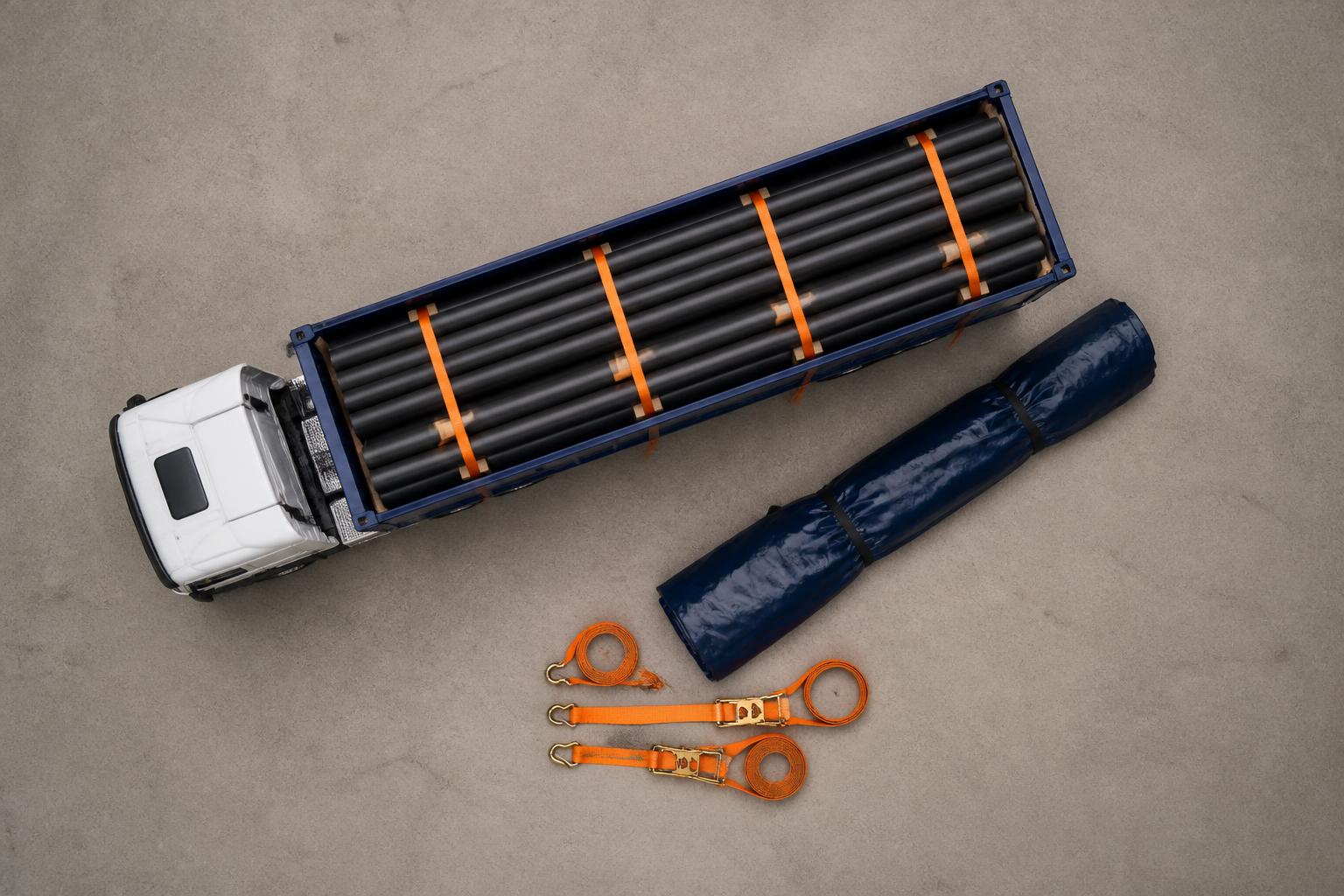
Choosing the right haulier for open top container work is mainly about avoiding costs that start before the lorry even arrives. Open top boxes need more planning than a standard dry box because the cargo, the way it was packed, the port release position, and the route to site can all create delay if they are not checked early. If the load sits while those points are being sorted out, free time disappears and demurrage, storage, abortive trips, or redelivery costs follow.
For importers and forwarders booking open top container haulage in the UK, the best results usually come from settling the operational detail before the collection is booked. We need to know how the cargo sits in the container, whether anything projects above the top rail, whether the tarpaulin and bows are fitted, what lifting method is available at delivery, and whether the route or site has restrictions. That is what allows us to book the right port slot, plan against shipping line free time, and say early if the move is at risk.
What makes open top container haulage different
An open top container is still one of the standard ISO containers used in port systems, but the road move is not standard by default. The difference starts with the cargo. Open top boxes are often used where goods are too tall to load through the doors, need crane loading from above, or are awkward in shape. That can mean machinery, steelwork, timber packs, out of gauge pieces within the container envelope, or cargo that needs top lifting at delivery.
That changes the planning in several ways. First, we need to know whether the container remains fully within normal road profile once loaded on the trailer. A box can be an open top and still travel like any other import, but if the cargo sits high under a sheet, if the hard top is not fitted, or if any part of the shipment changes the transport height or security of the load, we need to assess that before the job leaves the port. Waiting until the driver reaches the stack or the delivery point is where avoidable cost starts.
Second, loading and unloading arrangements matter more. A standard FCL dry box can often be tipped at a warehouse with a forklift and a loading bay plan already in place. Open top cargo may need a crane, overhead gantry, side access space, lifting chains, spreader beam clearance, or a booking at a site that only unloads at set times. If those arrangements are not confirmed before collection, the container can arrive and not get tipped, which leaves the importer paying for waiting time, wasted journeys, or a second delivery.
Third, weather protection and sealing can be a live issue. Some open top containers move with tarpaulin covers and roof bows fitted. Others may have a removable hard top. We need to know the condition expected on release and on delivery, and whether the consignee is responsible for removing and refitting any cover during unloading. If a box cannot be returned in the required condition because that was not agreed in advance, the line may raise repair or handling queries later.
For that reason, open top container haulage in the UK is less forgiving than routine dry van work. Good planning is what keeps it routine.
Open top versus standard container haulage
The clearest difference between open top and standard container haulage is that standardisation falls away sooner. With a sealed dry box, much of the move is predictable once we have the release, customs clearance, container size, weight, and delivery details. With an open top, we need a wider operational picture.
On equipment, the road unit may be the same, but trailer choice and delivery setup can matter more. A 20ft ISO Container, 40ft ISO Container, or 45ft ISO Container can all be moved on normal skeletal equipment if the load is within legal road limits and properly contained. The question is not just container length, but height, centre of gravity, and unloading method. Some deliveries that look straightforward on paper become difficult because there is no safe top-lift space on site.
On loading method, a standard import is usually loaded through the doors at origin and unloaded through the doors at destination. Open top cargo is often loaded from above, and that usually means it is also better handled from above at destination. If the consignee plans to devann through the doors because no crane is available, we need to know that early, because it may affect where the load sits and how long the vehicle is likely to be on site.
On route risk, open top work needs more checking. Height risk is the obvious one, but not the only one. Some sites have tree cover, low canopies, overhead pipework, or narrow internal roads that are manageable for a standard box but not for a load that needs lifting room above the trailer. If the site can only unload outside, ground conditions also matter.
On timing, open top moves are more exposed to exception handling. A standard import can often tolerate a late afternoon collection if the delivery is simple and close by. Open top work usually benefits from tighter timing because unloading resources such as cranes, banksmen, and site engineers are often booked for a set window. If the port slot slips, traffic builds, or customs intervention delays release, the whole delivery plan can move with it.
On communication, the difference is significant. We need a better handover from the forwarder or consignee. That includes the cargo type, packing photos where available, gross weight, whether the goods sit above the top rail, whether the cover is fitted, and exactly how the site will unload. Without that, no haulier can properly judge whether the move is genuinely standard or whether it carries extra risk.
What to compare between UK hauliers
When comparing UK hauliers for open top work, we would focus less on generic claims and more on whether the operator can control the practical points that create cost.
Start with port familiarity. A haulier that regularly collects from Felixstowe, London Gateway, Tilbury, Purfleet, Southampton, and Liverpool will already understand where exceptions tend to arise, how booking windows work, and how to react when a release is technically in place but not yet collectable in practice.
Next, look at fleet control. We run 40 vehicles and 40 trailers of our own on operator licence OF2023521, with vetted partner hauliers on their own operator licences for additional volume. For open top work, that matters because the more direct control there is over planning and dispatch, the easier it is to respond when a booking needs to move or a delivery issue appears late.
Check freight liability as well. Open top cargo is often industrial, heavy, or specialist. Our freight liability is £6,500 per tonne under RHA 2024 conditions, with the same limit applying on subcontracted loads, and up to £10,000 per tonne available by arrangement for higher value cargo. That is a practical point, not a sales line. If the goods value is well above standard RHA limits, it should be discussed before the booking is accepted.
Ask how the haulier handles exceptions. Do they flag free time risk early, or only after the port slot has been missed? Do they want cargo and site details up front, or do they simply take the booking reference and hope the move behaves like a normal box? Open top collections need the first approach, not the second. Our planning team works against line free time and port availability, and we say early when a container is at risk. That is the same discipline we apply on other specialist container moves, including high cube container planning and 20ft import collections where free time is tight.
Also compare document handling. The haulier should be comfortable with line release, customs status, delivery references, VBS or slot systems, and site booking requirements. Open top work does not need fancy language. It needs accurate execution.
Port coverage and booking systems that affect the move
Port coverage affects open top moves because collection timing is tied to both release status and booking access. The main UK container ports do not all work the same way, and local process knowledge makes a real difference once free time is running.
At Felixstowe, booking discipline is central. Slot access is managed through CARGOES VBS, and availability can shift with stack pressure, vessel discharge timing, and day by day demand. An open top box that needs a carefully timed delivery should not be treated as a last minute collection if the discharge, release, and delivery slot are not aligned. Being based about 35 miles by road from Felixstowe gives us a practical advantage in reacting quickly when bookings open or change.
At London Gateway, the Container Booking System and CBS process shape the move. If the release is in place but the booking window does not match the delivery requirement, the plan needs adjusting before the driver is committed. The same is true for linked issues such as customs holds, missing PIN data, or delivery sites that will only accept within a narrow unloading window.
Tilbury and Purfleet collections depend just as much on local handling and timing. For some importers, especially those moving mixed freight patterns into the South East, the difference between a smooth collection and extra port cost is simply whether the haulier knows how that port behaves in practice and books accordingly. We have covered some of that in more detail in our guide to avoiding extra port cost on Tilbury collections.
Southampton and Liverpool add another consideration, distance to delivery and return planning. Open top containers moving inland from those ports can absorb more cost if the site fails the first delivery attempt, because the mileage and lost driver time are greater. That makes early confirmation of unloading arrangements even more important.
Across all ports, the main point is simple. A release is not a collection plan. The booking system, the local stack position, the line free time, and the delivery constraints all have to line up.
When merchant haulage is the better fit
For many open top imports, merchant haulage is the better fit because it gives the consignee or forwarder direct control over the road move. That matters most where timing is tight, the unloading method is unusual, or the shipment may need active exception handling.
With merchant haulage, we work directly from the importer or forwarder’s instruction. That means we can line the collection up with the actual delivery requirement, not a generic carrier arrangement. If the consignee needs the box collected on day two of free time because the crane slot is on day three, we can plan to that. If customs clearance is expected late and the delivery needs to move by 24 hours, the discussion is direct and immediate.
That control is useful where open top cargo has a higher chance of operational change. For example, the site may ask for a morning delivery only, the crane provider may alter the lift slot, or the line may update container availability later than expected. Under merchant haulage, we can adjust against those realities more cleanly.
It also helps where the consignee wants visibility on risk. If demurrage or storage exposure is building, we can raise that directly with the party who can make the decision, whether that is to collect and ground the box, hold for site readiness, or move the delivery date. We have written separately about how haulage planning helps avoid port storage and delay, and the same principle applies here.
Carrier haulage can still be suitable in some cases, but for open top work with site-specific delivery constraints, merchant haulage usually gives better control over timing, communication, and exceptions.
Questions to settle before you book
Before booking an open top move, we recommend settling a short list of operational points. These are the details that let us plan the job properly and flag risk before cost builds.
First, what are the container details? We need the container number, size, line, gross weight, port of collection, and release status. Confirm whether it is a 20ft ISO Container, 40ft ISO Container, or 45ft ISO Container, and whether it is an FCL move or part of a wider LCL delivery programme. If the shipment is measured for planning by CBM elsewhere in the chain, that can be useful context, but road planning still turns mainly on actual weight, dimensions, and unloading method.
Second, what exactly is the cargo? A simple description is not enough if the goods are awkward. We need to know whether the load sits below the top rail, level with it, or above it under the cover. If photos are available, they help. If the goods need top lifting, say so at booking stage.
Third, how will the site unload? Is there a crane, gantry, forklift access from the doors, or another arrangement? Who removes and refits the cover if needed? How long is unloading expected to take? Is there space to work above the trailer safely?
Fourth, are there route or site restrictions? Confirm low trees, overhead cables, narrow access, timed delivery windows, PPE rules, escort requirements, and whether the vehicle can wait on site if the unloading resource is delayed.
Fifth, what is the free time position? We need to know the last free day for line demurrage and any relevant port storage exposure. If customs is not yet cleared, say so. If the release is pending, say that too. It is better to plan around uncertainty than to hide it.
Sixth, are there any special compliance points? If the container holds regulated material, feed products, or goods that bring APHA or waste handling considerations into the chain, that should be identified at the start. Jagelo Haulage Limited is an upper tier waste carrier and dealer, CBDU471791, and is registered with APHA to carry Category 3 animal by-products, animal feed in shipping containers, quay to premises, U1433815/TRANS. Those details matter when the cargo demands them.
Finally, who is making decisions if the plan changes? Open top moves run better when we have one contact who can approve a revised collection day, a delivery amendment, or a contingency plan quickly.
Jagelo Haulage Limited collects containers from Felixstowe, London Gateway, Tilbury, Purfleet, Southampton, and Liverpool for delivery across Great Britain. Since 2019 we have moved more than 75,000 containers, mostly as merchant haulage booked directly by importers and freight forwarders. For open top work, that experience matters less as a headline than as a working method. We ask the right questions early, book the port slot against the real delivery plan, and raise risk before it turns into avoidable port cost.
Is open top container haulage handled the same way as a standard box?
No. Open top moves usually need closer checks on loading profile, sheeted height, lifting method, route suitability and delivery site access before collection is booked.
Which UK ports matter most for open top container collections?
For many importers, the key ports are Felixstowe, London Gateway, Tilbury, Purfleet, Southampton and Liverpool, because coverage across those points gives more routing flexibility.
Why does liability cover matter on open top work?
Open top cargo can be higher risk because of loading profile, handling method or cargo value. Check the haulier's freight liability limit and whether the same limit applies to subcontracted loads.
What should I send a haulier before asking for a quote?
Send the port, container size, collection reference, release status, customs status, delivery postcode, cargo description, weight and any loading or unloading constraints.
Does Felixstowe use VBS for container collections?
No. At Felixstowe, collections are booked on the Container Booking System (CBS), which replaced the Vehicle Booking System (VBS) in January 2025.