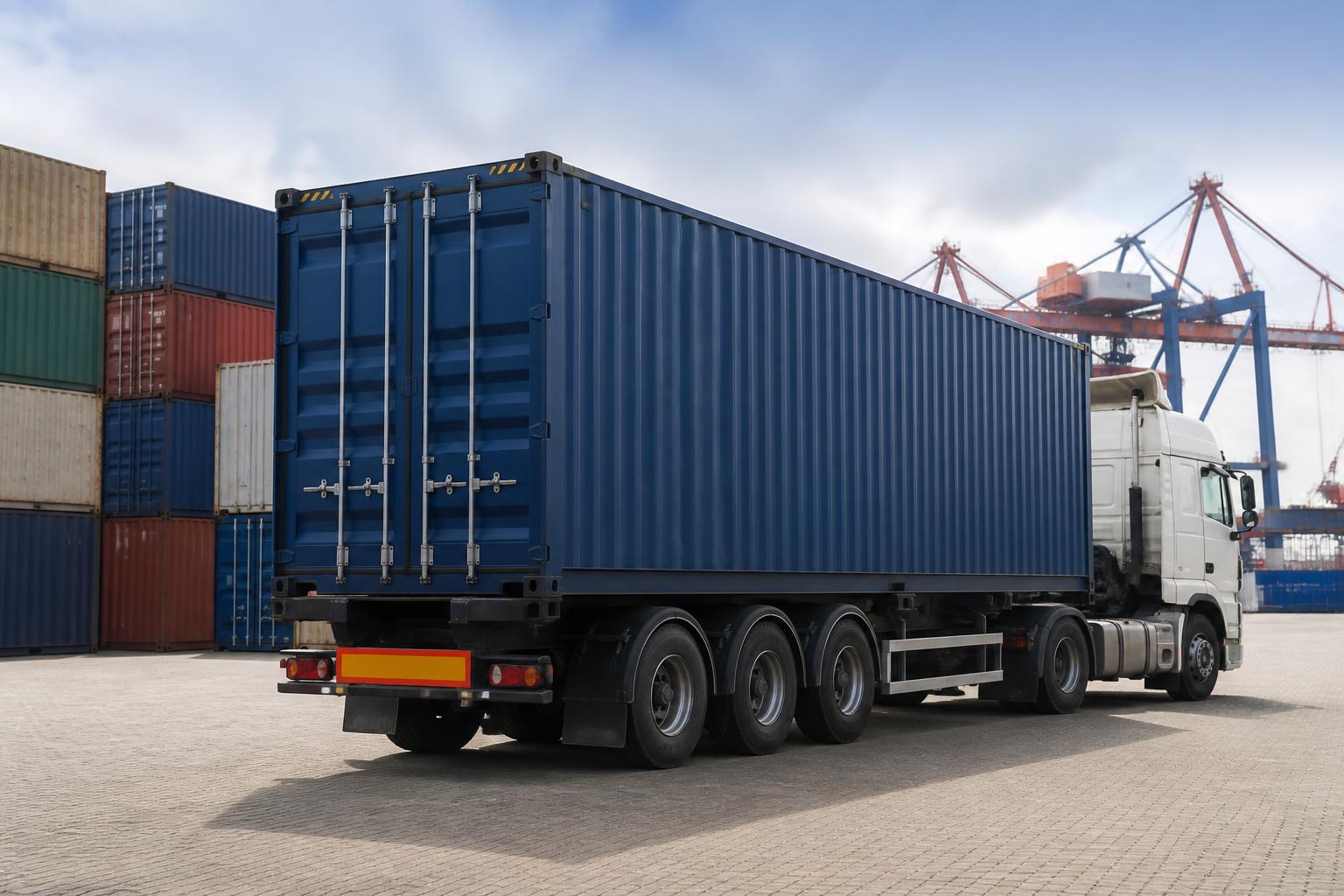
If you are choosing a haulier for a high cube import, the main point is simple. Treat it as a container move with extra height risk from the start, not as a standard job that can be squeezed through the usual process. A high cube box can be routine when the route, trailer, delivery point and port booking are checked properly. It becomes expensive when those checks are left until the day of collection.
For most importers and forwarders, the right choice is a haulier that runs the move as merchant haulage, books the port slot, works to shipping line free time, checks release and customs status before dispatch, and tells you early when a box is at risk. That matters on any FCL move, but it matters more on high cube container haulage in the UK because the margin for error on bridges, access and redelivery options is smaller.
What makes high cube container haulage different
A standard dry 40ft box is usually 8ft 6in high. A high cube 40ft or 45ft unit is typically 9ft 6in high. That extra foot sounds minor on paper, but on the road it changes planning straight away. Once a container is on a trailer, overall running height becomes the first operational question. If the wrong trailer is sent, or the route is not checked against actual height restrictions, the box may be collectable from port but not deliverable to site.
That is why we do not treat a high cube as just another 40ft ISO Container or 45ft ISO Container. We plan it as a separate road move with its own constraints. The container type, gross weight, discharge port, delivery postcode and site access notes all matter before the vehicle is allocated.
Equipment choice comes first. Trailer deck height affects whether a high cube can move within a workable overall height for the intended route. A haulier needs to know what trailer is going under the box, not just whether a tractor unit is available. The same applies where the load is a 20ft ISO Container with unusual cargo height or a Refrigerated Container with equipment housing that affects clearance and rear access. The container itself may be standard in shipping terms, but the road move is not standard if the delivery point has low trees, overhead cables, a rail bridge, a tight yard entrance or a sloping approach.
Planning also changes at the delivery end. High cube deliveries fail more often on final access than on trunk route. Industrial estates can be straightforward up to the estate entrance and then restrictive inside. A site may receive standard trailers regularly and still be awkward for a high cube because of gate height, canopy clearance, turning angle or the need to reverse under a structure. We therefore need proper delivery instructions, not just a postcode and a contact name. If there is any doubt, photos, What3Words, previous delivery history and site measurements help avoid an abortive journey.
Risk is different too. When a standard height box cannot be delivered because of access, there may still be local options to hold or redeliver. With a high cube, the alternatives can be narrower because not every nearby route or temporary holding point is suitable. That increases the importance of getting the move right before collection. It also increases the value of early warning if release, customs status or site readiness are not in place.
Which haulage setup suits your move best?
For importers and forwarders booking UK road legs themselves, the practical choice is usually between merchant haulage and a less managed setup where parts of the move are left with different parties. The difference is not theoretical. It shows up in who actually controls the clock.
With merchant haulage, we book the collection slot, watch the shipping line free time, check that release is in place, look for customs issues before the driver is committed, and keep the customer updated if a container is moving towards demurrage or storage risk. That is usually the cleanest arrangement for port to premises container work because one party is managing the road move from release to delivery.
In a less managed setup, those tasks can be split. One party may expect the forwarder to arrange release. Another may wait for the importer to confirm customs status. Someone else may assume the haulier is booking the port slot when in fact no booking has been made. That can still work if everyone is very clear, but it is where avoidable cost starts. A high cube move is not the place for assumptions, especially when the port booking window is tight or the delivery point needs a specific trailer.
This is also where communication standard matters. On a managed merchant haulage move, the customer should not have to chase for every milestone. The haulier should be checking whether the line release is live, whether the box is customs cleared, whether the port booking has been accepted, and whether the free time leaves enough room for the planned delivery date. If there is a problem, the customer needs that raised while there is still time to act, not after storage or demurrage has started building.
That is one reason many customers book directly with us rather than leaving the road leg to be arranged later. We collect from Felixstowe, London Gateway, Tilbury, Purfleet, Southampton and Liverpool and deliver across Great Britain, mostly as merchant haulage for importers and freight forwarders. Where the move needs close control of booking, release and timing, that direct line matters. We cover more on timing pressure and port cost in how container haulage avoids port storage and delay.
How to compare hauliers on equipment, access and coverage
When you compare hauliers for high cube work, start with owned fleet and trailer capability. Ask how many vehicles and trailers they run on their own operator licence, and whether they can say what trailer type will be used for a high cube job. A vague answer usually means the planning is being left too late. We run 40 vehicles and 40 trailers of our own on operator licence OF2023521, with vetted partner hauliers on their own operator licences taking extra volume where needed.
That matters because extra volume is normal in container haulage. The key question is not whether a haulier ever subcontracts, most do. The question is whether subcontracting is controlled. We use vetted partners when volume requires it, but the move still needs the same planning standard, the same container information, the same access check and the same freight liability position.
Next, look at site access process. A reliable haulier should ask for the details that make a difference, not just the collection and delivery postcodes. For a high cube move that includes whether the site can take a full length artic, whether there are overhead restrictions, whether unloading is live tip, grounded, side accessible or dock based, and whether there are booking times or waiting limits. For some customers, especially where a 45ft ISO Container is going to a first time delivery address, a pre check can save a failed run.
Coverage also needs to be stated clearly. For container work, "nationwide" can mean many things. In our case it means collections from the main ports we serve, Felixstowe, London Gateway, Tilbury, Purfleet, Southampton and Liverpool, with delivery throughout Great Britain. That distinction matters because Great Britain is not the same as the whole UK for road planning. A move into Northern Ireland involves different arrangements. If your traffic is mainly England, Scotland and Wales, ask the haulier to confirm coverage in those terms.
The same applies to cargo type. High cube does not tell you the commodity. Some loads bring additional handling or compliance requirements. We are an upper tier waste carrier and dealer, CBDU471791, and we are registered with APHA to carry Category 3 animal by-products, animal feed in shipping containers, quay to premises, U1433815/TRANS. If your box contains controlled material, feed products or waste related cargo, check those registrations before the collection day, not after the container is already available.
If your traffic includes different box sizes and load types, it also helps to check whether the haulier works routinely across ISO containers, including 20ft ISO Container, 40ft ISO Container, 45ft ISO Container and Refrigerated Container moves. That does not mean every trailer fits every job. It means the operator is used to matching the road plan to the actual unit being collected.
How port processes affect high cube collections
Port process is where many container moves are won or lost. The main UK ports do not all handle bookings and collections in exactly the same way, and local knowledge is not a nice extra. It affects whether a booking is obtained promptly, whether a release issue is spotted before dispatch, and whether a collection plan is realistic inside free time.
Felixstowe is the clearest example because booking knowledge there is operationally important. Collections are managed through the Container Booking System, CBS, also referred to as the Container Booking System in full, and that means timing, slot availability and amendment handling need to be understood properly. If a haulier works Felixstowe every day, the process is familiar. If not, small errors can turn into missed collections quickly. We are based at Bridge Farm, Woolpit, Suffolk, IP30 9PQ, about 35 miles by road from the Port of Felixstowe, so this is a port we know closely in day to day planning.
At London Gateway, booking flow and terminal practice differ from Felixstowe. The same is true again at Tilbury, Southampton and Liverpool. Purfleet also has its own operational pattern depending on the move. A customer does not need a lecture on each terminal system, but they do need a haulier that knows the practical difference between them. A collection plan that works at one port may not translate neatly to another if release timing, slot demand or terminal cut off behaviour differs.
This matters even more for high cube boxes because if the collection gets pushed, the delivery plan may also need to move. If the original route was chosen to suit a morning delivery window, a later collection can remove that option. That is why we prefer to manage the whole chain of events, release, customs status, booking, collection and delivery timing, rather than dealing only with the driving part.
For customers moving boxes through Tilbury, local process and cost exposure deserve special attention. We have written separately about avoiding extra port cost when choosing a Tilbury container haulier. For visibility during the move, our approach to container tracking without adding avoidable cost also shows what we think customers should expect from a managed haulage service.
One more point on port process. Where rules differ between Great Britain and the EU generally, the road haulage and port booking steps are not interchangeable. UK port collection depends on UK terminal systems, UK customs status and UK road planning. Even where the import leg has come through an EU process before arrival, the final container collection in Great Britain still has to be planned to local terminal and road conditions.
What to check on risk, liability and exceptions
When you compare hauliers, ask directly about freight liability. Do not assume all operators carry the same level because many do not. Standard RHA terms often work at a lower limit than customers expect. Our freight liability cover is £6,500 per tonne under RHA 2024 conditions, which is five times the RHA standard of £1,300. The same limit applies to subcontracted loads, and up to £10,000 per tonne is available by arrangement for high value freight.
That point on subcontracted loads is important. If a haulier uses partner operators for overflow, ask whether the same liability limit follows the load or whether cover changes when the move is subcontracted. If the answer is unclear, that is a risk in itself.
You should also ask how exceptions are handled. A good haulier should be able to explain, in practical terms, what happens if the container is not released, if customs place a hold, if the terminal booking cannot be secured in the expected window, or if the box is approaching the end of free time. The answer should include who monitors the issue, who escalates it, and when the customer is told. "We will let you know if there is a problem" is not enough. You need to know what counts as a trigger for escalation.
For import work, demurrage and detention exposure should be discussed separately because they are not the same thing. Demurrage usually relates to time in port or terminal beyond free time. Detention usually relates to use of the shipping line equipment outside the port beyond the allowed period. A haulier cannot remove those charges once they have been incurred, but a managed haulier can reduce the chance of them arising by checking release early, booking promptly, and flagging delivery constraints before the collection is attempted. We explain that in more detail in how detention charges build up on UK container moves.
Finally, ask what happens when a box is genuinely at risk. We think the right answer is early, plain escalation. If a high cube container cannot move as planned because release is missing, customs have stopped it, the site is not accessible, or free time is running out, you need to hear that while options still exist. That may mean changing the delivery date, prioritising paperwork, amending the booking plan or arranging a different delivery approach. What matters is that the issue is surfaced early by a haulier that is actually watching the move.
That is what we build our service around at Jagelo Haulage Limited. Since 2019 we have moved more than 75,000 containers, around 13,000 a year, for importers and forwarders who want the road leg managed properly from port booking through to delivery. For high cube work especially, that is the difference between a routine collection and an avoidable problem.
Are high cube containers harder to deliver than standard containers?
Often, yes. The extra height can make access tighter at warehouses, yards and rural sites. A haulier should check trailer type, route constraints and unloading point access before collecting from port.
Do all hauliers handle high cube container work in the same way?
No. Some only provide a vehicle, while others manage the full merchant haulage process, including slot booking, release checks, free time planning and early warning if collection is at risk.
What ports matter most for high cube container haulage in the UK?
For many importers, the key ports are Felixstowe, London Gateway, Tilbury, Purfleet, Southampton and Liverpool. Booking systems, slot availability and local process differ by port.
Why does freight liability matter on container haulage?
It sets the carrier's liability limit if cargo is lost or damaged under the agreed conditions. You should also check whether the same limit applies when loads are subcontracted.
Should I ask about access before the container leaves port?
Yes. Confirm site restrictions, opening hours, vehicle limits, ground conditions and unloading arrangements before collection. That is especially important for high cube units and first-time delivery points.