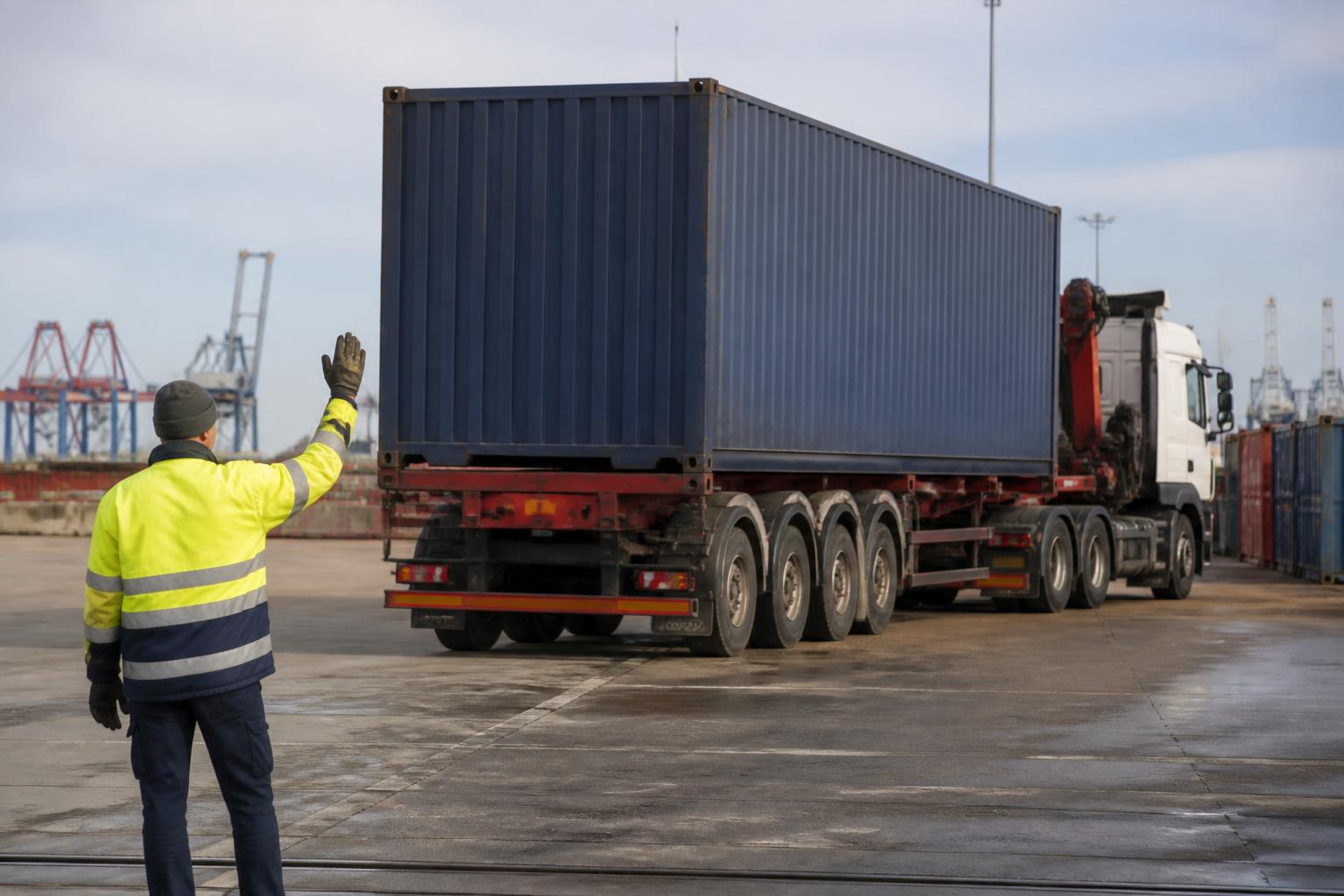
Choosing 20ft container haulage from port without avoidable cost comes down to planning the collection before the box is urgent. For a 20ft unit, the biggest problems are rarely the road miles alone. They are release not in place, customs holds not spotted early, free time running out, a delivery point that cannot take the weight safely, or a booking sequence that leaves the container sitting in port when it could have been moving.
When we plan a 20ft collection, we look at the whole chain, not just the transport leg. That means the shipping line release, customs status, terminal booking position, container weight, delivery restrictions, and whether the move is merchant haulage or line haulage. If those points are checked in the right order, a 20ft import can move cleanly from Felixstowe, London Gateway, Tilbury, Purfleet, Southampton or Liverpool without storage, failed delivery, or wasted waiting time.
What matters most when comparing 20ft container haulage from port
A 20ft box looks simple on paper. In practice, it needs more checking than many larger units because the weight is concentrated over a shorter footprint and because importers often use 20ft units for dense cargo.
The first point is gross weight. A 20ft ISO Container carrying tiles, metal products, bagged goods, ingredients, paper reels or other dense cargo can be well within legal container limits but still create road planning issues if the collection is not assigned properly. We need the container gross mass, commodity, and whether the weight shown is estimated or confirmed. A 20ft box that is legal in port is not automatically suitable for every tractor and trailer combination, every route, or every delivery site.
The second point is the delivery point. We need to know whether the container is going to a warehouse, factory, farm, construction site, waste site, or a premises with restricted access. Ground conditions matter. So do unloading method, opening side, and whether the customer intends to tip, devann on the trailer, or ground the container. A 20ft unit can be easier to place than a 40ft unit in tight yards, but its concentrated weight can make site conditions more critical, not less.
The third point is free time. For imports, avoidable cost often starts when a box is collected too late, not when the invoice arrives. We check the last free day for demurrage and, where relevant, whether there are line or terminal deadlines that affect the move. If a release is delayed or customs status is unclear, the available window can shrink quickly. That is why we plan around free time from the start, not after the delivery booking is agreed. We cover this in more detail in our guide to avoiding port storage and delay on container collections.
The fourth point is release status. Before a collection can happen, the shipping line or release party has to make the container available to collect. Depending on the line and the port, that may mean a discharge status update, line release, import entry acceptance, clearance of holds, and the correct handoff of collection rights. A haulier cannot fix a missing release by turning up earlier. We would rather tell you at once that the box is not collectable than book a slot that is likely to fail.
The fifth point is who manages the move. Some importers want us to take the job from release monitoring through to terminal slot booking and delivery planning. Others want to control parts of the process themselves and instruct us only when the box is fully ready. Both approaches can work, but the division of responsibility needs to be clear. If the haulier is expected to manage the sequence, we need the shipping line, container number, port, ETA, delivery address, commodity, weight, and the contact who can confirm release or customs progress when something changes.
For anyone moving imports through Suffolk regularly, our explanation of who can collect containers from Felixstowe port sets out the practical requirements behind the collection itself.
merchant haulage or line haulage?
This choice affects control, communication and cost.
With merchant haulage, the importer or forwarder books us directly to collect the container from port and deliver it inland. We then work to your release, your delivery instruction and your deadlines. This is the model we handle most often. It gives the importer or forwarder direct visibility of the road move and, in many cases, better control of timing. If a box is at risk on free time, if the delivery point changes, or if customs clearance is delayed, we can deal directly with the party making the decision.
With line haulage, the shipping line controls the inland move as part of its own transport arrangement. The line appoints the haulier, sets the process, and usually remains the point of control for changes. That can suit some traffic flows, especially where the importer wants a single line-managed movement and is less concerned about choosing the road provider. It can also suit transactions where the inland leg is already tied into the shipping contract.
Operationally, merchant haulage is usually preferred where the importer or freight forwarder wants to choose the haulier, manage delivery appointments directly, and keep closer control over free time exposure. It is also common where the delivery is to a specialist site, where communication needs to be fast, or where the importer wants one haulage contact across several ports.
Line haulage is more common where the consignee accepts the line's inland arrangement or where the commercial structure of the shipment makes that simpler. The trade-off is that the importer may have less direct influence over booking priority, delivery sequencing and exception handling.
For a 20ft ISO Container, merchant haulage often makes even more sense because the move can need more tailored planning. If the cargo is heavy, the delivery point is awkward, or the collection has to be timed carefully against release and free time, direct control helps. When we are booked on a merchant haulage basis, we can flag issues early and agree the practical answer with the importer or forwarder before the job becomes expensive.
How port processes change the job
The same container can be straightforward at one port and awkward at another, simply because the release process, slot booking and terminal systems differ.
At Felixstowe, the sequence usually depends on discharge, line release, customs clearance position, and a valid vehicle booking through the port system. The booking itself is not the job. The job is making sure the booking is made at the right time, against a container that can actually be collected. A slot booked before release is in place can be wasted. A slot booked too late can leave the box exposed to demurrage. If you want a fuller port-specific view, our article on choosing Felixstowe container delivery without extra port cost goes into the detail.
At London Gateway, bookings are managed through CARGOES VBS. That means the collection plan depends not just on road capacity but on slot availability in the system at the point the box is actually released and clear to move. If release lands late in the day, the practical collection window may be narrower than it first appears.
Tilbury and Purfleet each have their own operating patterns and terminal processes. The important point is that a haulier needs to know the local booking sequence and the likely pinch points. A container may be customs clear but still not collectable because the terminal handoff is incomplete, a PIN or release reference is missing, or the booking timing is wrong for that site. On merchant haulage work, we monitor those steps because avoidable port cost often starts with a process gap, not a traffic problem.
Southampton has its own planning rhythm around terminal access, line release and road timing. Liverpool adds another layer for customers delivering further into Great Britain because the inland leg is longer and a missed collection day can have a bigger knock-on effect on delivery booking and free time use. We collect from all of these ports regularly, and the planning changes by terminal, by line and by release pattern, not just by postcode.
Customs status also changes the job. In the UK, import entries, holds and documentary issues are handled under UK customs rules, not EU customs procedure. If a container is selected for checks, held pending document resolution, or not yet fully cleared, the road move has to wait. The key is visibility. We would rather know by mid-morning that a box is still on hold than find out after a wasted booking attempt. For urgent traffic, our guide on securing a same-day port collection in the UK explains what has to line up for that to work.
The same applies to specialist cargo. A Refrigerated Container, waste movement, or APHA-sensitive load may require an extra check before booking. We are an upper tier waste carrier and dealer, CBDU471791, and we are registered with APHA to carry Category 3 animal by-products and animal feed in shipping containers, quay to premises, U1433815/TRANS. If a shipment falls into one of those categories, it is better to confirm that at booking stage than after the container is already close to storage.
Why 20ft boxes need a different check from 40ft boxes
A 20ft ISO Container is not just a shorter version of a 40ft ISO Container. For haulage planning, the difference is material.
The main issue is payload concentration. A 20ft unit often carries dense cargo at a weight that is completely normal for the container but much more demanding on axle planning than a longer box with the same commodity spread over greater length. That affects vehicle allocation, route choice and, in some cases, whether the delivery can be done in one standard movement at all.
A 40ft ISO Container or 45ft ISO Container is more often used for lighter or more volumetric cargo. That is not a rule, but it is common. The commercial measure might be FCL, LCL or CBM, but from a road perspective what matters is actual gross weight, weight distribution and how the unit will be handled at destination. A lightly loaded 40ft can be simple. A heavily loaded 20ft can need close planning even when the mileage is short.
There is also a site risk difference. A 20ft box may suit a smaller yard because the physical footprint is easier to place, but if the receiving site wants to unload quickly or use equipment not suited to the load concentration, the job can become unsafe or impractical. If the plan is to tip a dense cargo from a 20ft unit, the risk profile is different again. Tipping a heavily loaded 20ft container is not something to assume from the commodity description alone. We need to know the cargo type, packing method, and whether the site has done that operation safely before.
Ground conditions matter too. A short, heavy box delivered onto poor yard surfaces can create more trouble than a longer, lighter one. The same applies to access gradients, tight turns and unloading position. That is why we ask more delivery questions on some 20ft jobs than on a straightforward 40ft warehouse drop.
In short, 20ft container haulage from port needs a separate check because legal collection from the terminal is only one part of the move. The real test is whether the box can be moved lawfully and delivered safely to the actual site, on the actual day, with the actual cargo inside it.
What to compare in a haulier beyond the rate
The rate matters, but it is not what decides whether a 20ft import moves cleanly.
First, look at fleet capacity and control. We run 40 vehicles and 40 trailers of our own on operator licence OF2023521. That matters because direct fleet control gives us more certainty on planning, especially for timed collections, heavy 20ft units and jobs that need active monitoring against free time. It also matters to ask how extra volume is covered. We use vetted partner hauliers on their own operator licences when required, and we keep the same operational standards around booking, communication and document handling.
Second, ask how the haulier handles subcontracting. Some operators quote as though every move is done on their own fleet, then place a high proportion of work without clear control. There is nothing wrong with subcontracting when it is managed properly, but the importer or forwarder should know who is responsible for the booking sequence, release checks, delivery updates and exception handling. On our subcontracted loads, the same freight liability limit applies as on our own fleet moves.
Third, compare freight liability, not just transport price. Our freight liability cover is £6,500 per tonne under RHA 2024 conditions, which is five times the standard RHA level of £1,300 per tonne. Up to £10,000 per tonne is available by arrangement for higher value cargo. If a shipment is commercially sensitive, that difference matters. It is worth checking the limit before the container moves, not after a claim issue arises.
Fourth, look at communication. A good haulier should say early when a box is at risk. That means telling you if release is still missing, if customs status is blocking the move, if the booking window is tightening, or if the delivery point information does not support a safe plan for a heavy 20ft unit. Silence is expensive in port work. We would rather escalate a risk while there is still time to avoid cost.
Fifth, check whether the haulier can handle the paperwork and booking sequence properly. That includes the release details, container number accuracy, port system requirements, delivery references, and timing of the terminal booking. Depending on the port, that may involve CARGOES VBS, a Container Booking System, or another CBS process. The point is not the acronym. The point is whether the haulier understands the order in which things need to happen so that a valid slot is used on a collectable box.
Finally, ask about experience with the cargo types you actually move. We have moved more than 75,000 containers since 2019, about 13,000 a year, across Felixstowe, London Gateway, Tilbury, Purfleet, Southampton and Liverpool. That volume matters because port haulage is procedural. The more often a team deals with releases, holds, booking changes and site issues, the faster it spots a job that is drifting toward avoidable cost.
If you are booking a 20ft import, the right question is not only who can carry the box. It is who can take control of the collection sequence, match the vehicle to the weight, book the port correctly, and tell you early when the plan needs to change. That is what keeps a standard import from becoming a storage problem. At Jagelo Haulage Limited, that is the part of the job we focus on every day.
Is a 20ft ISO Container usually easier to move than a 40ft box?
Not always. A 20ft ISO Container is shorter, but it is often heavier for its size. That can make axle weight, delivery access and unloading arrangements more critical than with a 40ft ISO Container.
When does merchant haulage make more sense?
merchant haulage usually suits importers and forwarders who want the haulier to book the port slot, work around free time and flag early if release, customs or timing issues put the collection at risk.
What should I send when asking for a haulage quote?
Send the collection port, container size, gross weight, delivery postcode, commodity, release position, customs status and any site restrictions. If the goods may be controlled, send the UN number and class and the haulier can confirm whether it can take it.
Does the booking system matter for Felixstowe collections?
Yes. At Felixstowe, collections are booked on the Container Booking System (CBS). Slot availability affects planning, especially where free time is tight or the box is not yet fully released.
What level of freight liability should I check?
Check the stated freight liability and whether it also applies to subcontracted loads. Jagelo Haulage Limited works with freight liability of £6,500 per tonne under RHA 2024 conditions, with up to £10,000 per tonne by arrangement.