Axle weight distribution: the UK operator’s compliance guide
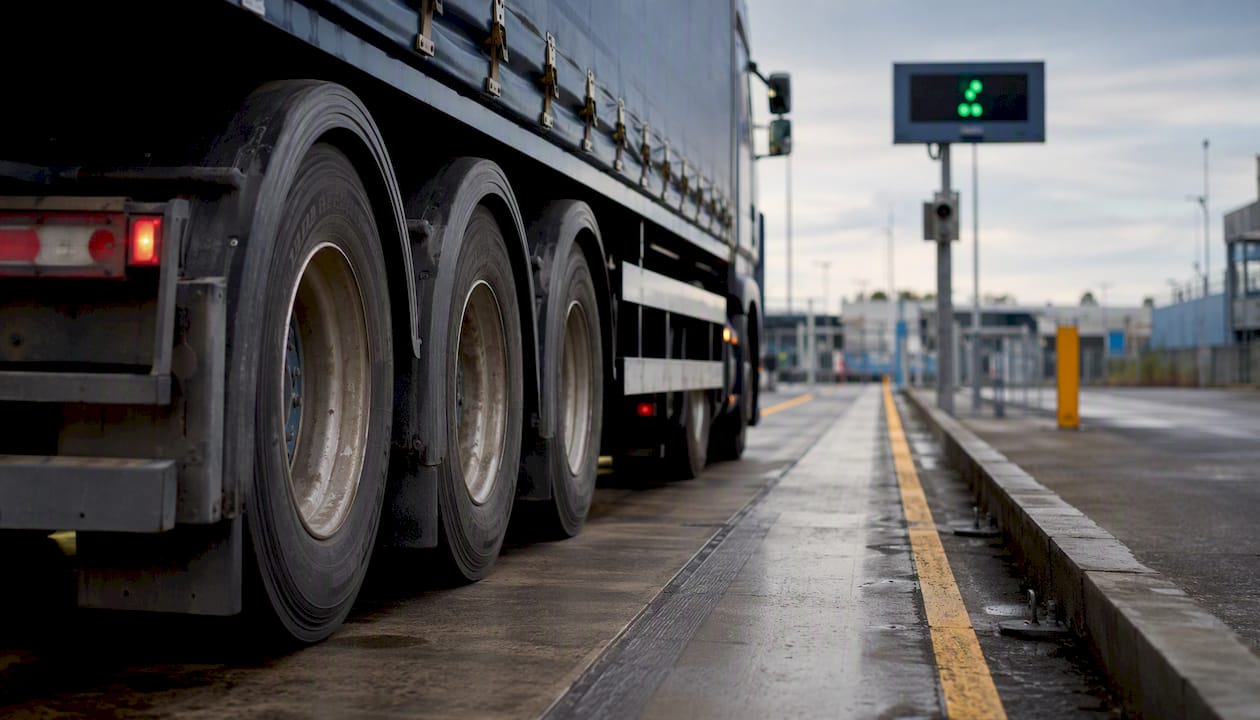
Axle weight distribution is the allocation of a vehicle’s total load across its individual axles, and in the UK it is the single most important factor governing legal compliance, road safety, and vehicle handling. Getting it wrong does not simply mean exceeding a gross vehicle weight (GVW) figure; it means individual axle groups can breach statutory limits even when the overall GVW appears acceptable. Under The Road Vehicles (Authorised Weight) Regulations 1998 (AWR), each axle group carries its own maximum, and spacing between axles directly changes what those maxima are.
Three immediate checks reduce your enforcement risk before any vehicle leaves the yard:
- Confirm your plated weights and tare axle splits from a calibrated weighbridge or manufacturer axle-load certificate, not from registration paperwork.
- Verify that your axle spacing qualifies for the higher tandem or triaxle limits permitted under Schedule 3.
- Weigh the loaded vehicle on a calibrated weighbridge or portable axle scales before departure and attach the signed weight record to the vehicle paperwork.
The scale of the problem is significant. Overloading causes an estimated £50 million a year in road damage across the UK, and DVSA enforcement officers can record separate offences for each axle group, the gross weight, and the train weight in a single roadside stop.
Key takeaways
Correct axle weight distribution requires per-axle measurement from a calibrated source, validation against Schedule 3 limits, and signed records attached to every movement before the vehicle leaves the yard.
| Point | Details |
|---|---|
| Statutory axle limits | Single driving axle: 11,500 kg; driving tandem with twin tyres and road-friendly suspension: 19,000 kg; triaxle: — (AWR Schedule 3). |
| Spacing changes the limit | Tandem and triaxle maxima vary with axle-centre distance; always cross-reference Table 6 before assuming the higher figure applies. |
| Measure per axle, not total GVW | A vehicle within its 44,000 kg train weight can still have an overloaded bogie; weigh each axle group on a calibrated weighbridge before departure. |
| Re-weigh after significant unloads | Removing more than approximately 2,000 kg from one axle group on a multi-drop run can push another group over its limit. |
| Jhaulage’s compliance approach | Jhaulage validates every container load plan against per-axle capacity and provides signed weight certificates and GPS-tracked port-to-door delivery. |
Table of Contents
- Why axle weight distribution matters: key definitions
- UK statutory axle load limits and how spacing affects them
- How to measure and record axle weights accurately
- Practical steps to achieve correct load distribution
- Common pitfalls and the enforcement risks you need to understand
- Pre-departure checklist for axle distribution compliance
- How Jagelo Haulage manages axle distribution across its container fleet
- Why disciplined axle management is worth the operational effort
- Jhaulage: compliant container haulage across major UK ports
- Sources
Why axle weight distribution matters: key definitions
Before you can manage load distribution, you need precise definitions for the terms that appear on vehicle plates and in enforcement notices.
- Axle weight: the total downward force transmitted to the road surface through one axle, measured in kilograms.
- Gross vehicle weight (GVW): the maximum total weight of the vehicle including its load, as specified on the ministry plate.
- Train weight: the combined weight of a motor vehicle and any trailer it is drawing.
- Plated weight: the maximum weight authorised by the manufacturer’s plate or ministry plate; the lower of the two values governs legal permissibility.
- Tandem axle: two axles whose centres are less than 2.5 m apart, treated as a group for weight calculation purposes.
- Triaxle: three axles whose outermost centres span no more than 3.25 m, again assessed as a group.
Poor load distribution carries three distinct operational consequences. First, an unbalanced vehicle is harder to steer and brake, particularly in emergency manoeuvres. Second, concentrated axle loads accelerate road surface deterioration, which is why the £50 million annual estimate carries real policy weight. Third, operators who run overloaded axles gain an unfair cost advantage over compliant competitors, which is precisely why DVSA enforcement targets individual axle groups rather than GVW alone.
Pro Tip: Before loading, record the empty (tare) axle split from a weighbridge, not from the vehicle registration document. Registration tare is a single total figure and tells you nothing about how that weight is distributed across axle groups.
UK statutory axle load limits and how spacing affects them
Schedule 3 of the AWR sets the numeric ceilings for each axle configuration. The table below summarises the most common limits operators encounter.
Spacing is not a footnote; it is a threshold that changes the permitted weight. Under the Table 6 spacing rules within Schedule 3, a tandem axle group with centres less than 1.0 m apart attracts a lower limit than one with centres between 1.0 m and 1.3 m. Operators must measure their actual axle centres and cross-reference them against the relevant table row before assuming the higher figure applies.
Combination weights follow a separate set of conditions. Gov confirms that the standard maximum for a five-axle articulated vehicle is 40,000 kg. Operation at 41,000 kg requires a three-axle tractor drawing a two-axle trailer, with the driving tandem fitted with twin tyres and road-friendly suspension. The 44,000 kg limit applies to combined transport operations carrying ISO containers of at least 6.1 m in length, with the tractor meeting the same suspension and tyre conditions and the engine meeting Euro VI emissions standards. The LST combination weights brief sets out these spacing definitions and derived limits in full.
How to measure and record axle weights accurately
Measurement sequence matters. A calibrated weighbridge is the preferred method: it captures all axle groups simultaneously and produces a printed certificate that satisfies roadside inspection. Where a weighbridge is not accessible before departure, portable axle scales placed under each axle group in sequence give a reliable alternative, provided the vehicle is on level ground and the scales are within calibration.
Weigh-in-motion (WIM) systems installed at some ports and motorway sites can flag gross overloads, but they are not a substitute for a static pre-departure weigh. WIM readings carry a margin of error and are not designed to produce the per-axle certificate you need for your records.
- Position the empty vehicle on a level weighbridge and record the per-axle split.
- Load the vehicle according to the approved load plan.
- Weigh the loaded vehicle and confirm each axle group is within its Schedule 3 limit.
- Record: date, weighbridge location, vehicle registration, trailer number, configuration, per-axle readings, and the name of the person signing off.
- Calculate the kingpin/fifth-wheel load by subtracting the tractor’s front and rear axle readings from the tractor GVW, then confirm the trailer bogie reading independently.
- Attach the signed weight record to the vehicle’s journey paperwork.
Registration tare is a single aggregate figure and provides no axle split. For an accurate baseline, either weigh the empty vehicle or obtain a manufacturer axle-load certificate, as industry guidance consistently recommends.
Pro Tip: On multi-drop runs, re-weigh after any unload that removes more than approximately 2,000 kg from a single axle group. Removing a heavy pallet from the rear of a trailer can shift the bogie well below its minimum safe load while simultaneously overloading the kingpin.
Practical steps to achieve correct load distribution
Start from your tare axle split, calculate the available capacity per axle group, then position freight accordingly. The heaviest items belong centre-forward on the trailer floor, balancing the load between the kingpin and the bogie rather than concentrating mass at either end.

The lever rule governs how cargo position translates into axle loads. Moving a 5,000 kg pallet 1 m towards the rear of a trailer can shift more than 1,000 kg from the kingpin group onto the bogie. The SafeDrivingForLife loading guidance provides a practical payload-times-distance formula for calculating front and rear axle contributions, which you can apply as a spot check before committing to a load plan.
For container loading specifically, follow this sequence:
- Measure and record the tare axle split of the empty tractor and trailer.
- Obtain the container’s verified gross mass (VGM) and any available cargo distribution data.
- Plan cargo positions using a load-planning calculator, inputting axle centres, kingpin position, and item weights.
- Load heaviest items first, positioning them over or slightly forward of the bogie centre.
- Secure all items with appropriate lashings before moving the vehicle.
- Validate the loaded configuration with the calculation tool and confirm each axle group is within its limit.
- Conduct a final weighbridge check and attach the certificate to the paperwork.
Pro Tip: Tyre pressure and air-suspension ride height both affect measured axle loads. Check tyre pressures against the manufacturer’s specification and confirm the suspension is at the correct ride height before weighing. A deflated tyre or a dropped air bag can shift several hundred kilograms between axle groups.
Common pitfalls and the enforcement risks you need to understand
The most frequent mistake operators make is treating GVW compliance as sufficient. A vehicle can be within its 44,000 kg train weight and still have an overloaded rear bogie if the container’s cargo is concentrated at the back. DVSA officers weigh axle groups individually at roadside checkpoints and can reconstruct the kingpin load from the tractor’s front and rear axle readings.
Other recurring errors include:
- Trusting the registration document for tare axle splits rather than a weighbridge certificate.
- Failing to re-weigh after significant partial unloads on multi-drop routes.
- Assuming that a road-friendly suspension label on the vehicle plate automatically qualifies the tandem for the 19,000 kg limit without confirming twin tyres are also fitted.
- Overlooking the container-length and Euro VI engine requirements when operating at 44,000 kg.
On penalties, the driver, the haulier, and the loader can each face separate proceedings. DVSA can issue a prohibition notice preventing the vehicle from moving until the overload is corrected, and fixed penalty notices apply per offence.
Enforcement officers can record multiple simultaneous offences from a single roadside stop: one for each overloaded axle group, one for gross vehicle weight, and one for train weight. A vehicle with two overloaded axle groups and an excess GVW can therefore generate three separate penalty proceedings from a single inspection.
For operators with overweight containers, the overweight container transport guide sets out practical mitigation steps including re-stow and split-load options.
Pre-departure checklist for axle distribution compliance
Use this checklist as the final gate before any loaded vehicle leaves the yard.
Loader sign-off:
- Confirm plated weights and tare axle split are recorded from a calibrated weighbridge or manufacturer certificate.
- Verify the load plan positions items within available capacity per axle group.
- Apply a lever-rule spot check for any item exceeding 1,000 kg placed more than 2 m from the bogie centre.
- Secure all cargo with appropriate lashings and confirm container doors are sealed.
- Record: loader name, date, vehicle registration, trailer number, and load plan reference.
Driver sign-off:
- Confirm tyre pressures and suspension ride height are at specification.
- Conduct a final weighbridge check and confirm all axle groups are within Schedule 3 limits.
- Attach the signed weight certificate to the journey paperwork.
- Note the weighbridge location and reference number on the consignment record.
- Confirm re-weigh points for any multi-drop leg where a single unload exceeds approximately 2,000 kg.
For container-specific loading techniques, the container loading guide provides detailed cargo-positioning and lashing guidance.
How Jagelo Haulage manages axle distribution across its container fleet
Jagelo Haulage Limited operates a fleet of over 40 GPS-tracked trucks and trailers on container haulage routes serving Felixstowe, Tilbury, Southampton, and Liverpool. Container loads vary significantly in cargo distribution, and multi-drop routes introduce the additional complication of changing axle loads after each delivery.
The operational approach Jagelo Haulage applies covers four stages. First, every tractor and trailer in the fleet has a recorded tare axle split from a calibrated weighbridge, providing an accurate baseline rather than relying on registration paperwork. Second, load planners validate each container’s verified gross mass against the available axle-group capacity before the vehicle is dispatched. Third, portable axle scales are used at port collection points where a fixed weighbridge is not immediately accessible. Fourth, drivers on multi-drop routes are instructed to re-weigh after any significant unload and to contact the operations team if a re-weigh indicates a redistribution problem.
Maintaining a signed weight record for every loaded movement has materially reduced the number of roadside prohibition events and gives clients a clear audit trail confirming their cargo was transported in full compliance with UK statutory limits.
Operators can replicate this approach regardless of fleet size. The key takeaways are:
- Establish tare axle splits from a weighbridge, not from registration documents.
- Validate every load plan against per-axle capacity before departure.
- Use portable scales at port if a weighbridge is not available on-site.
- Re-weigh after significant partial unloads and keep signed records for every movement.
Why disciplined axle management is worth the operational effort
The conventional view in fleet management is that axle compliance is a cost centre: time spent weighing, paperwork to maintain, and re-weigh stops that add minutes to a run. That framing misses the actual arithmetic. A single prohibition notice grounds the vehicle until the overload is corrected, which in a port context can mean missing a collection window and incurring demurrage charges that dwarf any fine. Two or three enforcement events in a twelve-month period can trigger a DVSA operator licence review, which puts the entire business at risk, not just one vehicle.
The operators who treat axle management as a discipline rather than a compliance burden tend to find that the weighbridge stop before departure is the cheapest insurance available. It removes uncertainty from the driver’s journey, gives the client a verifiable record, and keeps the vehicle moving. The paperwork burden is real but modest compared with the cost of a grounded vehicle at Felixstowe on a Friday afternoon.
Jhaulage: compliant container haulage across major UK ports
Operators who need container movements managed to the same standards described in this guide will find that Jhaulage’s port-to-door service removes the compliance friction at every stage. Every vehicle in the fleet carries a calibrated tare axle record, load plans are validated against per-axle capacity before dispatch, and GPS tracking provides a real-time audit trail from port gate to delivery point.
Practical services that directly address axle distribution risk include:
- Weighbridge co-ordination and signed weight certificates for every loaded movement.
- Load planning support for containers with uneven cargo distribution.
- Portable axle-scale checks at Felixstowe, Tilbury, Southampton, and Liverpool.
- Multi-drop route management with scheduled re-weigh points after significant unloads.
- GPS-tracked, port-to-door container haulage with 24/7 operations support.
To discuss a container movement or request a quote, contact Jhaulage through the Jagelo Haulage landing page.
Sources
The following statutory and practical references are the authoritative starting points for UK axle weight compliance.
- The Road Vehicles (Authorised Weight) Regulations 1998 — Schedule 3
- Gov
- A simplified guide to lorry types and weights
Recommended
- Container Weight Limits for UK Roads: The 2026 Compliance Guide | Jagelo Haulage
- Abnormal load haulage in the UK: a complete guide | Jagelo Haulage
- Role of driver compliance in haulage: 2026 guide | Jagelo Haulage
- Heavy Container Haulage: A Strategic Reference Guide for UK Logistics 2026 | Jagelo Haulage