More on overweight containers from Jagelo Haulage
Loading a container to its maximum plated capacity is often the quickest way to trigger a DVSA roadside prohibition. You likely recognise that keeping a supply chain moving requires a precise understanding of container weight limits for UK roads to avoid the risk of vehicle immobilisation. It's a common frustration for logistics managers when a packed container is flagged for an axle overload, leading to graduated fines and avoidable port delays.
This article serves as your definitive technical reference for maintaining compliance under the May 2026 enforcement standards. You'll gain the specific knowledge required to manage the 44-tonne gross vehicle weight limit and understand the technicalities of axle weight distribution. We'll examine the latest DVSA sanctions policy and provide the operational insights needed to select a haulage partner that prioritises regulatory protection. By the end of this guide, you'll have the confidence to ensure every shipment is legally compliant and operationally efficient.
Key Takeaways
- Identify the specific payload differences between 20ft and 40ft units to ensure every shipment adheres to container weight limits for UK roads.
- Master the foundational 44-tonne gross vehicle weight limit for 6-axle combinations to protect your operations from costly DVSA penalties.
- Understand why total weight is only one factor; proper longitudinal load distribution is critical to prevent individual axle overloads.
- Review the 2026 DVSA enforcement standards and the impact of weigh-in-motion technology on modern logistical schedules.
- Learn how professional container haulage providers use rigorous pre-departure checks to maintain regulatory compliance and operational safety.
Maximum Gross Vehicle Weight (GVW) on UK Roads
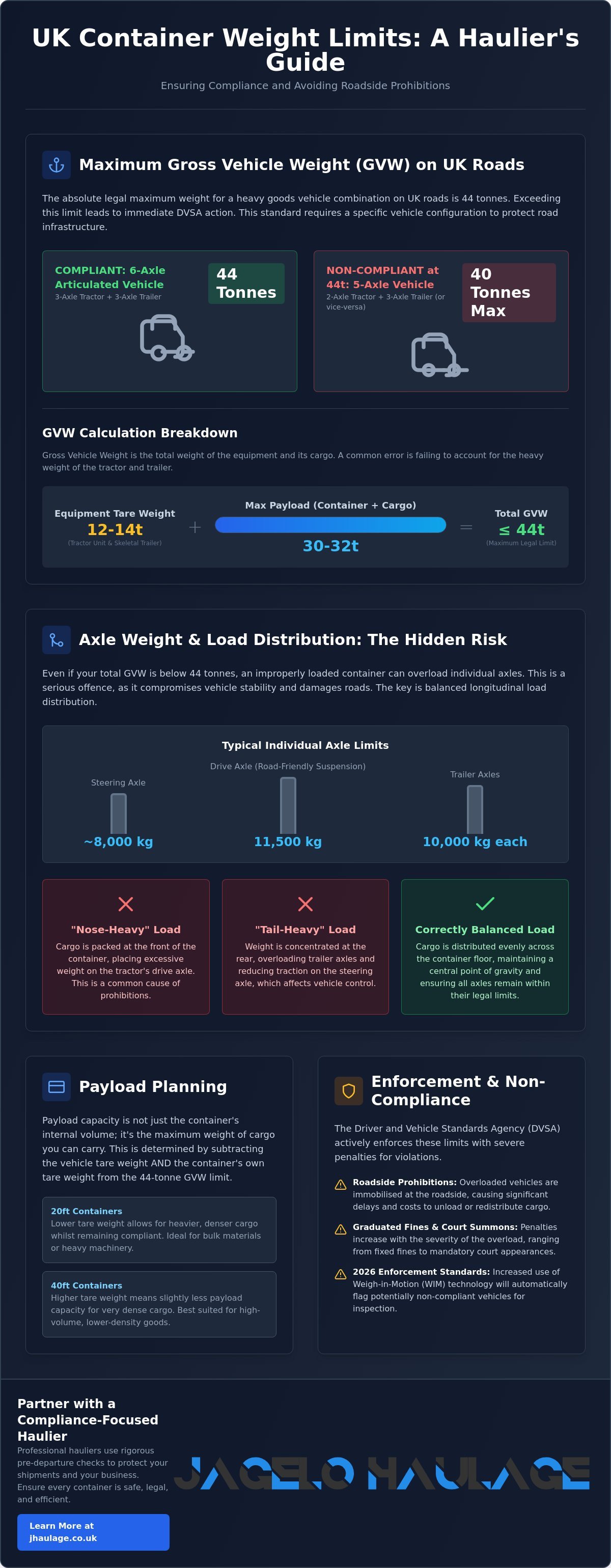
The 44-tonne limit represents the maximum permissible weight for heavy goods vehicles operating on the UK road network. This standard applies specifically to 6-axle articulated vehicle combinations. It is a critical benchmark for anyone managing container haulage, as exceeding this threshold results in immediate regulatory action from the DVSA. Whilst other European territories may experiment with Longer Heavier Vehicle (LHV) regulations, the UK maintains a strict 44,000 kg ceiling to protect the integrity of national infrastructure and road safety.
Achieving this maximum weight requires a specific vehicle configuration. A standard 5-axle articulated vehicle is restricted to 40 tonnes. This 4-tonne difference is significant for logistics managers looking to maximise cargo volume per shipment. Operating a 5-axle vehicle at 44 tonnes is a serious offence that leads to graduated fixed penalties or court summons depending on the severity of the overload.
The 44-Tonne Regulation Explained
To legally operate at 44 tonnes, the vehicle must consist of a 3-axle tractor unit coupled with a 3-axle trailer. This configuration ensures that the weight is distributed across a larger surface area, reducing the impact on the road surface. Additionally, the vehicle must be equipped with road-friendly suspension, typically air suspension, on the driving axles. These technical requirements are not optional; they are essential components of maintaining container weight limits for UK roads and ensuring the vehicle remains stable during transit.
Vehicle and Trailer Tare Weights
Logistics managers must account for the tare weight, or unladen weight, of the equipment before calculating the maximum cargo capacity. A modern tractor unit and skeletal trailer typically weigh between 12 and 14 tonnes. This unladen weight has increased slightly in recent years due to the mandatory inclusion of Euro VI emission control systems, which add weight through heavy exhaust after-treatment components.
Gross Vehicle Weight is the combined mass of the vehicle, trailer, and container.
Understanding this distinction is vital for accurate load planning. If a tractor unit weighs 8,500 kg and the skeletal trailer weighs 4,500 kg, the total unladen weight is 13,000 kg. This leaves a maximum remaining capacity of 31,000 kg for both the container shell and the cargo inside. Failing to subtract the equipment weight from the 44-tonne limit is a frequent cause of accidental overloading at the port. Professional hauliers manage these calculations internally to ensure every load remains within container weight limits for UK roads before it joins the public highway.
Axle Weight Limits and Load Distribution
Compliance with container weight limits for UK roads requires more than a simple gross weight check. Even if a vehicle combination remains under the 44-tonne limit, it can still be illegal if a single axle exceeds its specific weight threshold. The DVSA monitors individual axle weights to ensure vehicles remain stable and do not cause disproportionate wear to the road infrastructure. Maintaining a balanced longitudinal centre of gravity is the primary discipline for any logistics manager overseeing heavy container movements.
Unevenly distributed cargo is a frequent cause of compliance failure. If the contents are packed tightly at one end of the container, the resulting weight concentration can push an axle over its legal limit whilst the total vehicle weight remains well within the permitted 44,000 kg. This creates a significant risk during roadside inspections. Operators must ensure that the cargo is spread across the floor of the container to maintain a neutral balance point.
The Mechanics of Axle Overloading
Individual axle limits vary depending on the vehicle configuration and the type of suspension used. A single driving axle equipped with twin tyres and road-friendly suspension is generally limited to 11,500 kg. In contrast, non-driving axles on the trailer are typically restricted to 10,000 kg each, as detailed in the official government guidance on Maximum Gross Vehicle Weight (GVW). Placing heavy machinery or dense materials at the very front of a container creates a "nose-heavy" load. This configuration places excessive strain on the tractor unit's drive axle and can lead to mechanical failure or immediate prohibition.
Conversely, a "tail-heavy" container puts too much weight on the rear trailer axles. This imbalance can reduce the weight on the steering axle, which negatively affects the driver's ability to control the vehicle accurately. Professional hauliers prioritise a central weight distribution to ensure the vehicle handles predictably in all road conditions.
Best Practice for Internal Cargo Securing
The responsibility for even weight distribution starts with the shipper at the point of loading. Using dunnage, bracing, and pallets to fill voids is essential for maintaining the load's position. Cargo that shifts during transit is a major hazard; a load that is compliant when it leaves the port can become illegal after a single sharp braking event if the contents slide forward. This shift changes the axle weight distribution instantly, often resulting in an accidental breach of container weight limits for UK roads.
Expert logistics for shipping containers involves a rigorous assessment of how cargo is secured within the steel shell. Professional haulage partners provide the necessary oversight to ensure that containers are not just heavy, but safely balanced. If you are managing high-density shipments and need to ensure every load meets these technical standards, you can request a haulage compliance quote to protect your operational timeline.
Payload Capacities for 20ft and 40ft Containers
A common misconception in international shipping is that the maximum gross weight listed on a container's CSC plate is legally transportable on the road. Whilst a heavy-plated 20ft unit may be certified for a gross weight of 30,480 kg, transporting this on a standard UK skeletal trailer would likely exceed the 44-tonne limit once the vehicle's tare weight is included. Understanding the specific container weight limits for UK roads requires a calculation that prioritises domestic legislation over international equipment ratings.
Logistics managers must subtract the combined weight of the tractor unit and trailer from the 44,000 kg limit to find the true available capacity for the container and its contents. With a typical vehicle combination weighing approximately 14 tonnes, the remaining 30 tonnes must account for both the steel container shell and the cargo. According to UK government HGV weight regulations, any deviation that pushes the total mass above this threshold is a punishable offence, regardless of the container's physical capacity.
Standard 20ft Container Payload Limits
The 20ft container is frequently used for high-density goods such as stone, metals, or liquids. A non-heavy plated 20ft unit typically offers a payload capacity of approximately 21,700 kg. However, heavy-plated variants can carry up to 27,000 kg. These dense loads present a high risk of axle overloading. To mitigate this, professional container haulage providers often use sliding skeletal trailers. These specialised trailers allow the driver to adjust the position of the 20ft unit, moving it toward the centre of the trailer to ensure the weight is distributed evenly across all six axles rather than concentrating it over the rear tri-axle group.
40ft and High Cube Container Considerations
Standard 40ft containers typically allow for a payload of around 26,000 kg. Whilst they provide double the volume of a 20ft unit, their cargo weight capacity is often lower due to the increased tare weight of the larger steel shell. High Cube variants, which stand at 9ft 6in compared to the standard 8ft 6in, add another layer of complexity. These units are designed for volume rather than weight, yet their height can pose significant challenges for bridge clearances on certain UK routes. Standard UK motorway bridges are 16ft 6in (5.03m), but many secondary routes have lower restrictions. Hauliers must plan routes meticulously to ensure these taller units don't just meet weight requirements but also clear physical infrastructure safely.
Enforcement and the Cost of Non-Compliance
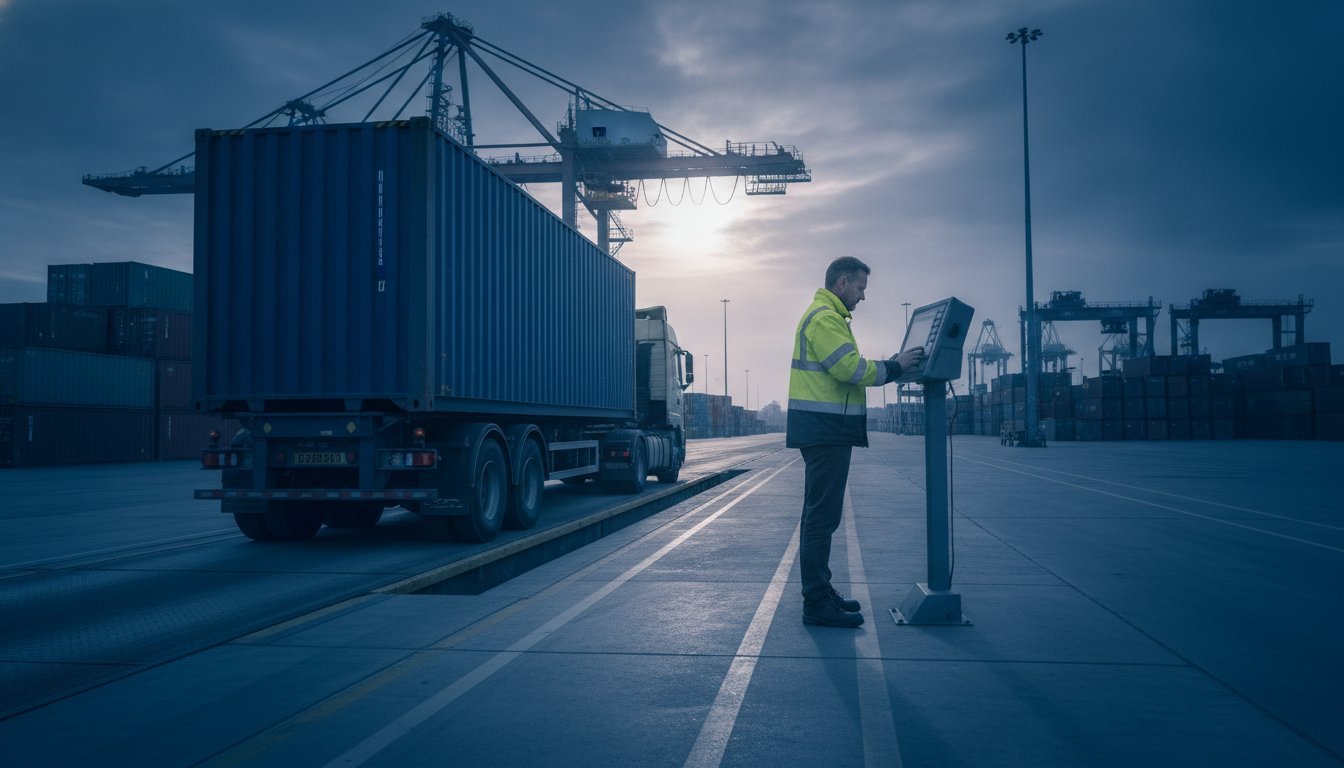
The DVSA maintains rigorous oversight of the UK road network to ensure all freight movements remain within legal parameters. They employ a data-led approach to enforcement, using weigh-in-motion (WIM) sensors embedded in major road surfaces. These sensors identify overloaded vehicles at motorway speeds, allowing examiners to intercept specific HGVs for closer inspection. This technology ensures that container weight limits for UK roads are strictly upheld to prevent infrastructure damage and maintain public safety.
Roadside examiners use static weighbridges or portable weigh pads to verify both the gross vehicle weight and individual axle weights. If a breach is found, the consequences are immediate and non-negotiable. The DVSA may allow a 5% tolerance before issuing a fixed penalty, provided the weight isn't exceeded by one tonne or more. However, this is a discretionary measure and shouldn't be relied upon as a buffer in logistical planning.
DVSA Roadside Inspections
During a weight check, the examiner will issue a graduated fixed penalty based on the severity of the offence. According to the May 2026 enforcement policy, the following fines apply:
- 5% to 9.99% overload: £100 fixed penalty.
- 10% to 14.99% overload: £200 fixed penalty.
- 15% to 29.99% overload: £300 fixed penalty.
- 30% or more overload: Immediate court summons.
If a vehicle is deemed dangerously overloaded, the DVSA will issue a prohibition notice (PG9). This grounds the vehicle immediately. The cargo cannot move until the weight is redistributed or partially unloaded onto another vehicle. This process causes severe logistical delays, additional handling costs, and potential missed vessel windows at the port.
Long-term Risks to Business Operations
The financial penalty is often the smallest cost of non-compliance. Every offence is recorded against a company's Operator Compliance Risk Score (OCRS). A poor OCRS rating increases the frequency of future inspections and can lead to a Public Inquiry before the Traffic Commissioner. This process puts the business's Operator Licence at risk. Persistent non-compliance suggests a lack of professional oversight, which can lead to the revocation of the right to operate HGVs in the UK.
Overloading also accelerates mechanical wear, placing undue stress on braking systems, tyres, and suspension components. This leads to higher maintenance budgets and unpredictable vehicle downtime. Selecting reliable container haulage from established partners is a strategic decision to mitigate these risks. Professional hauliers use modern, well-maintained fleets and strict weight-checking protocols to protect your OCRS rating and your supply chain's integrity. To secure your next shipment with a compliant partner, contact us for a professional haulage quote.
Professional Management of Heavy Container Haulage
Jagelo Haulage prioritises operational discipline to ensure every freight movement remains within legal boundaries. Compliance is not a passive state; it is the result of active fleet management and technical oversight. Managing container weight limits for UK roads is a strategic priority for our traffic office, ensuring that your cargo is handled by professionals who understand the high stakes of the modern supply chain. Our internal protocols are designed to eliminate the variables that lead to overloading prohibitions and avoidable logistical delays.
A significant advantage in managing heavy cargo is the use of specialised merchant haulage. Unlike standard shipping line arrangements, merchant haulage provides the flexibility to select specific equipment tailored to the weight of the container. This control allows us to deploy 6-axle vehicle combinations specifically for high-density loads. This ensures the 44-tonne limit is utilised effectively without risking an axle overload or a breach of safety regulations.
Disciplined Fleet Management
Our fleet consists of modern tractor units and skeletal trailers maintained to the highest industry standards. We strictly utilise 6-axle configurations for our heavy-duty operations to provide the maximum legal payload capacity for our clients. Every vehicle is subject to a rigorous maintenance schedule, which includes the frequent calibration of on-board weighing systems. These systems provide drivers with real-time data, allowing for immediate verification of container weight limits for UK roads before the journey commences.
Driver training is a cornerstone of our operational security. Our professional drivers receive specific instruction on load security, the physics of axle weight distribution, and the latest DVSA enforcement protocols. This expertise ensures that our team can identify potential issues, such as unevenly packed containers, before they become a legal liability on the public highway.
Strategic Partnering for UK Port Logistics
Operational efficiency is maintained through meticulous route planning. Our traffic office identifies and avoids weight-restricted infrastructure, such as weak bridges or narrow rural corridors, that could jeopardise the safety of a heavy load. We manage the entire documentation and verification process, providing a transparent audit trail for every movement. This disciplined approach ensures that your goods move from the port to their final destination without the risk of vehicle immobilisation or costly fines.
Jagelo Haulage provides the competence and reliability required to manage complex logistical challenges. We prioritise the safety of the public and the security of your cargo above all else. For businesses seeking secure container transport solutions that guarantee compliance, our team is ready to provide the necessary strategic support.
Securing Your Supply Chain Through Regulatory Compliance
Maintaining strict adherence to container weight limits for UK roads is a strategic necessity that protects your operational timeline and your Operator Licence. As established, successful haulage requires a precise balance between gross vehicle weight and individual axle distribution. Relying on professional equipment and 6-axle configurations is the most effective way to mitigate the risk of DVSA prohibitions and costly roadside delays.
Jagelo Haulage brings over 15 years of specialist industry experience to every container movement. With a modern fleet of over 40 trucks and comprehensive coverage across all major UK ports, we provide the disciplined oversight required for high-density cargo. We ensure your shipments remain legal and efficient from the moment they leave the quay. Our commitment to functional reliability means your supply chain stays moving without the threat of regulatory interference.
Secure your next delivery with a partner that prioritises technical accuracy and operational protection. We're ready to manage your most demanding logistical requirements with quiet confidence and professional consistency.
Request a professional container haulage quote from Jagelo Haulage today to ensure your operations remain fully compliant.
Frequently Asked Questions
What is the maximum payload for a container on UK roads?
The maximum payload is typically between 26,000 kg and 30,000 kg, depending on the unladen weight of the specific haulage equipment used. A 6-axle vehicle combination has a gross limit of 44,000 kg. Once the 14,000 kg tare weight of the tractor and trailer is subtracted, the remaining capacity must cover both the container shell and the cargo inside.
Can I transport a 30-tonne container on a 40-tonne truck?
You cannot legally transport a 30-tonne container on a vehicle restricted to a 40-tonne gross limit. A 5-axle truck usually weighs approximately 13 tonnes unladen. Adding a 30-tonne container would result in a 43-tonne total, exceeding the legal limit by 3,000 kg and risking immediate prohibition by enforcement authorities.
How does the DVSA check container weights?
The DVSA utilises a combination of weigh-in-motion sensors and physical inspections to enforce container weight limits for UK roads. Sensors embedded in the road surface identify potential offenders at motorway speeds. Suspected vehicles are then directed to a static weighbridge or checked using portable weigh pads to confirm individual axle weights and gross mass.
What happens if my container is found to be overloaded at the port?
An overloaded container will be issued a prohibition notice and prevented from joining the public highway. You'll be required to redistribute the load or remove a portion of the cargo until the vehicle meets legal standards. This process often involves hiring additional labour and equipment, causing significant financial loss and delivery delays.
Is there a difference in weight limits for 20ft and 40ft containers?
The 44-tonne gross limit applies to both, but 20ft containers often carry denser cargo, increasing the risk of individual axle overloading. 40ft containers have a higher unladen weight, which slightly reduces the maximum cargo payload compared to a heavy-plated 20ft unit. Proper equipment selection is essential to maintain container weight limits for UK roads regardless of the unit size.
How should I distribute weight inside a shipping container?
Cargo should be distributed evenly across the floor to maintain a central longitudinal centre of gravity. Placing heavy items at the very front or back of the container puts excessive pressure on specific axles. Using dunnage and bracing ensures the load doesn't shift during transit, which could otherwise cause a legal load to become non-compliant during a roadside check.
Do UK road weight limits include the weight of the truck and trailer?
Yes, the 44-tonne limit is a Gross Vehicle Weight (GVW) figure. This total includes the tractor unit, the skeletal trailer, the empty container shell, and the cargo inside. Logistics managers must account for the unladen weight of the vehicle and trailer, which typically ranges from 12,000 kg to 14,000 kg, when calculating the available capacity for cargo.
What are the fines for exceeding UK HGV weight limits?
Fines are issued as graduated fixed penalties based on the percentage of the overload. As of May 2026, overloads up to 9.99% incur a £100 fine, whilst those between 15% and 29.99% result in a £300 penalty. Any overload exceeding 30% leads to an immediate court summons and poses a significant risk to the company's Operator Licence.