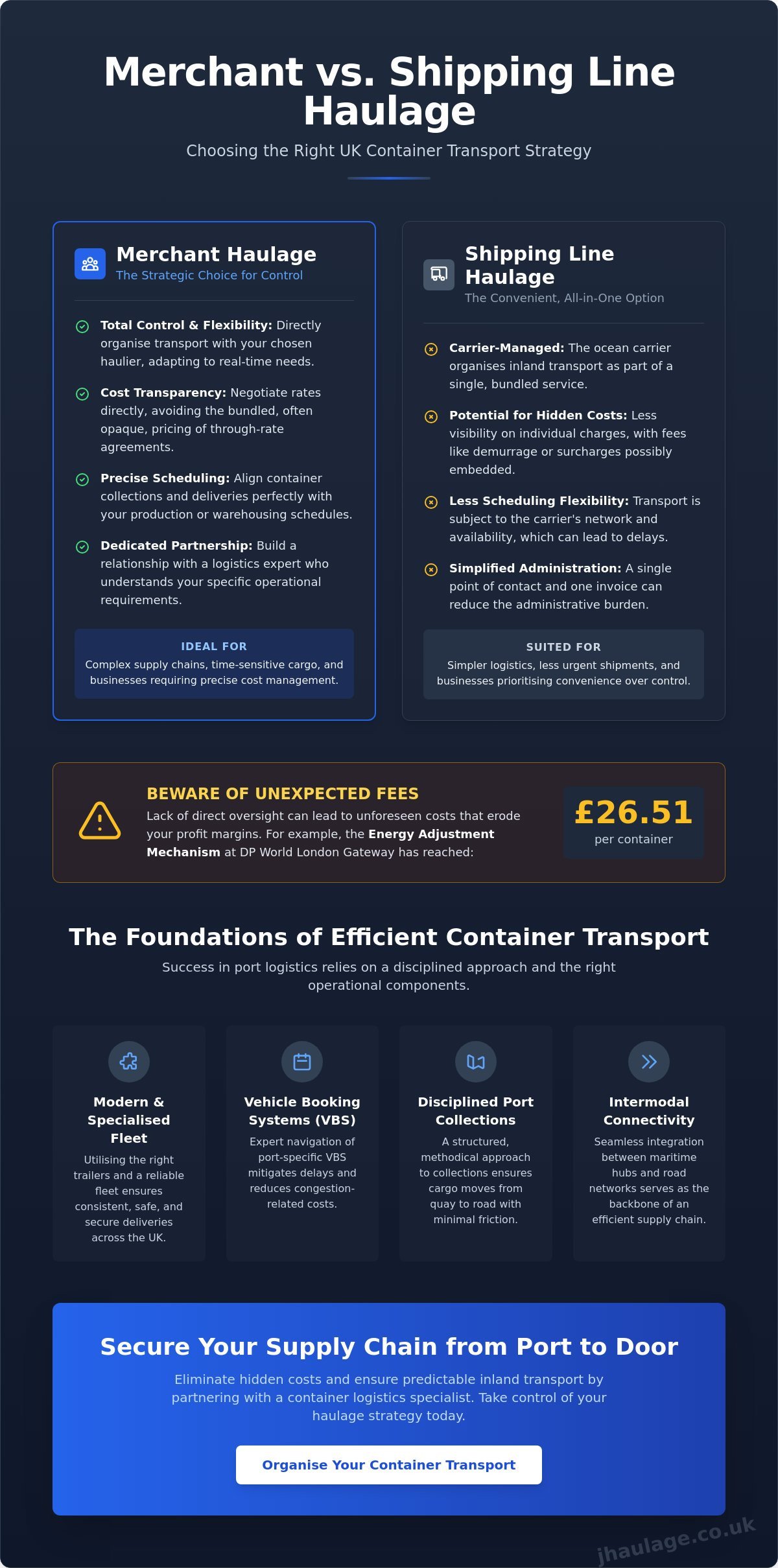
What if the efficiency of your entire supply chain depends less on the ocean voyage and more on the final fifty miles from the port gate? Many operators find that port congestion and unexpected fees, such as the Energy Adjustment Mechanism at DP World London Gateway reaching £26.51 per container, can quickly erode profit margins. You likely recognise that once a box clears the quay, visibility often drops while costs continue to climb. Securing reliable logistics for shipping containers requires more than just a truck; it demands a structured approach to the fundamentals of transport.
This guide explains how to master UK port transport by integrating disciplined haulage strategies with port-centric expertise to protect your bottom line. You'll discover the essential components of professional container logistics and learn how to optimise your supply chain from port to door. We will examine the distinctions between merchant and shipping line haulage, provide a framework for selecting reliable partners, and identify proven methods to reduce lead times through more predictable inland transport. By following this methodical approach, you can eliminate hidden costs and ensure your cargo reaches its destination with consistent security.
Key Takeaways
- Learn how intermodal transport serves as the backbone of modern supply chain management by connecting maritime hubs to inland destinations.
- Distinguish between Merchant Haulage and Shipping Line Haulage to gain greater control over your container transport costs and scheduling.
- Understand the operational necessity of a modern fleet and specialised trailers for ensuring consistent container deliveries across the UK.
- Discover how Vehicle Booking Systems (VBS) and disciplined port collection strategies help to mitigate delays and reduce congestion-related costs.
- Establish a framework for choosing a strategic partner that provides reliable logistics for shipping containers through both merchant and shipping line services.
Understanding the Fundamentals of Logistics for Shipping Containers
Container logistics is the strategic movement of standardised units between maritime hubs and inland destinations. This process ensures that goods arriving at major UK ports reach their final delivery point with minimal disruption. Effective logistics for shipping containers relies on a disciplined coordination of transport modes to maintain the integrity of the supply chain. It's a precise operation where timing and equipment must align to prevent bottlenecks at the port gate.
Professional transport providers act as the critical link between global shipping lanes and local warehouses; for those seeking a broader view of these networks, Perimeter Global Logistics (PGL) offers comprehensive industry insights into international and domestic transport solutions. By focusing on the fundamentals of movement, these providers ensure that cargo remains protected throughout its journey. This structured approach is essential for businesses that require consistent results in an increasingly complex trade environment.
The Role of Intermodal Transport in the UK
Intermodal transport allows containers to move seamlessly from deep-sea vessels to shore and then onto road transport. By Understanding the Fundamentals of Logistics for Shipping Containers, operators can better appreciate how standardised 20ft and 40ft units eliminate the need for manual cargo handling during transit. This standardisation significantly increases operational efficiency and reduces the risk of damage. It also allows for optimised road routes that minimise unnecessary mileage. This methodical planning helps to manage fuel consumption whilst ensuring that cargo remains secure within a single unit from origin to destination.
Why Professional Haulage is the Backbone of the Chain
Road haulage provides the most flexible link in the UK logistics chain. Unlike general courier services that manage small parcels, professional container haulage focuses on the heavy-duty movement of industrial goods and retail stock. Achieving a seamless port-to-door delivery requires a partner with deep operational knowledge. With over 15 years of industry experience, Jagelo Haulage understands the technical complexities of port systems and the strict protocols required for safe container deliveries.
Professional hauliers don't just move boxes; they provide a strategic outcome that protects the client's interests. This expertise is vital for navigating port-specific requirements such as Vehicle Booking Systems (VBS) and customs clearance windows. Most goods suitable for containerised transport fall into specific categories:
- Industrial machinery and heavy components
- High-volume retail consumer goods
- Construction materials and raw resources
- Electronics and high-value equipment, such as bulk shipments of refurbished laptops from HGC Technologies UK Ltd.
When coordinating the transport of specialised construction materials, it is important to consider the final destination requirements; you can read more about GW Flooring and their expert supply and installation services for high-quality floor coverings.
By utilising a dedicated fleet, a professional partner can adapt to fluctuating demand. This flexibility ensures that your logistics for shipping containers remain stable even during periods of high port congestion. The focus is always on functional reliability and the safe delivery of every unit.
Evaluating Merchant Haulage versus Shipping Line Haulage
Choosing between merchant and shipping line haulage is a critical decision for any business managing logistics for shipping containers. Merchant haulage occurs when the cargo owner or their freight forwarder organises transport directly with a haulier. In contrast, shipping line haulage is managed by the ocean carrier as part of a through-rate agreement. While the latter may appear simpler, the merchant model provides a level of oversight that is often necessary for complex UK supply chains.
The scale of these operations is significant. According to official UK port freight statistics, the volume of containerised goods remains a primary driver of port activity. Managing this volume effectively requires a clear understanding of which commercial model best serves your operational requirements. For many, the choice comes down to the balance between administrative convenience and tactical control.
Flexibility and Control in Merchant Haulage
Merchant haulage is the preferred choice for businesses that require precision. This model allows for better scheduled container deliveries because you communicate directly with the transport provider. You can select a haulier based on their specific fleet capabilities and their track record for reliability. This direct relationship is essential when managing tight production schedules or handling same day container delivery requirements. By bypassing the shipping line's administrative layers, you gain immediate access to vehicle status and driver locations.
Operating under a merchant haulage agreement gives you the authority to dictate the priority of your containers. If a specific unit contains urgent components, you can coordinate its collection as soon as it clears the quay. If you require a partner that understands these priorities, you can request a professional transport assessment to see how direct haulage fits your model.
The Direct Route: Shipping Line Haulage Explained
Shipping line haulage is often viewed as a "one-stop-shop" solution. The carrier manages the entire journey from the port of origin to the final destination. This model can be appropriate for low-complexity shipments where delivery windows are broad and cargo is not time-sensitive. However, it often lacks the responsiveness found in merchant haulage. You typically don't have direct communication with the driver or the transport office, which can make resolving delays difficult. For businesses where logistics for shipping containers must be precise, the lack of visibility in the shipping line model often creates unnecessary risk.
Core Components of a Modern Container Transport Fleet
Reliability in logistics for shipping containers is a direct result of physical capacity and technical maintenance. A fleet of over 40 trucks provides the necessary redundancy to manage high-volume port collections without relying on the unpredictability of third-party subcontractors. This scale of operation ensures that even during peak periods, your cargo remains a priority. Modern fleets in 2026 are increasingly defined by their adherence to Euro 6 emission standards, which allow for unrestricted access to Clean Air Zones and improve overall fuel efficiency across nationwide routes.
Maintaining a company-owned fleet allows for stricter oversight of vehicle health and driver performance. Every vehicle must be equipped with telematics to provide real-time data on location and transit status. This disciplined approach to equipment management is what separates professional haulage from basic transport services. It ensures that the technical capability of the fleet matches the high stakes of the UK supply chain.
Vehicle Specifications and Specialised Trailers
The movement of 20ft and 40ft units requires articulated lorries paired with skeletal trailers. These trailers are designed specifically for container security; they utilise heavy-duty twist-locks to secure the unit directly to the chassis. This configuration is essential for maintaining stability during transit, especially when handling maximum weight loads. Professional operators use skeletal trailers because they allow for even weight distribution, which protects the vehicle and the road surface. Managing these assets requires disciplined operational protocols to ensure every trailer is inspected and fit for purpose before leaving the port gate.
Safety Standards and Operational Security
Operating within high-stakes port environments requires drivers who are trained in specific safety and security protocols. These environments are complex, and any failure in procedure can lead to significant delays or safety incidents. Secure transport practices include rigorous gate-check procedures and the use of high-security seals to prevent tampering or theft. Every driver must understand the nuances of port-side operations, including how to interact with automated terminal systems and marshaling areas. Fully insured haulage is a non-negotiable standard for corporate logistics that ensures the carrier maintains comprehensive Goods in Transit and Public Liability insurance for the full value of the cargo. This financial protection, combined with operational discipline, creates a secure environment for your goods from the moment they are lifted from the quay.
- Regular fleet maintenance schedules to prevent mechanical downtime.
- GPS tracking on all vehicles for constant visibility.
- Driver training focused on port-specific safety requirements.
- Use of standardised skeletal trailers for maximum container security.
By investing in modern equipment and safety training, a logistics partner provides a stable foundation for your logistics for shipping containers. This commitment to the fundamentals of transport ensures that your supply chain remains resilient against external pressures.
Strategies for Efficient Container Delivery and Scheduling
Efficiency in logistics for shipping containers isn't just about speed. It's about the precision of the collection process from major UK maritime hubs like Felixstowe, Southampton, or London Gateway. Hauliers must navigate the Vehicle Booking System (VBS), which regulates the flow of heavy goods vehicles into the terminal. A missed slot can lead to significant delays and additional port storage fees. Securing these slots requires a disciplined transport office that monitors vessel arrival times and terminal availability in real-time. This methodical approach ensures that your cargo doesn't sit idle on the quay longer than necessary.
Responsive customer support is equally vital during the transit phase. When issues arise at the port or on the road, you need immediate information to adjust your downstream operations. A professional partner provides this visibility through constant monitoring and proactive updates. This level of service transforms a simple transport movement into a strategic component of your supply chain. If you require a partner that prioritises these operational details, you can request a quote for professional container haulage to secure your next delivery.
Navigating Port Logistics and Collection Procedures
Port congestion is a constant variable in UK transport. Effective hauliers coordinate closely with terminal operators to secure collection windows that align with the client's delivery requirements. Understanding the specific nuances of each port, such as local traffic patterns or terminal-specific gate procedures, is vital. This expertise ensures that the vehicle spends less time idling and more time in transit. A haulier who understands these complexities can navigate the terminal environment with greater competence, which directly reduces the risk of late collections. Following a professional checklist is often the best way of ensuring on-time container delivery in these high-pressure environments.
Mitigating Delays in the Inland Supply Chain
Once the container is clear of the port, the focus shifts to the final delivery. Proactive communication is the most effective tool for preventing misunderstandings at the delivery point. This involves providing accurate ETAs and ensuring the site is ready for the vehicle's arrival. Operators often use "drop and swap" or "wait and load" strategies to maximise efficiency. A "drop and swap" allows the driver to leave a full container and collect an empty unit immediately, which keeps the vehicle moving and reduces waiting time. Understanding how to organise efficient container delivery scheduling is essential for maintaining a brisk operational rhythm.
- Confirm the container release with the shipping line before the vehicle arrives at the port.
- Verify delivery site access restrictions to prevent vehicle rejection.
- Ensure the VBS slot is booked as soon as the container is "freighted" and cleared.
- Use real-time GPS tracking to manage delivery windows and inform the warehouse team.
By implementing these strategies, you can maintain a more predictable flow of goods. Disciplined logistics for shipping containers relies on this attention to detail at every stage of the journey from the port gate to your warehouse door.
Selecting a Strategic Partner for Nationwide Container Logistics
Selecting a partner for logistics for shipping containers is a decision that impacts the entire operational framework of a business. While the lowest possible rate might seem attractive during the procurement phase, it often fails to account for the hidden costs of unreliability. A single missed port slot or a delay in delivery can result in significant terminal storage charges and disrupted production lines. Competence and functional reliability provide a far greater return on investment by ensuring that cargo moves predictably and safely; for businesses with requirements in the US, atlantacontainertrailer.com offers reliable container and trailer solutions to support these same standards of operational efficiency.
A strategic partner does more than just transport goods; they integrate into your supply chain to provide protected outcomes. For businesses with diverse delivery points across the country, a haulier with a nationwide reach is essential. This capability ensures that regardless of the destination, the standards of service remain consistent. Working with a provider that manages both merchant and shipping line haulage offers the flexibility to adapt to different commercial requirements whilst maintaining a single point of accountability. This dual expertise allows for a more streamlined approach to transport management across various cargo types.
This requirement for versatility often extends to internal business changes; for instance, you can learn more about Carryall Transport if your organisation requires expert assistance with commercial relocations and specialised equipment transport.
The Importance of Industry Experience and Reliability
Industry experience is a primary indicator of a stable logistics partner. A firm with over 15 years of operational history understands the high stakes of the supply chain and follows strict protocols to mitigate risk. This longevity demonstrates an ability to navigate the complexities of UK port systems and changing regulations with quiet confidence. A disciplined, corporate approach ensures that every movement is planned with precision. A dependable partner prioritises safety and efficiency above all else, recognising that their performance is a direct reflection of the client's own brand reliability. They don't just react to problems; they use established frameworks to prevent them from occurring.
How Jagelo Haulage Optimises Port-to-Door Operations
Jagelo Haulage specialises in professionally managed transport solutions that bridge the gap between maritime hubs and inland destinations. By operating a modern fleet of over 40 trucks and specialised skeletal trailers, they provide the physical capacity required for consistent nationwide operations. This infrastructure supports a range of services, from standard inland container haulage to complex multi-drop schedules. The focus is always on delivering a secure and methodical service that meets the specific needs of corporate clients and operational managers.
Professional logistics for shipping containers requires a partner that understands the fundamentals of the sector. The team at Jagelo Haulage provides responsive customer support and maintains the highest standards of operational security. If you require a dependable partner to manage your UK port transport, you should contact the team to discuss your specific requirements. They offer secure transport solutions designed to protect your cargo and optimise your supply chain efficiency from the port gate to the final delivery point.
Securing Stability in Your UK Supply Chain
Professional logistics for shipping containers relies on the precise coordination of port collection and inland delivery. You now understand that choosing between merchant and shipping line haulage is a strategic decision that dictates your level of control. Maintaining a modern, company-owned fleet is not just an operational preference; it's a fundamental requirement for nationwide reliability. By prioritising disciplined scheduling and specialised equipment, you can effectively mitigate the risks of port congestion and unexpected terminal fees.
Jagelo Haulage brings over 15 years of industry experience to every movement. With a modern fleet of over 40 trucks and trailers, we specialise in both merchant and shipping line haulage to provide a seamless port-to-door service. Our focus remains on functional reliability and the safety of your cargo at every stage of the journey. You can contact Jagelo Haulage for a reliable container transport solution to ensure your operations remain secure and efficient. We look forward to supporting your logistical requirements.
Frequently Asked Questions
What is the difference between merchant haulage and shipping line haulage?
Merchant haulage is transport organised by the cargo owner or their forwarder, whereas shipping line haulage is managed directly by the ocean carrier. Choosing the merchant model often provides greater control over scheduling and direct communication with the transport office. It's a strategic choice for businesses that require high visibility and responsiveness within their logistics for shipping containers. This model allows you to prioritise specific units based on your inventory needs rather than relying on the carrier's broader schedule.
How much does it cost to transport a shipping container in the UK?
Transport costs for shipping containers in the UK are influenced by the distance from the port, the container size, and current fuel surcharges. You should also account for potential ancillary charges such as port infrastructure fees or waiting time at the delivery site. Every route is calculated based on these variables to ensure a fair and transparent rate for the specific operation. Professional hauliers provide detailed breakdowns to help you manage your transport budget effectively whilst avoiding hidden costs.
Can I get same-day container delivery from a UK port?
Same-day container delivery is achievable provided the unit has cleared customs and a vehicle is available within the port's booking system. This service requires a haulier with a disciplined transport office that can react quickly to "freighted" status updates from the terminal. It's often used for urgent industrial components or time-sensitive retail stock that must reach the destination without delay. You should always verify the current terminal status before requesting an urgent collection to avoid unnecessary charges or wasted journeys.
What information do I need to provide for a container haulage quote?
To provide an accurate quote, a haulier requires the container number, the shipping line's release reference, and the port of collection. You must also specify the delivery address, the gross weight of the cargo, and any site-specific access restrictions. This data allows the transport team to allocate the correct vehicle and skeletal trailer for the task. Providing complete information upfront ensures that the quote is accurate and that the operation follows the correct safety and weight protocols.
How do I ensure my container delivery is on time?
Ensuring on-time delivery requires proactive communication and the early booking of Vehicle Booking System (VBS) slots at the port. You should confirm that the delivery site is ready to receive the vehicle and that all customs documentation is complete before the driver arrives at the quay. Professional hauliers use real-time GPS tracking to monitor progress and manage delivery windows effectively. This disciplined approach helps to prevent delays caused by traffic or site-specific issues that could disrupt your warehouse schedule.
What types of vehicles are used for shipping container logistics?
Modern logistics for shipping containers utilise articulated lorries paired with skeletal trailers designed specifically for 20ft and 40ft units. These vehicles are typically Euro 6 compliant to meet UK emission standards and allow access to Clean Air Zones in major cities. Skeletal trailers are essential because they use heavy-duty twist-locks to secure the container directly to the chassis for safe transit. Using the correct equipment is a fundamental requirement for maintaining the security and stability of the cargo throughout its journey.
Are containers fully insured whilst in transit on the road?
Professional transport providers carry comprehensive Goods in Transit and Public Liability insurance as a standard operational requirement. This ensures that the full value of your cargo is protected whilst it's being moved on the road. You should always verify that a haulier maintains these non-negotiable insurance standards to safeguard your financial interests during the delivery process. This protection provides peace of mind and ensures that the haulier takes full responsibility for the safety of the cargo from the port gate to your door.
How does port congestion affect my container logistics?
Port congestion can lead to significant delays by reducing the availability of VBS slots and increasing driver turnaround times at the terminal. These delays often result in additional costs such as port storage or demurrage fees if the container isn't collected within the "free time" period. A disciplined logistics partner monitors port flow to adjust schedules and mitigate these external pressures. This proactive management is essential for maintaining a consistent flow of goods and protecting your bottom line from unexpected port-related expenses.