Part of our guide to container haulage from Felixstowe
Felixstowe night gate operations: a 2026 guide

Felixstowe night gate operations are the controlled, AI-managed process by which trucks access the port’s container terminals during overnight hours, typically from 19:00 onwards. As the UK’s largest container port, Felixstowe handles continuous cargo flows that cannot pause for daylight hours. Understanding what Felixstowe night gate operations involve is not optional for logistics professionals. It is a prerequisite for avoiding costly delays, missed vessel windows, and demurrage charges that compound quickly when a single gate slot is lost.
What are Felixstowe night gate operations?
Felixstowe night gate operations are the formal, scheduled procedures governing truck entry and exit at the port’s terminals during overnight hours. The industry term for this process falls under the broader category of extended gate operations, a practice adopted by major container ports worldwide to distribute truck traffic across a full 24-hour cycle rather than concentrating movements in peak daytime windows.
The Port of Felixstowe operates around the clock across two primary terminal areas: Trinity, which is configured for mega-vessels and advanced automation, and Landguard, which handles a different segment of container traffic using legacy handling infrastructure. Both terminals process inbound and outbound containers continuously, and the night gate is the mechanism that keeps road haulage aligned with that continuous rhythm.
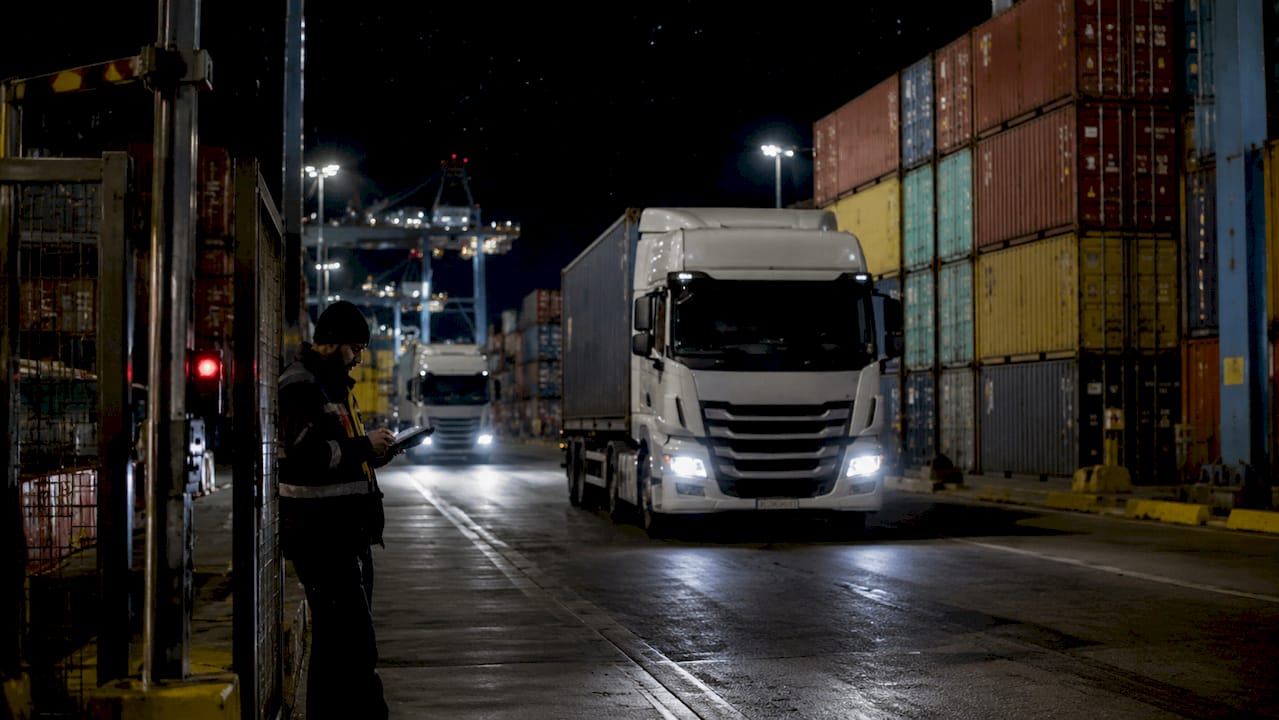
The practical purpose is straightforward. By spreading truck movements across the full day, the port reduces peak congestion, shortens individual turnaround times, and keeps yard capacity balanced. For logistics planners, the night gate is not simply an alternative window. It is a deliberate tool for managing supply chain timing with precision.
How does the AI-powered gate automation system work at night?
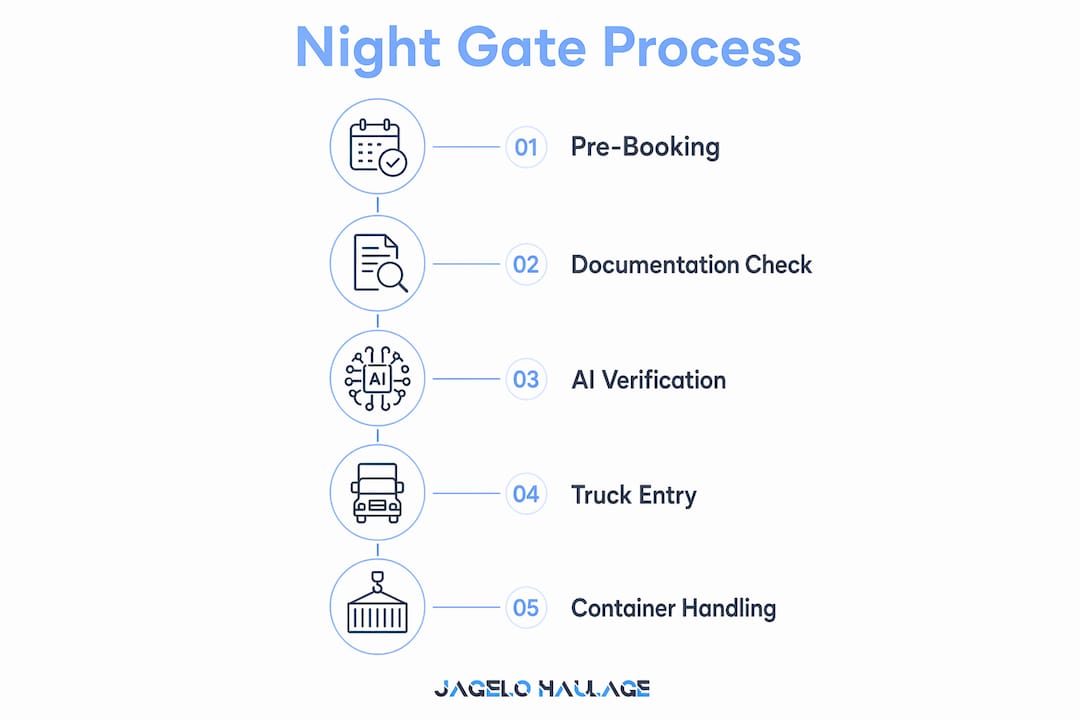
The gate automation system at Felixstowe uses two core technologies: optical character recognition (OCR) and predictive scheduling algorithms. OCR cameras read truck registration plates and container identification numbers automatically as vehicles approach the gate. The predictive algorithms then cross-reference that data against pre-registered Vehicle Booking System (VBS) entries to authorise or flag the movement.
AI-powered gate automation reduces truck turnaround times by 25% during night operations. That figure is significant because night shifts carry reduced on-site staffing, meaning any manual intervention caused by a system flag takes longer to resolve than it would during the day.
The automation delivers three clear operational benefits during night gate hours:
- Faster processing: Vehicles with accurate, pre-registered documentation move through the gate without manual checks, cutting dwell time at the gate head.
- Consistent throughput: Predictive algorithms prioritise gate queues based on vessel departure schedules and yard capacity, preventing bottlenecks from forming.
- Reduced human dependency: The system processes entries without a gate operator present for each transaction, which is what makes true 24/7 access viable.
The system’s weakness is also its strength. Because automation removes human discretion, any discrepancy between a driver’s documentation and the VBS entry triggers an automatic flag. Data discrepancies at the gate cause manual interventions that are particularly disruptive at night when supervisory staff are limited.
Pro Tip: Verify that every field in your VBS pre-gate submission matches the physical documentation exactly, including container prefix, check digit, and vehicle registration. A single character mismatch is enough to trigger a flag and stall your driver at the gate for an extended period.
What are the operational hours and scheduling requirements?
Night gate access at Felixstowe follows a structured timetable that logistics planners must treat as fixed, not flexible. The scheduling process involves several interdependent steps that must be completed in the correct sequence.
-
VBS slot booking: The Vehicle Booking System releases night gate slots 72 hours in advance. Bookings open three times per week, and slots fill quickly for high-demand periods. Missing the release window means working with whatever residual availability remains, which is often insufficient for time-sensitive cargo.
-
Gate opening times: Night operations generally commence from 19:00 at designated gate points. Logistics planners should confirm the specific gate numbers applicable to their terminal and container type, as Trinity and Landguard operate on different gate configurations.
-
Pre-gate compliance: Before a truck can present at the gate, the driver must complete the pre-gate registration process. This includes submitting the container reference, vehicle registration, and relevant customs documentation. The pre-gate process is the single most common point of failure for night gate rejections.
-
Punctual arrival: Night gate windows are narrow. Arriving outside the booked slot, even by a short margin, can result in the system rejecting the entry. The port does not carry over missed slots to the next available window automatically.
-
Coordination with vessel and rail schedules: Vessel and rail timetables directly influence gate slot availability. Felixstowe handles over 30 daily freight trains, and rail terminal cut-off times affect which containers are available for road collection during any given night window.
Auxiliary services such as customs clearance support and specialised cargo handling operate with reduced staffing during night shifts. Logistics planners who assume full daytime service levels will be available overnight consistently encounter delays that could have been avoided with accurate planning.
How does port congestion affect night gate efficiency?
Port congestion at Felixstowe is not a constant. It fluctuates based on vessel bunching, weather disruption, and available yard capacity. The median vessel waiting time at Felixstowe was 0.6 days as of june 2026, reflecting a relatively low congestion index at that point. That figure can shift materially within days when multiple large vessels arrive in close succession.
Night gate efficiency is directly tied to yard capacity at the moment of arrival. When the yard is full or approaching capacity due to daytime congestion, the gate system slows processing to manage inflow. Trucks may be held in the approach queue even with valid VBS bookings. Understanding congestion variability at Felixstowe is therefore not background knowledge. It is an active planning input.
Logistics providers who monitor live congestion data and terminal throughput indices can make informed decisions about whether to proceed with a night gate movement or defer to the next available window. Deferring a collection by a few hours to avoid a congested yard often costs less than the demurrage accrued while waiting at the gate. The peak season pressures that affect daytime operations do not disappear at night. They simply manifest differently, as compressed yard space rather than visible queue lengths.
How do night gate operations fit into Felixstowe’s 24/7 logistics ecosystem?
Night gate access is one component of a continuous terminal operation that spans road, rail, and sea. Treating it in isolation produces suboptimal results. The most effective logistics planners treat night gate slots as part of a coordinated vehicle booking and cargo handling strategy that accounts for all three transport modes simultaneously.
The integration points that matter most for night operations are:
- Rail terminal cut-off times: Felixstowe’s rail terminals handle freight trains throughout the day and night. Containers arriving by rail for onward road collection must clear the rail terminal before they can be presented at the road gate. Missing the rail cut-off pushes the container into the next train cycle, which may not align with your night gate slot.
- Vessel discharge sequences: Mega-vessels at Trinity terminal discharge containers in a sequence determined by the vessel planner. Your container may not be available in the yard at the start of your booked night window. Confirming discharge progress before dispatching a driver prevents wasted journeys.
- Multimodal coordination: Synchronising road haulage with rail and vessel schedules is the defining factor in overall supply chain efficiency at Felixstowe. The port’s infrastructure supports this coordination, but the planning responsibility sits with the logistics provider.
Pro Tip: Use the port’s live terminal status information alongside your VBS booking to confirm container availability before your driver departs. A confirmed booking does not guarantee the container is physically accessible in the yard at the booked time.
The BlackRock and MSC ownership transition does not currently alter daily night gate procedures. Logistics professionals should monitor for any future operational changes that may arise from that transition, but existing VBS processes and gate configurations remain in place for 2026 operations.
Key takeaways
Night gate operations at Felixstowe are an AI-managed, VBS-dependent process that requires precise documentation, advance booking, and active congestion monitoring to deliver consistent turnaround performance.
| Point | Details |
|---|---|
| AI automation drives night access | OCR and predictive algorithms process gate entries automatically, reducing turnaround times by 25%. |
| VBS bookings open 72 hours ahead | Slots release three times weekly and fill quickly; missing the window limits your options significantly. |
| Documentation accuracy is non-negotiable | Any mismatch between physical documents and VBS entries triggers an automatic flag and delays entry. |
| Auxiliary services are reduced overnight | Customs and specialist cargo support operate with limited staffing at night; plan collections accordingly. |
| Congestion data informs timing decisions | A median vessel wait of 0.6 days can shift rapidly; monitor live throughput before dispatching drivers. |
Night gate planning: what the data does not tell you
I have spent considerable time working through Felixstowe’s gate processes with hauliers who treat the VBS as a formality rather than a precision instrument. The consistent pattern is this: the operators who struggle with night gate rejections are not failing because of bad luck. They are failing because they are entering data at speed rather than with care.
The AI system at Felixstowe does not interpret intent. It matches characters. A container number entered with a transposed digit is not a close match. It is a rejection. At 02:00, with a driver waiting at the gate and no supervisor immediately available, that rejection becomes an expensive problem. The discipline required is not technical. It is procedural.
The second pattern I see is planners who book night gate slots without confirming vessel discharge progress. The booking confirms your right to present at the gate. It does not confirm the container is in the yard. Checking discharge status before departure is a five-minute task that eliminates a significant category of failed collections.
Night gate access is genuinely valuable for flattening peak daytime demand and reducing demurrage exposure. The planners who extract that value consistently are the ones who treat every submission as if the system will reject it unless proven otherwise.
— Vytautas
Jhaulage’s container haulage services at Felixstowe
Jhaulage specialises in container haulage from Felixstowe, with direct experience managing VBS bookings, pre-gate compliance, and night gate coordination across Trinity and Landguard terminals. The fleet of over 40 GPS-tracked trucks operates around the clock, aligned with the port’s 24/7 gate schedule.
Clients working with Jhaulage benefit from documentation checks before dispatch, proactive congestion monitoring, and scheduling that accounts for vessel discharge sequences and rail cut-off times. For logistics professionals who need reliable container movement through Felixstowe’s night gate without the administrative burden, Jhaulage provides the operational discipline and port familiarity to keep collections on schedule.
FAQ
What time do Felixstowe night gate operations start?
Night gate operations at Felixstowe generally commence from 19:00 at designated gate points. Specific gate numbers and start times vary by terminal and container type, so confirm directly with the port or your haulier before booking.
How far in advance must I book a night gate slot at Felixstowe?
The Vehicle Booking System releases night gate slots 72 hours in advance, with bookings opening three times per week. Slots for high-demand periods fill quickly, so booking at the earliest available release is the standard practice.
What causes a gate rejection during night operations?
The AI gate system rejects entries when documentation does not match the VBS submission exactly. Common causes include transposed container digits, incorrect vehicle registrations, and missing customs references. Manual resolution at night takes longer due to reduced staffing.
Are all port services available during Felixstowe night gate hours?
No. Auxiliary services including customs clearance support and specialised cargo handling operate with reduced staffing during night shifts. Logistics planners should confirm which services are available before scheduling collections that depend on them.
How does port congestion affect night gate access?
Congestion reduces yard capacity and can slow gate processing even for trucks with valid VBS bookings. Monitoring live congestion data before dispatch allows planners to decide whether to proceed or defer, avoiding unnecessary dwell time and demurrage exposure.