Part of our guide to container haulage from Felixstowe
How to navigate felixstowe port truck entry: 2026 guide

Truck entry at Felixstowe Port is a structured, documentation-driven process requiring advance booking via the Vehicle Booking System (VBS), a valid RHIDES card, and precise knowledge of designated access routes and terminal gates. To navigate Felixstowe port truck entry without delays, you must treat the entire operation as a scheduled procedure rather than a reactive one. Felixstowe handles nearly 50% of the UK’s containerised trade, which means any gap in preparation compounds quickly into demurrage charges and missed delivery windows. This guide covers every procedural layer: access routes, booking systems, customs documentation, internal terminal procedures, and the 2026 operational changes reshaping how trucks move through the port.
What are the key access routes and entry points for trucks at felixstowe?
The primary truck access route to Felixstowe Port is the A14 trunk road, which connects directly to the M6 and the wider national motorway network. Port signage for Felixstowe extends as far as M6 junction 1 near Rugby, guiding HGV operators through major highway junctions well before they reach Suffolk. This level of advance signage reflects the port’s status as the UK’s busiest container terminal and the volume of freight traffic it must manage daily.
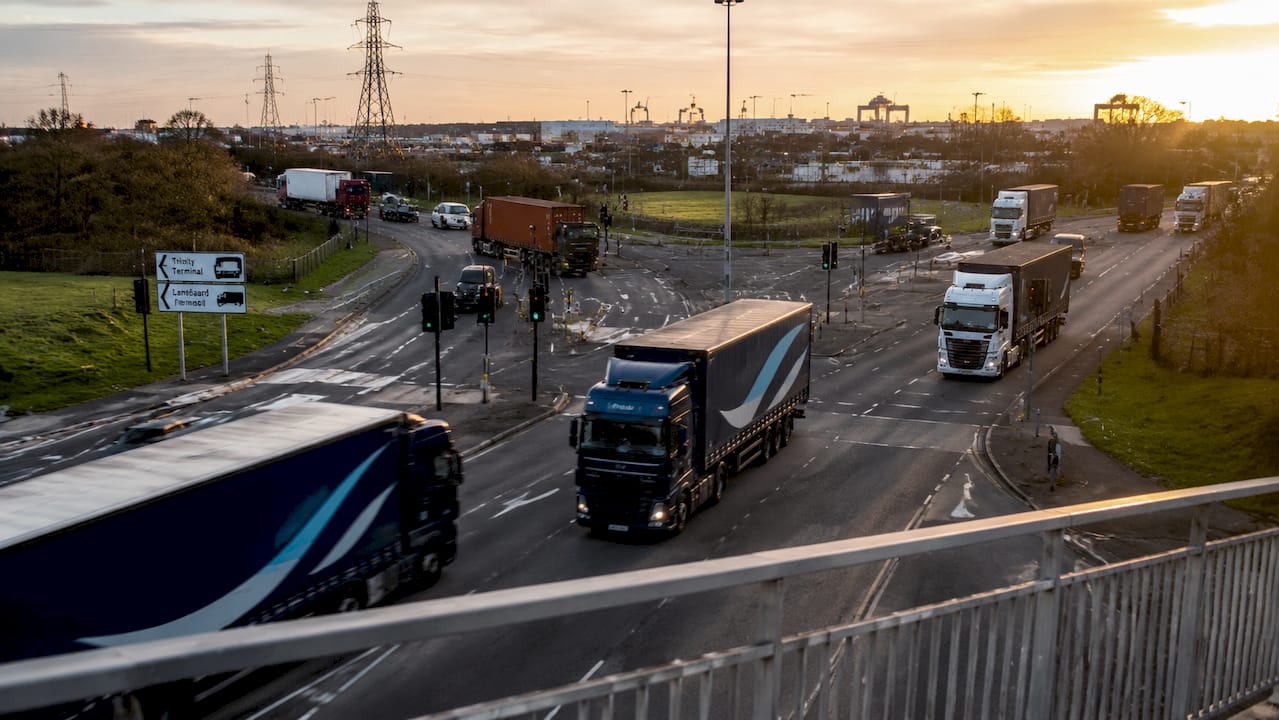
For operators approaching from London or the South East, the A12 serves as the secondary entry corridor, feeding into the A14 before the port gates. Choosing the correct approach route is not merely a matter of convenience. Incorrect routing adds mileage, risks weight-restricted roads, and can cause drivers to miss their VBS booking window entirely.
The two principal terminals, Trinity and Landguard, each have separate vehicle gates and distinct entry requirements. Understanding which terminal holds your container before departure is non-negotiable. Arriving at the wrong gate wastes your booking slot and triggers a rebooking process that can push your collection into the following day.
| Terminal | Primary Gate Location | Key Access Route |
|---|---|---|
| Trinity Terminal | Northern section of port | A14 westbound approach |
| Landguard Terminal | Southern section of port | A14 / A154 Dock Road |
Key access considerations for Felixstowe port truck routes:
- Follow A14 from the west for the most direct HGV approach to both terminals
- Use the A12 from the south if departing from London, Essex, or Kent
- Confirm your terminal assignment before departure to select the correct gate
- Observe port signage from major junctions; dedicated HGV signs are posted from the M6 and A1(M)
- Allow additional time during peak periods when A14 congestion near Ipswich is common
Pro Tip: Check live traffic conditions on the A14 between Bury St Edmunds and Ipswich before every run. This stretch is the single most common cause of HGV drivers missing their VBS slot, particularly during morning peaks.
How to use the VBS and obtain the right documentation
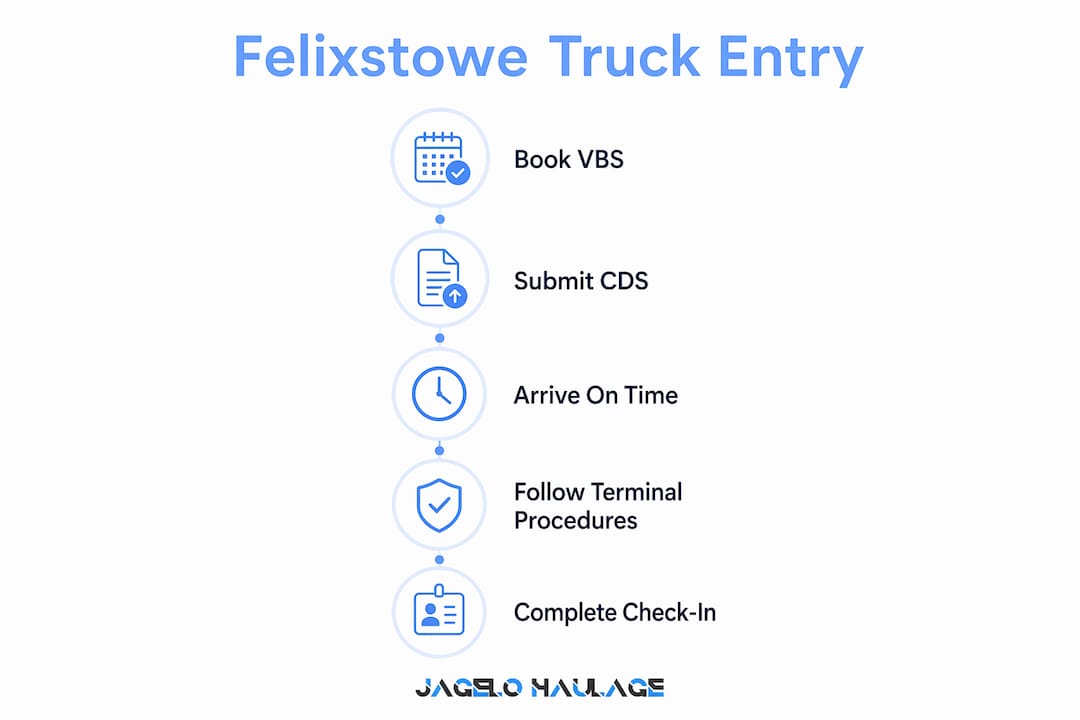
The VBS mandates one-hour booking slots for every truck entering Felixstowe’s container terminals. No driver may pass through a terminal gate without a confirmed VBS booking number. This system coordinates throughput across both Trinity and Landguard terminals and is the single most important administrative step before any port visit.
Here is the complete documentation sequence you must complete before arrival:
- Obtain your VBS booking slot. Log into the Felixstowe Port VBS portal and book a one-hour arrival window aligned with your container’s availability. Book as early as possible; peak slots fill quickly.
- Carry your RHIDES card. The RHIDES card is mandatory for driver identification at gate check-in. Without it, the driver cannot complete the check-in process regardless of other documentation.
- Confirm your CBS number and PIN. For container collections, the CBS (Container Booking System) number and associated PIN are required at the gate. These are provided by the shipping line or freight forwarder and must be confirmed before departure.
- Submit Customs Declaration Service (CDS) documentation. All customs entries must be submitted before the vessel arrives at port. Incorrect or late CDS submissions are the leading cause of gate refusals and container holds.
- Align Postponed VAT Accounting (PVA) where applicable. PVA elections must be correctly recorded on the customs entry to prevent cash flow complications at the gate.
Customs clearance for routine shipments typically takes 2–4 hours. Pre-arrival submission is therefore not optional; it is the only way to guarantee your container is released when your truck arrives. Delays arise most frequently from complex declarations or inspection flags, both of which are compounded when documentation is submitted late.
For a detailed walkthrough of customs compliance procedures relevant to Felixstowe operations, including CDS processing steps, that resource provides practical procedural guidance.
Pro Tip: Cross-reference your CBS number against the shipping line’s release confirmation the evening before your booking slot. Discrepancies between the freight forwarder’s records and the shipping line’s system are far more common than operators expect, and resolving them takes time you will not have on the day.
What internal port procedures and zones must truck drivers know?
Each terminal at Felixstowe operates independently, with separate check-in points and access requirements for Trinity and Landguard. Drivers must report to the correct vehicle gate for their assigned terminal and present their RHIDES card, VBS booking number, and CBS PIN in sequence. Gate staff will not process entry if any element is missing.
Inside Trinity Terminal, the operational environment has changed significantly following the deployment of approximately 68 electric autonomous trucks. These vehicles operate within defined zones and follow programmed routes between ship-to-shore cranes and container stacks. Human-driven trucks must observe restricted zones and follow marshalling instructions carefully. Autonomous truck operations improve container handling speed, but they introduce new traffic patterns that require driver awareness and compliance with on-site signage.
Parking constraints have historically created significant quayside congestion at Felixstowe. A proposed 70-space lorry park near Stratton Hall off the A14 addresses this directly by providing a designated waiting area for trucks whose containers have not yet cleared customs or been released by the terminal. Using offsite parking rather than queuing at the quay reduces congestion, protects your VBS slot timing, and avoids penalty charges for overstaying in restricted areas.
Operational considerations inside the port:
- Confirm terminal assignment (Trinity or Landguard) before approaching the gate
- Follow all marshalling instructions in autonomous truck zones at Trinity Terminal
- Use the A14 lorry park facility to wait offsite when containers are not yet released
- Never attempt to enter a terminal gate without a confirmed VBS booking number
- Report any gate discrepancies immediately to the terminal control office rather than waiting in the queue
What are best practices to minimise demurrage and waiting times?
Logistics professionals must treat port entry as a precision-timed operation to avoid the compounding costs of demurrage and storage. At a port handling close to half of the UK’s containerised imports, even a one-day delay on a single container can trigger charges that erode the margin on an entire shipment.
The following practices define efficient scheduling at Felixstowe:
- Book VBS slots proactively. Align your booking window with the container’s confirmed availability date, not the vessel’s estimated arrival. Vessels frequently berth ahead of or behind schedule.
- Submit CDS documentation before vessel arrival. Pre-arrival customs processing is the single most effective way to accelerate container release. Late submission guarantees a hold.
- Monitor container status via real-time tracking platforms. Tools such as the OCEAN platform provide live container status updates, allowing you to adjust your VBS slot before the booking window closes.
- Avoid peak arrival periods. Early morning slots between 06:00 and 08:00 and late afternoon slots between 15:00 and 17:00 carry the highest gate congestion. Mid-morning and early afternoon windows typically offer faster processing.
- Maintain direct communication with terminal operators. If your container is flagged for inspection or a customs hold, contact the terminal control office immediately. Proactive communication shortens resolution times.
For operators managing multiple collections, proactive scheduling practices at Felixstowe provide a structured framework for coordinating VBS bookings across a fleet without creating slot conflicts or demurrage exposure.
Coordinating VBS booking data with CDS submission timestamps is the most reliable method for reducing truck queuing at the gate. Digital integration between the two systems removes the manual reconciliation step that most delays originate from.
How do 2026 operational innovations affect truck entry at felixstowe?
The 2026 operational picture at Felixstowe is defined by two developments: the full deployment of autonomous electric trucks at Trinity Terminal and the introduction of new lorry parking infrastructure off the A14. Both changes directly affect how you plan and execute truck entry.
| Development | Location | Impact on Truck Entry |
|---|---|---|
| ~68 electric autonomous trucks | Trinity Terminal | New restricted zones; altered internal traffic flow |
| 70-space lorry park (proposed) | Off A14, Stratton Hall | Offsite waiting facility; reduces quayside congestion |
| Expanded CDS digital integration | All terminals | Faster customs release; reduces gate hold frequency |
The autonomous truck fleet at Trinity Terminal operates continuously within defined container transport corridors. Human-driven HGVs entering Trinity must follow marshalling instructions and avoid autonomous vehicle zones. The efficiency gains from automation are real: faster container moves between cranes and stacks reduce overall dwell time. However, drivers unfamiliar with the new traffic patterns face a higher risk of marshalling errors and delays at internal checkpoints.
The lorry parking scarcity near the port has long created a logistical bottleneck, with trucks queuing on approach roads and at the quayside while waiting for container release. The new facility near Stratton Hall resolves this by providing a controlled waiting environment where drivers can hold offsite until their container is confirmed ready. This is a structural improvement for fleet operators managing tight delivery schedules across multiple port runs.
For a full breakdown of Felixstowe’s motorway connections and how the A14 and A12 feed into the national network, that guide covers optimal routing for HGV operators approaching from all directions.
Key takeaways
Efficient truck entry at Felixstowe Port requires advance VBS booking, complete CDS documentation submitted before vessel arrival, and precise knowledge of terminal-specific gate procedures and internal autonomous truck zones.
| Point | Details |
|---|---|
| Book VBS slots in advance | Every truck needs a confirmed one-hour VBS slot before approaching any terminal gate. |
| Submit CDS documentation early | Customs entries must be filed before the vessel arrives to prevent container holds at the gate. |
| Know your terminal | Trinity and Landguard have separate gates and check-in requirements; confirm assignment before departure. |
| Use offsite lorry parking | The new A14 lorry park near Stratton Hall allows trucks to wait offsite while containers clear customs. |
| Respect autonomous truck zones | Trinity Terminal’s electric autonomous fleet operates in defined corridors; drivers must follow marshalling instructions. |
What i have learned from years of felixstowe port operations
The single most consistent mistake I see from operators at Felixstowe is treating the VBS booking as a formality rather than a hard operational constraint. A booking slot is not a suggestion. If your customs documentation is not cleared before you arrive, your slot expires and the container stays in the terminal. That is a demurrage charge, a rebooking fee, and a missed delivery window, all from one administrative gap.
The introduction of autonomous trucks at Trinity Terminal has added a layer of complexity that some drivers are still adjusting to. The instinct to follow familiar internal routes no longer applies in zones where autonomous vehicles have right of way. I have seen experienced drivers receive marshalling corrections simply because they defaulted to old movement patterns. The port environment is changing, and preparation now includes understanding the autonomous vehicle layout before you enter the gate, not after.
The new lorry park near Stratton Hall is, in my view, one of the most practically useful infrastructure additions Felixstowe has seen in years. Waiting at the quayside while a container clears customs is expensive and disruptive. Waiting offsite in a controlled facility while monitoring container status via a tracking platform is professional fleet management. The distinction matters enormously when you are running multiple collections in a single day.
My consistent advice: communicate early and often with both the terminal operator and your freight forwarder. The port systems are sophisticated, but they depend on accurate data flowing from your side of the operation. Gaps in communication are where delays are born.
— Vytautas
Jhaulage: expert container haulage from felixstowe port
Jhaulage operates as a specialist container haulage provider with deep operational knowledge of Felixstowe Port, including both Trinity and Landguard terminals. The fleet of over 40 GPS-tracked trucks and trailers is deployed specifically for port-to-door container movements, with 24/7 support to manage VBS bookings, documentation coordination, and real-time container tracking on your behalf.
Whether you need a single collection or a managed programme of daily port runs, Jhaulage handles the procedural complexity so your supply chain keeps moving. From peak season port challenges to routine collections, the team brings the operational discipline that Felixstowe demands. Contact Jhaulage today to discuss your Felixstowe haulage requirements.
FAQ
What documents does a truck driver need to enter felixstowe port?
Every driver requires a valid VBS booking number, a RHIDES card for identification, and a CBS number with PIN for container collection. Customs Declaration Service (CDS) documentation must also be cleared before arrival.
How far in advance should i book a VBS slot at felixstowe?
Book your VBS slot as early as the container availability date is confirmed. Peak slots fill quickly, and late booking risks missing your collection window entirely.
What is the best truck route to felixstowe port from the midlands?
The primary route is via the A14 trunk road, which connects directly from the M6. Port signage for Felixstowe is posted from M6 junction 1 near Rugby, guiding HGV operators through the full approach.
How do autonomous trucks at trinity terminal affect my entry procedure?
The approximately 68 electric autonomous trucks at Trinity Terminal operate in defined zones with priority movement. Human-driven trucks must follow marshalling instructions and avoid autonomous vehicle corridors to prevent delays at internal checkpoints.
What should i do if my container is not released when i arrive at the gate?
Exit the gate area and use the designated lorry park off the A14 near Stratton Hall to wait offsite. Monitor your container status via a real-time tracking platform and contact the terminal control office to confirm the release timeline.
Recommended
- How Felixstowe connects to UK motorways: 2026 guide | Jagelo Haulage
- Reliable Container Haulage from Felixstowe: A Guide to Port Logistics | Jagelo Haulage
- Felixstowe container collection best practices: 2026 guide | Jagelo Haulage
- Container Haulage from Felixstowe: A Professional Guide to Port Logistics | Jagelo Haulage