More on overweight containers from Jagelo Haulage
How to handle overweight container transport UK

Overweight container transport in the UK is defined as the movement of shipping containers whose gross vehicle weight exceeds 44,000kg, the legal maximum for a standard 6-axle articulated vehicle. To handle overweight container transport UK operations legally and safely, logistics managers must obtain the correct Special Types General Order (STGO) permits, conduct thorough route surveys, and deploy specialist equipment. This guide covers every stage of the process, from permit categories and notification periods to loading best practices and the common mistakes that cause costly delays at ports including Felixstowe, Tilbury, Southampton, and Liverpool.
What weight limits and legal permits apply to overweight container transport in the UK?
The UK legal framework for heavy load transport solutions is built around a clear threshold. The maximum gross vehicle weight for a 6-axle articulated vehicle is 44,000kg. Any load exceeding this figure requires an STGO permit before the vehicle can legally move on public roads.
STGO permits are divided into three categories, each covering a distinct weight bracket. Category 1 covers loads up to 46,000kg, Category 2 extends to 80,000kg, and Category 3 reaches up to 150,000kg. Loads above 150,000kg fall outside the STGO framework entirely and require a Special Order, which carries an eight-week notification period. That eight-week lead time is not a formality; it exists because authorities must assess infrastructure, coordinate police escorts, and sometimes arrange temporary road closures.
Notice periods for abnormal load haulage range from two clear working days to eight weeks, depending on load size and category. Standard moves below 80,000kg require just two days’ notice, while loads wider than 6.1 metres or heavier than 150,000kg require a BE16 Special Order with the full eight-week lead time. Missing these windows is one of the most common causes of demurrage charges and detention costs at UK ports.
The table below summarises the key permit categories, weight limits, and notice requirements for overweight cargo transport UK operations.
| Permit type | Maximum gross weight | Minimum notice period |
|---|---|---|
| Standard articulated (no permit) | 44,000kg | None |
| STGO Category 1 | 46,000kg | 2 working days |
| STGO Category 2 | 80,000kg | 2 working days |
| STGO Category 3 | 150,000kg | 5 working days |
| BE16 Special Order | Above 150,000kg | 8 weeks |
Pro Tip: Always apply for your STGO permit category one level above your calculated load weight. Cargo weights can shift during port handling, and operating on the wrong category exposes you to immediate prohibition notices and fines.
What are the critical steps in planning overweight container moves?
Success in overweight container transport depends heavily on first and last mile planning. Legal compliance is necessary but not sufficient for logistics success. A permit in hand means nothing if the delivery route passes under a bridge with a 4.5-metre clearance restriction or over a road rated for 18,000kg per axle.
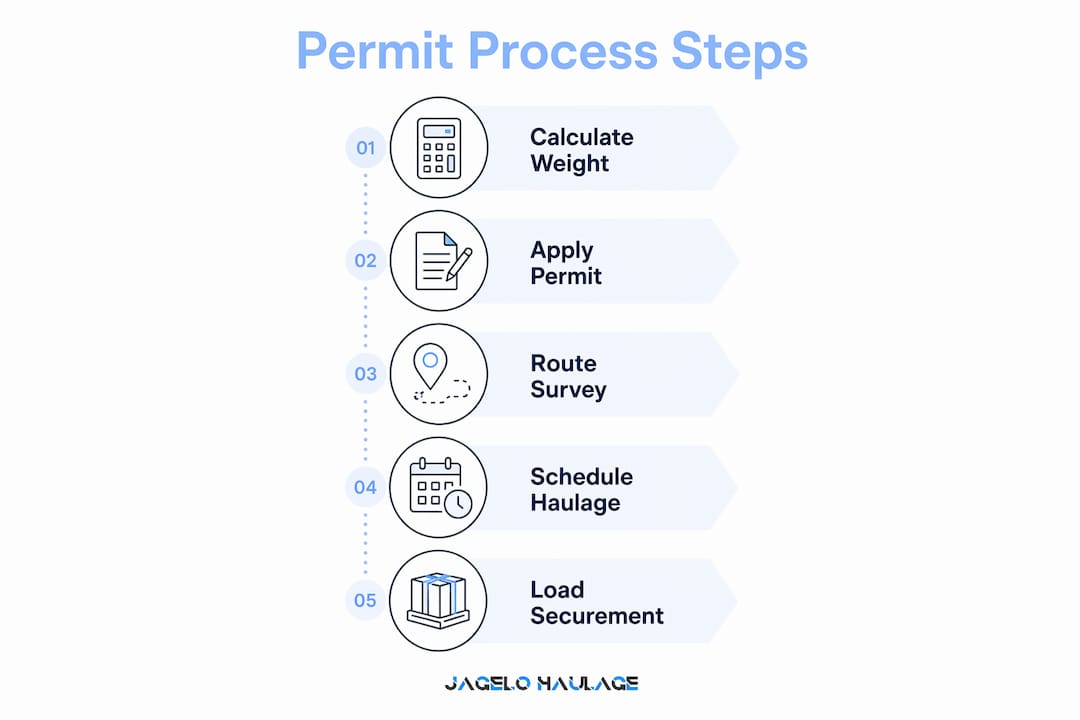
The planning process for container shipping regulations UK compliance follows a defined sequence. Each step builds on the last, and skipping any one of them creates compounding risk.
- Conduct a pre-transport load assessment. Weigh the container and document the internal load distribution. Loading plans must consider axle weight limits individually, not just overall vehicle weight, to prevent fines or operational halts.
- Identify the correct STGO permit category. Cross-reference the gross vehicle weight against the permit thresholds in the table above and apply through the ESDAL (Electronic Service Delivery for Abnormal Loads) system, which is the UK’s central portal for abnormal load notifications.
- Commission a detailed route survey. Thorough route planning is the difference between a smooth delivery and a load stranded on a restricted road. Check bridge weight ratings, overhead clearances, road surface conditions, and any temporary traffic management schemes.
- Notify relevant authorities within the required window. Submit notifications to Highways England, local highway authorities, and police forces along the route. The ESDAL system automates much of this, but you must verify that all notifications are acknowledged before departure.
- Arrange escort vehicles if required. STGO Category 2 and 3 loads typically require police or private escort vehicles. Specialist equipment such as extendable trailers and escort vehicles are essential for transporting overweight containers safely and legally in the UK.
- Conduct a site access survey at the delivery point. Site surveys should assess not just access but the ground bearing capacity and turning requirements for heavy container delivery vehicles.
- Confirm operator qualifications and vehicle certification. The driver must hold the appropriate licence category, and the vehicle must carry current STGO authorisation documentation on board throughout the journey.
Pro Tip: Use the ESDAL system’s route mapping tool to cross-reference your planned route against the National Abnormal Indivisible Loads (NAID) database. This flags known restrictions before you commit to a route, saving significant replanning time.
How to handle container loading, unloading, and securing for overweight cargo
Safe loading and unloading is where many overweight cargo transport UK operations encounter avoidable risk. The physical integrity of the container and the stability of its contents during transit are both the responsibility of the logistics operator, not the port terminal alone.
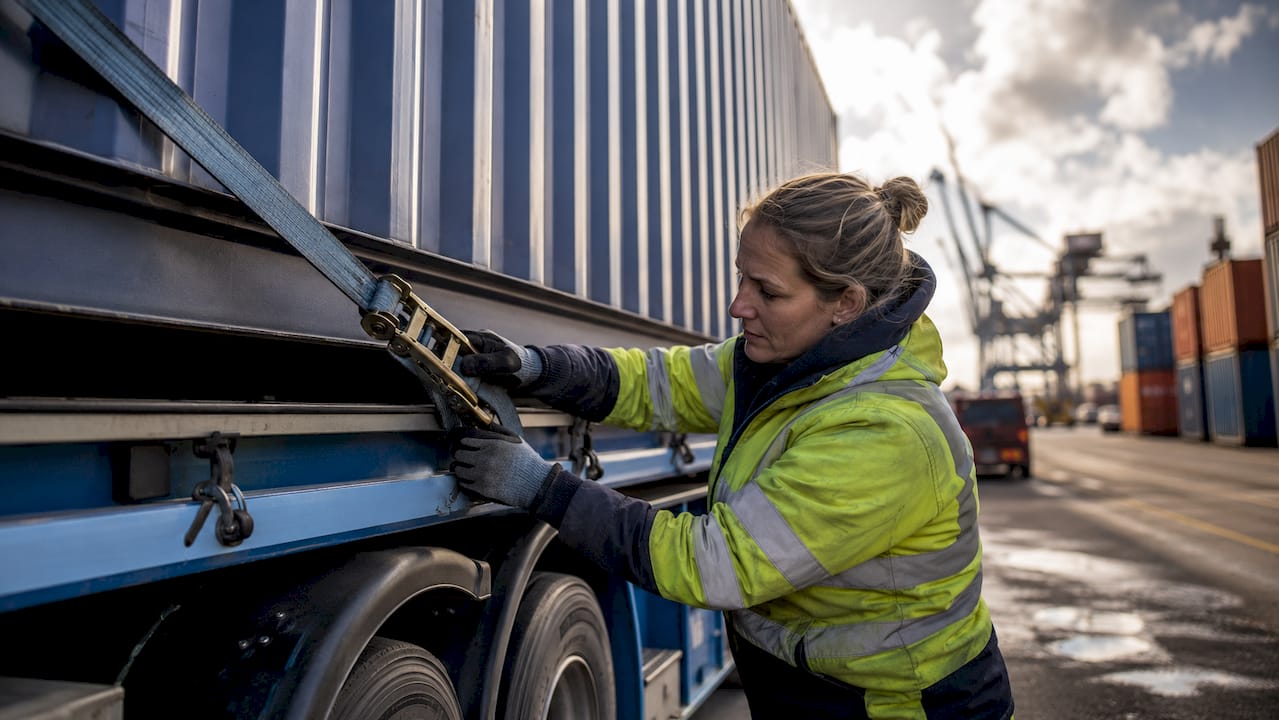
Uneven weight distribution in custom-fit containers can cause axle overloading even when the total vehicle weight remains within the permitted limit. A container fitted with heavy internal racking concentrated at one end is a common example. Operators must declare all internal configurations and load distributions before shipment to avoid axle overloads that would otherwise go undetected until a roadside weighbridge check.
Port Skills and Safety (PSS) guidance on container handling is not compulsory but is considered best practice and is frequently referenced by safety inspectors. The updated SiP003 guidance, released in june 2025, sets out safety protocols for container operations at UK ports. Operators who follow PSS guidance demonstrate a clear duty of care, which carries significant weight in the event of an incident investigation.
The following measures form the baseline for safe container securing during overweight transport:
- Verify that all internal contents are braced, blocked, or strapped to prevent movement during transit.
- Confirm that twist locks and corner castings are correctly engaged before the container leaves the terminal.
- Check that the container’s CSC (Container Safety Convention) plate is valid and that the maximum gross weight stated does not exceed the vehicle’s permitted payload.
- Use specialist trailers, such as skeletal or extendable flat-bed trailers, matched to the container dimensions and weight.
- Conduct a post-loading visual inspection to confirm the container sits level on the trailer and that no structural deformation is visible.
“Operators who align their handling procedures with Port Skills and Safety guidance reduce operational risk and demonstrate a standard of duty of care that generic compliance alone cannot provide.” — PSS SiP003 Guidance, June 2025
For detailed guidance on how to secure container loads correctly before road transport, Jhaulage’s dedicated resource covers the full process.
What common challenges arise when transporting overweight containers in the UK?
The most frequent failures in how to ship heavy containers UK operations are not technical. They are procedural. Operators underestimate planning timelines, use generic contract terms, or fail to account for site conditions at the delivery point.
Site access constraints such as ground softness, narrow turning circles, and weight-limited roads frequently cause delivery failures for overweight containers if not pre-assessed. A vehicle carrying a 60,000kg load that arrives at a delivery site with soft ground and no hardstanding will either damage the site or be unable to complete the delivery. Both outcomes generate significant costs.
Contractual clarity and tailored agreements define liability for damages, delays, and compliance failures. Generic terms often fail to reflect actual operational risks, leaving both the haulier and the customer exposed. Bespoke contracts that specify responsibility for permit acquisition, route survey costs, and delay penalties protect all parties.
The table below maps the most common errors in UK freight overweight guidelines compliance against the recommended corrective action.
| Common error | Corrective action |
|---|---|
| Incorrect permit category applied | Recalculate gross vehicle weight including trailer and fuel; apply for the next category up |
| Insufficient notice period | Build permit lead times into the booking process from the point of order confirmation |
| No site access survey conducted | Commission a ground-bearing capacity and turning radius survey before confirming the delivery date |
| Uneven internal load distribution undeclared | Require a load distribution declaration from the shipper as a condition of accepting the booking |
| Generic contract terms used | Replace with bespoke agreements specifying liability for permits, delays, and site damage |
| Escort vehicle not arranged in advance | Confirm escort requirements at the permit application stage, not on the day of movement |
Clear contractual terms specifically tailored to container transport are vital to mitigating liability and protecting all parties during overweight moves. This is particularly relevant for merchant haulage arrangements, where the shipper nominates the haulier but the liability chain can become unclear without explicit contractual definition.
For a broader view of UK port logistics compliance, Jhaulage’s strategic guide covers the full scope of container transport management from port gate to final delivery.
Key takeaways
Effective overweight container transport in the UK requires STGO permits, detailed route and site surveys, correct load distribution declarations, and bespoke contractual terms to protect all parties.
| Point | Details |
|---|---|
| Legal weight threshold | Any vehicle exceeding 44,000kg gross weight requires an STGO permit before moving on public roads. |
| Permit categories and notice | STGO Categories 1–3 cover up to 150,000kg; Special Orders above that require eight weeks’ notice. |
| Route and site planning | Surveys must cover bridge ratings, overhead clearances, ground bearing capacity, and turning radius. |
| Load distribution declaration | Axle weights must be assessed individually; uneven internal loads cause overloading even within total weight limits. |
| Contractual protection | Bespoke contracts specifying permit responsibility, delay penalties, and site damage liability are non-negotiable. |
What I have learned from years of overweight container moves
The paperwork is rarely the hard part. In my experience, the operations that go wrong do so because someone assumed the site was ready, or that the route was clear, or that the permit category from the last job would cover this one. Those assumptions are expensive.
The operators I have seen handle overweight container transport most effectively treat every move as a distinct project. They do not reuse route surveys from previous jobs. They do not accept a shipper’s word on load distribution without a written declaration. They build permit lead times into their sales process, not their operations process, so the customer understands the timeline before the booking is confirmed.
The regulatory environment is also tightening. The PSS SiP003 guidance update in june 2025 signals that safety inspectors are paying closer attention to container handling at ports. Operators who have not reviewed their procedures against the updated guidance are carrying risk they may not be aware of.
The other shift I have observed is in contractual practice. The move towards bespoke agreements, rather than standard terms, reflects a maturing industry. Logistics managers who insist on tailored contracts are not being difficult. They are being precise, and precision is what this work demands.
Early communication with authorities, clear internal processes, and a culture that treats compliance as a baseline rather than a burden are what separate operators who grow from those who stall.
— Vytautas
How Jhaulage supports overweight container transport operations
Jhaulage operates a fleet of over 40 specialist trucks and trailers, serving major UK ports including Felixstowe, Tilbury, Southampton, and Liverpool. The team manages STGO permit applications, route surveys, and escort vehicle coordination on behalf of clients, removing the administrative burden from logistics managers who need certainty, not complexity. Every movement is tracked via GPS in real time, and 24/7 support means you have direct access to experienced operators at every stage of the operation. Jhaulage’s procedures align with Port Skills and Safety guidance, giving you documented evidence of duty of care for every overweight container move. To discuss your specific requirements, contact the Jhaulage specialist team directly.
FAQ
What is the maximum weight before an STGO permit is required in the UK?
The maximum gross vehicle weight for a standard 6-axle articulated vehicle is 44,000kg. Any load exceeding this threshold requires an STGO permit before the vehicle can operate on public roads.
How long does it take to obtain an STGO permit in the UK?
Standard STGO Category 1 and 2 permits require a minimum of two clear working days’ notice. Loads above 150,000kg or wider than 6.1 metres require a BE16 Special Order with eight weeks’ notice.
What is the ESDAL system and why does it matter?
ESDAL (Electronic Service Delivery for Abnormal Loads) is the UK government’s central portal for submitting abnormal load notifications to highway authorities and police. Using ESDAL correctly and confirming all acknowledgements before departure is a legal requirement for STGO movements.
Why does load distribution matter if the total weight is within the permit limit?
Individual axle weights are assessed separately from the total gross vehicle weight. Uneven internal load distribution can cause a single axle to exceed its legal limit even when the overall vehicle weight remains within the permitted category, resulting in prohibition notices and fines.
Is Port Skills and Safety guidance legally mandatory for container handling?
PSS guidance is not a legal requirement, but it is considered industry best practice and is frequently referenced by safety inspectors during incident investigations. Following the SiP003 guidance demonstrates a documented standard of duty of care.