Secure container load for transport: the UK guide
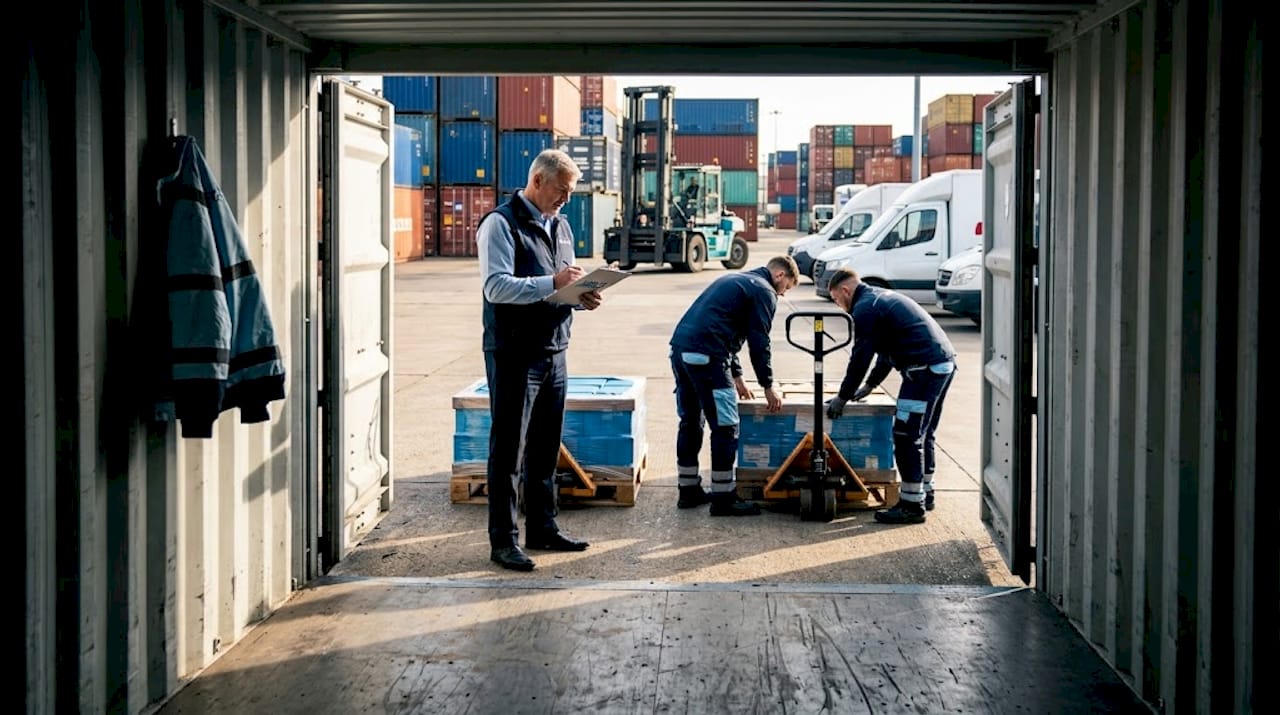
Every year, improperly secured container loads cost UK importers and exporters millions of pounds in damaged goods, delayed shipments, and insurance disputes. Whether your freight is moving through Felixstowe, Tilbury, Southampton, or Liverpool, the decision to secure container load for transport correctly is not optional — it is a regulatory, financial, and safety obligation. This guide takes you through the complete process: from pre-load inspection and selecting the right securing materials, to applying ISO-compliant seals and building the documentation trail that protects you when things go wrong.
Table of Contents
- Why securing container loads matters and the risks of failure
- Preparing for secure container loading: inspection and materials checklist
- How to secure cargo within containers: blocking, bracing, lashing, and void filling
- Applying and verifying security seals: standards and practical steps
- Verification and documentation: the key to secure container transport
- Unique challenges and expert insights on securing container loads in UK logistics
- Partnering with experts for secure container haulage in the UK
- Frequently asked questions
Key Takeaways
| Point | Details |
|---|---|
| Secure cargo prevents damage | Proper use of blocking, bracing, lashing, and void filling stops movement and reduces cargo damage and safety risks. |
| ISO 17712 seals ensure integrity | High-security seals compliant with ISO 17712 deter tampering and satisfy customs requirements for container security. |
| Document every securing step | Recording inspections, load plans, and sealing details creates an auditable trail that supports compliance and claims. |
| Preparation is critical | Thorough container inspection and materials readiness prevent problems and lay the foundation for safe loading. |
| Adapt securing to container type | Secure loading methods must fit the specific container and transport mode to effectively withstand dynamic forces. |
Why securing container loads matters and the risks of failure
Cargo movement during transit is not a minor inconvenience. It is the single most common cause of freight damage across road, sea, and intermodal supply chains. Unsecured cargo shifting during transport is a primary cause of cargo damage and safety hazards when the container is opened at destination — and the consequences extend well beyond replacing broken goods.
The forces acting on a container load are significant and constant. Acceleration and braking on road legs, cornering forces during port manoeuvres, and wave motion on deep-sea voyages combine to create dynamic stresses that will exploit any weakness in your load arrangement. A pallet that seems stable at rest can travel several centimetres in each direction across a trans-Atlantic voyage, causing cumulative damage that is only visible at delivery.
From a regulatory standpoint, the IMO/ILO/UNECE Code of Practice for Packing of Cargo Transport Units (commonly called the CTU Code) sets the international benchmark for how containers must be loaded and secured. Non-compliance does not just risk your cargo — it exposes your business to liability in the event of an accident. Keep up with developments via the container haulage news published by experienced UK hauliers who track these standards closely.
The insurance dimension is equally pressing. Insurers routinely investigate whether documented securing procedures were followed before settling cargo claims. Shipments lacking proper load plans or securing records are frequently subject to disputed or reduced settlements. Consider these core risk categories:
- Cargo damage: shifting loads crush, abrade, or puncture goods
- Handler injuries: unstable loads can collapse when container doors are opened at destination
- Customs delays: evidence of unsecured or tampered loads triggers inspections
- Increased detention costs: delays caused by damaged cargo result in demurrage charges at port
- Reputational harm: repeated damage incidents affect relationships with shipping lines and freight forwarders
Working with container haulage specialists who understand these risks is the first step towards consistent compliance.
“A load that arrives in good condition is the result of decisions made before the container doors are closed — not after.”
Having outlined why secure loading is essential, the next step is thorough preparation before loading begins.
Preparing for secure container loading: inspection and materials checklist
No amount of lashing or bracing will compensate for a compromised container. Your preparation phase must confirm that the unit itself is fit for purpose before a single item of cargo goes inside. As container loading best practices consistently emphasise, a pre-load inspection is non-negotiable.
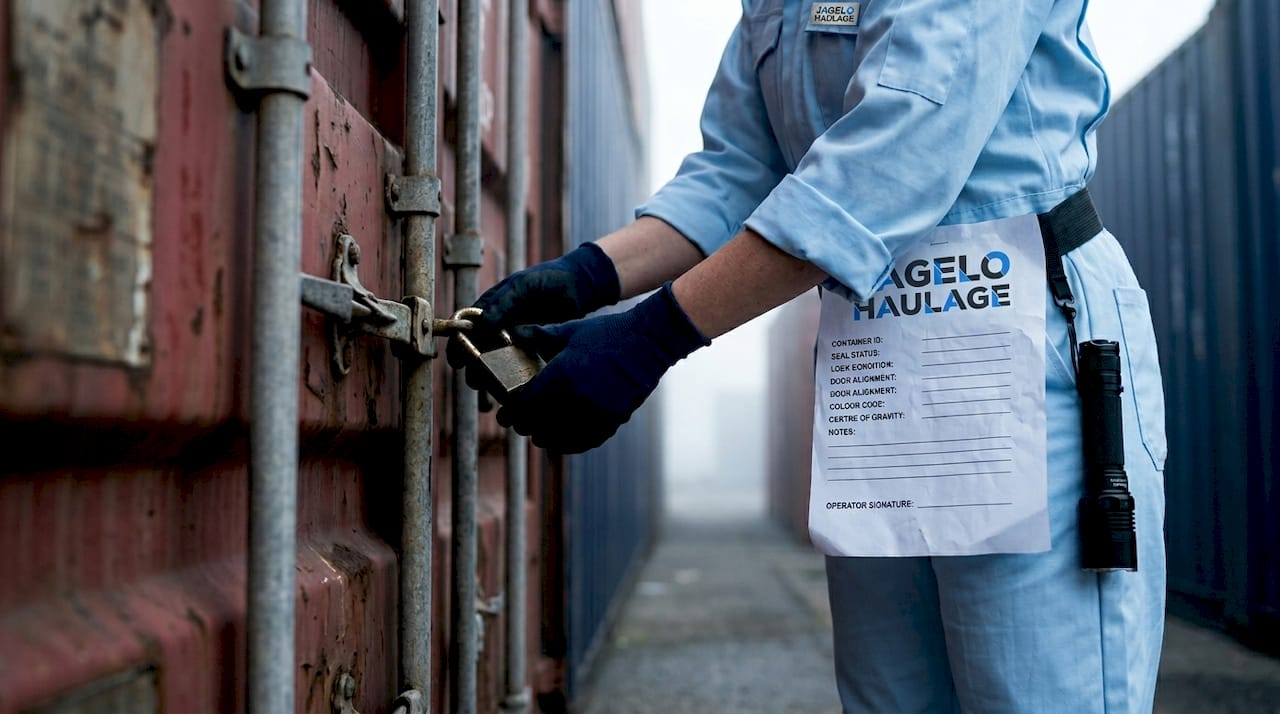
Check the door seals and locking mechanism to ensure doors close properly, are watertight, and locking bars function correctly. Beyond the doors, inspect the container floor for soft spots, protruding nails, or damage that could compromise cargo integrity. Walls and roof should be checked for rust perforations, particularly in older units where corrosion is common.
Essential securing materials checklist:
| Material | Purpose | Typical use case |
|---|---|---|
| Blocking lumber | Stops lateral movement | Heavy machinery, drums |
| Bracing timber | Supports vertical stacks | Bagged goods, palletised cargo |
| Dunnage (air bags or foam) | Fills voids between cargo units | Mixed-SKU loads, irregular shapes |
| Ratchet straps | Restrains cargo to container fittings | Pallets, crates, long items |
| Corner boards | Protects edges from strap pressure | Cartonised goods |
| Anti-slip mats | Prevents base-layer sliding | All cargo types |
Once your inspection is complete, document the container’s condition with photographs. Record the container number, condition grade, any pre-existing damage, and the identity of the inspector. This record serves as your baseline for insurance purposes and reduces disputes over damage that may have existed prior to loading.
Pro Tip: Always check the container’s CSC plate (Container Safety Convention plate, which certifies the unit has passed structural testing) before accepting it for loading. An out-of-date or missing CSC plate means the container is not certified for international transport and should be rejected.
With all necessary inspections and materials in place, focus shifts to the actual process of loading and securing.
How to secure cargo within containers: blocking, bracing, lashing, and void filling
The CTU Code treats cargo restraint as a system, not a series of individual actions. Securing the load with blocking, bracing and lashing is treated as non-negotiable because unsecured cargo shifting during transport is a primary cause of cargo damage and safety hazards. These methods work together, and neglecting any one of them undermines the others.
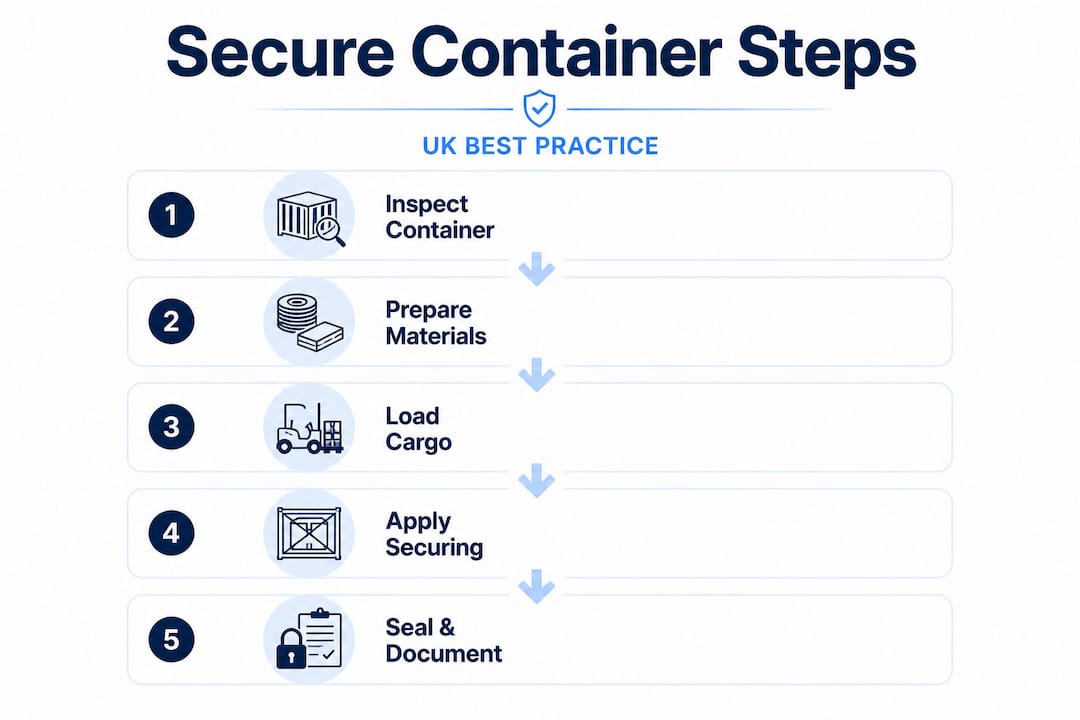
Here is how each method functions within the securing system:
| Method | Function | When to use |
|---|---|---|
| Blocking | Prevents cargo from sliding by placing physical barriers | Heavy items, drums, machinery |
| Bracing | Supports stacked cargo vertically, preventing toppling | Multi-tier palletised loads |
| Lashing | Restrains cargo to container lashing rings or floor fittings | All cargo requiring positive restraint |
| Void filling | Eliminates gaps between cargo units that allow micro-movement | Any load with space between units |
Step-by-step securing sequence:
- Place anti-slip mats on the container floor before the first layer of cargo
- Load heaviest items first, positioning them centrally over the container’s longitudinal axis to keep the centre of gravity low
- Apply blocking lumber fore and aft (front to back) of heavy items to prevent longitudinal movement under braking and acceleration forces
- Stack lighter cargo on top, ensuring each tier is stable before adding the next
- Apply bracing between stacks and container walls to prevent lateral toppling
- Thread ratchet straps through lashing rings on the container floor and walls, tensioning them firmly but without over-compressing fragile goods
- Fill all remaining voids with dunnage air bags, expanding foam, or timber void fillers
- Conduct a final visual check: no gaps larger than 15cm should remain unfilled between cargo units or between cargo and container walls
The goal of this process is to create what experienced freight handlers call a unified load mass — cargo that behaves as a single, stable unit under the dynamic forces of transport, rather than a collection of individual items that each respond separately to movement.
Pro Tip: Tight straps over poorly filled voids are one of the most common and costly errors in cargo securing methods. The strap prevents large-scale movement, but unfilled voids allow continuous micro-movement that abrades packaging, loosens fastenings, and causes cumulative damage invisible until delivery. Fill voids first, then strap.
Once the load has been physically secured by these combined methods, final steps include documentation and sealing.
Applying and verifying security seals: standards and practical steps
A container seal does more than deter theft. It forms part of the customs custody chain, providing evidence that the container has not been opened between the point of sealing and the point of inspection. For UK businesses engaged in cross-border trade, this distinction matters considerably.
ISO 17712 defines high-security mechanical seals with tamper-evident design and unique identification, required for international container integrity workflows. High-security bolt seals meeting this standard resist cutting and pulling forces that would defeat lower-grade cable or strap seals.
HMRC requires seal integrity throughout transit, with the container door locking bar as the typical sealing point; broken seals can trigger investigations and delays that cost your business time and money at port.
Bolt seal application procedure:
- Confirm the seal number matches your shipping documentation before opening the seal packaging
- Close both container doors fully, ensuring the right-hand door is closed first (it has the primary locking bar)
- Thread the bolt seal through the right-hand door locking bar hasp
- Apply firm, even pressure to lock the seal body — you should hear and feel the bolt click into the locked position
- Attempt to pull the bolt out to confirm it is fully engaged
- Photograph the applied seal, showing the seal number and locking bar clearly
- Record the seal number, time of application, and the name of the person who applied it
At each transit point, check seals against the following criteria:
- The seal number matches the shipping documentation
- No visible cuts, abrasions, or deformation on the seal body
- The bolt cannot be rotated or withdrawn
- The seal has not been replaced with a unit of a different colour or type
Pro Tip: Apply the VVTT procedure at each seal inspection: View the seal number against the paperwork, Verify the seal body is undamaged, Tug the bolt firmly to confirm engagement, and Twist the seal body to check it has not been compromised. Thirty seconds of structured checking at each container security seals inspection point can prevent hours of customs delay at destination.
With seals applied and verified, the final phase involves reviewing securing evidence and preparing for transport.
Verification and documentation: the key to secure container transport
Documentation is where many otherwise competent securing operations fall short. Physical securing and seal application are visible — documentation is not, and it is easy to defer under time pressure at port. The consequences of that deferral often appear weeks later, when an insurance claim or customs query arrives with no records to support your position.
Your securement process should be evidence-driven, recording container condition, sealing events, and internal securing approach to support insurer and customs queries. This is not a bureaucratic exercise — it is your primary defence when goods arrive damaged and liability is disputed.
Critical documentation points for every shipment:
- Container number, CSC plate expiry date, and pre-load condition photographs
- Load plan showing cargo position, weight distribution, and lashing point locations
- List of securing materials used, including type and quantity of dunnage, straps, and void fillers
- Seal number, time of application, identity of the person who applied the seal, and photographs
- Seal check records at each transit point, including any anomalies noted
- Name and signature of the responsible loading supervisor
Pro Tip: Use a standardised Load and Seal Record Form for every container departure. A consistent format ensures nothing is omitted under time pressure, and the completed forms create an auditable record series that satisfies both secure container load documentation requirements and insurer expectations. Many cargo insurance policies now include clauses that can void cover where no such records exist.
Having fully prepared, executed and verified the secure load, let’s consider practical perspectives and challenges that logistics managers encounter.
Unique challenges and expert insights on securing container loads in UK logistics
There is a common misconception in freight operations that applying ratchet straps to the main cargo units constitutes adequate securing. It does not. Teams often fail security by securing big items but ignoring micro-movements caused by unfilled voids; securing must treat void-filling and restraints as an integrated system. The straps address the obvious risk; the voids create the invisible one.
What experienced logistics managers understand is that the securing method must be matched to the container type and the transport mode. A standard 20-foot dry van container moving by road from Felixstowe to a midlands distribution centre faces different forces than a flat rack container loaded with heavy plant equipment destined for a deep-sea voyage. Open-top containers, reefer units, and flat racks each require specific adaptations to blocking and lashing arrangements — there is no single configuration that works universally.
The transport leg also determines the intensity of the securing requirement. Port handling introduces vertical forces from crane lifts that road transport does not generate. Deep-sea legs introduce rolling and pitching forces that road haulage does not replicate. A container moving through multiple modes needs a securing approach that accounts for the most demanding leg, not the average.
From our experience working across major UK ports, the operations that consistently avoid cargo damage and customs queries share one characteristic: they treat the load plan as a container load expertise document produced before the first item enters the container, not a retrospective record completed afterwards. When the securing sequence is designed in advance, it can be checked, challenged, and improved. When it is improvised at the container doors, errors are inevitable.
The real discipline in container load security is designing the cargo arrangement so that the load behaves as a unified mass under dynamic forces. That means thinking about weight distribution, void filling, and lashing geometry as an integrated engineering problem — not a checklist to tick before closing the doors.
Partnering with experts for secure container haulage in the UK
Applying the standards in this guide consistently across every container departure requires expertise, structured processes, and a haulage partner who understands the regulatory landscape as thoroughly as you do.
Jagelo Haulage Limited provides specialist container haulage across all major UK ports, with operations aligned to CTU Code and ISO 17712 requirements for cargo securing and sealing. Our fleet of over 40 GPS-tracked trucks and trailers supports real-time monitoring throughout each transport leg, and our experienced teams follow documented securing and seal management procedures on every movement. Whether your consignment requires full container load transport, same-day port collection, or a planned import delivery programme across the UK, we ensure your cargo arrives with its securing and seal integrity intact. Review our terms of service and cookie policy for full details of how we operate.
Frequently asked questions
What are the main methods to secure a container load effectively?
The primary securing methods are blocking to stop cargo movement, bracing to support stacked loads, lashing to restrain items to container fittings, and void filling to eliminate gaps that allow shifting between cargo units.
Why is ISO 17712 certification important for container seals?
ISO 17712 classifies seals and requires tests for mechanical strength and tamper evidence, ensuring only seals that meet stringent physical and security criteria are used to certify container integrity in international shipments.
How does proper documentation improve container load security?
Evidence-driven securement processes including load plans, seal records, and pre-load photographs create an auditable chain of custody that supports your position in insurance disputes and customs queries following delivery.
What risks arise from unsecured cargo during transport?
Unsecured shifting cargo is a primary cause of goods damage and handler injuries during container opening, and it frequently triggers customs inspections and prolonged port delays that generate demurrage and detention charges.
What should I inspect on a container before loading?
Check door seals and locking bars for correct function and watertightness, examine the floor for structural damage or protruding fixings, verify the CSC plate is current, and photograph any pre-existing damage before loading begins.