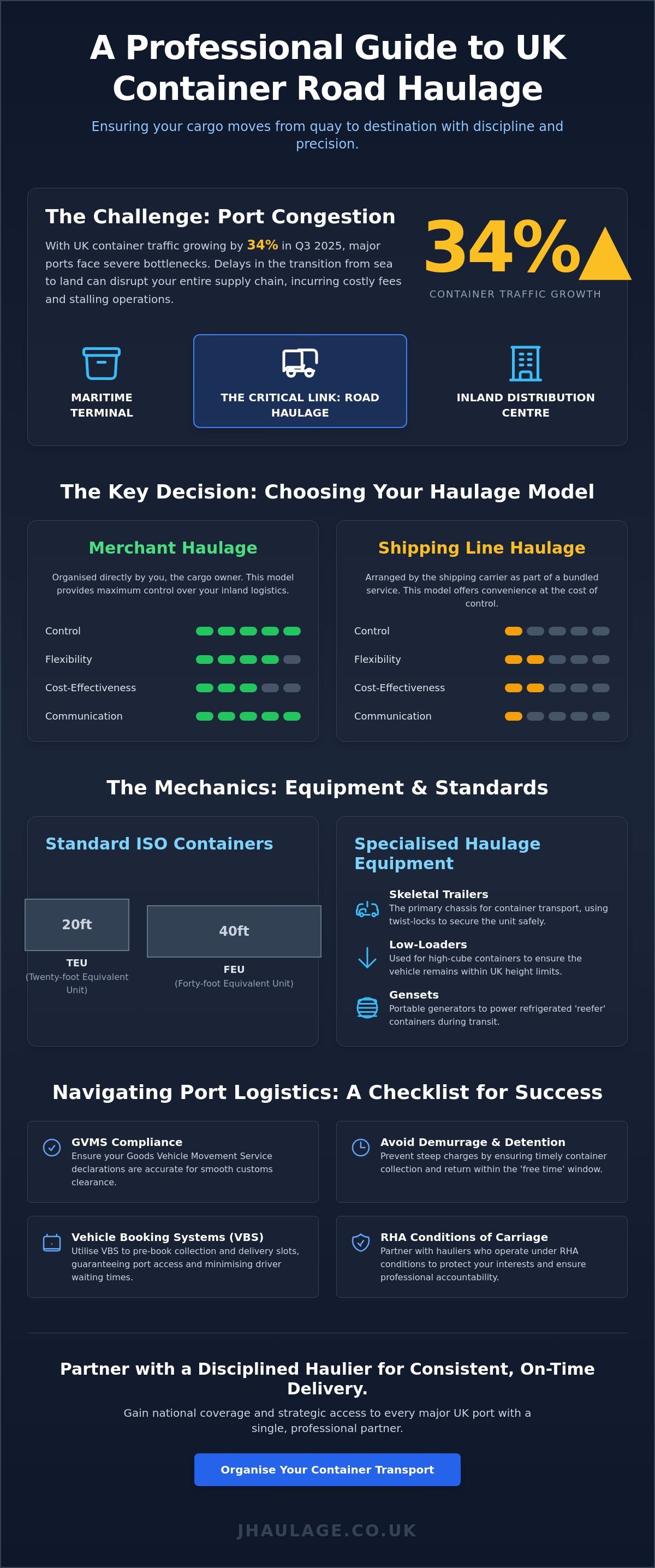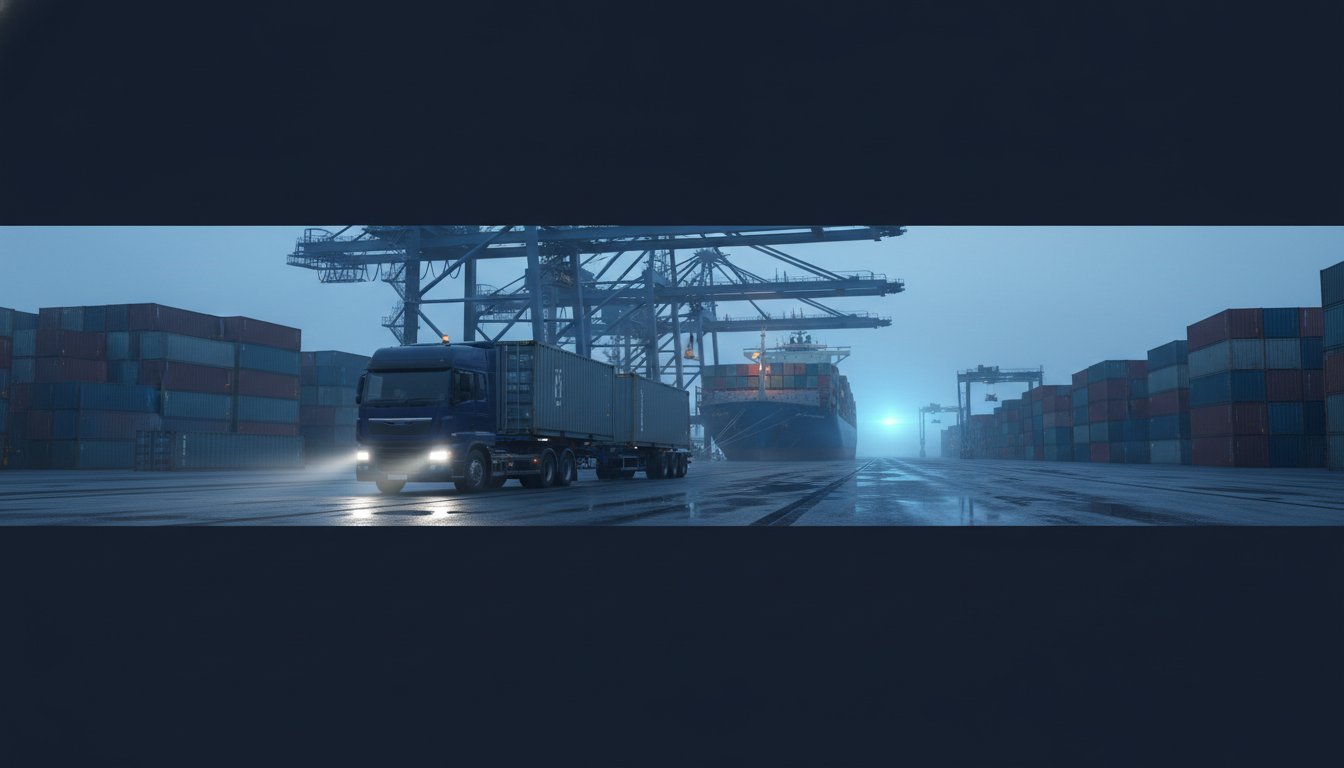
UK container traffic grew by 34 per cent in the third quarter of 2025, but this volume increase often leads to severe bottlenecks at major ports like Felixstowe and Southampton. You're likely aware that delays during the transition from sea to land can disrupt your entire supply chain. Efficient road haulage for containers is the strategic link that ensures your goods move from the quay to their final destination without unnecessary friction. It's the final stage that determines the overall success of your international shipping operations.
This professional guide clarifies the mechanics of container transport within the current UK logistical framework. You'll discover the functional differences between merchant haulage and shipping line haulage, helping you select the model that suits your specific operational needs. We'll also detail the mandatory customs requirements, such as the Goods Vehicle Movement Service (GVMS) and the latest port energy surcharges, to provide you with the confidence needed for safe and punctual deliveries. By understanding these core fundamentals, you can protect your cargo and maintain a disciplined delivery schedule.
Key Takeaways
- Understand how road haulage for containers serves as the essential link between maritime logistics and domestic distribution centres across the UK.
- Gain clarity on the technical requirements for ISO container transport, including the use of specialised skeletal trailers for secure weight distribution.
- Compare the operational benefits of merchant haulage against shipping line haulage to select the most suitable arrangement for your specific cargo requirements.
- Learn how to navigate port infrastructure through Vehicle Booking Systems (VBS) and protect your interests using RHA Conditions of Carriage.
- Discover the strategic advantages of partnering with a disciplined haulier to ensure consistent, on-time delivery from major UK ports.
Defining Road Haulage for Containers in the UK Supply Chain
Road haulage for containers is the specialised movement of standardised shipping units between maritime terminals and inland destinations. It's more than just a transport service; it's the operational bridge connecting global trade to the British consumer. Whilst ships handle the long-haul transit across oceans, haulage provides the agility required to navigate the UK's road network and deliver goods directly to distribution centres. This process, often referred to in technical circles as Drayage, represents a critical phase where efficiency directly impacts the bottom line. Without disciplined road logistics, the entire maritime supply chain would stall at the water's edge.
British businesses rely on road transport for the majority of container movements because it offers unparalleled flexibility. Rail freight provides high capacity but is limited by fixed infrastructure and rigid schedules. In contrast, road haulage for containers allows for precise scheduling that supports "just-in-time" inventory models. This reliability ensures that warehouses remain stocked without the need for excessive, costly overheads. It's the primary method used to keep the UK's retail and manufacturing sectors moving with precision.
The Importance of Professional Port Logistics
Moving standard 20ft and 40ft containers requires specific technical expertise and heavy-duty equipment. Professional hauliers use skeletal trailers designed to distribute the immense weight of a loaded unit safely across the vehicle's axles. Incompetence at this stage leads to safety risks and financial penalties. Efficient management is also essential for controlling container transport costs. By securing timely collection slots, a disciplined partner prevents the accumulation of port demurrage and detention charges. These fees can escalate quickly if a container sits idle on the quay past its allotted free time.
National Coverage and Strategic Port Access
A successful supply chain requires access to every major maritime hub, from Felixstowe and Southampton to London Gateway and Liverpool. National coverage ensures that a business can redirect cargo as port conditions change without losing service consistency. A centralised fleet provides the logistical muscle to manage diverse requirements whilst maintaining a single point of professional accountability. For companies operating multiple distribution centres across the UK, this national reach is not a luxury; it's a fundamental requirement for operational stability. It ensures that goods are always within reach of their final destination, regardless of which port they enter.
The Mechanics of Container Transport: Equipment and Standards
UK container movements are governed by strict ISO standards and rigorous vehicle specifications. According to UK port freight statistics, millions of units pass through British terminals annually, each requiring precise handling. The two primary units are the Twenty-foot Equivalent Unit (TEU) and the Forty-foot Equivalent Unit (FEU). These standard sizes dictate the choice of vehicle and the planning of the inland route. Road haulage for containers relies primarily on skeletal trailers, which are specialised chassis designed solely to carry shipping units. They use twist-locks to secure the unit at each corner, ensuring the load remains stable during transit. This design is essential for maintaining correct weight distribution across the axles, which prevents damage to road infrastructure and ensures compliance with UK vehicle weight regulations.
Standard vs Specialised Haulage Equipment
Standard skeletal trailers handle most cargo, but certain units require specialised configurations. High-cube containers, which offer extra vertical space, often necessitate the use of low-loader skeletal trailers to ensure the vehicle remains within UK height limits. Similarly, refrigerated or "reefer" containers require vehicles equipped with gensets. These portable generators provide a continuous power supply to the container's cooling unit whilst the truck is in motion. Choosing the correct equipment is a fundamental operational decision that protects the integrity of the goods. If you require assistance in determining the correct vehicle for your cargo, you can request a professional transport assessment.
Operational Delivery Models: Wait and Load vs Drop and Collect
The efficiency of road haulage for containers is also determined by the delivery model chosen at the destination. "Wait and Load" is a disciplined approach where the driver remains with the vehicle while the container is emptied or filled. This model is best for sites with high labour availability and rapid turnaround times. In contrast, "Drop and Collect" involves leaving the trailer at the site and returning later to retrieve it. This is ideal for high-volume distribution centres where loading takes several days. Selecting the right model depends entirely on your warehouse capacity and available staff.
Modern fleets must also meet Euro 6 emissions standards to ensure uninterrupted port access. In 2026, non-compliant HGVs face a daily charge of £100 to enter the London Ultra Low Emission Zone (ULEZ). Similar Clean Air Zones operate in cities like Birmingham and Bath, with daily charges reaching up to £100 for older vehicles. Maintaining a modern, compliant fleet is a commercial necessity that ensures cost-effective access to the UK's most critical industrial hubs.
Merchant Haulage vs Shipping Line Haulage: Understanding Your Options
Deciding between merchant haulage and shipping line haulage is a strategic choice for any business importing or exporting via UK ports. Shipping line haulage, often called carrier haulage, is a functional solution where the maritime carrier manages the road transport from the quay to your warehouse. Merchant haulage, however, provides the transparency required for strategic logistics management by allowing the cargo owner to appoint their own specialist provider. With total freight tonnage increasing by 2 per cent to 426.1 million tonnes in the rolling year to September 2025, according to the latest quarterly port freight data, managing these volumes requires a transport model that matches your specific operational capacity.
Cost structures differ significantly between these two models. Shipping lines usually offer a flat rate for the inland leg, which simplifies invoicing but often includes hidden administrative margins. In contrast, road haulage for containers arranged through merchant haulage allows for transparent, negotiated pricing. This model requires the cargo owner to manage the "merchant haulage release" at the port, but the resulting flexibility often outweighs the administrative effort for established businesses. It allows you to move beyond the rigid constraints of carrier-led scheduling.
The Benefits of Choosing Merchant Haulage
Direct control is the primary advantage of the merchant model. When you manage your own transport, you decide which containers are prioritised for collection based on warehouse demand. You aren't at the mercy of a carrier's third-party schedule. This direct link to your haulier fosters a professional relationship where transport managers understand your site's specific constraints. By working with a reliable container haulage specialist, you can often secure more consistent service levels than those provided through generic, carrier-arranged transport. It ensures that your logistics partner is accountable directly to you.
When Shipping Line Haulage Might Be Appropriate
Shipping line haulage remains a functional choice for infrequent shippers or those with very low volumes. It offers simplicity, as the shipping line assumes liability for the entire journey from the port of origin to the final UK destination. However, as your business grows and your container volumes increase, the lack of visibility in carrier haulage can lead to supply chain bottlenecks. Transitioning to merchant haulage is a standard step for businesses seeking to optimise their road haulage for containers and reduce reliance on carrier-led logistics. This shift allows for a more disciplined approach to inland delivery, ensuring that your transport strategy supports your broader commercial goals.
Key Considerations for Efficient Inland Container Logistics
Operational efficiency in road haulage for containers depends on strict adherence to port protocols and legal frameworks. Most major UK terminals, including Felixstowe, Southampton, and London Gateway, utilise a Vehicle Booking System (VBS) to regulate traffic flow. Hauliers must secure these specific time slots in advance to avoid long queues and potential turn-aways at the terminal gate. Managing "restitution" is equally critical; this involves returning the empty container to a designated port or inland depot within the carrier's agreed timeframe. Failure to manage this process leads to significant detention charges from the shipping line, which can erode the commercial viability of a shipment.
Liability and insurance are primarily governed by the Road Haulage Association (RHA) Conditions of Carriage. These standard terms define the level of protection for your cargo during the inland leg of its journey. It's essential to verify that your transport partner operates under these conditions, as they provide a clear legal structure for claims and responsibilities. Modern logistics also relies on real-time communication amongst all stakeholders. Digital tracking allows transport managers to provide precise delivery windows, ensuring that warehouse teams are ready to receive the goods as soon as the vehicle arrives at the destination.
Safety and Compliance in Road Haulage
Safety is a non-negotiable aspect of professional logistics. Every load must be secured using industrial-grade twist-locks and remain within the legal weight limits for UK roads. Professional drivers with extensive port experience understand the specific safety protocols of each terminal, which prevents operational delays and ensures a disciplined delivery process. Fully insured transport is a fundamental requirement for protecting high-value cargo against unforeseen transit risks. If you require a partner that prioritises these safety standards, you can request a secure container delivery quote.
Planning for Peak Periods and Port Congestion
Seasonal demand significantly impacts haulage availability across the UK. During the fourth quarter, the volume of imports for the retail sector often exceeds the available vehicle capacity. Securing your road haulage for containers well in advance is the only way to guarantee a collection slot during these peak periods. External factors, such as high winds at coastal ports or vessel delays, can also disrupt inland schedules. A disciplined logistics partner will monitor these conditions in real-time, adjusting routes and bookings to mitigate the impact of port congestion on your broader supply chain.
Professional Road Haulage for Containers with Jagelo Haulage
Jagelo Haulage provides secure, professionally managed container transport solutions underpinned by over 15 years of industry expertise. Our operation is built on a foundation of steadfast professionalism and functional reliability, ensuring that every delivery supports your broader supply chain objectives. We don't view our service as a simple physical task; we treat road haulage for containers as a strategic outcome that determines the efficiency of your inland logistics. With a modern fleet of over 40 trucks, we're equipped to handle the specific demands of both merchant haulage and shipping line haulage across the UK road network.
Our fleet consists of Euro 6 compliant vehicles, which allows for unrestricted access to Clean Air Zones and major port terminals. This technical capability is matched by a disciplined management style that prioritises the safety of your cargo and the punctuality of our drivers. We understand the high stakes involved in maritime trade, where a single delay at the port can have a cascading effect on your distribution schedule. Jagelo Haulage mitigates these risks through rigorous protocol adherence and a highly organised transport office that understands the fundamentals of port-to-door delivery.
Our Commitment to Reliable Port-to-Door Logistics
We provide national coverage by operating from all major UK maritime hubs, including Felixstowe, Southampton, and London Gateway. This geographic reach ensures that we can manage your road haulage for containers regardless of which terminal your cargo enters. Our focus remains on disciplined operations that prioritise the safety and efficiency of your supply chain. By maintaining a specialised fleet and employing experienced drivers, we provide the protected outcomes that corporate clients and operational managers require. Jagelo Haulage is the trusted partner for businesses that need consistency and a no-nonsense approach to inland container haulage.
Our responsive customer support team is a core component of our service. They assist operators in navigating the complex digital landscape of modern logistics, including the mandatory use of the Goods Vehicle Movement Service (GVMS) and the Customs Declaration Service (CDS). This expert guidance helps to prevent administrative bottlenecks that often lead to port detention charges. We act as a strategic partner, ensuring that your logistical framework remains robust even during peak periods of port congestion.
Get Started with Your Container Haulage Requirements
Effective logistics planning requires a partner who understands the fundamentals of the sector. Our team is ready for a no-nonsense discussion about your specific requirements, whether you're moving standard ISO units or specialised refrigerated containers. We provide clear, authoritative advice to help you choose the most efficient haulage model for your business. You can request a professional quote for your inland container haulage to ensure your goods are delivered safely and on time. Enquire about our container haulage services today and secure a disciplined logistics partner for your UK operations.
Optimising Your Inland Logistics Strategy
Efficient supply chain management requires a disciplined approach to the movement of goods from the quay to the warehouse. Selecting the most appropriate model between merchant and shipping line haulage is a strategic decision that impacts both cost and operational control. By adhering to port protocols such as Vehicle Booking Systems and RHA standards, you can mitigate the risk of expensive delays and ensure the safety of your cargo throughout the inland journey. Professional road haulage for containers remains the essential link that maintains the integrity of your international shipping operations.
Jagelo Haulage offers the steadfast professionalism required to manage these complex logistics. With over 15 years of industry expertise and a modern fleet of over 40 trucks, we provide national coverage across all major UK ports. Our team prioritises functional reliability to deliver protected outcomes for every client. We understand the high stakes of the supply chain and follow strict protocols to ensure your goods arrive on time. Partner with Jagelo Haulage for reliable UK container transport and strengthen your logistical framework today.
Frequently Asked Questions
What is the difference between 20ft and 40ft container haulage?
20ft containers, or TEUs, are typically utilised for heavy or dense cargo, whilst 40ft containers, known as FEUs, are the standard for high-volume, lighter goods. Road haulage for containers involves adjusting the skeletal trailer's twist-locks to secure the specific unit size safely. Both units must adhere to UK road weight limits, which usually cap at 44 tonnes for a six-axle vehicle combination.
How much notice is required to book road haulage for containers?
The required notice period depends on seasonal demand and current port congestion levels. During peak periods, such as the fourth quarter, booking several days in advance is often necessary to secure a vehicle. It's advisable to contact the transport manager as soon as the vessel's arrival date is confirmed to ensure a VBS slot is available at the terminal.
Can you transport refrigerated or hazardous containers by road?
Transporting refrigerated or hazardous containers is possible but requires specialised equipment and specific driver certifications. Refrigerated units need a trailer equipped with a generator set to provide continuous power during transit. Hazardous goods require a driver with an ADR vocational training certificate and a vehicle that meets all safety marking requirements. You should confirm these specific capabilities during the booking process.
What information do I need to provide for a haulage quote?
To receive an accurate haulage quote, you must provide the collection port, the delivery postcode, and the container size. Additional operational details, such as the gross weight, the container number, and the port release reference, are required to finalise the booking. Providing precise information allows the transport office to allocate the correct vehicle and trailer configuration for your cargo.
What are the RHA Conditions of Carriage and why do they matter?
The RHA Conditions of Carriage are the industry-standard legal terms that define the liability and insurance limits for goods in transit. They establish a disciplined framework for responsibility between the haulier and the customer. Operating under these terms ensures there's a clear, professional protocol for addressing any claims related to cargo damage or loss during the inland leg of the journey.
How is container weight managed for road safety compliance?
Container weight is managed through precise axle distribution on skeletal trailers to ensure compliance with UK road regulations. Drivers must verify that the loaded unit does not exceed the maximum gross vehicle weight allowed for the specific vehicle combination. This disciplined approach to road haulage for containers prevents legal penalties and protects the safety of the driver and other road users.
What happens if my container is delayed at the port?
Delays at the port can result in demurrage or detention charges from the shipping line if the container exceeds its allotted free time. Professional hauliers monitor vessel arrival times and VBS availability to mitigate these risks as much as possible. If a delay occurs due to terminal congestion or weather, the transport office will work to reschedule the collection slot as soon as operations resume.
Do you offer same-day container delivery services?
Standard container transport typically involves pre-booked slots to align with port Vehicle Booking Systems and warehouse labour schedules. You should check with the transport office regarding current availability for urgent requirements. Most disciplined operations prioritise scheduled, on-time deliveries to maintain the long-term stability and efficiency of the broader supply chain.