11 Incoterms and haulage rules hauliers must turn into job orders

Incoterms determine who arranges and pays for haulage and precisely when legal risk passes from seller to buyer. Under EXW, the buyer books and pays for haulage from the seller’s door; under FCA, delivery and risk transfer at a named place once goods are handed to the carrier; under DDP, the seller carries the goods, clears customs and bears the cost right through to the buyer’s premises. The ICC Incoterms® 2020 rules govern every one of these transfers.
TL;DR:
- Seven Incoterm rules are applicable across all transport modes, reducing disputes by clarifying risk transfer points for road haulage and multimodal moves.
- Disputes often arise when operators confuse vessel-based risk transfer events with inland container stakeholding, especially with sea-only terms like CIF and FOB.
- Matching contract language exactly to haulage job instructions and documenting handoffs with receipts and gate-in images minimizes operational ambiguity and legal risk.
- Strategic use of FCA, CPT, and CIP for container shipments improves dispute resilience, thanks to clear, receipted handoff points compared to ship-based terms.
- Proper planning of responsibilities for detention, THC, and re-weighing costs in job orders prevents costly disputes and billing errors.
Table of Contents
- Incoterms and haulage: the 11 rules and which ones actually apply to road transport
- How Incoterms allocate haulage costs and transfer risk
- Practical implications for haulage contracts and carrier liability
- Choosing the right Incoterm for containerised exports
- Clause templates and a checklist for haulage job orders
- How Jagelo Haulage applies these principles on real container jobs
- What the Incoterms rulebook won’t tell you
- Get your Incoterms working properly with a haulier who backs the paperwork
- Sources
Incoterms and haulage: the 11 rules and which ones actually apply to road transport
Not every Incoterm was built with a lorry in mind, and confusing the two categories is where a lot of avoidable disputes start. Of the 11 standard rules, seven work across any mode of transport, including road haulage and multimodal container moves. The remaining four were written specifically for sea and inland waterway shipments, and they carry assumptions about vessel loading that simply do not map onto a container stuffed at an inland depot.
The seven any-mode rules are:
- EXW (Ex Works): buyer arranges and pays for all transport, including the initial haulage leg from the seller’s premises.
- FCA (Free Carrier): seller delivers to a named place, carrier or terminal, and risk passes there.
- CPT (Carriage Paid To): seller pays carriage to a named destination but risk passes earlier, at the first carrier.
- CIP (Carriage and Insurance Paid To): as CPT, but the seller must also arrange insurance to a higher minimum level.
- DAP (Delivered at Place): seller delivers, ready for unloading, at the named destination.
- DPU (Delivered at Place Unloaded): seller delivers and unloads at the named destination, the only rule requiring the seller to unload.
- DDP (Delivered Duty Paid): seller delivers, cleared through customs, duties paid, at the buyer’s premises.
The four sea and inland waterway rules are FAS, FOB, CFR and CIF. Each of these ties risk transfer to a vessel-loading event, typically “on board” at the port of shipment. That works cleanly for bulk cargo loaded directly onto a ship, but it fits containerised freight poorly. A container is usually packed at an inland factory or depot days before it reaches a vessel, moves through a haulier’s hands, sits in a container yard, then gets loaded by terminal staff the seller never sees. Pinning risk transfer to the exact moment of vessel loading leaves a dangerous grey zone between the haulier’s gate-in and the crane operator’s hook, precisely the period when damage, theft or documentation errors are most likely to surface. This mismatch is well documented in Business, which flags the sea-only terms as generally unsuitable once goods travel by container rather than break bulk.
For the exact rule text, including the precise scope of each seller and buyer obligation, the ICC’s Incoterms rules resource remains the definitive reference. Anyone drafting a sales contract clause should check it before finalising wording, because summaries like this one simplify language that the ICC has deliberately made specific.
How Incoterms allocate haulage costs and transfer risk
Cost allocation and risk transfer are two separate questions, and treating them as one is the single most common source of confusion in Incoterm disputes. A seller can pay for carriage right through to the buyer’s warehouse under CPT or CIP while risk still passes to the buyer much earlier, at the point goods are handed to the first carrier. The buyer effectively bears the risk of loss or damage during a transport leg the seller is still paying for.
Insurance responsibility follows a similar logic but only two rules make it mandatory. Under CIP, the seller must insure goods to the higher Institute Cargo Clauses (A) level or equivalent, covering the buyer against most transit risks. Under CIF, the seller’s obligation is lower, insurance to Clauses ©, the minimum cover level. Every other rule leaves insurance to whichever party bears the risk at that stage, which in practice means many buyers under FCA, CPT, DAP or DPU need to arrange their own cargo cover for the leg where they hold the risk. Reviewing cargo insurance options before signing a contract avoids the nasty surprise of discovering a gap in cover only after a claim.
Haulage-specific cost touchpoints are where Incoterms bite hardest in daily operations:
- Vehicle Booking System (VBS) slots: whoever books haulage typically also manages VBS bookings and absorbs any slot-related penalties.
- Terminal Handling Charges (THC): liability depends on which party’s carriage contract covers the terminal leg, and mismatched Incoterm wording is the most common cause of THC being billed twice.
- Detention and demurrage: these accrue to whichever party controls container return timing, which is not always the party who arranged the haulage.
Statistic Callout: UK haulage spot rates remain at a relatively high level per mile in 2026, while contract rates typically fall within a lower range per mile, according to Logistics UK’s road freight cost data. Fuel and driver wages account for significant portions of that cost. Those figures matter directly to Incoterm selection: a seller quoting DDP prices needs to build volatile fuel and wage costs into a single delivered price, whereas a buyer under FCA sees haulage costs charged separately and can shop the lane. Understanding these container transport cost components before quoting a contract price protects margin on either side of the deal.
Detention and demurrage exposure deserves particular attention because it rarely appears explicitly in the Incoterm rule itself. The rule tells you who arranges carriage and when risk transfers; it says nothing about who pays if a container sits at the terminal three days past free time. That has to be settled in the underlying carriage contract and the haulage job order, not assumed from the Incoterm alone.
Practical implications for haulage contracts and carrier liability
An Incoterm clause in a sales contract is only as good as the job order that translates it into an actual booking. Sellers and buyers frequently write “FCA Felixstowe” into a contract and assume the haulier will simply work out what that means operationally. It won’t, not reliably, and that gap produces most of the disputes logistics teams deal with.
The fix is straightforward but often skipped: match the sales contract’s named place, word for word, to the haulage job order. If the contract says “FCA seller’s warehouse, Nottingham,” the job order needs that exact facility name, not a general area or postcode. When the named place is the seller’s own premises, FCA delivery is complete once goods are loaded onto the buyer’s collecting vehicle, a very different moment, legally, from delivery at a third-party terminal.
A second distinction that trips up newer exporters is merchant haulage versus carrier haulage. Under merchant haulage, the shipper (or their forwarder) arranges the inland container move independently of the ocean carrier’s contract. Under carrier haulage, the shipping line arranges and invoices the inland leg as part of its own bill of lading. Mixing the two, for instance booking merchant haulage while the Incoterm implies the seller’s carrier contract should cover it, is a common cause of duplicate THC billing.
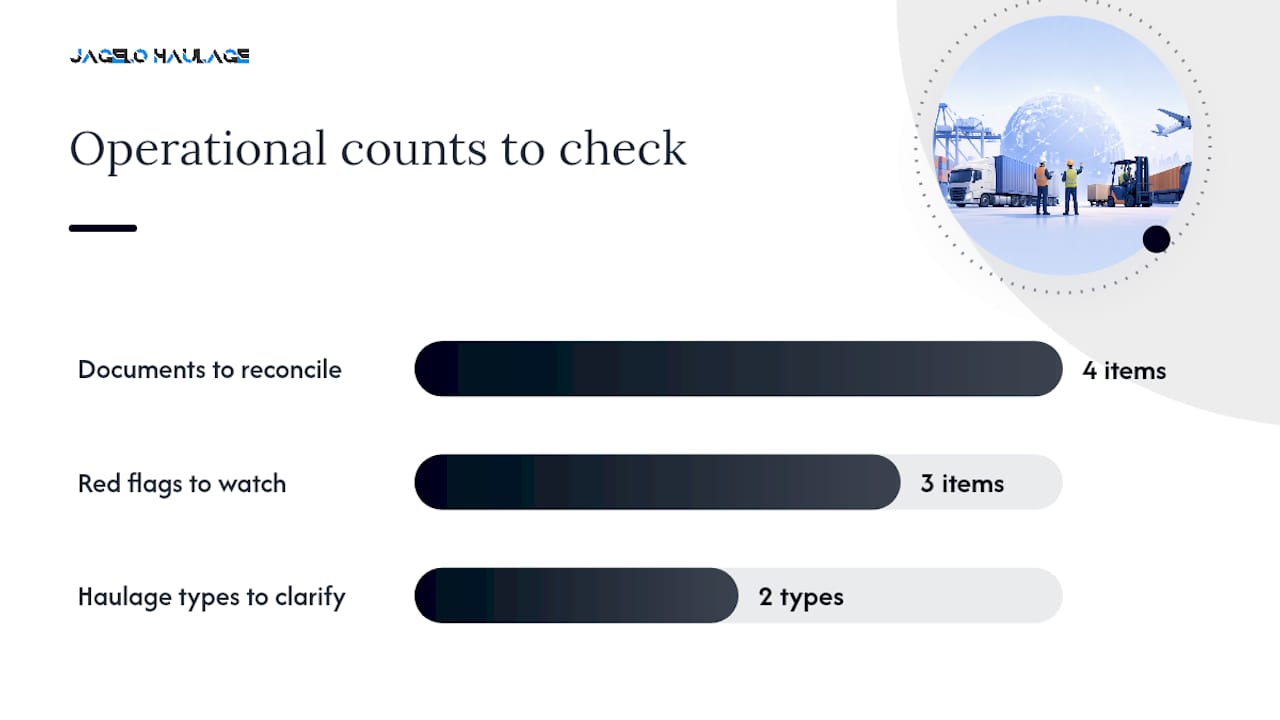
For every containerised move, four documents should reconcile with each other:
- Gate-in receipt confirming the container’s arrival time and condition at the terminal.
- Proof of Delivery (POD) signed at the final handoff point named in the contract.
- Seal and VGM (Verified Gross Mass) records, matched against the bill of lading before departure.
- Bill of lading details, cross-checked against the Incoterm’s named place to confirm risk transfer actually happened where the contract says it did.
Reviewing the documentation requirements for UK freight before the first shipment under a new contract saves considerable pain later.
Pro Tip: Never accept “FCA seller’s facility” as complete contract language. Add the exact loading dock or gate reference and the specific evidence required at handoff, a signed receipt, a timestamped photo, whatever your operation uses, because vague named places are the single most litigated ambiguity in Incoterm disputes.
Watch for three red flags that consistently precede post-delivery arguments: a named place described by city or region rather than exact facility; rolled bookings where the vessel changes but nobody updates the haulage appointment; and double THC, where both the seller’s and buyer’s contracts assume the other party is covering the terminal charge.
Choosing the right Incoterm for containerised exports
FCA, CPT and CIP consistently outperform the maritime-specific terms for container trades, and the reasoning comes down to one thing: a named, receipted handoff point. Port practice and trader experience, summarised in INN.LAW’s analysis of Incoterms best practice, shows these three rules reduce disputes over THCs and demurrage precisely because they don’t depend on the ambiguous “on board” moment that FOB, CFR and CIF require.
EXW and DDP sit at opposite ends of the control spectrum, and the right choice depends on how much visibility and administrative burden each party wants.
- EXW gives the buyer maximum control over haulage and cost, but the buyer must also handle export customs formalities in the seller’s country, which many overseas buyers are poorly placed to do.
- DDP puts almost every obligation, haulage, export and import customs, duties, on the seller, which suits sellers offering a genuinely landed price but exposes them to unfamiliar import regulations. Checking customs rules for the buyer’s country in advance is not optional under DDP; it’s the difference between a smooth delivery and a container stuck in customs limbo.
- FCA, CPT and CIP sit in the middle, giving sellers control over export formalities while handing inland and ocean carriage arrangements to whichever party is better placed to manage them.
Before settling on a term, work through a short decision checklist: who books the ocean leg and holds the carrier relationship; who pays THCs at origin and destination; who supplies container booking data and, critically, who is responsible for meeting carrier cut-off times. That last point matters more than it sounds. A missed cut-off caused by unclear responsibility for submitting VGM data can cost a shipper an entire sailing, and no Incoterm clause fixes that after the fact.
Clause templates and a checklist for haulage job orders
Contract language only works if it survives translation into an actual booking instruction. Three short templates cover most containerised scenarios:
- FCA named place (warehouse or terminal): “Seller delivers the goods, cleared for export, to [named carrier/terminal, exact facility name and address] no later than [date/time]. Delivery is complete upon [signed warehouse receipt / accepted terminal gate-in], evidenced by [document type].”
- EXW pickup: “Buyer’s nominated carrier collects goods from [seller’s exact facility address] during [specified appointment window]. Seller provides loading assistance but bears no risk or cost beyond making goods available.”
- DDP delivery: “Seller delivers goods, duties and taxes paid, to [buyer’s named facility]. Seller is responsible for import customs clearance and all inland haulage costs to the final address.”
Every job order built from these templates should confirm: the appointment window, the equipment required (skeletal trailer, curtain-sider, refrigerated unit), the VGM and seal verification procedure, and which party supplies booking details ahead of carrier cut-offs.
Pro Tip: Build cost allocation for detention, re-weighing and refused delivery into the job order itself, not just the sales contract. If a haulier turns up to a locked gate because nobody confirmed the appointment, someone pays for that wasted trip, and it should be decided before the truck leaves the yard, not argued about afterwards.
Escalation rules matter just as much as the clauses themselves. Define upfront who absorbs the cost if a container is refused at delivery, if re-weighing reveals a VGM discrepancy, or if detention accrues because the consignee’s yard can’t accept the appointment slot.
How Jagelo Haulage applies these principles on real container jobs
Understanding the rules on paper is one thing; running them across dozens of container moves a week is another. Jhaulage operates a fleet of more than 40 trucks and trailers across the UK’s major container ports, including Felixstowe, Tilbury, Southampton and Liverpool, with GPS tracking fitted as standard so both shipper and consignee can see exactly where a container sits at any moment.
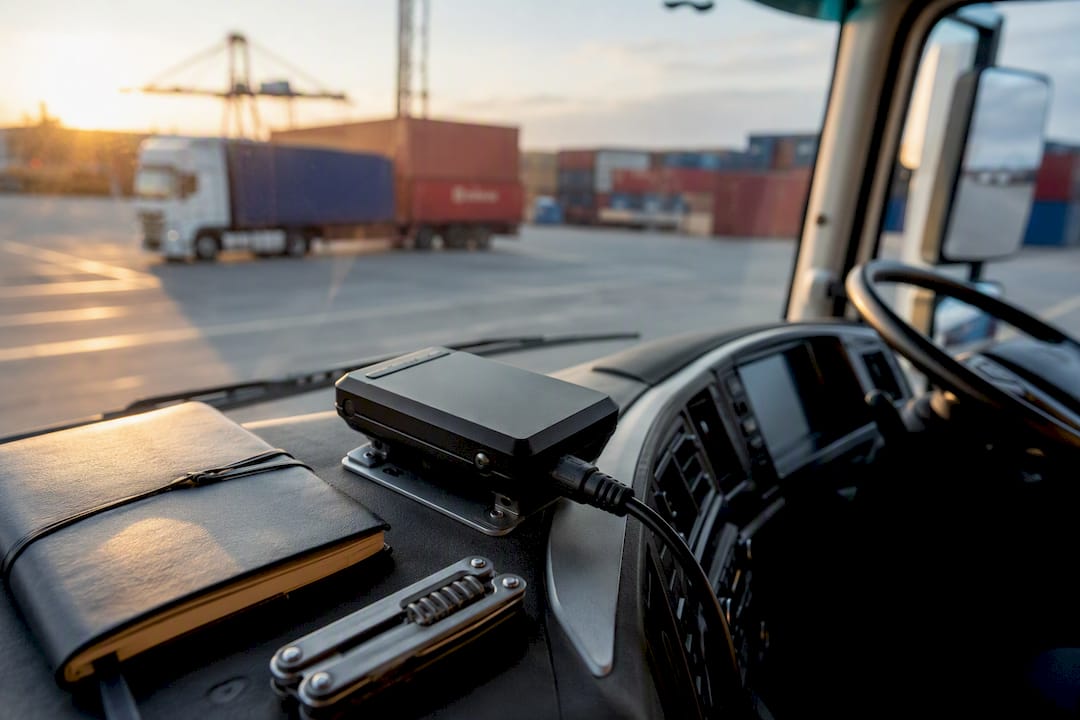
That visibility solves a problem that sits at the heart of most Incoterm disputes: proving where and when a handoff actually happened. When a job comes in under an FCA contract naming a specific depot, Jhaulage confirms the appointment window with the terminal or warehouse in advance, captures gate-in evidence at the point of collection, and issues POD documentation as soon as delivery completes. That paper trail is what lets a seller demonstrate, with evidence rather than assumption, that risk transferred exactly where the contract said it would.
For DDP jobs, where the seller carries responsibility right through to the buyer’s door, coordination between customs clearance and the final delivery slot has to be tight, since a delay on one side pushes the whole schedule. Jhaulage’s container haulage operations are built around 24/7 support precisely because customs holds and vessel delays don’t respect office hours.
One internal control worth borrowing regardless of who your haulier is: log THC liability against each job order before the truck moves, not after the invoice arrives. That single step prevents the double-billing dispute that catches out more exporters than any other Incoterm misunderstanding.
What the Incoterms rulebook won’t tell you
The rulebook is precise about legal risk transfer and frustratingly quiet about the operational mess that sits underneath it. Most guidance treats Incoterm selection as a legal exercise, pick the right three letters, insert the named place, done. That’s backwards. The letters matter less than the specificity of what follows them, and I’d argue the industry’s obsession with “which Incoterm should I use” distracts from the harder, more valuable question: does your job order actually match your contract, word for word, facility for facility?
Conventional advice treats FCA, CPT and CIP as automatically safer than FOB or CIF for containers, and the reasoning holds up. But the safety only materialises if someone enforces the named-place discipline at the operational level. A perfectly chosen Incoterm with a vague job order delivers the same disputes as a poorly chosen one. Prioritise the paper trail, gate-in receipts, PODs, VGM records, over the theoretical elegance of the clause itself. That’s where real exposure lives, and it’s the part most freight professionals underinvest in relative to the time they spend debating which rule to pick.
— Vytautas
Get your Incoterms working properly with a haulier who backs the paperwork
Jhaulage turns Incoterm clauses into evidenced handoffs, not assumptions, across Felixstowe, Tilbury, Southampton and Liverpool. Whether a contract names FCA delivery at your own warehouse or DDP right through to the buyer’s door, a fleet of more than 40 GPS-tracked trucks and trailers, backed by 24/7 support, gives you the gate-in receipts and POD evidence that settle disputes before they start rather than after an invoice lands.
If you’re drafting a sales contract that names a specific port or terminal, or you’re already juggling job orders that don’t quite match your Incoterm wording, that’s exactly the gap Jhaulage closes daily. Get in touch through the Jagelo Haulage container haulage services page to discuss port coverage for your lanes and get a quote built around your actual named place, not a generic estimate.
Sources
For the exact legal wording behind any clause discussed here, consult the ICC’s Incoterms rules directly rather than relying on summaries, including this one. Business.gov.uk’s Incoterms guidance offers a practical UK-facing overview, while Logistics UK’s haulage cost data helps anchor pricing expectations. Jhaulage’s own guides on haulage contracts offer practical templates drawn from day-to-day port operations.
- Business
- ICC handbook on transport and the Incoterms® 2020 rules
- UK road freight costs — Logistics UK