How to reduce container transport costs for business

Reducing container transport costs in business is defined as the systematic application of freight optimisation techniques, including container utilisation planning, intermodal mode selection, and automated carrier rate management, to lower total logistics spend without degrading service reliability. The industry term for this discipline is freight cost optimisation, and it sits at the intersection of operational planning and financial control. Businesses that treat it as an ongoing discipline rather than a one-off exercise consistently outperform those that rely on periodic rate negotiations alone. This guide presents the most effective methods available in 2026, backed by data, and explains exactly how each one works in practice.
How to reduce container transport costs in business through better load planning
Container utilisation is the single most controllable cost lever in container logistics. Every partially filled container you ship carries the same fixed ocean freight, port handling, and haulage fees as a full one. The financial logic is straightforward: fewer containers shipped means lower total spend, even before you touch carrier rates.
The underlying challenge is what logistics engineers call the bin packing problem: fitting irregularly shaped cargo into a fixed volume while respecting weight limits, stacking rules, fragility constraints, and port delivery sequence. Manual loading plans, built on experience and rule of thumb, routinely leave 15–25% of usable space empty. Container loading optimisation that accounts for weight distribution, order sequence, stacking rules, and port sequence can reduce container counts by approximately one third. That is not a marginal gain; it is a structural reduction in your fixed cost base.

Mathematical optimisation software and AI-based load planning tools now solve this problem in seconds. They evaluate thousands of packing configurations simultaneously, applying your operational constraints as hard rules rather than guidelines. The result is a loading plan that a human planner could not produce manually in a reasonable timeframe.
Key factors that load planning tools must account for:
- Weight distribution: uneven loads cause vehicle instability and can breach axle weight regulations on UK roads.
- Stacking rules: fragile or hazardous goods require specific placement to prevent damage and comply with IMDG Code requirements.
- Port sequence: cargo destined for the first port of discharge must be accessible without unloading freight bound for later stops.
- Cube versus weight: some cargo is weight-limited before it is volume-limited; good software distinguishes between the two.
Pro Tip: Review whether your team uses fixed loading heuristics (rules like “heaviest goods always on the floor”) or genuine optimisation software. Heuristics are fast but leave money on the table. A two-week trial with a load planning tool against your actual shipment data will quantify the gap.
Container optimisation is a decision-structuring challenge that requires simultaneous consideration of many operational constraints, not isolated rules. Optimising holistically is where the real savings materialise.
Does intermodal shipping genuinely cut freight expenses?
Intermodal transportation is the practice of moving a container using two or more transport modes, typically ocean, rail, and road truck, under a single freight contract. The container itself never changes; only the vehicle carrying it does. This distinction matters because it eliminates the rehandling costs and cargo damage risk associated with break-bulk freight.
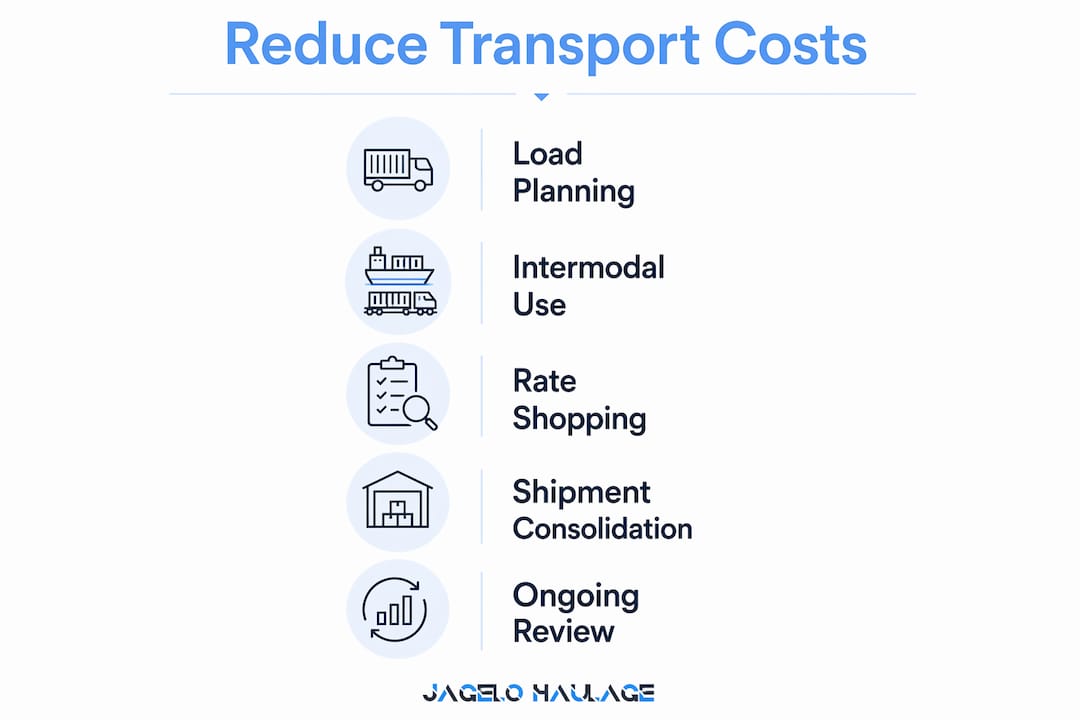
The cost advantage of intermodal over all-truck solutions is well established. Shifting from all-truck to rail and truck saves businesses 15%–30% on time-insensitive, high-volume freight. Rail is significantly cheaper per tonne-kilometre than road haulage, and that gap widens as fuel costs rise. The trade-off is transit time: rail legs add one to three days compared with direct truck delivery.
The discipline of mode arbitrage sits at the heart of intermodal planning. You assess each shipment against three variables: cost, transit time tolerance, and volume. Shipments with flexible delivery windows and high cube or weight are the strongest candidates for intermodal routing. Shipments requiring same-day or next-day delivery remain on direct road haulage.
AI-driven routing tools now perform this assessment dynamically. AI scheduling coordinates rail arrival times and truck pickups to reduce container dwell times at terminals, cutting costs and improving equipment utilisation. Shippers using these tools report logistics cost reductions of 8%–15% as of Q2 2026. That figure compounds when combined with better container utilisation.
For UK logistics managers, the practical entry point is auditing your current freight mix. Identify shipments where the consignee’s required delivery date allows a two to four day buffer. Those shipments are your intermodal candidates. Run the cost comparison against your current all-road rates and the savings case becomes visible within a single spreadsheet exercise.
How does automated carrier rate shopping lower transport fees?
Manual carrier selection is one of the most persistent sources of cost leakage in container logistics. A procurement manager reviewing rates from three or four carriers, using last month’s data, and applying judgement rather than systematic scoring will consistently leave money uncaptured. Manual carrier selection leads mid-market shippers to leave 15%–22% of annual freight spend uncaptured. That is not a rounding error; for a business spending £2 million per year on freight, it represents up to £440,000 in avoidable cost.
Automated rate-shopping platforms address this by querying multiple carrier APIs simultaneously at the point of booking. The system retrieves live rates, applies your pre-configured business rules, and presents a ranked shortlist in seconds. The business rules scoring typically covers:
- Cost: the landed rate including all surcharges, fuel adjustments, and port fees.
- Transit time: scored against the shipment’s required delivery date.
- Carrier performance: historical on-time delivery and claims rates for that lane.
- Risk filters: exclusions for carriers on credit hold or with active service disruptions.
- Volume commitments: weighting towards carriers where you have contractual volume obligations.
The ROI timeline for these platforms is short. Automated rate-shopping delivers positive ROI in 60–90 days for most mid-market shippers. The savings come not just from lower rates but from eliminating the administrative time your team spends on manual rate collection.
Pro Tip: Calibrate your scoring rules quarterly. Carrier performance data changes with seasons, port congestion cycles, and capacity shifts. A scoring model built in january will produce suboptimal results by april if it has not been updated.
One additional risk to manage: using a single carrier for over 60% of your volume creates concentration risk and exposes you to rate spikes when that carrier tightens capacity. Segmenting your invoice data by zone and service type regularly reveals zone-based surcharge overpayments that are otherwise invisible in aggregate billing.
Shipment consolidation and operational planning to cut container logistics costs
The fastest way to improve freight margins without new technology is to audit your existing network data. Logistics managers can recover 15%–20% margin by identifying empty miles and underutilised trailer capacity in their current operations. The data already exists in your transport management system or carrier invoices; the discipline is in reviewing it systematically.
Shipment consolidation is the most direct application of this principle. Combining multiple smaller consignments into a single full container load (FCL) eliminates the per-unit cost premium of less-than-container-load (LCL) freight. LCL charges include a consolidation fee, a deconsolidation fee, and a higher per-cubic-metre rate than FCL. For regular trade lanes, consolidating weekly LCL shipments into bi-weekly FCL movements typically produces a measurable cost reduction on that lane.
Predictable scheduling is equally important. Creating predictable pickup and delivery windows allows carriers to plan routes efficiently and reduces the cost premiums associated with last-minute logistics changes. Carriers price uncertainty into their rates. When you give them reliable booking windows, they treat your freight as preferred loads and price accordingly. You can read more about scheduling discipline in Jhaulage’s guide on efficient container delivery.
Practical consolidation measures worth implementing:
- Review order cycles: align purchase order frequency with shipping frequency to avoid partial loads triggered by procurement timing rather than genuine demand.
- Establish cut-off windows: set weekly or bi-weekly freight cut-off dates so warehouse teams consolidate cargo before booking, not after.
- Use a Vehicle Booking System (VBS): port-side VBS tools at Felixstowe, Tilbury, and Southampton allow you to pre-book slots, reducing demurrage and detention costs caused by unplanned arrivals.
- Audit backhaul capacity: empty return legs represent paid-for capacity going to waste. Jhaulage’s analysis of backhaul container transport in the UK outlines how to recover value from return legs.
Treating freight cost control as an ongoing discipline, with monthly reviews of lane performance, carrier utilisation, and consolidation rates, produces compounding savings over time. A single annual rate negotiation does not.
Key takeaways
Reducing container transport costs requires simultaneous action on load efficiency, mode selection, carrier rate discipline, and operational planning, not any single lever in isolation.
| Point | Details |
|---|---|
| Optimise container loading | AI load planning tools can reduce container counts by approximately one third by solving weight, sequence, and stacking constraints together. |
| Use intermodal where transit allows | Shifting time-flexible freight to rail and truck combinations saves 15%–30% versus all-road solutions. |
| Automate carrier rate shopping | Manual carrier selection leaves 15%–22% of freight spend uncaptured; automated tools deliver positive ROI within 60–90 days. |
| Consolidate shipments and plan predictably | Combining LCL into FCL and setting fixed booking windows reduces per-unit costs and eliminates last-minute rate premiums. |
| Audit network data first | Reviewing existing empty miles and trailer utilisation data is the fastest margin recovery method before investing in new technology. |
Why cost reduction is a discipline, not a destination
I have worked with logistics teams across the UK freight sector long enough to recognise a pattern. Businesses that achieve lasting container cost reductions share one characteristic: they treat freight optimisation as a continuous operational discipline, not a project with a completion date.
The common failure mode is the one-off rate renegotiation. A procurement team spends three months benchmarking carriers, secures a 10% rate reduction, and then moves on. Twelve months later, surcharges have crept back in, carrier mix has drifted towards concentration risk, and loading efficiency has reverted to manual heuristics. The savings evaporate without anyone noticing.
The harder truth is that technology alone does not solve this. AI routing tools and automated rate platforms are genuinely powerful, but they require clean, consistent data to function well. Most mid-market logistics operations have data gaps: inconsistent shipment records, carrier invoices that do not map cleanly to lanes, and load plans stored in spreadsheets rather than systems. Closing those gaps is unglamorous work, but it is the prerequisite for everything else.
What I have found actually works is integrating human expertise with analytical tools on a regular review cycle. Monthly lane performance reviews, quarterly carrier scoring recalibrations, and annual network audits create the feedback loop that keeps savings compounding. The businesses that do this consistently are the ones that still show lower unit freight costs three years later, even as market rates fluctuate.
The freight market in 2026 is volatile. Port congestion, fuel surcharge variability, and capacity shifts on key trade lanes mean that a cost structure optimised in january may need adjustment by june. Build the review cadence into your operational calendar, not just your annual budget cycle.
— Vytautas
How Jhaulage supports businesses in reducing container haulage costs
Jhaulage operates as a specialist container haulage provider serving major UK ports including Felixstowe, Tilbury, Southampton, and Liverpool. For logistics managers looking to cut shipping expenses on the road leg of their supply chain, Jhaulage offers competitive rates, reliable scheduling, and a fleet of over 40 GPS-tracked trucks and trailers that provide real-time cargo visibility.
Jhaulage’s 24/7 support and port-to-door service model means your containers move on schedule, reducing the demurrage and detention costs that erode freight budgets. Whether you need full container load haulage, same-day port collections, or a dependable partner for high-volume container movements, Jhaulage provides the operational reliability that underpins genuine container logistics savings. Contact Jhaulage to discuss a tailored haulage solution for your business.
FAQ
How much can a business realistically save on container transport costs?
Businesses applying load optimisation, intermodal mode selection, and automated rate shopping simultaneously can achieve total freight cost reductions of 15%–30% on eligible lanes. Savings vary by freight profile, volume, and current operational maturity.
What is the difference between FCL and LCL in container shipping?
Full container load (FCL) means you book an entire container for your cargo; less-than-container-load (LCL) means your cargo shares a container with other shippers. FCL is cheaper per cubic metre at sufficient volume and avoids consolidation and deconsolidation fees.
How does intermodal shipping reduce freight costs?
Intermodal shipping replaces expensive all-road haulage with cheaper rail legs for the long-distance portion of a journey. Rail and truck combinations save 15%–30% on time-insensitive, high-volume freight compared with direct truck-only routing.
What is demurrage and how do you avoid it?
Demurrage is the charge levied by a shipping line when a container remains at a port beyond the agreed free-time period, typically three to five days. You avoid it by pre-booking port slots through a Vehicle Booking System and coordinating haulage collections before the free-time window expires.
Is automated carrier rate shopping suitable for smaller logistics operations?
Automated rate-shopping platforms are available at entry-level price points and deliver positive ROI within 60–90 days even for mid-market shippers. The key requirement is consistent shipment data; without clean records, scoring models cannot rank carriers accurately.
Recommended
- How to Secure the Cheapest Container Haulage in the UK | Jagelo Haulage
- Need Container Transport? What Matters Most | Jagelo Haulage
- The Professional Guide to Cost-Effective Container Haulage in 2026 | Jagelo Haulage
- Understanding Container Transport Costs: A Comprehensive UK Buying Guide for 2026 | Jagelo Haulage