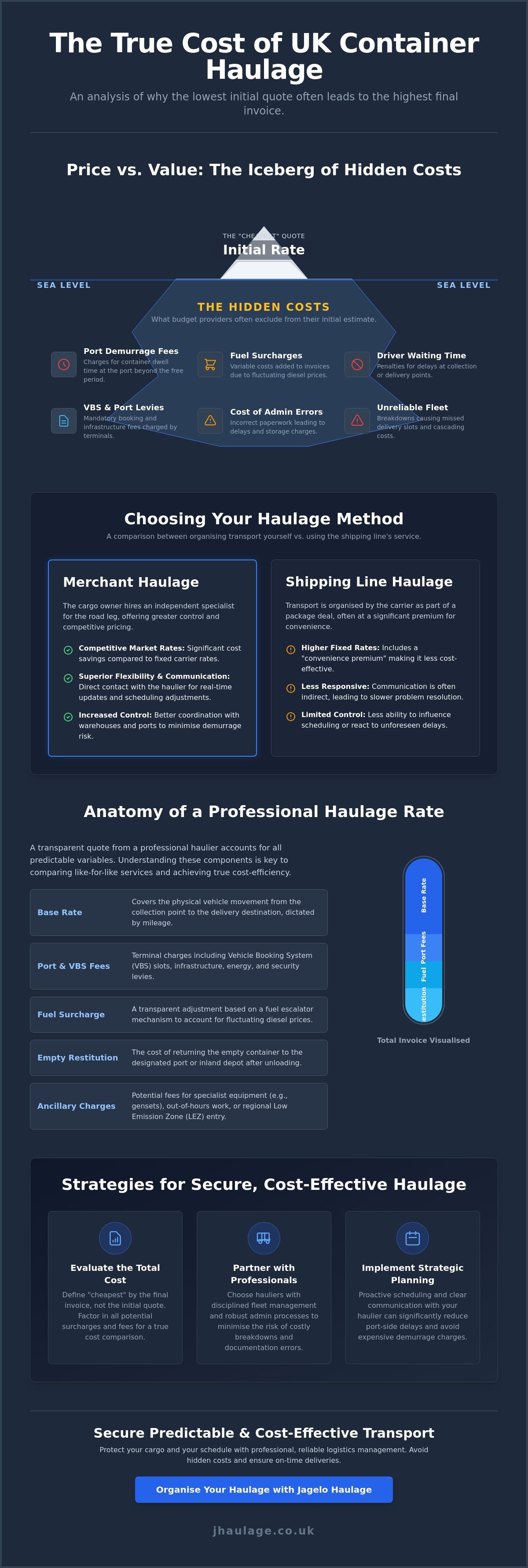
The lowest initial quote for transport often results in the highest final invoice once hidden costs surface. Whilst searching for the cheapest container haulage in the UK, many logistics managers overlook the financial impact of unpredictable fuel surcharges and hidden demurrage fees at the port. These unexpected expenses, combined with unreliable drivers who miss critical delivery windows, quickly transform a seemingly budget-friendly option into a significant operational liability.
You've likely recognised that true cost-efficiency stems from professional reliability rather than just a discounted rate. It's a matter of protecting your cargo and your schedule through disciplined logistics management. This article outlines how to secure the most cost-effective container haulage rates without compromising the security or timing of your logistics operations. We provide a structured overview of how to achieve predictable pricing, minimise port dwell time at hubs like Felixstowe or Southampton, and navigate the latest 2026 regulatory requirements, such as the Smart Tachograph Version 2 mandates.
Key Takeaways
- Define the cheapest container haulage by evaluating the total cost of the delivery cycle to avoid misleadingly low initial quotes.
- Identify the primary components of transport rates, including the critical role that empty container restitution plays in final pricing.
- Mitigate the financial risk of port-side delays by implementing strategic planning to minimise expensive demurrage and detention fees.
- Understand how professional fleet management and scheduled deliveries ensure secure, nationwide transport without compromising operational timing.
What Defines the Cheapest Container Haulage in the UK?
Container haulage refers to the professional movement of loaded or empty units from maritime hubs to their final inland destinations. This process has become the standard for global trade since the widespread adoption of Containerization, providing a structured method for transporting goods across road and rail networks. For businesses managing 2026 logistics budgets, cost-reduction has become a central priority. However, the cheapest container haulage is rarely defined by the lowest initial figure on a quote. Instead, true cost-efficiency must be measured by the total cost of the delivery cycle, including the mitigation of delays and administrative failures.
Price vs. Value: Why the Lowest Quote Can Be Deceptive
A low initial quote often serves as a baseline that excludes essential variables. It's common for budget-focused providers to omit fuel surcharges or driver waiting times from their primary estimate. These costs appear later as unavoidable additions to the invoice. Beyond the paperwork, vehicle reliability plays a massive role in the final bill. A breakdown or a missed slot at a port terminal leads to immediate financial penalties. Professional fleet management reduces these risks. High-quality operators use disciplined maintenance protocols to ensure their trucks remain operational, preventing the cascading costs of a failed delivery. Disciplined administrative processes also lower the chance of errors in port documentation, which can otherwise lead to expensive storage fees.
Merchant Haulage vs. Shipping Line Haulage
Logistics managers generally choose between shipping line haulage and merchant haulage. Shipping line haulage is organised by the carrier, often at fixed rates that include a significant convenience premium. Merchant haulage allows the cargo owner to take control of the transport process by hiring an independent specialist. This approach typically offers more competitive market rates and superior communication. Because independent hauliers focus specifically on the road leg of the journey, they provide a level of responsiveness that large shipping lines cannot match. This increased control allows for better coordination with warehouse staff and port authorities, directly reducing the likelihood of incurring demurrage charges. For those seeking the cheapest container haulage, the flexibility of merchant haulage usually provides the most sustainable path to long-term savings.
Key Factors Influencing Container Transport Rates
Standard haulage quotes consist of several distinct layers. The base rate covers the physical movement of the unit, but total costs often include Vehicle Booking System (VBS) charges, port infrastructure levies, and regional low emission zone fees. Terminals such as Felixstowe or London Gateway apply specific energy and security adjustment levies that must be accounted for in your budget. These elements are essential when calculating the customs value of imported goods. Understanding these components helps logistics managers identify the cheapest container haulage options by comparing like-for-like services rather than surface-level figures.
Empty container restitution is another significant factor in pricing. Once a delivery is complete, the empty unit must be returned to a port or a designated inland depot. If a haulier lacks a return load, the customer often bears the cost of this dead mileage. Additionally, peak season surcharges influence the market during high-demand periods. During these times, fleet availability tightens and rates typically rise across the sector. Securing the cheapest container haulage requires a partner who manages these variables through disciplined fleet planning and efficient restitution strategies.
Port Proximity and Regional Logistics Hubs
The distance from major maritime hubs to your delivery point dictates the base rate. Hauliers located near major ports often offer more competitive pricing through a port-centric logistics model. This strategy involves storing or processing goods close to the point of entry, which reduces the mileage required for the initial delivery. A provider with national reach can better utilise their fleet by matching import deliveries with export collections. This balance lowers the overall cost per mile and provides more reliable scheduling for the client.
Fuel Surcharges and Equipment Requirements
Professional UK hauliers use a fuel escalator mechanism to maintain price transparency. This system adjusts the rate based on current diesel prices, ensuring that the base quote remains stable regardless of market volatility. Equipment choice also affects the final rate. Standard skeletal trailers are the most common solution, but specialised tasks might require side-loaders or multi-functional trailers. Operating a modern, fuel-efficient fleet helps keep these long-term operational costs predictable and secure. To see how these factors apply to your specific route, you can request a transparent transport quote from an experienced logistics provider.
The Hidden Costs of Budget Logistics: Avoiding Port Fees
A common objection amongst experienced logistics managers is that selecting the cheapest container haulage often leads to disproportionate port fines. This paradox occurs because low-cost operators frequently lack the administrative infrastructure required to manage complex terminal requirements. For instance, missed Vehicle Booking System (VBS) slots result in immediate financial penalties that the merchant must eventually absorb. In an industry shaped by the findings of the Road Haulage and Passenger Transport Sector Report, operational efficiency is the only sustainable way to protect margins. Maintaining a lean supply chain requires a haulier who understands that on-time delivery is a financial necessity rather than just a performance metric.
Demurrage and Detention: The Silent Profit Killers
Demurrage and detention represent the primary hidden costs in container transport. Demurrage is a fee charged by the shipping line or port authority for units that remain inside the terminal beyond the agreed free time. Conversely, detention is the cost incurred for keeping the container outside the port for too long after collection. A disciplined haulier prevents these charges through proactive communication and precise scheduling. By ensuring that inland container haulage is executed within strict timeframes, professional operators eliminate the risk of these escalating daily fines. This level of coordination is essential for maintaining the cheapest container haulage over the long term.
Reliability as a Cost-Saving Strategy
Reliability acts as a strategic insurance policy against logistical delays. A single late delivery often triggers a domino effect, disrupting warehouse labour schedules and potentially causing missed export windows. Professional fleet management ensures that drivers follow established protocols and utilise modern equipment to avoid mechanical failures. This steadfast approach to logistics allows businesses to secure a protected outcome for their cargo. Same-day delivery capabilities are particularly vital for urgent shipments that are nearing the end of their port-free period. When a haulier understands the high stakes of the supply chain, they prioritise performance and results over simple self-promotion. This focus on the fundamentals ensures that the initial price of transport remains the final cost of the operation.
Proven Strategies to Organise More Cost-Effective Haulage
Securing the cheapest container haulage requires a transition from reactive booking to strategic planning. Logistics managers can lower their annual spend by implementing disciplined scheduling habits and consolidating shipments to maximise trailer capacity. Whilst spot-market rates might occasionally seem attractive, they lack the consistency needed for long-term budget security. Direct communication with an asset-based haulier ensures that your operational requirements are understood without the interference of intermediaries. This approach eliminates middleman margins and provides a transparent view of the total delivery cost.
Efficient Scheduling and Volume Commitments
Advanced notice is one of the most effective tools for cost reduction. Providing a haulier with 48-72 hours notice allows them to optimise their vehicle utilisation and plan restitution cycles more effectively. This lead time often results in more favourable rates than urgent, last-minute requests. You should also consider the benefits of recurring transport contracts. By committing to consistent volumes, you move away from the volatility of daily price fluctuations. In some instances, night-trunking or off-peak deliveries can further reduce costs. These schedules avoid daytime traffic congestion and take advantage of quieter periods at port terminals, ensuring that your containers deliveries remain on schedule and within budget.
Selecting an Asset-Based Partner
Many businesses rely on bidding platforms or brokers to find the cheapest container haulage, but this often leads to fragmented communication and hidden fees. An asset-based haulier owns their fleet and employs their drivers directly. This model offers superior price stability because the provider has total control over their operational costs and equipment availability. You don't have to worry about a third-party carrier rejecting a load at the last minute because they found a higher-paying job elsewhere. Knowing exactly which fleet is carrying your cargo also provides a significant security benefit. A professional, asset-based partner understands the high stakes of the supply chain and follows strict protocols to protect your goods. To secure your logistics operations with a dependable fleet, you can request a professional haulage quote that reflects your specific volume and scheduling needs.
Consolidating your requirements with a single, reliable partner simplifies the administrative process. It reduces the likelihood of errors in VBS bookings and ensures that all port-side requirements are met consistently. This disciplined approach to merchant haulage ultimately provides the most sustainable path to lowering your overall transport expenditure without risking the integrity of your delivery windows.
Jagelo Haulage: Professional Logistics for Secure, Cost-Effective Transport
Jagelo Haulage operates as a disciplined specialist in the sector of port logistics. With more than 15 years of experience in the industry, the firm understands the complex requirements of the UK supply chain. Securing the cheapest container haulage is not merely about finding the lowest initial price; it's about achieving a strategic outcome through professional management. The business maintains a modern fleet of over 40 trucks and trailers. This scale allows for consistent nationwide coverage whilst maintaining the punctuality that corporate clients expect. Every statement of capability is backed by a track record of functional reliability and a commitment to protecting your cargo.
The team prioritises the safety and efficiency of every operation. They understand that the movement of goods from maritime hubs to inland destinations requires a master of the fundamentals. By focusing on these core competencies, they provide a brand atmosphere that feels serious and highly disciplined. This approach ensures that the physical operations mirror the reliability promised in the initial quote. They don't rely on hyperbolic marketing; they focus on performance and results to build long-term stability with their partners.
A Modern Fleet Serving Major UK Ports
The capacity to manage merchant haulage from major hubs like Felixstowe and Southampton is central to the service offering. Jagelo Haulage utilises secure, well-maintained equipment to protect client cargo throughout the transit process. This commitment to equipment standards minimises the risk of operational failures that cause missed delivery windows. For shipments that are time-critical, merchants can enquire about the availability of same-day delivery services to mitigate the risk of port-side fines. Expert knowledge of port terminal procedures ensures that container collections are handled without administrative friction or unnecessary delays.
Strategic Partnership for Your Supply Chain
Jagelo Haulage functions as a strategic partner in your broader operational framework. Their disciplined, corporate approach to logistics provides a sense of quiet confidence for logistics managers. They don't attempt to disrupt the industry with trendy jargon. Instead, they focus on being a dependable partner that understands the high stakes of the supply chain. This methodical rhythm of communication builds long-term stability and trust amongst their client base. Information is presented in a structured way that moves from the broad service category to the specific logistical benefit.
Choosing a partner with a proven fleet provides the security of knowing exactly who is handling your cargo. This transparency is a key component in securing the cheapest container haulage over the long term. It eliminates the unpredictability associated with brokers and bidding platforms. You are invited to request a port haulage quote to see how professional logistics can improve your bottom line and secure your supply chain.
Securing Your Logistics Future with Disciplined Haulage
Achieving a cost-effective supply chain requires a shift from reactive spot-market booking to strategic, long-term planning. You've seen that the cheapest container haulage is defined by the total cost of the delivery cycle rather than a single initial quote. By prioritising merchant haulage and maintaining strict delivery schedules, you can successfully eliminate the risk of expensive port-side delays and administrative penalties.
Jagelo Haulage provides the professional infrastructure needed to protect your operations. With over 15 years of industry experience and a modern fleet of more than 40 professional vehicles, the team specialises in merchant haulage from all major UK ports. This asset-based model ensures price stability and reliable communication for every shipment. You can Request a Professional Container Haulage Quote today to secure a dependable partner for your inland logistics. Taking control of your transport operations is the most effective way to ensure consistent performance and financial security for your business.
Frequently Asked Questions
How is the cost of container haulage calculated in the UK?
Haulage rates are calculated by combining the base transport fee with variable factors such as the fuel escalator and Vehicle Booking System (VBS) charges. Professional operators also include regional levies, such as London's Low Emission Zone (LEZ) fees, to ensure price transparency. Securing the cheapest container haulage requires a comprehensive review of these components to avoid hidden costs that surface after the initial quote is issued.
What is the difference between merchant haulage and shipping line haulage?
Merchant haulage allows the cargo owner to select their own transport provider, whereas shipping line haulage is managed by the maritime carrier. Choosing the merchant option often provides greater flexibility and more competitive market rates. This method allows for direct communication with the driver and better coordination with warehouse operations, which is essential for maintaining a disciplined supply chain.
Can I get a same-day delivery for a container from the port?
Same-day delivery is achievable when port terminal slots and vehicle availability align. Success depends on the haulier's ability to secure a VBS booking and the proximity of the delivery destination to the maritime hub. Whilst it's a vital tool for time-critical cargo, logistics managers should check with their provider's operational team to confirm current fleet capacity before committing to an urgent schedule.
How can I avoid demurrage and detention charges at the port?
Preventing demurrage and detention charges requires precise timing and proactive fleet management. Demurrage is avoided by collecting the unit within the port's agreed free period, whilst detention is prevented by returning the empty container promptly. A professional haulier uses disciplined scheduling to ensure these windows are met, protecting the merchant from the escalating daily fines associated with logistical delays.
Does the size of the container (20ft vs 40ft) affect the haulage price?
The physical dimensions of the container do influence the final haulage rate. A 40ft unit requires a larger skeletal trailer and results in higher fuel consumption compared to a 20ft unit. Additionally, some ports apply different infrastructure levies based on the size of the box. These variables are standard across the industry and are factored into the transport quote to ensure operational costs are covered accurately.
What ports do container haulage companies typically serve?
Professional haulage companies serve all major UK maritime hubs, including Felixstowe, Southampton, London Gateway, and Tilbury. Coverage also extends to regional terminals such as Liverpool, Teesport, and Hull. A provider with a national reach can coordinate collections from multiple ports, allowing for better fleet utilisation and more consistent service for clients managing diverse import and export routes.
Is it cheaper to use a bidding site or a dedicated haulage company?
Dedicated haulage companies often provide better long-term value than aggregator bidding sites. Bidding platforms frequently result in fragmented communication and a lack of accountability if a delivery window is missed. An asset-based partner offers price stability and a disciplined approach to port logistics. This reliability prevents the expensive port fines that often accompany the supposedly cheapest container haulage found on unregulated platforms.
What insurance coverage should a reliable haulage partner provide?
A reliable haulage partner must provide comprehensive Goods in Transit (GIT) insurance and Public Liability coverage. These policies protect the merchant's financial interests in the event of accidental damage or loss during transit. Clients should request a copy of the haulier's insurance schedule to verify that the level of cover is appropriate for the value of their specific cargo and meets corporate compliance standards.