Part of our guide to container haulage from Felixstowe
Examples of Felixstowe delivery routes UK: 2026 guide
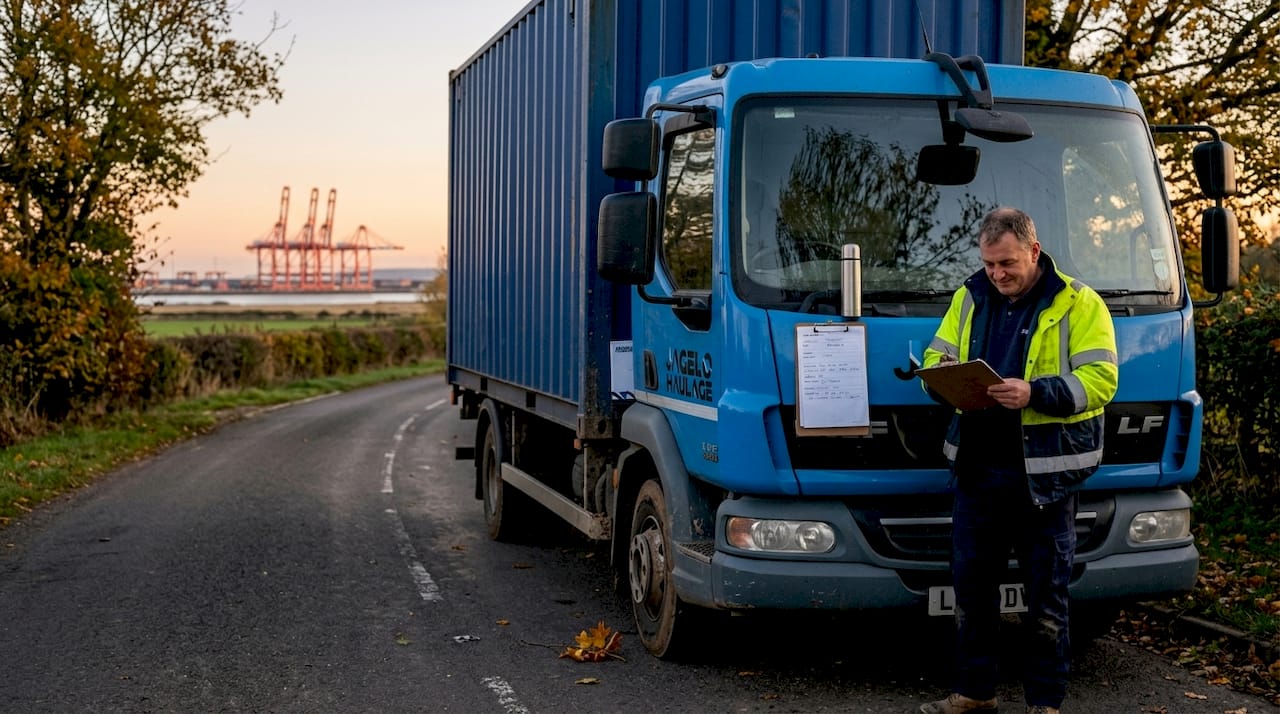
Selecting the right delivery route from Felixstowe is not a matter of simply following the nearest motorway. As the UK’s single largest container port, handling nearly 48% of the country’s total container market share, Felixstowe generates freight volumes that test even the most experienced logistics planners. Congestion, haulage type selection, driver availability, and seasonal delay risk all compound the decision. This guide sets out practical examples of Felixstowe delivery routes UK logistics teams rely on most, along with a framework for evaluating each one against your specific operational requirements.
Table of Contents
- Key takeaways
- 1. Key criteria for evaluating Felixstowe delivery routes
- 2. Routes from Felixstowe to the Midlands and Northern England
- 3. Routes from Felixstowe to London and the South East
- 4. Comparison of the main Felixstowe delivery routes
- 5. Freight transport to Northern England via rail intermodal
- 6. Practical recommendations for optimising your route strategy
- My perspective on Felixstowe route planning in 2026
- How Jhaulage supports your Felixstowe container haulage
- FAQ
Key takeaways
| Point | Details |
|---|---|
| Primary road corridors | The A14 and A12 are the two critical arteries connecting Felixstowe to the wider UK motorway network. |
| Merchant Haulage advantage | Opting for Merchant Haulage over Carrier Haulage can save 4 to 5 days during peak congestion periods. |
| Peak season delay risk | Felixstowe carries a 5 to 7 day delay risk in peak season compared to just 2 to 3 days at Southampton. |
| Rail as a viable alternative | Felixstowe’s onsite rail freight terminals provide daily intermodal services to Midlands and Northern UK hubs. |
| Multi-route resilience | Maintaining contingency routes via Southampton or intermodal rail protects supply chains during Felixstowe bottlenecks. |
1. Key criteria for evaluating Felixstowe delivery routes
Before examining specific route examples, you need a working framework for assessing which option fits your shipment profile. Not every route suits every cargo type, timeline, or budget.
The most critical factor is motorway connectivity. Felixstowe sits at the end of the A14, which feeds directly into the M6 corridor towards the Midlands and North, or branches west via the M11 toward London. The A12 provides an alternative southward corridor for South East and London-bound freight. Understanding how these motorway connections from Felixstowe interact with your delivery destination determines your base route immediately.
Beyond road access, consider these criteria when assessing your Felixstowe delivery options:
- Haulage type: Carrier Haulage (arranged by the shipping line) versus Merchant Haulage (you appoint an independent haulier) carries very different delay and cost profiles, particularly during high-volume periods.
- Congestion risk: Felixstowe receives dozens of ship calls weekly with peak arrivals concentrated mid-week, meaning port egress can slow considerably on certain days.
- Destination region: Routes to Birmingham differ materially from those serving London or Leeds in terms of distance, transit time, and driver availability.
- Cost versus reliability tradeoff: Cheaper Carrier Haulage rates may look attractive until a 5-day queue at the port gate erodes any saving.
- Seasonal planning: Pre-Christmas and post-Chinese New Year periods generate the worst congestion windows. Route and haulage type decisions made six weeks in advance can be the difference between on-time delivery and a demurrage charge.
Pro Tip: When booking freight from the Far East, request a Merchant Haulage option at the time of placing your sea freight order. Attempting to switch post-arrival is significantly harder and may not be possible with certain shipping lines.
2. Routes from Felixstowe to the Midlands and Northern England
The A14 to M6 corridor is the backbone of container haulage from Felixstowe to the Midlands and North. It is the most frequently used inland route for full container load (FCL) shipments destined for Birmingham, Manchester, Sheffield, and Leeds.
The typical sequence runs as follows. Containers depart the port via the A14 westbound, joining the M1 or M6 near Huntingdon, with journey times to Birmingham averaging 2.5 to 3 hours under normal traffic conditions. Manchester and Leeds extend that to 4 to 5 hours. This is the primary inland route for the majority of hauliers operating from the port.
Key characteristics of Midlands and North routes include:
- Distance from Felixstowe to Birmingham: approximately 145 miles via A14/M6.
- Distance to Manchester: approximately 220 miles via A14/M6.
- Known bottlenecks: the A14 between Felixstowe and Bury St Edmunds carries heavy freight traffic daily, and the M6 around Birmingham is subject to frequent peak-hour congestion.
- Merchant Haulage advantage: independent hauliers operating on specialist container routes typically move containers 4 to 5 days faster than Carrier Haulage during port congestion windows.
Rail freight is a particularly underused option for this corridor. Felixstowe operates dedicated rail terminals with daily services to Midlands and Northern UK freight depots, providing a genuine intermodal alternative when road congestion is severe or driver availability is constrained.
3. Routes from Felixstowe to London and the South East
London-bound containers follow a different routing logic. The primary option is A14 westbound to the A1(M) or M11, connecting into the M25 orbital. A second frequently used option involves the A12 south-westward, passing through Colchester and Chelmsford before feeding into East London and the M25 via the A12/A406 junction.
Distance from Felixstowe to Central London runs approximately 95 to 110 miles depending on route selection, with average transit times of 2 to 3 hours outside peak periods. This is shorter in mileage than the Midlands run, but journey times can be deceptive given the density of HGV-restricted zones and last-mile constraints in Greater London.
Pro Tip: For South East destinations, scheduling container pickups from Felixstowe before 06:00 or after 14:00 can reduce A12 and M25 congestion exposure by up to 40 minutes per journey, which is significant when multiple daily collections are planned.
South East route considerations worth noting:
- Driver availability for London routes tends to tighten sharply in pre-Christmas and pre-Easter windows due to the concentration of retail distribution in this region.
- Last-mile distribution nodes in East London, such as Tilbury and the Thames Gateway area, serve as secondary staging points for containers awaiting onward delivery into Central London or the Home Counties.
- For East Anglia destinations, the A14 and A11 provide direct access without requiring the M25, making them among the cleaner UK delivery routes examples in the entire Felixstowe logistics network.
4. Comparison of the main Felixstowe delivery routes
The table below summarises the core characteristics of the principal examples of Felixstowe delivery routes UK logistics teams manage on a regular basis.
| Route | Approx. distance | Average transit time | Congestion risk | Haulage options | Cost profile |
|---|---|---|---|---|---|
| Felixstowe to Birmingham | 145 miles | 2.5 to 3 hrs | Medium (A14/M6) | Carrier and Merchant | Moderate |
| Felixstowe to Manchester | 220 miles | 4 to 5 hrs | Medium to High | Carrier and Merchant | Moderate to High |
| Felixstowe to London (A12) | 95 to 110 miles | 2 to 3 hrs | High (M25) | Carrier and Merchant | Moderate |
| Felixstowe to Leeds | 200 miles | 4 hrs | Medium (M1) | Carrier and Merchant | Moderate |
| Felixstowe to East Anglia | 30 to 60 miles | Under 1 hr | Low | Merchant preferred | Low |
| Felixstowe to Southampton (diversion) | 185 miles | 3 to 4 hrs | Low to Medium | Merchant preferred | Moderate |
The London route appears shorter on paper but ranks among the highest for congestion risk due to M25 saturation. The Midlands corridor offers a better balance of distance, transit predictability, and haulier availability, making it the preferred choice for businesses with fixed delivery schedules. For urgent shipments, peak congestion at Felixstowe can cause gridlock severe enough to justify rerouting containers via Southampton entirely, especially when Felixstowe’s 5 to 7 day peak delay risk would breach contractual delivery windows.
5. Freight transport to Northern England via rail intermodal
For containers destined for Leeds, Sheffield, Newcastle, or Glasgow, road-only routes from Felixstowe become progressively less efficient beyond the 200-mile mark. This is where rail intermodal haulage deserves serious consideration as one of the best routes for Felixstowe freight planning.
Felixstowe’s rail terminals operate daily services connecting to inland container depots including Trafford Park in Manchester, Wakefield in West Yorkshire, and Doncaster in South Yorkshire. Containers loaded onto rail at Felixstowe typically arrive at these depots within 24 hours, after which a short-haul road leg completes delivery to the final consignee.

The cost case for rail intermodal strengthens considerably above 200 miles. Road haulage rates for Northern England routes carry a fuel and driver time premium, whereas rail rates offer a more predictable fixed-cost structure. Intermodal also reduces exposure to motorway congestion, driver hours regulations (which can limit flexibility on long-haul routes), and the risk of vehicle breakdown on extended runs.
For logistics planners reviewing freight transport routes UK-wide, the combination of Felixstowe rail access and short-haul road delivery represents a resilient and cost-competitive model that many operations still underutilise.
6. Practical recommendations for optimising your route strategy
Knowing the routes is only half the task. Applying that knowledge systematically to your operational planning is what separates reactive logistics from controlled, cost-efficient freight management.
- Establish your haulage type preference early. For time-sensitive shipments, Merchant Haulage should be the default. Carrier Haulage works acceptably for non-urgent full container loads where cost is the primary driver, but the risk of a 4 to 5 day delay during peak congestion must be factored into your planning timeline.
- Build a peak season calendar. Pre-Christmas (October to December) and post-Chinese New Year (February to March) are the two highest-risk congestion windows at Felixstowe. Booking haulage capacity at least six weeks ahead during these periods is standard practice among experienced UK logistics teams.
- Designate Southampton as a contingency port. When Felixstowe’s congestion is forecast to be severe, routing containers via Southampton reduces peak delay risk from 5 to 7 days down to just 2 to 3 days. The overland distance to Birmingham from Southampton (approximately 120 miles) is comparable to the Felixstowe route, making this a viable alternative without excessive additional cost.
- Adopt a multi-carrier delivery model. Businesses that use multiple carriers reduce both fulfilment costs and the risk of single-point failure in their distribution network. This approach also provides negotiating leverage on rate renewals.
- Integrate GPS tracking and delivery data. Real-time vehicle monitoring allows you to identify recurring delay patterns on specific route segments and adjust departure scheduling accordingly.
Pro Tip: If your supply chain relies heavily on Felixstowe, consider maintaining an active relationship with a dedicated haulage specialist who can pivot to contingency routes at short notice. The cost of that relationship is marginal compared to a demurrage bill on a delayed container.
My perspective on Felixstowe route planning in 2026
I have observed that most logistics failures at Felixstowe are not caused by road conditions or distance. They are caused by a default reliance on Carrier Haulage when Merchant Haulage would have provided both speed and control. Shipping lines are not haulage specialists. Their trucking arrangements prioritise asset utilisation, not your delivery deadline.
What I have found works consistently is treating route selection and haulage type as a single integrated decision, not two separate steps. The best routes for Felixstowe are the ones matched to your haulage model from the outset, with a fallback position already agreed before the vessel departs the origin port.
Driver shortages remain a structural pressure on the UK container haulage market in 2026, and they affect Carrier Haulage queues far more than Merchant Haulage operations, where specialist hauliers maintain dedicated driver relationships and priority booking with the Vehicle Booking System at Felixstowe. Logistics professionals who build strategic haulage partnerships now, rather than procuring spot haulage reactively, are consistently achieving better transit times and lower detention costs. That pattern will only strengthen as freight volumes through Felixstowe continue to grow.
— Vytautas
How Jhaulage supports your Felixstowe container haulage
Jhaulage operates a fleet of over 40 GPS-tracked trucks and trailers purpose-built for container haulage from Felixstowe and other major UK ports including Tilbury, Southampton, and Liverpool. Whether your freight is destined for the Midlands, Northern England, London, or the South East, Jhaulage provides flexible Merchant Haulage arrangements that bypass shipping line queues and deliver containers on your schedule, not the port’s.
The team operates 24 hours a day, 7 days a week, with bespoke route planning that accounts for congestion windows, driver availability, and contingency routing via alternative ports when necessary. For businesses that depend on Felixstowe logistics planning and need a haulage partner who treats every container as a priority, Jhaulage offers the coverage, the fleet, and the expertise to keep your supply chain moving. Contact the Jhaulage container specialists today to discuss a tailored delivery solution for your UK freight requirements.
FAQ
What are the main road routes from Felixstowe for container haulage?
The two primary corridors are the A14 westbound connecting to the M6 for Midlands and Northern England destinations, and the A12 southbound connecting to the M25 for London and South East deliveries.
When should I choose Merchant Haulage over Carrier Haulage from Felixstowe?
Merchant Haulage is advisable for any time-sensitive shipment, particularly during peak seasons, as it can reduce port delays by 4 to 5 days compared to Carrier Haulage arrangements managed by the shipping line.
Is rail freight a practical option from Felixstowe to Northern England?
Yes. Felixstowe’s rail terminals provide daily intermodal services to inland depots including Trafford Park, Wakefield, and Doncaster, making rail a cost-effective and reliable alternative for destinations beyond 200 miles.
What are the main congestion risks for Felixstowe delivery routes?
Peak season delays at Felixstowe can reach 5 to 7 days, compared to 2 to 3 days at Southampton. Pre-Christmas and post-Chinese New Year periods carry the highest congestion risk and require advance haulage booking.
Can I use Southampton as an alternative to Felixstowe for UK deliveries?
Yes. Southampton offers comparable overland distances to key Midlands destinations and significantly lower peak delay risk, making it a viable contingency port when Felixstowe faces severe congestion or gridlock.
Recommended
- How Felixstowe connects to UK motorways: 2026 guide | Jagelo Haulage
- Reliable Container Haulage from Felixstowe: A Guide to Port Logistics | Jagelo Haulage
- Reliable Container Haulage from Felixstowe Port: A Strategic Logistics Guide | Jagelo Haulage
- Container Haulage from Felixstowe: A Professional Guide to Port Logistics | Jagelo Haulage