Container seal procedures for UK logistics teams
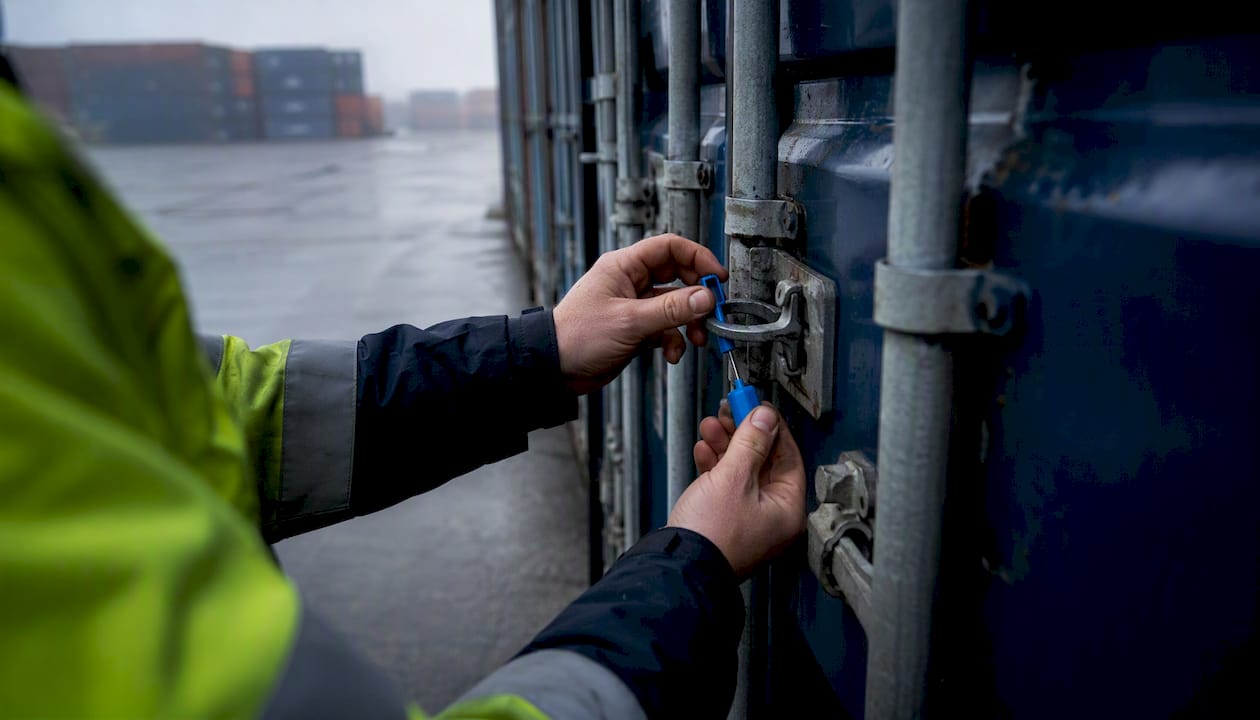
Seal every container correctly, and you do four things without exception: apply an appropriate seal, record its serial number, have a witness confirm the application, and verify that number matches at every handover. Miss any one of these and you have created a gap that no amount of GPS tracking or paperwork can close after the fact.
That single discipline sits behind two of the most cited frameworks in freight security: ISO 17712, the international standard governing mechanical container seals, and the seal procedures built into schemes like CTPAT and the VVTT method promoted by US Customs and Border Protection. Get the basics right at the point of stuffing, and everything downstream (customs clearance, carrier acceptance, insurance claims) becomes far less complicated.
Here is the checklist to run before anything else:
- Select a seal that meets the security level your contract or route demands (ISO 17712 Category H for high-risk or international moves).
- Inspect the container doors and locking bar before applying anything.
- Apply the seal to the correct locking point and have a second person witness it.
- Photograph the sealed door and record the serial number against the bill of lading immediately.
- Verify the same serial and seal condition at every subsequent handover, using the VVTT method.
We will unpack each of these in turn, starting with the seal types themselves.
Key Takeaways
Correct container seal procedures depend on applying the right seal category, witnessing its application, logging the serial immediately, and verifying that number at every handover using VVTT.
| Point | Details |
|---|---|
| Match seal to route risk | Use ISO 17712 Category H bolt seals for international and CTPAT-linked routes; reserve pull-tight seals for low-risk domestic moves. |
| Never skip the witness | A named witness at application turns your seal log from a claim into verifiable evidence during a dispute. |
| Photograph before movement | Capture the sealed door and serial before the vehicle leaves, and log it as a gate condition rather than an afterthought. |
| Run VVTT at every handover | View, verify, twist, and tug the seal at driver pickup, port, depot, and consignee receipt without exception. |
| Hold, don’t cut, on suspicion | If a seal shows tamper evidence, contain the container and photograph it rather than cutting it open immediately. |
Table of Contents
- What types of container seals are there, and when should you use each?
- What is ISO 17712, and what does the “H” marking actually mean?
- How do you apply a container seal correctly at the point of stuffing?
- How should you verify seals at each handover point?
- What should a seal log record, and how long should you keep it?
- What do customs and shipping lines expect from your seal procedures?
- What should you do when a seal is broken, missing, or shows signs of tampering?
- What tampering methods should you look out for?
- How should you choose and stock seals for your operation?
- What process controls demonstrate genuine seal security to an auditor?
- What actually keeps seal discrepancies down on the ground?
- Where to check the standards and guidance behind these procedures
- Frequently asked questions about container seal procedures
- Sources
What types of container seals are there, and when should you use each?
The seal type you choose should match the security level the shipment demands, not just what happens to be in the stores cupboard. Five types cover almost every container movement in UK freight: bolt seals, cable seals, plastic pull-tight seals, padlock-style seals, and tamper-evident security tape.
Bolt seals are the workhorse of high-security container transport. A steel pin locks into a barrel housing and typically requires bolt cutters to remove, which makes tampering obvious and slow. Most bolt seals sold for international freight carry an ISO 17712 Category H rating, and they are the default choice for any container crossing a border or moving through a CTPAT or AEO-linked supply chain.
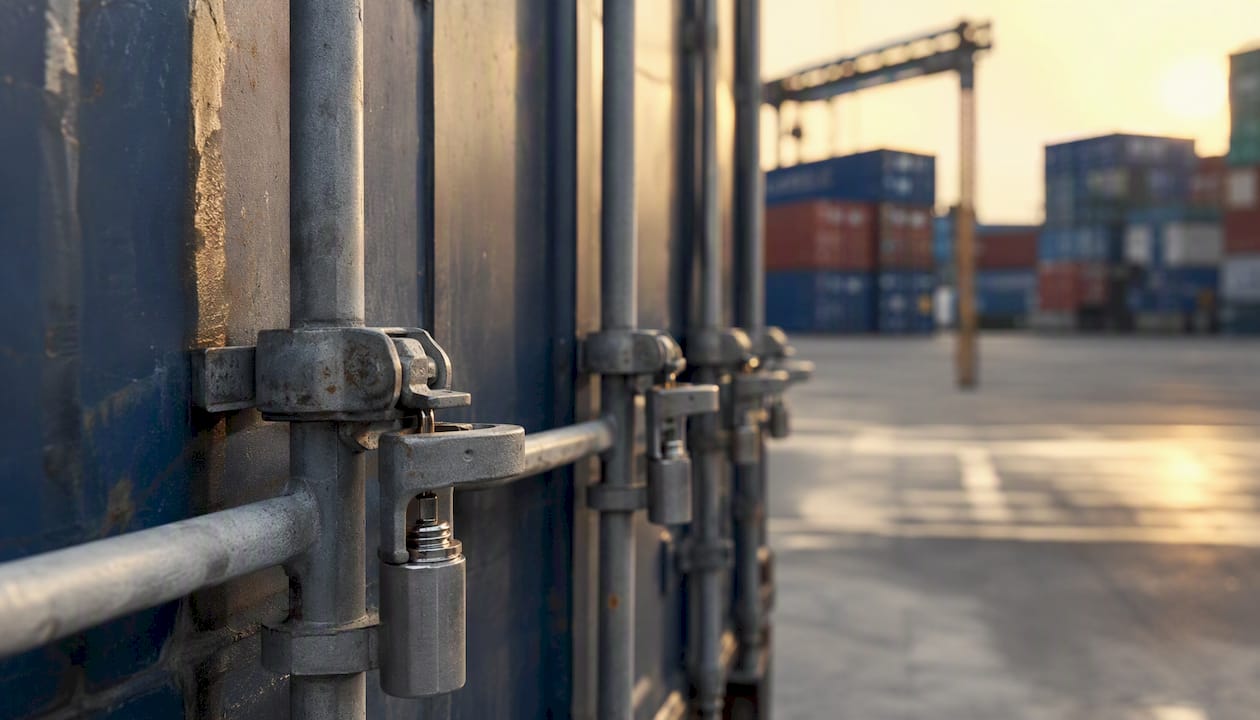
Cable seals work on the same principle but use a length of steel cable rather than a rigid bolt, which makes them useful on container doors, chassis pins, or trailer hardware with irregular geometry. They offer strong tamper resistance and are often specified where the locking mechanism does not suit a straight bolt.
Plastic pull-tight seals are lightweight, cheap, and genuinely tamper-evident in the sense that they cannot be reused once tightened, but they offer minimal physical resistance. A pair of scissors defeats one in seconds. They suit low-risk domestic moves, internal depot transfers, or situations where the contractual requirement is simply “sealed and traceable” rather than high security.
Padlock-style seals combine a numbered tamper-evident element with a reusable locking body, which makes them useful for repeat internal movements where the container itself never leaves controlled premises. They are rarely acceptable for international shipments because reuse undermines the single-use traceability that customs authorities expect.
Tamper-evident security tape is a supplementary control, not a substitute for a mechanical seal. It is most useful on secondary access points (spare wheel carriers, side doors, refrigeration unit panels) where a full mechanical seal is impractical but you still want a visible tamper indicator.
| Seal type | Security level | Tamper evidence | Ease of application | Environmental resistance | Traceability | Relative cost |
|---|---|---|---|---|---|---|
| Bolt seal | High (ISO 17712 H) | Very high, requires cutting tools | Moderate, needs correct tool | Strong against saltwater and corrosion | Excellent, unique serial and manufacturer mark | Highest |
| Cable seal | Medium to high | High | Moderate | Good, cable coating resists corrosion | Good, unique serial | Mid to high |
| Pull-tight plastic | Low to medium | Moderate, visible if cut | Very fast, no tools needed | Weak in extreme heat or cold | Fair, serial can be printed | Lowest |
| Padlock-style | Medium | Low if reused improperly | Fast | Moderate | Poor unless serial is changed each use | Mid |
| Security tape | Low | High for surface tampering only | Very fast | Poor, degrades in UV and damp | Poor, no unique serial standard | Low |
Pro Tip: Stock at least two seal types by route risk category, not by habit. Keep ISO 17712 Category H bolt seals reserved for export, cross-border, and CTPAT-linked lanes, and issue pull-tight seals only for domestic depot-to-depot moves where the contract does not specify otherwise.
What is ISO 17712, and what does the “H” marking actually mean?
ISO 17712:2013 is the international standard that sets uniform procedures for classifying, testing, and withdrawing mechanical freight container seals. If your seal does not meet this standard, most carriers and customs programmes will not treat it as evidence of an unbroken chain of custody, regardless of how tamper-resistant it looks.
The standard defines three classification levels:
- Category S (indicative seals): low mechanical strength, intended purely to show whether a container has been opened. Independent guidance summarising the standard puts the axial tensile threshold for Category S at around 1 kN minimum, which is a modest force by industrial standards.
- Category C (security seals): stronger than indicative seals but still below the high-security threshold, suited to lower-risk domestic movements.
- Category H (high-security seals): the tier that international freight and most CTPAT-aligned programmes specify. The same Lockwise guidance lists a minimum axial tensile strength of 20 kN for Category H, alongside additional side-cut and low-temperature resistance testing that Category S and C seals are not required to pass.
That gap between roughly 1 kN and 20 kN is not a rounding difference. It is the reason a shipping line will reject a pull-tight seal on a transatlantic container while accepting it on an internal depot shuttle. If your route touches a CTPAT member, an AEO-authorised operator, or a US customs entry point, Category H is generally the only realistic choice.
Confirming a seal genuinely meets Category H means checking four things on the physical unit itself. Compliance network guidance is specific here: a legitimate ISO 17712 high-security seal must carry the manufacturer’s name, a discreet “H” marking, and dual or unique serial numbers, backed by a test certificate the manufacturer or distributor keeps on file.
- Visible “H” mark, usually stamped or moulded rather than printed, so it cannot be reproduced with a label.
- Manufacturer’s name or trademark on the seal body.
- A unique serial number, often duplicated on the seal body and a tag or barrel, so tampering that removes one part still leaves a traceable reference.
- A laboratory test certificate available on request from the manufacturer or distributor, confirming the batch met Category H thresholds.
If a supplier cannot produce that certificate on request, treat the seal as unverified, no matter what marking is stamped on it.
How do you apply a container seal correctly at the point of stuffing?
Inspect the doors, select the correct seal, apply it to the secure locking point, have a witness confirm it, photograph the result, and log the serial immediately. That sequence is the entire procedure, and skipping any step is what turns a routine sealing into a disputed discrepancy three weeks later.
- Inspect the container hardware first. Check door hinges, locking bars, and the cam housing for damage, corrosion, or signs of previous tampering before you go anywhere near a seal. A seal on a compromised door is a false sense of security.
- Verify the seal’s serial number against your issue log before it goes anywhere near the container. This catches transcription errors and duplicate issues before they become a paperwork mismatch at the far end of the journey.
- Apply the seal to the correct position. Practical guidance from freight security practitioners is consistent on this: fit a bolt seal to the secure cam position where the container hardware has one, or otherwise through the bottom of the centre-most vertical locking bar on the right-hand container door.
- Perform VVTT immediately after application. View the seal for obvious defects, verify the serial matches the log, twist to confirm the locking pin is fully engaged, and tug firmly to confirm it will not release under pressure.
- Have a second person witness the application. CTPAT job aid guidance is explicit that a trained, designated person should apply the seal with a witness present wherever the operation allows for it.
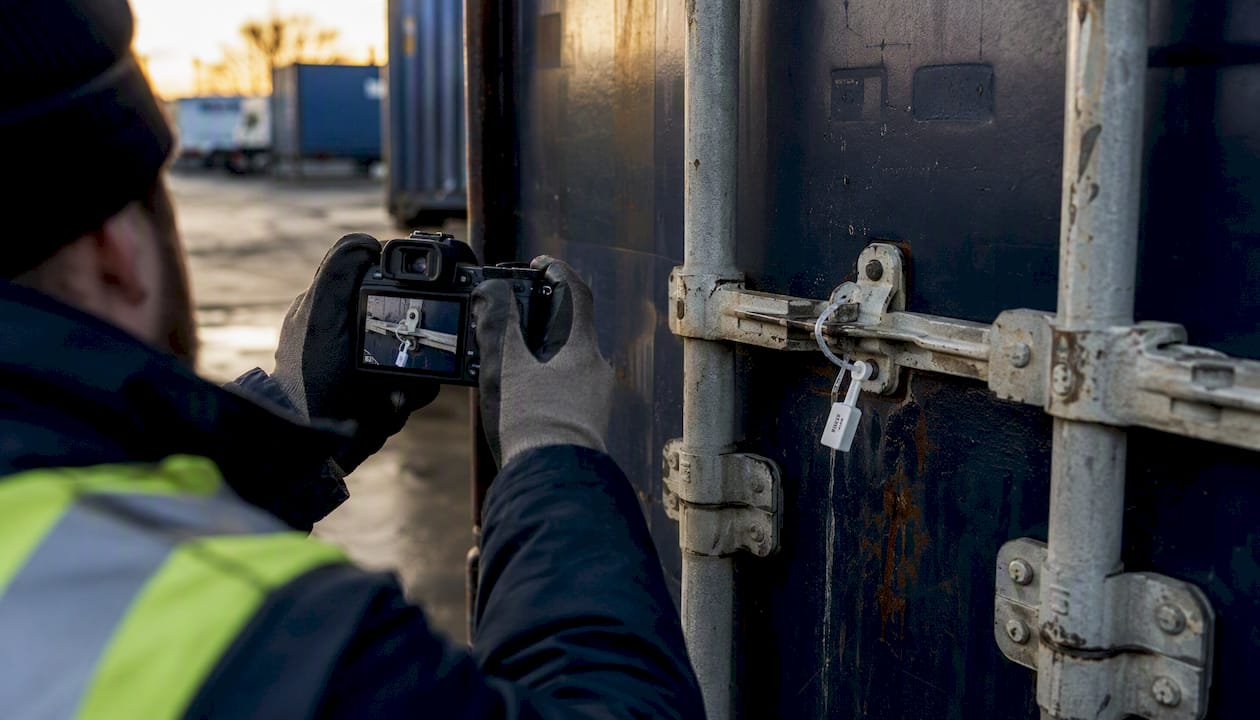
- Photograph the sealed door and the seal itself, close enough to read the serial. CBP’s own recommended procedures call for photographing the sealed door at the point of stuffing and forwarding the image electronically wherever the workflow supports it.
- Log the event immediately. Record the seal serial, container ID, date and time, the name of the person applying it, the witness’s name, and the bill of lading reference before the vehicle moves.
Handling bolt and cable seals safely deserves a mention here. Cut-resistant gloves reduce the risk of nicks when tensioning a bolt seal by hand, and a proper sealing tool (rather than pliers improvised for the job) reduces both injury risk and the chance of damaging the seal body during application. Anyone regularly loading containers should also follow the wider secure container load procedures that cover securing the cargo itself, since a well-sealed door on a badly loaded container solves only half the problem.
Pro Tip: Timestamp your photograph automatically through your logging app rather than relying on the device clock. If a discrepancy dispute ever reaches arbitration, a verifiable timestamp carries far more weight than a driver’s recollection of “about half past two.”
How should you verify seals at each handover point?
Run VVTT (View, Verify, Twist, Tug) and match the serial against the paperwork at every single handover, with a witness present whenever the operation allows for it. This is the check that catches problems while they are still cheap to fix, rather than after a container has already been unloaded three hundred miles away.
What that verification actually involves varies slightly depending on who is doing the checking:
- Driver pickup: confirm the seal serial matches the bill of lading before the vehicle leaves the yard, photograph the seal, and note any visible damage to the door or seal body in the collection record.
- Port handover: cross-check the serial against the manifest at the gate, note the time of handover, and flag any discrepancy to the terminal operator before the container is accepted into the stack.
- Depot delivery: repeat VVTT on arrival, log the result against the outbound record, and hold the container in a designated area if anything fails to match rather than proceeding to unstuff.
- Consignee receipt: the final check before the seal is broken for good. Photograph the intact seal in position before cutting it, log who removed it and when, and only then proceed to unloading.
Detailed guidance on the technique itself is worth internalising rather than rushing: view the seal for tamper marks, verify the serial character by character against the document, twist to confirm the locking mechanism is fully engaged, and tug hard enough to confirm the seal will not separate under load.
- If the serial does not match: stop, photograph the seal and container ID, and hold the unit before proceeding further in the chain.
- If the seal shows any sign of tampering (fresh scratches, mismatched font on a replacement serial sticker, glue residue): treat it as a suspected breach, not a cosmetic fault.
- If the seal is simply missing: treat this the same as a confirmed breach, not an oversight, and escalate immediately.
- Notify your operations lead, the customer, and (where relevant) the carrier or terminal before the container moves any further.
Pro Tip: Build in one last verification pass immediately before any border crossing, even if the container was checked an hour earlier at the depot. A short delay at that point is far cheaper than a rejected entry or a customs hold triggered by a mismatch discovered at the frontier.
What should a seal log record, and how long should you keep it?
Every seal issuance and removal needs a log entry capturing the serial number, timestamp, the person who applied or removed it, the witness, the location, and the related bill of lading or shipment reference. Skip any of those fields and you have created exactly the kind of gap an auditor or a disputed claim will find.
A workable log template needs these fields as a minimum:
| Field | What to record | Why it matters |
|---|---|---|
| Seal serial number | Full serial as printed or stamped on the seal | Primary reference for matching against paperwork at every handover |
| Date and time issued | Exact timestamp, not just the date | Establishes the chain-of-custody sequence if disputed |
| Issued by | Name of the person who applied the seal | Identifies accountability for the sealing decision |
| Witness | Name of the second person present at application | Supports the evidentiary value of the record |
| Container ID | Full container number | Links the seal record to the specific unit |
| Bill of lading / shipment reference | BOL number or internal shipment ID | Ties the physical seal to the commercial documentation |
| Photographic reference | File name or storage link for the application photo | Provides visual evidence independent of the written log |
Manufacturers and distributors of ISO 17712 seals are expected to maintain their own traceability records covering the batches they supply, often for several years after issue, which gives you a secondary reference point if your own log is ever challenged. Your internal log does not need to match that retention period exactly, but keeping records for the duration of your standard commercial dispute window (and any period your insurer or customer contract specifies) is sound practice.
A tool along the lines of a container transport software platform can take much of this burden off paper logs and spreadsheets, particularly for image capture and automatic timestamping across a fleet handling multiple containers a day.
Pro Tip: Reconcile your physical seal stock against the log at least monthly, not just at year-end audit time. A missing box of fifty pull-tight seals is far easier to explain (and far less alarming) if you catch it four weeks after the fact rather than eleven months later.
What do customs and shipping lines expect from your seal procedures?
Most shipping lines and customs programmes expect ISO 17712 Category H seals on international and cross-border routes, a printed seal number on the bill of lading, witnessed application, and a documented chain of custody available on request. None of that is unusual or excessive. It is the baseline that CTPAT and AEO-aligned operators are already working to, and falling short of it is one of the more common reasons containers get flagged for additional inspection.
Before a container leaves for an international leg, confirm the following with your carrier or freight forwarder:
- Which seal category the specific route or contract requires, since some lanes accept Category C while others insist on Category H regardless of cargo value.
- Whether the shipping line has a preference on seal placement or documentation format beyond the ISO 17712 baseline.
- Whether photographic evidence at the point of sealing satisfies their handover requirement, or whether they expect a physical inspection at the terminal.
- That your seal supplier can produce a current test certificate on request, since a CTPAT or AEO audit will ask for this if seal integrity is ever questioned.
Building these checks into your standard pre-shipment routine avoids the awkward situation of a container being held at the gate because the seal category does not match the line’s own contract terms. A structured compliance checklist covering documentation, seal category, and hardware condition catches most of these gaps before the vehicle even leaves the yard.
What should you do when a seal is broken, missing, or shows signs of tampering?
Do not cut a seal that shows signs of tampering. Hold the container, photograph everything in its current state, and notify your security contact, the customer, and the carrier before anyone proceeds with unloading. Cutting first and asking questions later destroys the one piece of physical evidence that might explain what happened.
When a seal genuinely needs to be removed as part of the normal delivery process, follow this sequence:
- Verify the documentation first, confirming the serial on the physical seal matches the bill of lading before you touch it.
- Photograph the intact seal in position, close enough to read the serial clearly.
- Remove the seal using the correct tool, recording the exact time of removal and the name of the person doing it.
- Dispose of the cut seal securely rather than leaving it loose in the cab or yard, since a discarded seal can itself become a source of confusion in a later audit.
- Log the removal against the same record used at application, closing out that container’s chain-of-custody entry.
Where a seal is broken, missing, or shows tamper evidence on arrival, the steps change:
- Contain the situation immediately. Do not move the container further into the yard or begin unstuffing until the discrepancy is documented.
- Photograph the seal, the door, and the surrounding area before anyone else touches the container.
- Notify your security team, the customer, the carrier, and customs where relevant, in that rough order of urgency depending on cargo value and route.
- Document the investigation as it happens, not retrospectively, including who was notified and when.
- If a replacement seal is applied after examination, record both the old and new serial numbers, photograph the replacement, and notify every party who received the original seal record.
What tampering methods should you look out for?
Cut-and-reseat, adhesive filling, seal swapping, and drilled or repainted bolts are the four tampering methods that account for most successful container breaches. Each leaves a physical trace, but only if you know what you are looking for and take the time to look properly.
- Cut-and-reseat: the original seal is cut, the container accessed, and a near-identical seal (often with a forged or reused serial) is reapplied. Look for mismatched fonts on the serial, slightly different colour tone on the seal body, or a serial that does not quite align with the issue log’s expected format.
- Adhesive filling: a small cut is made and glued or filled to disguise the breach. Look for glue residue, a seam that feels rough rather than moulded, or discolouration around the join.
- Swapped seals: an entirely different seal is substituted for the original, sometimes of the correct type but with a fraudulent serial. The tug element of VVTT is critical here, since a swapped seal that has not been correctly re-engaged will often separate under firm pressure.
- Drilled or repainted bolts: the bolt is drilled out and reinserted, or a scratched surface is repainted to hide tool marks. Look closely at the barrel housing for fresh scratches, tool marks, or paint that does not match the batch colour of the rest of the seal.
Performing the VVTT check properly means slowing down rather than rushing the twist and tug. A hurried check misses exactly the subtle signs that distinguish a genuine seal from a reseated one: a slightly different font on the serial, glue residue around the barrel, or a twist that engages just a fraction too easily.
Photographing suspected tampering matters as much as spotting it. Capture the full seal, a close-up of the serial, and a wide shot showing the seal in context on the door, and label each image with the container ID, date, and time before you send it anywhere.
How should you choose and stock seals for your operation?
Match the seal’s ISO 17712 category and physical form to the route risk, contractual obligations, and handling model, not to whatever happens to be cheapest per unit. A pull-tight seal costing a few pence saves nothing if it triggers a customs hold on a container worth tens of thousands of pounds.
Before placing an order with any seal supplier, ask for the following:
- A laboratory test certificate from an accredited testing body, confirming the exact category and model the batch was tested against.
- Confirmation that the certificate specifies the category (H, S, or C) rather than a generic “high security” claim with no underlying test data.
- Evidence of ISO 9001:2015 certification in the manufacturer’s own quality management system, where available, as a secondary signal of consistent production quality.
- A clear unique serial policy, confirming no serial is reissued or duplicated within a batch.
- The option to sample-inspect a batch before committing to a large order, particularly for a new supplier relationship.
Once seals arrive, treat them as controlled stock rather than general consumables. Store them in a locked or access-controlled area, assign issuance to named personnel only, and run a physical reconciliation against the log on a fixed schedule rather than an ad hoc one. Reviewing your wider fleet management practices alongside your seal controls tends to surface the same gaps, since both depend on disciplined, timestamped record-keeping rather than good intentions.
Pro Tip: Keep at least one spare box of Category H seals separate from daily stock, reserved strictly for replacement after an inspection or incident. Scrambling to source an emergency seal mid-shift is when corners get cut.
What process controls demonstrate genuine seal security to an auditor?
A written seal policy, secure storage, designated issuers, and a documented chain of custody are what turn a compliant-looking seal into genuine evidence of control. Auditors working to CTPAT or AEO standards are not primarily checking whether you own the right seal. They are checking whether your process would catch a problem if one occurred.
- Write a seal policy that defines access, storage, issuance, witnessing, and escalation. If this only exists as informal practice in someone’s head, it will not survive a staff turnover, let alone an audit.
- Restrict seal storage to a locked area with limited access, and record who holds keys or codes.
- Assign issuance to named, trained personnel, rather than leaving seals accessible to whoever is on shift.
- Install CCTV covering the sealing area, where practical, to provide independent evidence alongside your photographic log.
- Run periodic seal inventory audits, reconciling stock against issuance records on a fixed schedule rather than only when something goes wrong.
CTPAT job aid guidance is direct on this point: members are expected to keep written high-security seal procedures, use trained designated personnel, and document audits and incidents as a matter of course, not as a reaction to a specific problem.
| Control area | What auditors typically ask to see | Evidence to keep on file |
|---|---|---|
| Written policy | A documented seal procedure, dated and version-controlled | Current policy document and revision history |
| Personnel training | Records showing who is trained to apply and verify seals | Training log with names and dates |
| Storage and access | How seals are secured and who can access them | Access log or key/code register |
| Chain of custody | Complete log of issuance, application, and removal | Seal log matching every serial to a shipment |
| Incident history | How discrepancies were handled when they occurred | Incident reports with corrective actions taken |
Industry audit experience suggests that most seal-related non-compliance findings come from process gaps rather than the seal itself: a missing witness signature, a serial that was never logged, or stock that was not reconciled for months at a time. If a discrepancy is ever found during your own internal checks, documenting the corrective action quickly and clearly matters as much as the fix itself, since it shows an auditor the control loop actually closes.
Pro Tip: If an internal audit finds a gap, write up the corrective action the same day, not the same week. A prompt, dated response to a self-identified issue reads far better to an external auditor than a fix with no paper trail behind it.
What actually keeps seal discrepancies down on the ground?
The seal itself is rarely where things go wrong. In most cases I have looked at, the failure point sits earlier, in the moment someone decides a full VVTT check can wait because the yard is busy, or that logging the serial “in a minute” is close enough to logging it now.
That is the uncomfortable truth about container security: the hardware side is largely solved. ISO 17712 Category H seals are hard to defeat quickly and cheaply, and any operation buying certified stock from a reputable supplier has already closed off the crude attacks. What remains open is the human process wrapped around that hardware, and it is far less glamorous to fix than upgrading to a better seal.
One routine that consistently reduces discrepancies in a depot or port setting is absurdly simple: make the photograph and the log entry happen before the vehicle is allowed to move, not after. When photographing and logging is a gate condition rather than an administrative afterthought, compliance jumps sharply, because you have removed the option to defer it. Teams that treat this as optional, “do it when you get a chance,” consistently show more log gaps and more disputed handovers than teams where it is a hard stop.
The other pattern worth naming: witnessing gets skipped far more often than serial recording does. It is the easiest step to cut when short-staffed, and it is also the step that gives your log real evidentiary weight if a dispute ever escalates. A serial number without a witness is a claim. A serial number with a named witness and a timestamped photograph is close to proof.
Where to check the standards and guidance behind these procedures
- ISO 17712:2013, the core international standard defining seal classification (H, S, C) and testing thresholds. This is the document to reference when a customer or auditor questions your seal category.
- CBP Recommended Seal Procedures Including Best Practices, covering the VVTT method, log requirements, and photographic evidence guidance.
- CTPAT Job Aid on Seal Security Procedures, setting out written policy, training, and audit expectations for members of the programme.
- J. J. Keller Compliance Network guidance on ISO 17712 cargo seals, useful for a plain-language summary of marking and traceability requirements to show auditors.
Show your CTPAT or AEO auditor the written seal policy, the current seal log, and the manufacturer’s test certificate together. Those three documents, kept current and accessible, answer almost every question a compliance review is likely to raise.
Jhaulage builds these procedures into every container movement handled across UK ports, with GPS-tracked fleet operations and documented handovers from stuffing through to final delivery. If your business needs dedicated container haulage with a documented chain of custody at every stage, that is the service Jhaulage provides across major UK ports.
Frequently asked questions about container seal procedures
What is the correct procedure for sealing a container?
Inspect the door hardware, select a seal that matches your route’s security requirement, apply it to the secure cam position or the bottom of the centre-most right vertical locking bar, have a witness confirm the application, photograph the sealed door, and log the serial against the bill of lading before the container moves.
What does the “H” marking on a container seal mean?
It shows the seal meets ISO 17712 Category H, the high-security classification with an axial tensile threshold of 20 kN or above, alongside side-cut and low-temperature resistance testing that lower categories do not require.
How do you check if a container seal has been tampered with?
Run the VVTT method: view the seal for defects or mismatched fonts, verify the serial against your paperwork, twist to confirm the pin is engaged, and tug firmly to confirm it holds. Glue residue, fresh scratches, or a serial sticker that looks slightly different from the seal body are all warning signs.
What should you do if a container seal is missing on arrival?
Treat it the same as a confirmed breach. Hold the container before unloading, photograph the door and any surrounding evidence, and notify your security contact, the customer, and the carrier before proceeding further.
Do all container shipments require ISO 17712 high-security seals?
Not universally, but most international and cross-border routes, and any move touching a CTPAT or AEO-aligned supply chain, effectively require Category H seals under carrier or customs expectations. Lower-risk domestic moves may accept Category C or a plastic pull-tight seal, depending on your specific contract terms.
How long should container seal records be kept?
Retain your seal log for at least as long as your standard commercial dispute window or your customer contract specifies, and check your insurer’s requirements too. Manufacturers and distributors of ISO 17712 seals typically hold batch traceability records for several years, which gives you a secondary reference if your own log is ever challenged.
Sources
- ISO 17712:2013 - Freight containers — Mechanical seals
- Cbp
- CTPAT Job Aid - Seal Security Procedures - October 2021
- ISO 17712: everything you need to know about high-security seals — Lockwise
- Federal & State Regulations | ISO 17712 cargo seals | J. J. Keller® Compliance Network