Container arrival coordination checklist for UK logistics teams
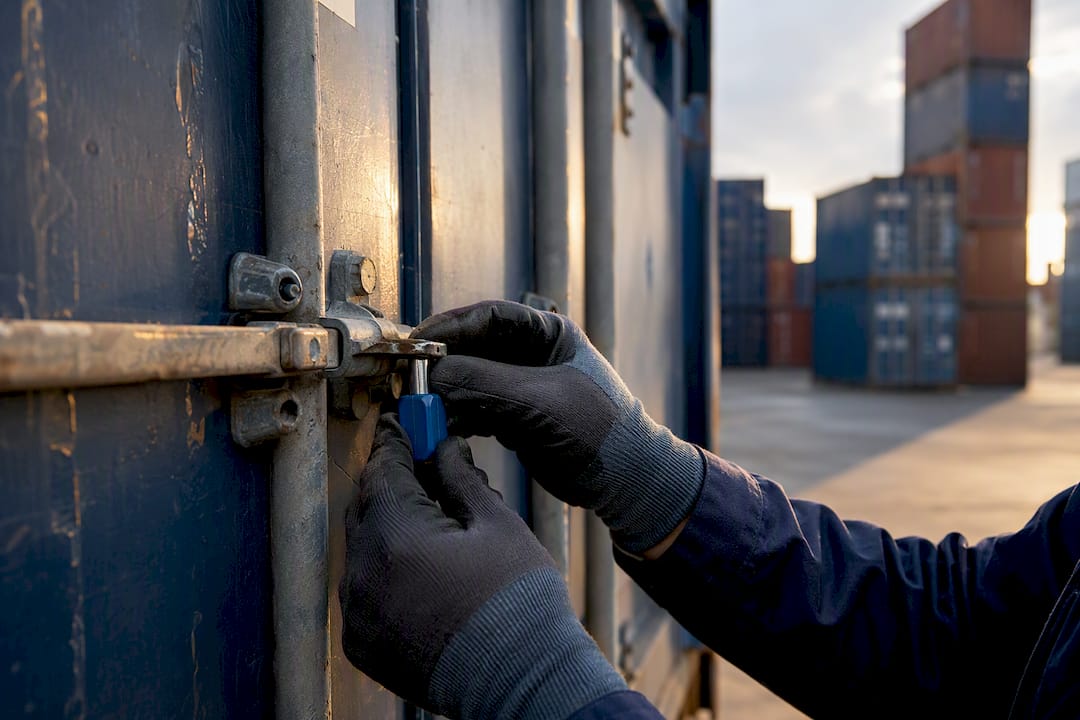
A correct container arrival coordination checklist delivers one outcome: on-time gate release, cleared customs, a haulier standing by with the right chassis, and confirmed onward delivery. Miss any one link and the whole chain stalls at the gate.
Before the vessel even berths, confirm these five things:
- Container number and seal number match the bill of lading
- Vessel ETA and terminal appointment slot are current
- Customs clearance owner is named and documentation is filed
- Haulier, chassis and driver are booked and briefed
- One single point of contact holds the whole movement
Security pre-arrival filings now run through a maritime single window at most ports, and missing that submission window is one of the fastest ways to see your box held outside the terminal before it even reaches the stack.
Key Takeaways
A disciplined container arrival coordination checklist works because it replaces reactive firefighting with a repeatable sequence covering documentation, terminal booking, haulier readiness, customs clearance and on-arrival verification.
| Point | Details |
|---|---|
| Reconcile documents early | Match bill of lading, invoice and packing list before the vessel arrives to avoid gate queries. |
| Plan against cargo-ready time | Stage hauliers around realistic exit time, not the vessel’s published ETA. |
| Confirm equipment before the slot | Check chassis compatibility, driver details and tracking are ready ahead of the appointment. |
| Name one point of contact | A single SPOC prevents conflicting updates during multi-container or group arrivals. |
| Use a tracked haulier for visibility | Jagelo Haulage Limited’s GPS-tracked fleet and 24/7 support cover chassis readiness and real-time tracking. |
Table of Contents
- Pre-arrival documentation checklist for container coordination
- How do you coordinate with the port and terminal before arrival?
- Getting your haulier and equipment ready before the appointment
- Customs clearance readiness before the container lands
- What happens on arrival: gate check-in through to delivery
- Special-cargo handling: reefers, dangerous goods and oversized loads
- Setting up a single point of contact and notification plan
- Handling delays, misroutes and demurrage exposure
- One-page printable checklist for container arrivals
- Why a disciplined checklist prevents most arrival problems
- Get container arrival support from Jagelo Haulage
- Frequently asked questions
- Sources
Pre-arrival documentation checklist for container coordination
Nothing derails a gate release faster than paperwork that does not match. Before the vessel berths, reconcile the bill of lading, commercial invoice and packing list against each other line by line. Discrepancies here are the single most common cause of terminal queries.
Your document set should include:
- Bill of lading (original or telex release, confirmed with the shipping line)
- Commercial invoice and packing list
- Arrival notice from the carrier or agent
- Cargo manifests and any certificates of origin
- Verified gross mass (VGM) evidence
- Dangerous goods paperwork, where applicable
Verify the container’s own data alongside the paper trail: container number, ISO size and type, tare and gross weight, and seal number all need to match what the bill of lading declares. Confirm the terminal appointment or gate slot, understand the release method (telex release versus original bills), and know exactly who is authorised to collect on your behalf.
Pro Tip: Assign one named document owner per shipment to reconcile invoice, packing list and bill of lading before the vessel arrives. Splitting that responsibility across three people is how mismatches slip through.
How do you coordinate with the port and terminal before arrival?
Converting an ETA into an actual gate release takes active management, not a diary entry. Track the vessel and voyage continuously. Schedules slip, and a stale ETA sent to your haulier days ago is worse than no ETA at all.
Once you have a firm date, book your terminal appointment or pre-gate slot and confirm what the driver needs to present at the barrier: photo ID, booking reference, and any terminal access credentials specific to that site. Felixstowe, Tilbury, Southampton and Liverpool each run slightly different pre-gate processes, so do not assume one terminal’s rules apply at another.
Plan your haulier’s staging time against the container’s realistic cargo-ready time rather than the vessel’s published arrival slot. Terminal throughput, discharge sequencing and customs holds routinely push the real release time hours past the scheduled arrival. Common terminal-side delays worth building contingency for:
- Release not yet lodged by the shipping line
- Gate queuing during peak discharge windows
- Chassis shortages at the terminal
Getting your haulier and equipment ready before the appointment
A booked slot means nothing if the truck, chassis and driver are not genuinely ready to move. Confirm your assigned haulier and driver by name, with a working mobile number, valid licence and tachograph hours available for the job. Check chassis compatibility against the container’s size and type before the appointment, not on arrival at the gate.
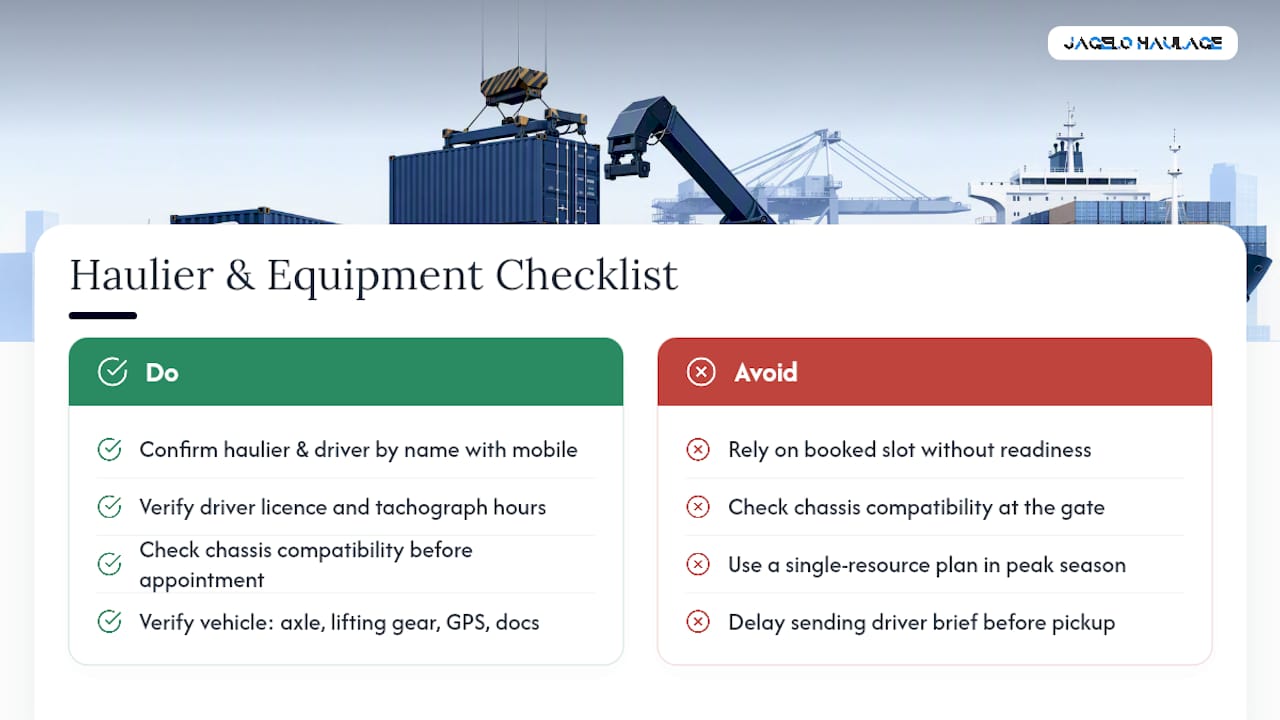
Verify the vehicle itself: correct axle configuration for the load, lifting or twistlock equipment if required, GPS tracking active, and insurance and operating documents carried on board. Send the driver a short brief covering container number, seal number, the pick-up window, terminal gate codes and who is authorised to sign for release.
Pro Tip: Stage a second haulier or spare chassis option during peak season. A single-resource plan looks efficient on paper until one truck breaks down and the whole delivery slips a day.
This is precisely where working with a tracked fleet pays off. Jagelo Haulage Limited runs GPS-tracked vehicles with 24/7 support, which means driver readiness and real-time position are visible to your operations desk without a phone call.
Customs clearance readiness before the container lands
Decide early who files the import declaration: your customs broker, the consignee, or the haulier acting under authority. Confirm EORI numbers, importer-of-record details and tariff classification are finalised well before the vessel arrives, not scrambled together on the day.
Assemble the customs package alongside your shipping documents: commercial invoice, packing list, bill of lading, relevant certificates, and any special licences for controlled or restricted goods. Submissions lodged late routinely trigger holds and physical inspections, adding days rather than hours to your timeline.
- Match bill of lading data exactly against commercial invoice figures
- Keep a running amendment log for any post-booking changes
- Flag temporary importation or bonded movements for pre-authority sign-off
- Confirm any controlled-goods licences before the container is due
Small data mismatches, a weight discrepancy or an inconsistent commodity code, are what most often pull an otherwise clean container into inspection. A quick reconciliation pass against your document owner’s checklist catches most of these before they cost you a day.
What happens on arrival: gate check-in through to delivery
- Driver checks in at the gate with ID, booking reference and release documents
- Terminal staff verify container and seal numbers against the booking
- Pre-delivery inspection confirms condition, with any discrepancy logged immediately
- Chassis swap completed if the terminal requires it
- Delivery route confirmed, checking low-bridge and weight restrictions
- Recipient contacted ahead of arrival for a smooth handover
At handover, capture the essentials: seal number recorded, photographic evidence of container condition, a signed delivery note, and a quick inventory spot-check where the cargo allows it.
- Driver ticks off: ID presented, release confirmed, seal matched, photos taken
- Dispatcher ticks off: delivery window held, recipient notified, documents filed
Special-cargo handling: reefers, dangerous goods and oversized loads
Reefer containers require power confirmation during terminal dwell, a pre-trip check of set points, and a temperature log to accompany the container throughout transit. Establish who runs power during any holding period before the truck arrives.
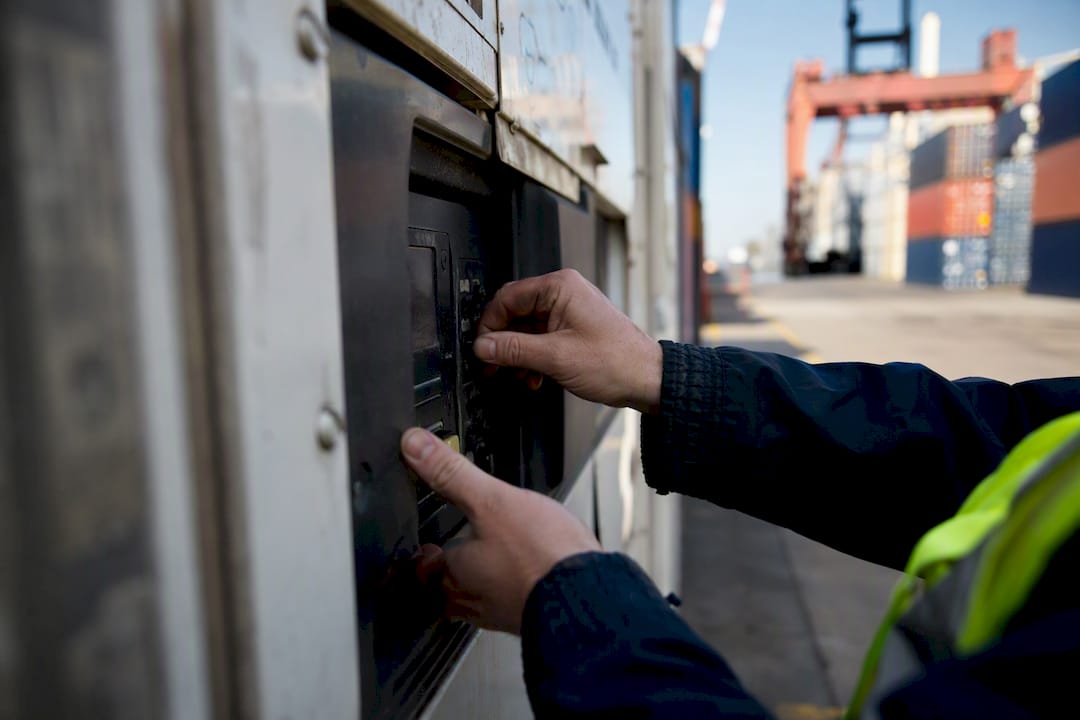
Dangerous goods require IMDG-compliant documentation, correct placarding, UN numbers on file and personnel trained to handle the classification. Terminals often apply additional segregation rules for hazardous cargo, so confirm these ahead of the appointment rather than at the gate.
Out-of-gauge and heavy-lift containers require a method statement, suitable lifting equipment, and necessary route permits, possibly including police escort for oversized moves. Match trailer type (spreader beam, tail lift) to the cargo before booking.
Pro Tip: Always confirm the terminal’s special-handling window in advance. Reefer plug-in bays and OOG lanes are limited resources, and turning up without a booked slot means queuing behind cargo that planned ahead.
Setting up a single point of contact and notification plan
Multi-container or group arrivals fall apart without one named decision-maker holding the full picture. Assign a single point of contact (SPOC) for the movement, backed by secondary contacts for the broker, carrier, terminal and consignee.
Build a simple notification matrix:
- ETA changes go to SPOC, haulier and consignee
- Pre-gate confirmation goes to driver and dispatcher
- Arrival and collection confirmation goes to consignee and SPOC
- Exception alerts go to SPOC and operations manager immediately
Keep message templates short: “Container [number] cleared, gate slot confirmed for [time], driver [name] en route.” Set escalation rules with clear SLAs, when a delay of more than two hours triggers a call to the operations manager, for example, rather than another email. A single shared tracking document beats scattered group chats every time; fragmented channels are how updates get missed.
Handling delays, misroutes and demurrage exposure
Build a short decision tree for the contingencies that come up most often: vessel delay, missing release documentation, a hold for inspection, container damage, or a chassis shortage at the gate.
- Vessel delay: update SPOC and haulier immediately, rebook gate slot
- Missing release: escalate to broker or shipping line within the hour
- Inspection hold: request timeline from terminal, notify consignee of revised delivery
- Chassis shortage: mobilise secondary haulier resource
- Container damage: photograph, log seal number, open claims file same day
Limit demurrage and detention exposure by pre-booking short-term storage where a delay looks likely, and by pushing customs action forward rather than waiting for the deadline. Keep photo evidence, seal logs and a minimal claims checklist ready so any dispute has a paper trail from day one.
One-page printable checklist for container arrivals
Copy this into your operations template or TMS for daily use:
- Container no. / Seal no. / Bill of lading ref
- Terminal slot / Gate access code
- Driver name / Driver mobile / Chassis ID
- Delivery window / Recipient contact
- SPOC name and number
A short prompt worth pasting straight into driver messages: “Container [no.], seal [no.], gate slot [time], chassis [ID], deliver to [address] by [window]. Contact [SPOC] for any change.” For shipments moving with Jagelo Haulage, add the fleet tracking reference so the consignee can follow progress without a phone call.
Why a disciplined checklist prevents most arrival problems
Most container delays trace back to reactive management, not to genuinely unpredictable events. A vessel slipping a day is normal. A missing seal number discovered at the gate is not; it is a checklist failure, not bad luck. Disciplined procedures replace guesswork with a repeatable sequence.
Fleet GPS tracking and 24/7 support only earn their keep when they sit on top of a process that already knows what “on time” means. One recurring failure worth naming: teams that assign a haulier but never confirm chassis compatibility until the truck reaches the gate, then lose half a day sourcing the right equipment. A checklist that forces that confirmation a day earlier removes the failure entirely.
Get container arrival support from Jagelo Haulage
Running this checklist well takes a haulage partner who can actually own the parts that go wrong most often. Jagelo Haulage Limited operates a GPS-tracked fleet of over 40 trucks and trailers across Felixstowe, Tilbury, Southampton and Liverpool, with 24/7 support covering pre-gate booking, chassis availability and driver readiness.
We can take direct ownership of the haulier and equipment readiness sections of your checklist: confirming chassis compatibility, briefing drivers with your container and seal details, and providing real-time position updates so your SPOC never has to chase a status call. Same-day mobilisation is available where timelines run tight, and our team handles refrigerated, oversized and dangerous-goods loads as standard.
If you have a container due, get in touch through Jhaulage for a quote, and attach your one-page checklist so we can confirm haulier and chassis availability against your gate window straight away.
Frequently asked questions
What is a container arrival coordination checklist? It is the set of pre-arrival, terminal, haulier and customs confirmations that together guarantee a container clears the gate, gets released, and reaches its delivery point without avoidable delay.
How early should I start pre-arrival documentation checks? Start reconciling your bill of lading, invoice and packing list as soon as the booking is confirmed, and finalise them before the vessel’s estimated arrival to leave time for corrections.
Who should own customs clearance on a container arrival? Name the filer, broker, consignee or haulier under authority, before the vessel arrives, and confirm EORI and classification details are already finalised rather than left until the gate.
What causes most container arrival delays? Missing or mismatched documentation, unconfirmed chassis availability, and late customs submissions account for most avoidable holds, rather than genuine vessel scheduling problems.
Does Jagelo Haulage handle special cargo like reefers or oversized containers? Yes. Jagelo Haulage Limited handles refrigerated transport, dangerous goods and out-of-gauge containers alongside standard full container load haulage across major UK ports.
Sources
- Vessel Pre-Arrival Documentation: Port Requirements and Compliance Checklist
- Container shipping documentation checklist: bill of lading, ISF and customs forms
- Container shipment checklist before export | Expert guide