Part of our guide to container haulage from Tilbury
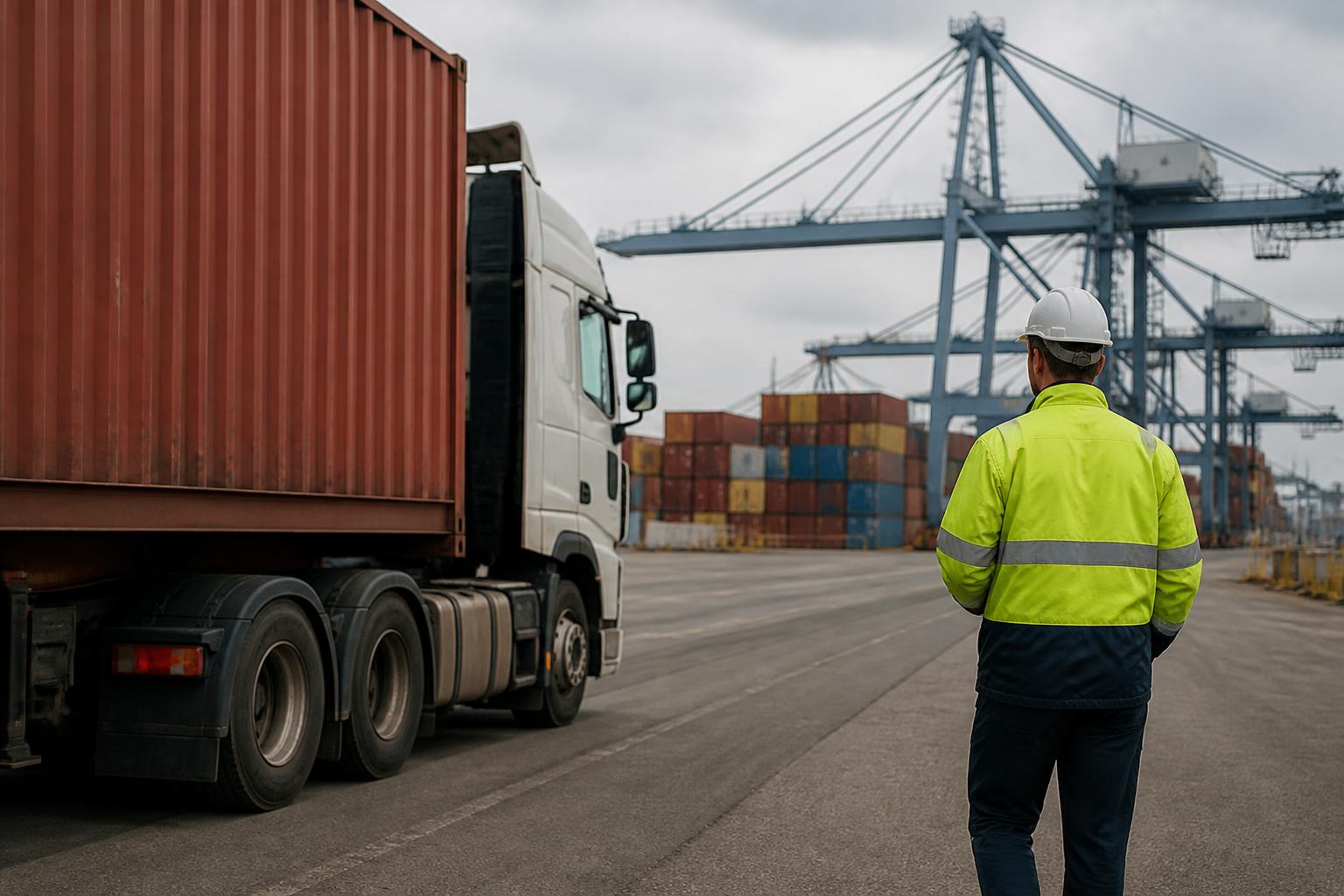
If a container is available on paper but the Tilbury slot is booked at the wrong time, or booked before the release and customs position are actually clear, the collection is exposed. That exposure shows up in very practical ways: a wasted run, a missed slot, a box rolling into storage, a driver turned away, or a delivery that no longer fits the warehouse plan. In other words, the risk around a Tilbury collection is usually not the drive itself. It is the booking decision that sits in front of it.
At Jagelo Haulage Limited, we treat the port booking as part of the haulage job, not as an admin step to do at the last minute. For importers, forwarders and customs agents using merchant haulage, the point is simple. A good Tilbury booking is one that matches the release, customs status, container details, road limits, driver availability and delivery readiness on the same timeline.
What people usually mean by Tilbury VBS
When people say Tilbury VBS, they usually mean the port vehicle booking process for collecting an import container. The wording varies because older habits stay in the trade long after systems change. Some people still ask whether a haulier can "get a VBS", when what they really need to know is whether a collection slot can be secured in the port booking platform and whether the container will actually pass through the gate process without a problem.
At Tilbury, that conversation is really about the slot booking process, not just the slot itself. A booked time in CARGOES VBS or another port-facing workflow does not by itself make a container collectable. It only reserves a window for the vehicle movement. The box still needs to be released by the line or terminal, customs-cleared or correctly routed, and matched to a delivery plan that works once the unit is on the road.
That is why we do not treat Tilbury VBS as a separate subject from haulage planning. If the container is FCL, the release trail may be straightforward, but the timing can still be wrong if customs status is pending or the consignee cannot receive the unit that day. If the cargo is moving after deconsolidation or linked to an LCL process, the booking risk may sit elsewhere, but the same principle applies. The collection only works when the booking, the paperwork and the delivery plan line up.
Readers also use the term because they are trying to solve a specific operational problem. They want to know whether the container can be collected today, whether a later slot will trigger cost, or whether the haulier will spot the risk early enough to avoid losing a day. We cover that same-day question in more detail in our guide to whether your container can be collected from Tilbury today.
What has to be in place before a Tilbury slot can be booked
Before we book a Tilbury slot, we want the operational basics confirmed. The first is release. That means the container must be released to the collecting party in the relevant system, with any shipping line holds lifted. If the line still shows a financial hold, document hold or release not yet transmitted, booking a slot too early just creates a likely rework.
The second is customs status. In the UK, the import position must be suitable for removal from the port. That may mean customs-cleared, correctly pre-lodged, or otherwise authorised for movement depending on the procedure used. Where a shipment is selected for examination or still sits under a customs hold, a slot booking does not solve the underlying issue. It only creates the chance of a failed collection if the hold is not lifted in time. UK port practice and UK customs processes are not simply a copy of EU general practice, so the exact route matters. We check what applies to the actual entry, not what would usually happen elsewhere.
The third is container identity and equipment detail. We need the correct container number, size and type, and we need it early. A 20ft ISO Container, 40ft ISO Container, 45ft ISO Container or Refrigerated Container does not move under the same road assumptions. Weight distribution, trailer selection, route viability and delivery handling can all change. The same applies if the box is a non-standard height, if the seal position matters for a receiving site, or if the terminal record needs checking against the paperwork.
The fourth is haulage instruction quality. A workable booking instruction should tell us where the container is going, what the receiving hours are, whether tipping or live unload is planned, whether the site has booking requirements of its own, and whether there are any restrictions on vehicle type. For merchant haulage, this is where many avoidable problems start. A slot can be booked against incomplete delivery information, but the risk only becomes visible later, when the driver is already committed and the warehouse says the unit cannot be accepted.
The fifth is delivery readiness. We need to know the consignee can receive the container on the intended day and within the intended time. If the goods are not ready to be unloaded, if labour is not booked, or if the site lacks the right handling equipment, collecting too early can be as costly as collecting too late. This matters especially where the consignee wants the container dropped and devanned later, or where quay to premises movement involves specific handling or regulated cargo conditions.
We also check for road and cargo exceptions. If the gross weight is likely to push the move outside standard road assumptions, the slot decision has to be made with the road leg in mind. An overweight import can be available at the port and still not be collectable in practice without the right planning. We cover that in more detail in our article on Tilbury overweight container haulage without avoidable delay.
How slot timing affects free time, demurrage and storage
The timing of the port booking affects cost because free time is not a single concept. Importers often refer to "free days" as if there were one clock, but in practice the shipping line and the terminal may be measuring different exposures. Depending on the line and the contract, you may be watching demurrage on the container equipment, storage at the port, or both.
A common mistake is to book the first available slot simply because the release appears to be in place. If customs is still uncertain, or the delivery site is not ready, that early booking can fail. Once the attempt is missed or reworked, the next available slot may be outside free time. The problem is not that the first slot was unavailable. It is that it was booked without enough confidence that the box could actually move.
The reverse mistake is waiting too long for a "perfect" delivery plan and allowing the container to sit when a workable slot was available within free time. That can happen when no one takes ownership of the whole timeline. The line says the box is released. The customs agent says the entry is submitted. The warehouse says tomorrow is easier. Then the next day becomes the first day of storage or the last safe day before demurrage escalates.
This is where a haulier should be reading the booking decision against the free time position, not just against driver availability. If the release is good and customs is clear, the right question is whether we can collect on a slot that protects cost and still deliver into a site that is genuinely ready. If not, we should say so early.
For us, that means we do not separate slot booking from risk reporting. If a container is approaching the end of line free time, or if terminal timing is tightening, we flag it. If the delivery constraints make collection on the last free day unrealistic, we say that as well. A customer can then decide whether to accept the likely charges, change the delivery plan, or prioritise the collection.
The same principle applies across Tilbury, Felixstowe, London Gateway, Purfleet, Southampton and Liverpool, although the operational feel differs by port. The booking systems may not be identical, and the available windows may move differently through the day, but the commercial risk is the same. Free time is only useful if the container is actually collected within it.
Why Tilbury collections fail or have to be reworked
Most failed or reworked Tilbury collections come from a short list of causes.
The first is release not actually in place. Someone has been told the container is "good to go", but the shipping line system still shows a hold or the release has not flowed through correctly. The truck arrives and cannot proceed.
The second is customs status not matching the collection plan. An entry may be submitted but not yet accepted in the way required for removal. A documentary or physical intervention may still be live. Sometimes the issue is not that customs has stopped the box, but that the parties have assumed customs is finished when it is not.
The third is incorrect or incomplete container data. A wrong container number, a size mismatch, a missing PIN or reference, or confusion between units can all force a rebook. This is basic, but it still happens regularly, especially when instructions are copied through several parties.
The fourth is road weight reality appearing too late. A box may be technically available at the port but not safely or legally moveable on a standard plan. That is common with dense cargo in a 20ft ISO Container, but it can affect other equipment too. If the verified weight, packing pattern or commodity detail is poor, the problem may only become visible after the slot has been taken.
The fifth is delivery site failure. The warehouse changes receiving hours, refuses the vehicle type, lacks labour, or asks for a separate booking that no one mentioned. The container could have been collected, but not delivered as instructed, so the movement has to be rebuilt.
The sixth is simple timing drift. The release comes through later than expected, the queue position changes, traffic extends the road leg, or the available slot no longer fits the planned unloading time. This does not mean the system has failed. It means the collection needed active management and did not get it.
Importers, forwarders and customs agents reduce these risks by doing three things consistently. First, send complete instructions early, including delivery constraints and any special cargo point. Second, make one party responsible for confirming release and customs status before the booking is treated as firm. Third, use a haulier that will challenge weak assumptions instead of just taking the job and hoping the port run works. Our wider approach to this is set out in how UK container haulage avoids port cost and delay.
How a haulier should manage a Tilbury collection
Good merchant haulage at Tilbury starts before the slot is booked. We review the release position, customs status, container details, delivery address, site readiness and likely road constraints together. If the move involves standard laden import work, we plan it that way. If it does not, we say so before the booking is locked in. Some loads stop being routine road haulage once the weight, dimensions or cargo conditions are properly understood, and the collection plan has to reflect that.
Once the booking window is identified, the slot should be taken in a way that gives the best chance of a clean collection and delivery, not just the earliest possible gate time. That means matching the port time to the delivery booking, checking whether the receiving site can accept the container within the legal driving day, and making sure the trailer and driver plan suit the unit.
After booking, the job still needs active control. We monitor whether the release remains valid, whether customs status changes, and whether the customer has altered the delivery plan. If a box is at risk of missing free time, we tell the customer early. If the container cannot move on the planned day because the release is not through, we say that before a vehicle is wasted.
This matters even more when volumes rise or timings compress. We run 40 vehicles and 40 trailers of our own on operator licence OF2023521, and we add vetted partner hauliers on their own operator licences when extra volume needs covering. That matters operationally because booking a slot is only useful if there is real transport capacity behind it. Since 2019 we have moved more than 75,000 containers, mainly as merchant haulage for importers and forwarders, so our process is built around exactly these timing and availability issues.
A properly managed Tilbury collection also means understanding the cargo itself. We move ISO containers across Great Britain from Tilbury and other major ports, including standard dry boxes and specialist equipment. Where the load involves regulated material, waste status, animal feed in containers or Category 3 animal by-products, the road plan has to fit the compliance position as well as the booking window. We are an upper tier waste carrier and dealer, CBDU471791, and APHA registered for the relevant quay to premises movements, so those checks sit inside our normal planning, not outside it.
Finally, a good haulier does not go quiet when the job becomes awkward. If the slot options are poor, if the free time is too tight, or if the delivery plan is not realistic, we tell the customer what the risk is while there is still time to change it. That is the difference between simply entering a booking in a Container Booking System or CBS and actually managing the collection outcome.
At Jagelo Haulage Limited, that is what we mean by handling a Tilbury collection properly. The booking is important, but the real job is making sure the container can leave the port, travel legally and arrive when the consignee is ready. If those parts are aligned, the Tilbury VBS question becomes routine. If they are not, the slot is where the risk starts to show.
Is Tilbury VBS the same as Felixstowe CBS?
No. At Felixstowe, the Container Booking System (CBS) replaced the Vehicle Booking System in January 2025. Tilbury collections have their own booking process, so the checks and timings are not identical.
Can a haulier book the Tilbury slot for me?
Yes, under merchant haulage that is normally part of the job. The haulier still needs the release, customs clearance status, container details and delivery instructions in time to make a workable booking.
What usually stops a container being collected from Tilbury?
The common issues are missing release, customs holds, incorrect container or reference details, booking data mismatches, and delivery instructions arriving too late to use free time properly.
When should I send a Tilbury collection order?
As soon as the shipment is firm enough to plan. Early notice gives more room to line up release, customs status, slot availability and delivery timing before free time starts to tighten.
Does Tilbury slot booking affect demurrage risk?
Yes. If the slot is booked too late, or has to be rebooked because paperwork is not ready, the container can run into the shipping line's free time and create demurrage exposure.