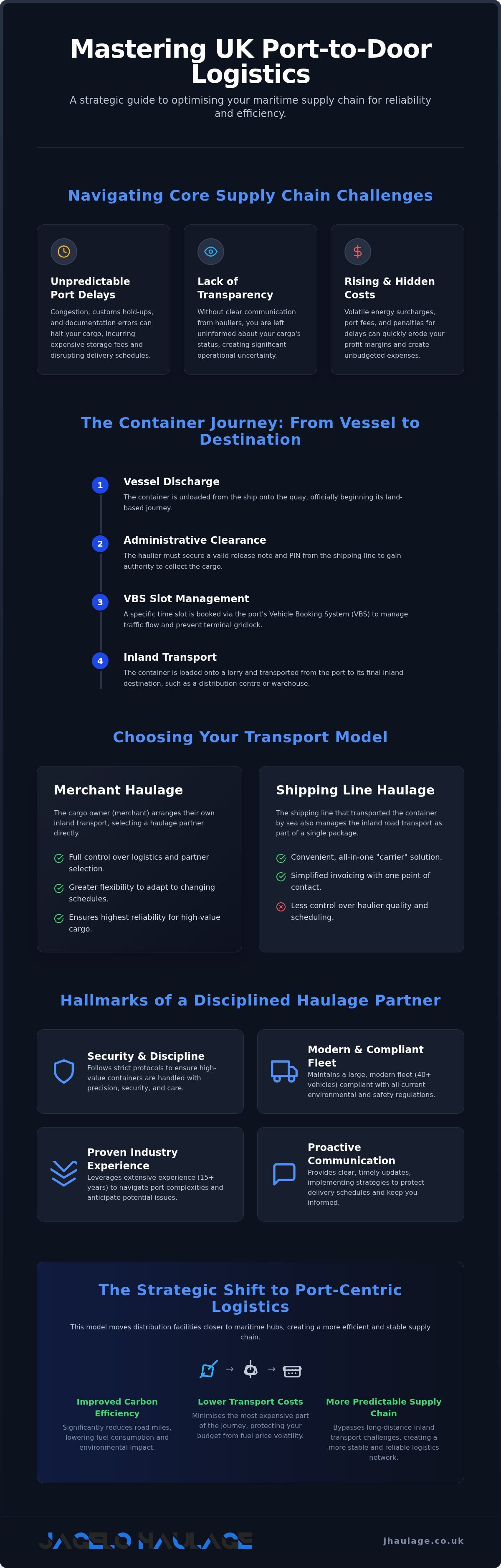
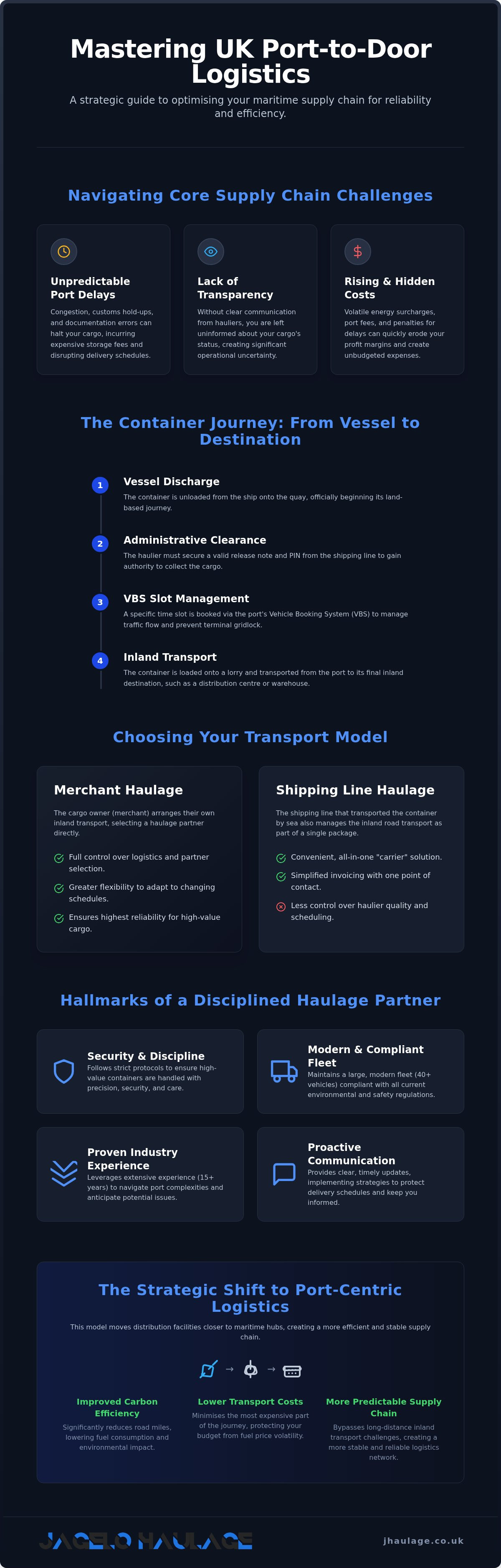
Professional road haulage is the critical linchpin of the maritime supply chain. Without a disciplined and highly organised fleet, your cargo's journey effectively fails at the final mile. You likely recognise that unpredictable port delays and a lack of transparency from haulage providers create significant operational risks. Managing the complexities of UK port logistics services becomes even more challenging when you balance merchant haulage against shipping line options amidst rising energy surcharges and the Border Target Operating Model. This friction often results in lost time and unbudgeted expenses that erode your bottom line.
This strategic guide helps you master port-to-door transport with expert insights into optimising your supply chain for 2026. We'll show you how to secure seamless container collection and fixed-cost reliability for your high-value cargo. You'll gain a clear understanding of the current landscape, from the latest infrastructure charges to the necessity of professional handling. This article provides the methodical structure required to transform your logistics from a source of uncertainty into a stable, strategic asset that supports your long-term business objectives.
Key Takeaways
- Understand how professional UK port logistics services act as the vital link between maritime hubs and inland distribution centres to maintain supply chain momentum.
- Master the essential documentation requirements, such as release notes and PINs, to ensure seamless container collection and avoid expensive port storage fees.
- Evaluate the strategic differences between merchant and shipping line haulage to determine which transport model offers the best control and reliability for your cargo.
- Identify common bottlenecks like customs hold-ups and port congestion to implement proactive communication strategies that protect your delivery schedules.
- Learn the criteria for selecting a disciplined haulage partner with a modern fleet and the operational expertise required to handle high-value containers safely.
The Critical Role of Port Logistics Services in the UK Supply Chain
Port logistics involves the integrated movement of goods from maritime hubs to inland distribution centres. The efficiency of the entire UK supply chain depends on seamless port-to-road transitions. When a container arrives at the quay, the speed of its transfer to a haulage vehicle determines the health of the broader network. Professional UK port logistics services are essential for reducing port dwell times. Efficient transport prevents the accumulation of extra fees, such as storage charges and delay penalties, which have risen significantly in 2026. A disciplined approach ensures that cargo doesn't sit idle, protecting the liquidity of your inventory and the reliability of your delivery promises.
Modern logistics providers prioritise security and operational discipline above all else. In an era of increased scrutiny and new regulatory models like the Border Target Operating Model, consistency is vital. Professional hauliers understand the high stakes of the supply chain. They follow strict protocols to ensure that every container is handled with precision. Jagelo Haulage leverages 15 years of industry experience to navigate these complexities, ensuring that our UK port logistics services provide the punctuality required for nationwide operations. This level of competence provides a sense of security for operators who require a dependable partner to manage their most valuable assets.
Understanding Port-Centric Logistics
The industry is seeing a significant shift towards port-centric logistics. This model moves processing and distribution facilities closer to major maritime hubs. By situating warehouses near the coast, businesses reduce the number of road miles required to move goods. This improves carbon efficiency whilst lowering transport costs. Jagelo Haulage supports these integrated networks through specialised container haulage. Our role as a strategic partner involves providing the reliable capacity needed to move goods from the vessel to these nearby centres without friction. This strategic outcome allows operators to bypass the volatility of long-distance inland transport, creating a more stable and predictable supply chain.
The Evolution of Container Transport in the UK
Containerisation has standardised global trade, but it's also increased the pressure on HGV capacity. To meet current environmental and safety standards, fleet modernisation is no longer optional. A modern fleet of over 40 vehicles ensures that transport remains consistent and compliant with 2026 regulations. Port logistics represents the strategic management of containerised goods through the UK port infrastructure, serving as a vital component of national infrastructure by connecting global maritime routes to domestic road networks. This evolution reflects a business philosophy that values performance and results over simple service delivery. It positions the haulier not just as a transport provider, but as a disciplined guardian of the supply chain.
Navigating Port Operations: From Vessel Discharge to Inland Transport
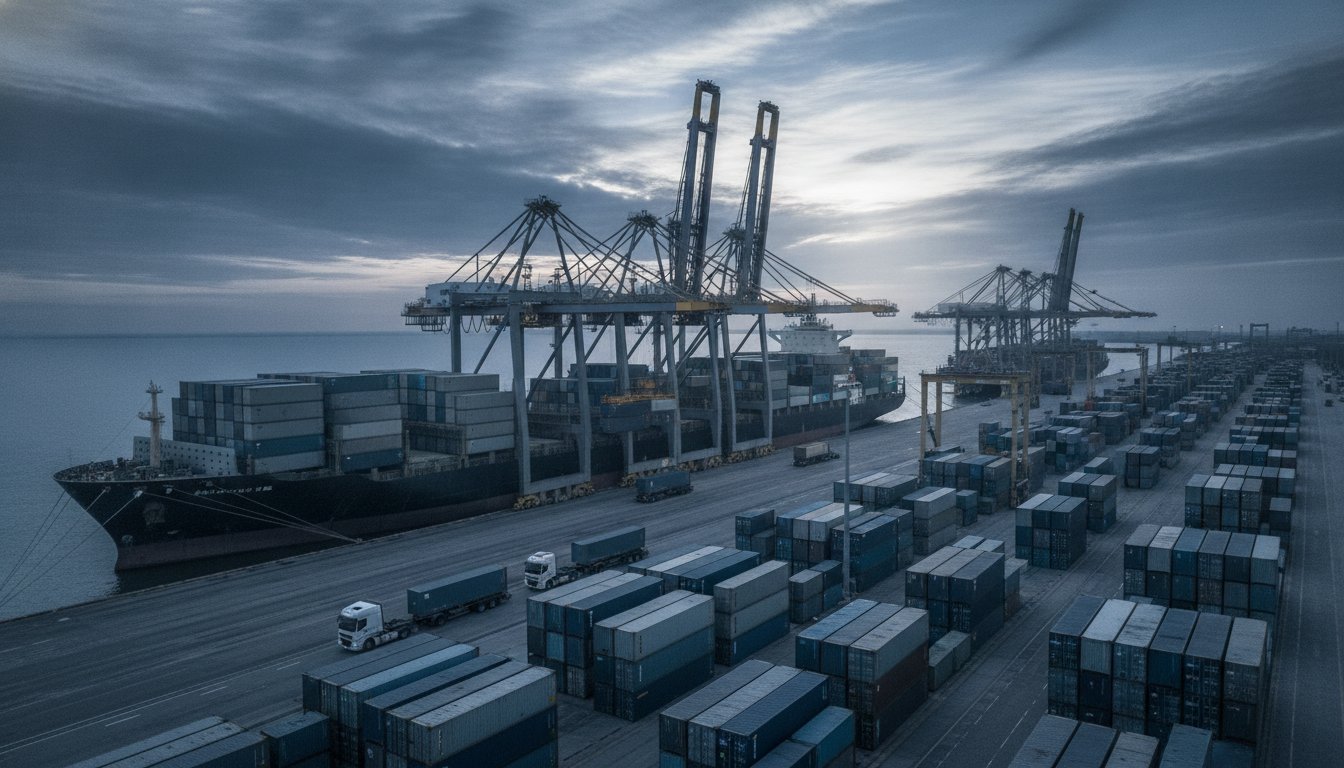
The transition from maritime vessel to road transport is a complex sequence that demands absolute accuracy. Once a container is discharged onto the quay, it enters a high-pressure environment where every minute of dwell time impacts the bottom line. Within the framework of UK port logistics services, the haulier's role is to bridge the gap between the terminal stack and the final delivery point. This process relies on a combination of digital coordination and physical precision.
The collection process cannot proceed without specific administrative clearances. Hauliers must possess a valid release note and a secure PIN provided by the shipping line or freight forwarder. These credentials act as the digital key for the cargo. Any error in this documentation causes immediate standstills at the port gate, leading to congestion and wasted fuel. Professionals ensure these details are verified well before the vehicle arrives at the terminal to maintain a disciplined flow of goods.
VBS and Slot Management: The Pulse of the Port
Vehicle Booking Systems (VBS) regulate the flow of HGVs into the terminal to prevent gridlock. These systems are fundamental to the UK's port industry, requiring hauliers to book specific time windows for every collection and return. If a driver misses their slot due to poor planning, the container remains at the port, often incurring daily storage fees. A disciplined logistics provider proactively manages these slots to maintain a steady rhythm of deliveries and avoid unnecessary costs.
Handling Specialised Cargo and Container Types
Not every container is a standard 20ft or 40ft unit. High-cube containers require specific trailer heights, whilst refrigerated units need monitoring to maintain temperature integrity. Heavy-load haulage also demands specialised equipment to remain within legal weight limits. You should review our detailed guide on logistics for shipping containers to understand these equipment requirements in depth. Ensuring your provider has a modern, versatile fleet of over 40 vehicles is the best way to guarantee compatibility. If you need a reliable partner to manage these operational windows, you can request a professional haulage consultation to secure your 2026 supply chain.
Managing the 'last mile' of the maritime journey is where a haulier's discipline is most visible. Punctuality at the port gate translates directly to reliability at the customer's warehouse. By treating every slot as a mission-critical objective, a professional partner removes the unpredictability often associated with UK port logistics services. This methodical approach ensures that your cargo moves from the quay to the door with minimal friction and maximum security.
Merchant vs Shipping Line Haulage: Selecting the Optimal Logistics Model
Choosing the right inland transport model is a strategic decision that directly affects supply chain resilience. Merchant haulage occurs when the cargo owner or freight forwarder organises the inland transport independently of the ocean carrier. In contrast, shipping line haulage involves the carrier managing the delivery from the port to the final destination as part of a through-rate agreement. Understanding the distinction between these two models is a core component of effective UK port logistics services. According to the UK port freight annual statistics, the volume of containerised traffic necessitates a disciplined approach to inland movement to avoid bottlenecks. Many UK businesses now prioritise merchant haulage to gain greater operational control over their delivery schedules.
The choice between these models often depends on the scale of the operation and the need for visibility. Whilst shipping line haulage offers a single point of contact, it often lacks the transparency required for complex modern supply chains. Merchant haulage allows for a more tailored approach, where the service is framed as a strategic outcome rather than just a physical task. This shift in perspective is essential for operators who need to guarantee punctuality at the warehouse door.
The Benefits of Merchant Haulage for Forwarders
Forwarders often prefer merchant haulage because it allows for direct communication with the haulage provider. This relationship ensures real-time updates and more responsive scheduling. When you manage the transport yourself, you can negotiate rates directly with independent contractors who operate modern, well-maintained fleets. This transparency leads to better visibility of the container's location and more predictable costs. For a deeper analysis of these advantages, you should read our guide on merchant haulage vs shipping line transport. This model empowers businesses to act as disciplined partners in their own logistics chain.
When to Rely on Shipping Line Haulage
Shipping line haulage offers a 'hands-off' approach that suits businesses with lower volumes or less complex requirements. The carrier assumes responsibility for the entire journey, which simplifies the administrative process for the importer. However, this convenience often comes at the expense of flexibility. The shipping line dictates the collection schedule and the choice of haulier, which can lead to delays if their preferred providers are overstretched. Whilst shipping line haulage provides a simplified administrative route for low-volume shippers, merchant haulage offers the precise operational control required to protect high-value supply chains from unpredictable port volatility.
Strategic Efficiency: Minimising Delays in Port-to-Door Logistics
Operational delays represent the most significant threat to the integrity of your supply chain. Port congestion, customs hold-ups, and documentation errors create a cascading effect that disrupts production schedules and customer commitments. In 2026, the implementation of the Border Target Operating Model (BTOM) has introduced a more risk-based approach to inspections, requiring even greater precision in UK port logistics services. Proactive communication between the port, the haulier, and the customer is the only way to mitigate these risks. A disciplined provider identifies potential bottlenecks before they manifest, ensuring that every container moves according to a structured plan.
Visibility is the foundation of strategic efficiency. Utilising real-time tracking allows all stakeholders to monitor the progress of a shipment, providing the data needed to adjust schedules if a delay occurs at the quay. This transparency is especially critical during peak periods or seasonal fluctuations when container volumes surge. By maintaining a methodical rhythm, a professional haulage partner ensures that your cargo doesn't become lost amongst the thousands of units moving through the terminal daily. Reliability in these moments defines the difference between a simple service and a strategic partnership.
Avoiding Demurrage and Detention Charges
Financial penalties for terminal overstays can quickly erode your profit margins. Demurrage fees are charged by the port terminal when a container remains on the quay past its allotted free time. Detention fees apply when the container is outside the port but hasn't been returned to the empty depot within the agreed window. In 2026, industry data indicates that example storage fees can reach £500 per day, whilst delay penalties might hit £1,000 per day. Efficient haulage scheduling ensures that containers are collected and returned within the free time window, protecting your bottom line from these avoidable costs.
Technology in Modern Haulage Operations
The integration of technology has transformed the reliability of inland transport. Telematics systems allow for the constant monitoring of vehicle behaviour and route optimisation, ensuring that every journey is as safe and efficient as possible. Electronic Proof of Delivery (ePOD) has also removed the administrative friction associated with paper-based systems, providing instant confirmation of a successful arrival. You can learn more about how these tools are integrated into a container transport fleet to support nationwide operations. If you want to eliminate the uncertainty of port-to-door transport, you should request a fixed-cost haulage quote to secure your 2026 logistics strategy.
Securing Your Supply Chain with Professional Port Logistics Partners
Selecting a partner for UK port logistics services requires a thorough evaluation of operational capacity and industry tenure. A provider's fleet size is a primary indicator of their ability to maintain consistent service during peak demand. Working with a haulage provider that operates a modern fleet of over 40 vehicles ensures that equipment failure doesn't become a bottleneck in your distribution chain. Port access is equally critical; a partner must have established routes and credentials at all major maritime hubs to provide nationwide coverage. This physical reach, combined with a disciplined approach to scheduling, creates the stability needed for long-term supply chain success.
Experience matters when navigating the volatility of the UK logistics sector. 15 years of industry experience translates directly to superior problem-solving during port disruptions. When unforeseen issues arise at the quay, a seasoned professional knows exactly which protocols to follow to minimise downtime. They don't simply react to crises; they anticipate them through disciplined planning and methodical execution. This depth of knowledge allows a provider to treat logistics as a strategic outcome that supports your broader business goals rather than a mere physical task. It ensures that every container delivery is executed with the same level of precision, regardless of external pressures.
The Jagelo Haulage Commitment to Professionalism
Our commitment is rooted in steadfast reliability and disciplined operational management. We recognise the high stakes of the modern supply chain and the financial consequences of even minor delays. Our responsive customer support assists operators nationwide in navigating the complexities of port-to-door transport, providing clear communication when it's needed most. This level of security is essential for businesses that cannot afford the unpredictability of less experienced providers. By pairing our name with a reputation for competence, we ensure that your cargo is handled according to strict professional protocols that prioritise safety and efficiency.
Getting Started with Nationwide Container Haulage
Initiating a partnership for merchant haulage or shipping line haulage is a structured process that begins with a clear assessment of your needs. You should request a quote that accurately reflects your specific port-to-door requirements, including container types and volume projections for the coming quarter. Our onboarding process is designed for efficiency, ensuring that documentation and slot management systems are aligned before the first collection occurs. If you require a disciplined partner to manage your maritime transport, you can contact Jagelo Haulage for reliable UK port logistics services. This transition from a simple service provider to a strategic partner ensures your supply chain remains resilient throughout 2026 and beyond.
Securing Your Supply Chain Momentum into 2026
Success in the maritime supply chain depends on the disciplined execution of the final mile. You've seen how precise documentation and proactive slot management prevent costly demurrage and detention charges at the terminal. Choosing between merchant and shipping line models allows you to prioritise either simple administration or the deep operational control required for high-value cargo. Professional UK port logistics services transform these complex variables into a stable strategic outcome for your business.
Jagelo Haulage provides this security through a modern fleet of over 40 trucks and trailers and over 15 years of port logistics experience. We specialise in merchant haulage support to ensure your containers move with methodical punctuality from the quay to the door. Our team understands the high stakes of your operations and follows strict protocols to maintain the integrity of your supply chain. Request a professional container haulage quote from Jagelo Haulage to secure your nationwide transport strategy. With a disciplined partner managing your logistics, you can focus on scaling your business with absolute confidence in your delivery reliability.
Frequently Asked Questions
What are the primary port logistics services available in the UK?
The primary UK port logistics services include container haulage, merchant haulage, and inland container deliveries. These services facilitate the movement of goods from major maritime hubs to distribution centres nationwide. Reliable providers offer professionally managed transport operations from all key terminals. By utilising a modern fleet of over 40 trucks, a specialist partner ensures that cargo remains secure and moves according to a disciplined, methodical schedule that supports national supply chain integrity.
How does merchant haulage differ from shipping line haulage?
Merchant haulage involves the cargo owner or forwarder organising inland transport through an independent haulier, providing greater control and real-time visibility. Shipping line haulage is managed by the carrier as part of a through-rate agreement. Whilst shipping line options offer simplicity, merchant haulage allows for direct negotiation and more responsive scheduling. This distinction is vital for businesses that require a strategic partner to manage high-value supply chains with absolute precision across the country.
What documentation is required for container collection from a UK port?
Successful container collection requires a valid release note and a secure PIN provided by the shipping line or forwarder. These digital credentials are mandatory for terminal access and cargo release. Any administrative errors in these documents will result in immediate standstills at the port gate. Disciplined haulage providers verify these details well in advance to maintain a steady rhythm of operations and avoid the financial penalties associated with unnecessary delays or terminal overstays.
How can businesses reduce their container transport costs in 2026?
Reducing costs in 2026 requires a focus on minimising port dwell times and avoiding administrative penalties. Businesses can achieve this by using merchant haulage to gain direct control over their transport schedules and rates. Efficient slot management ensures that containers are returned within the 'free time' window, preventing expensive detention fees. Partnering with a haulier that operates a modern fleet also reduces the risk of breakdown-related disruptions that impact the overall bottom line.
What happens if a haulage vehicle misses its port collection slot?
Missing a port collection slot requires the haulier to rebook a new window through the terminal's Vehicle Booking System (VBS). This often results in significant delays, as slots are frequently limited during peak periods. If the container remains at the terminal past its free period due to a missed slot, the cargo owner will incur daily demurrage charges. A disciplined logistics partner proactively manages these windows to ensure punctual collections and consistent nationwide supply chain flow.
Can a haulage company handle same-day delivery from the port?
Yes, professional haulage contractors can provide same-day delivery from the port once the container is cleared for release. This service is essential for time-sensitive cargo and relies on a modern fleet of over 40 trucks ready for immediate deployment. Precise coordination with the terminal's discharge schedule is required to ensure the vehicle is on-site at the correct VBS slot. This responsive approach assists operators nationwide in maintaining their critical and demanding delivery timelines.
What is the difference between demurrage and detention fees?
Demurrage fees are charged by the port terminal when a laden container remains on the quay beyond the allotted free days. Detention fees are applied by the shipping line when the empty container is not returned to the depot within the agreed timeframe. Both charges are designed to encourage the rapid movement of equipment. Efficient UK port logistics services prevent these costs by ensuring that every container is handled according to a methodical and predictable schedule.
How do I choose a reliable logistics partner for UK ports?
A reliable partner should possess at least 15 years of industry experience and operate a modern fleet of over 40 trucks. You should look for a provider that offers national coverage and has established credentials at all major maritime hubs. A disciplined partner treats every delivery as a strategic outcome rather than a physical task. They provide the security and responsive customer support needed to navigate the complexities of the modern supply chain across the UK.