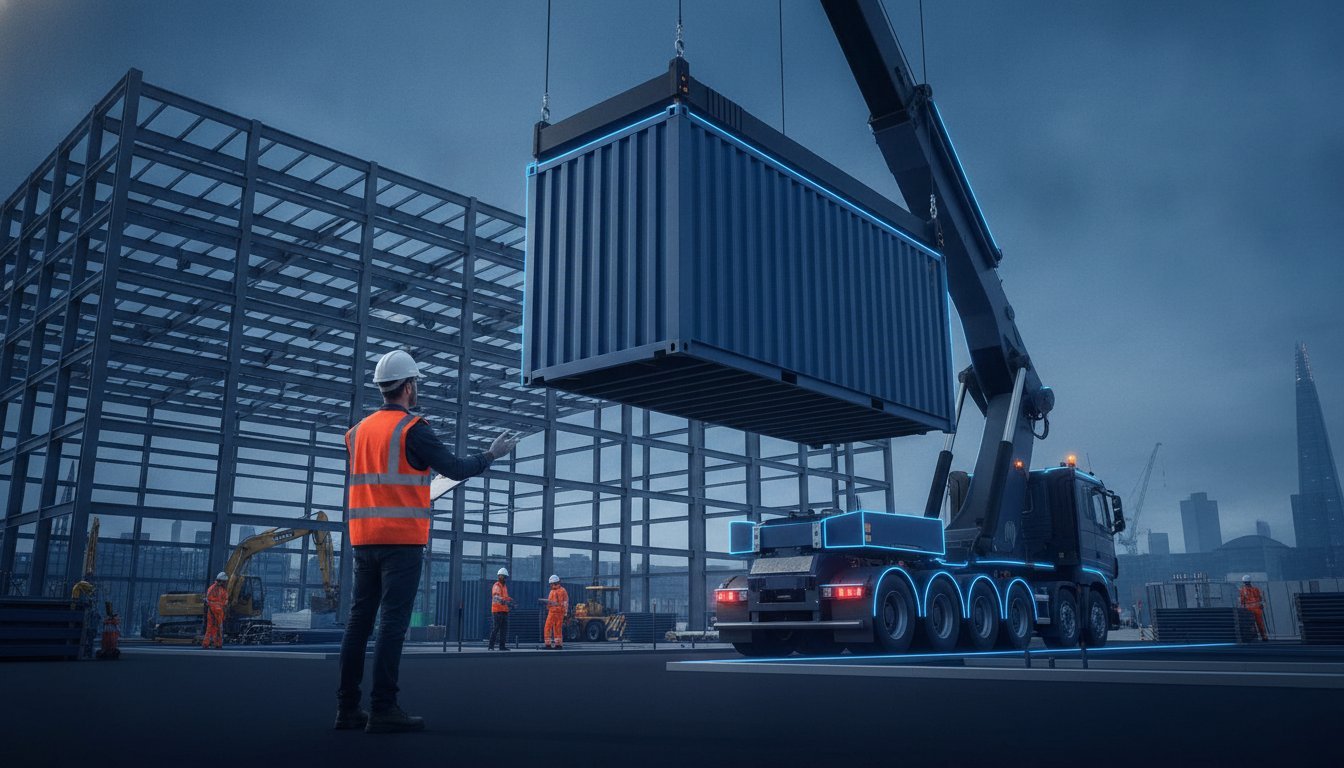
A successful container delivery to a construction site is a strategic operational outcome rather than a mere transport task. You likely recognise that even a minor delay at the port can trigger a costly chain reaction, stalling site progress and disrupting sub-contractor schedules. Unpredictable port congestion and inadequate access planning often lead to failed deliveries and significant detention charges. These logistical hurdles demand a disciplined approach to ensure your project remains on track.
This guide provides the technical framework necessary to master the complexities of modern haulage. We have designed this resource to help you coordinate port collections effectively and secure reliable placement on site. You will learn how to align haulage timelines with specific construction phases while eliminating the hidden costs of demurrage. By following these professional protocols, you can transition from reactive troubleshooting to a seamless, predictable logistics operation that protects your project's bottom line.
Key Takeaways
- Synchronise port release with site readiness to eliminate project downtime and operational delays.
- Implement disciplined site protocols to ensure a secure container delivery to construction site locations without failed attempts.
- Evaluate the benefits of merchant haulage to gain direct control over transport costs and scheduling flexibility.
- Minimise logistical overhead by mastering port collection protocols and reducing terminal surcharges.
- Leverage professional haulage expertise to maintain a steady flow of materials throughout every phase of your project.
The Complexity of Container Delivery to Construction Sites
Delivering a container to a construction site involves far more than simple haulage. Unlike a static distribution centre with dedicated loading bays, a construction site is an evolving environment. Site managers must coordinate multiple sub-contractors, plant machinery, and material deliveries simultaneously. A successful container delivery to construction site locations requires precise synchronisation between the port's release schedule and the site's immediate capacity to receive the unit. Reliability is paramount. If one delivery fails, it creates a cascading delay that can disrupt the entire construction programme.
Navigating Access and Road Width Restrictions
Standard HGVs carrying 20ft or 40ft containers require significant clearance. Approach roads often feature narrow lanes or tight corners that can trap an unprepared driver. Site planners must evaluate the entire route, not just the entrance. Professional hauliers conduct thorough route assessments to identify potential bottlenecks before the vehicle leaves the port. This proactive approach ensures that the vehicle can reach the designated placement area without incident.
- Evaluate approach roads for narrow lanes or tight corners that restrict large HGVs.
- Identify potential obstacles such as low-hanging trees or overhead utility cables that could snag the container during transit.
- Verify weight limits on local bridges or site entrance points to prevent structural damage or legal infringements.
The High Stakes of Site Logistics
Timing is the most critical factor in construction logistics. A late container arrival can halt an entire phase of the build, such as the installation of site offices or the delivery of critical structural components. These delays lead to financial losses and project creep. Utilising professional port logistics services UK ensures that containers move efficiently from terminals like Felixstowe, DP World Gateway, or Tilbury to the site. This coordination is essential for maintaining a steady operational flow and avoiding terminal surcharges.
Consistency in delivery prevents site congestion. When containers arrive within their scheduled windows, site managers can allocate labour and machinery effectively. This disciplined approach improves operational safety by reducing the number of vehicles waiting on public highways or blocking site access points. A secure container delivery to construction site projects is therefore a strategic outcome of meticulous planning rather than a matter of chance. By prioritising these logistical fundamentals, you protect the project's timeline and budget from the start.
Essential Site Preparation for Secure Container Delivery
Preparation is the foundation of a secure container delivery to construction site projects. Whilst the logistics of the port-to-site journey are complex, the final placement on site requires equal technical discipline. Precision at the point of delivery protects the asset, the site personnel, and the haulage equipment. A failed delivery attempt due to poor site readiness doesn't just incur costs; it disrupts the entire project timeline. Site managers must ensure the environment is fully prepared before the HGV arrives at the gates.
Clear communication remains the vital link between the site and the haulier. Site managers should provide detailed site maps and precise contact information for the delivery day. This documentation should include the exact entrance to be used and any specific site rules regarding PPE or vehicle movements. When the driver knows exactly where to go and who to contact upon arrival, the transition from the public highway to the site perimeter is handled with professional efficiency.
Ground Stability and Footprint Preparation
The delivery area must be level and composed of stable, compacted material. HGVs and containers carry immense weight; placing them on soft ground or areas with poor drainage can cause the vehicle to sink or the container to tilt. Compacted hardcore or concrete pads are the industry standard for secure placement. You should mark the container footprint clearly using high-visibility paint or stakes. This assists the driver with precise placement, ensuring the unit aligns perfectly with your site plan. Once your site is fully prepared, you can request a formal logistics quote to finalise your delivery schedule.
Safety Protocols and Overhead Clearance
Safety is the primary priority during the offloading process. You must maintain a minimum overhead clearance to accommodate the height of the trailer and, if applicable, the extension of a Hiab crane. Site managers should identify and flag any overhead utility cables or low-hanging structures that could pose a risk. It's equally important to check for underground services, such as water mains or electrical conduits, that might be compromised by the weight of a loaded HGV.
- Organise a designated, trained banksman to guide the vehicle safely within the site perimeter.
- Ensure the banksman and the driver have a clear, agreed-upon method of communication.
- Keep the delivery zone clear of other plant machinery and non-essential personnel during the manoeuvre.
- Verify that the entrance gates are wide enough to accommodate the vehicle's turning circle without restriction.
By adhering to these disciplined preparation protocols, you create a controlled environment that supports a successful delivery. This level of organisation reflects a commitment to operational excellence and ensures that the container is positioned safely and accurately for its intended use.
Choosing Between Merchant and Shipping Line Haulage for Sites
The haulage model you select is a critical decision that influences the operational efficiency of your project. For a container delivery to construction site, the choice usually sits between merchant haulage and shipping line haulage. Each model offers a different level of control and responsiveness. Understanding the technical distinctions between merchant haulage vs shipping line options is vital for project budgeting and timeline management. Whilst shipping lines handle the sea freight, their inland transport services are often structured for high-volume, predictable routes rather than the specific constraints of a building site.
Shipping line haulage typically operates on a "best-effort" basis regarding specific timing windows. This lack of precision can be problematic when you've organised a crane hire or a dedicated ground crew to receive the unit. If the vehicle arrives outside the agreed window, the resulting site congestion or idle labour costs can be significant. Merchant haulage, by contrast, allows you to nominate an independent haulier who specialises in the disciplined requirements of construction logistics.
The Advantage of Merchant Haulage for Developers
Direct communication with the haulier allows for more precise delivery scheduling. When you work with a merchant haulage provider, you gain a direct line to the transport manager and the driver. This transparency is essential for managing container transport costs effectively. You aren't just paying for a move; you're investing in a coordinated arrival that aligns with your site's operational capacity. Merchant haulage companies often provide more responsive support for urgent site requirements, such as last-minute changes to the delivery sequence or the need for specialised trailer equipment.
Operational Flexibility and Reliability
Construction environments are inherently fluid. Weather conditions, equipment failure, or unexpected site obstructions can necessitate a sudden change in plans. Merchant haulage allows for easier redirection or rescheduling if site conditions change. An independent haulier prioritises your specific project needs rather than following a rigid, multi-drop shipping line schedule. This flexibility ensures that your container delivery to construction site remains a controlled event even when external variables shift.
- Maintain direct control over the transport provider to ensure accountability.
- Ensure consistent safety standards by working with a dedicated logistics partner.
- Reduce the risk of "no-show" deliveries that occur when shipping lines overbook their capacity.
- Optimise your site's labour usage by securing guaranteed arrival windows.
A dedicated logistics partner understands the high stakes of the supply chain. By choosing a merchant haulage model, you position your project to benefit from a professional, punctual service that understands the fundamentals of site-specific delivery. This strategic choice simplifies the transition from the port terminal to the final placement, protecting your project's bottom line.
Optimising Port-to-Site Timelines and Logistics
Operational efficiency begins at the port terminal. A successful container delivery to construction site depends on the technical coordination that occurs before the vehicle even reaches the public highway. Site managers often focus on the arrival time, but the groundwork for a punctual delivery is laid through professional collection protocols at the port. This stage of the supply chain requires deep expertise in port-specific systems and a disciplined approach to time management. Reliability in this phase prevents the cascading delays that often disrupt broader construction programmes.
Real-time tracking and professional dispatching are essential tools for modern site logistics. These systems keep site managers informed of the vehicle's progress, allowing for precise adjustments to site labour and plant machinery schedules. When the haulier and the site remain in constant communication, the delivery becomes a controlled, predictable event rather than a source of operational friction. This transparency is a hallmark of a high-standard haulage operation.
Coordinating Collection from Major UK Ports
Coordinating reliable container haulage from Felixstowe, Southampton, or Tilbury requires a mastery of terminal-specific requirements. Hauliers must manage Vehicle Booking System (VBS) slots with precision to avoid wasted journeys and terminal congestion. All customs and release documentation must be finalised before the truck arrives at the gate to ensure a swift turnaround. Strategic port proximity allows for more responsive inland container haulage services, as it reduces the transit time between the terminal and the site. This proximity is a functional advantage that supports tighter delivery windows and improves overall project security.
Mitigating Delays and Demurrage Charges
Demurrage and detention charges represent significant financial risks in construction logistics. These costs escalate quickly if containers aren't collected promptly after their arrival at the port. A proactive approach to port logistics ensures that containers are moved as soon as they're released by the shipping line. Disciplined planning eliminates the "stay" times that lead to these unnecessary surcharges. By prioritising immediate collection, you reduce the logistical overhead of the project and protect the budget from avoidable expenses.
- Secure VBS bookings well in advance to guarantee terminal access during peak hours.
- Verify the "last free day" for each container to prioritise the most urgent collections.
- Maintain a clear audit trail of release codes and pin numbers to prevent gate delays.
- Ensure the site is ready to receive the unit immediately upon the vehicle's departure from the port.
Effective timeline management transforms the delivery process into a strategic asset for your project. By mastering the fundamentals of port coordination, you ensure a steady flow of materials and equipment to your site. To secure a disciplined haulage partner for your next project, you can request a professional logistics quote today.
Professional Haulage Solutions for National Construction Projects
Jagelo Haulage maintains a steadfast commitment to professional container transport standards. We understand that a container delivery to construction site is a high-stakes operation that requires more than just physical transit. It is a strategic outcome that demands meticulous planning and execution. With over 15 years of industry experience, our team has developed the disciplined protocols necessary to manage the complexities of the UK supply chain. We prioritise competence and protection in every movement, ensuring that your cargo arrives safely and on schedule to support your project's milestones.
Our approach is rooted in functional reliability. We don't just move goods; we provide a structured logistics service that integrates with your construction phases. By positioning ourselves as a strategic partner, we help site managers reduce logistical overhead and eliminate the friction often associated with port-to-site movements. This focus on the fundamentals of the supply chain allows us to deliver consistent results for corporate clients and operational managers across the country.
Fleet Capability and Operational Reach
Our ability to support large-scale developments is anchored in our significant investment in hardware and personnel. Operating a modern container transport fleet of over 40 trucks allows us to provide scalable support for projects of any size. This national coverage ensures a consistent service level, regardless of whether your site is situated near a major port or in a more remote inland location. We maintain our equipment to the highest standards, which reduces the risk of mechanical delays and ensures that our vehicles are always ready for the rigours of heavy industrial haulage.
- Scalable support for multi-unit deliveries on large-scale construction developments.
- Rigorous maintenance schedules to ensure vehicle reliability and site safety.
- National reach providing a single point of contact for projects across the UK.
- Specialised trailers designed for the secure transport of 20ft and 40ft units.
A Disciplined Approach to Site Safety
Safety is the primary metric of our operational success. In the active environment of a building project, a container delivery to construction site requires a driver who is trained in industry-standard safety protocols. Our drivers are seasoned professionals who understand the importance of following site rules, coordinating with banksmen, and identifying potential hazards before they become incidents. This disciplined approach protects both the cargo and your site personnel, creating a secure environment for every offloading procedure.
We take stoic pride in our ability to provide protected outcomes. By adhering to strict protocols and maintaining a modern fleet, we ensure that your logistical needs are met with precision. This level of organisation reflects our understanding of the high stakes involved in construction logistics and our commitment to being a dependable partner in your broader operational framework.
Securing Your Project's Logistical Foundation
Success in construction logistics depends on technical discipline and proactive planning. By prioritising site readiness and selecting a merchant haulage model, you eliminate the friction that often disrupts building schedules. Mastering the container delivery to construction site requires a partner who understands the high stakes of the supply chain and follows strict operational protocols. A disciplined logistics strategy doesn't just improve efficiency; it protects your project's bottom line whilst ensuring a steady flow of materials.
Jagelo Haulage provides the steadfast reliability your operation demands. With over 15 years of industry expertise and a modern fleet of more than 40 specialised trucks, we ensure secure transit from major hubs like Felixstowe and Southampton. We act as a strategic partner, delivering the competence and protection necessary for national developments. Contact Jagelo Haulage for Professional Container Delivery Solutions to streamline your next project. We look forward to supporting your site's operational success.
Frequently Asked Questions
What is the minimum road width required for container delivery to a construction site?
A minimum road width of 3 metres is required for straight access, although 3.5 metres is preferred to ensure safe clearance for the vehicle's mirrors. If the approach route involves tight corners, the width requirement increases significantly to accommodate the HGV's turning circle. Site managers should conduct a technical route assessment to identify any narrow pinch points before the vehicle departs from the port.
Do I need a permit to have a container delivered to a site near a public road?
You must obtain a highway permit from the local council if any part of the container or the delivery vehicle occupies a public road, pavement, or verge. Application lead times vary by local authority, so you should organise this well in advance. If the container delivery to construction site is completed entirely within private land boundaries, a highway permit is generally not required.
How much space is needed for a HIAB truck to offload a container?
A HIAB truck typically requires a working width of 8 to 10 metres to facilitate a safe offloading procedure. This space is necessary to accommodate the truck's width and the full extension of the hydraulic outriggers, which provide stability during the lift. You must also ensure a minimum vertical clearance of 6 metres to avoid contact with overhead cables or structures.
Can containers be delivered to sites with soft or unpaved ground?
Containers shouldn't be delivered to soft or unpaved ground unless you have installed heavy-duty ground protection mats or a compacted hardcore base. The combined weight of the HGV and a loaded container exerts immense pressure that will cause the vehicle to sink into unstable soil. Ensuring a level, stable surface is a fundamental safety requirement that prevents the container from tilting or the vehicle becoming trapped.
What is the difference between merchant haulage and shipping line haulage for sites?
Merchant haulage allows you to hire an independent transport provider directly, whilst shipping line haulage is controlled by the carrier that moved the container by sea. Merchant haulage is the preferred model for construction projects because it offers greater flexibility and precise arrival windows. This direct relationship ensures the haulier is more responsive to the specific timing needs of an active building site.
How do I avoid demurrage charges when organising container delivery from a port?
You avoid demurrage by ensuring the container is collected from the port terminal within the "free time" window provided by the shipping line. This requires disciplined coordination and the early booking of Vehicle Booking System (VBS) slots at the port. Professional hauliers monitor vessel arrival times closely to ensure the container delivery to construction site occurs as soon as the cargo is released.
What information does the haulier need before the delivery day?
The haulier requires the full site address, a site contact name, and the specific container release PIN or reference code. You should also provide a site map that identifies the exact placement location and any known hazards, such as underground services or overhead obstructions. Providing this data early allows the transport manager to plan the route with precision and ensures a seamless delivery outcome.