More on FCL container transport from Jagelo Haulage
13–15 CBM Pivot: FCL vs LCL for UK Port to Door Moves
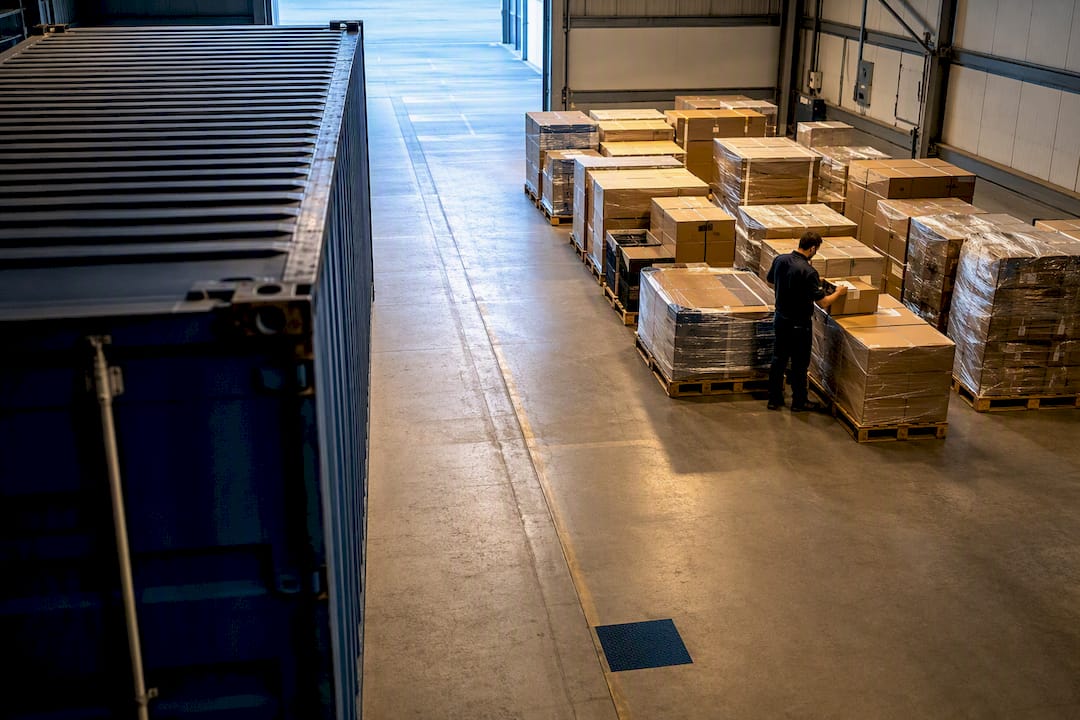
Choose FCL when your shipment volume is near the break-even threshold commonly recognized around 13 to 15 CBM, when shipping valuable goods, or when you cannot tolerate delay; choose LCL below that range, where paying by volume is usually more cost-effective than paying for an entire container you cannot fill. The trade-off is straightforward: LCL saves money on small consignments but exposes you to consolidation delays and neighbour risk, while FCL costs more per unit at low volumes but hands you a sealed container and full control over your own timeline.
TL;DR:
- Shipping volumes near 13-15 CBM generally favor full container load, especially for valuable or time-sensitive goods, due to control and speed benefits.
- Rates for FCL are flat per container size, while LCL costs depend on actual volume, making LCL more cost-effective below the CBM break-even point.
- Additional fees, such as CFS handling, documentation, and destination charges, often determine the true cost advantage between FCL and LCL.
- Delay and damage risks are higher with LCL because of multiple handling touches and neighbor risk, whereas FCL offers more control over timing and security.
- Obtaining both FCL and LCL quotes before booking ensures an accurate comparison, especially for shipments close to the volume pivot.
Table of Contents
- FCL vs LCL at a glance
- Which mode fits your shipment? A decision checklist
- How to calculate the break-even on live quotes
- Documentation, CFS handling and demurrage exposure
- How a specialist haulage partner reduces the risk on both modes
- Environmental impact: does mode choice matter?
- Common challenges and risks in FCL and LCL shipping
- What to look for when selecting a carrier
- Insurance: what changes between the two modes
- The decision rule that actually holds up
- How Jagelo Haulage supports both FCL and LCL execution
- Sources
FCL vs LCL at a glance
Before working through the maths, it helps to see the two modes side by side. FCL means the container is yours alone, sealed at origin and opened only at destination, which is why carriers and freight guides consistently describe it as the faster, lower-risk option. LCL means your cargo shares space with other shippers’ goods, consolidated at a container freight station (CFS) and billed per cubic metre or weight/measure, whichever is greater.
- Pricing model: FCL is quoted as a flat rate per container size (20ft, 40ft); LCL is billed per CBM or W/M, so the cost scales with your actual volume.
- Transit time: FCL moves directly from stuffing to sailing to discharge; LCL adds waiting time for consolidation at origin and deconsolidation at destination, which lengthens the overall lead time.
- Handling and risk: FCL cargo is touched twice, once at stuffing and once at destuffing; LCL cargo is handled multiple times through the CFS process, raising damage exposure.
- Volume fit: LCL suits shipments well under a full container; FCL suits anything near or above the break-even band, plus reefer, dangerous goods, or oversized cargo that rarely consolidates well.
Neither mode is inherently “better.” The right call depends on where your shipment sits on the volume curve, and how much operational certainty your supply chain actually needs.
Which mode fits your shipment? A decision checklist
Run your shipment through these five checks before booking, in roughly this order:
- Volume against the pivot. If you are within a couple of CBM of the 13–15 CBM break-even band, treat the decision as genuinely open and price both modes rather than assuming.
- Lead time versus inventory cost. If a stockout costs more than the freight saving, FCL’s shorter, more predictable transit usually wins even above a marginal price premium.
- Cargo value, fragility and special requirements. Reefer cargo, dangerous goods and out-of-gauge freight rarely consolidate well and generally push you toward FCL or a specialised container regardless of volume.
- Frequency and cashflow. Smaller, more frequent shipments, common with SMEs testing new markets or running sample runs, often suit LCL precisely because tying up capital in a half-empty container makes little commercial sense.
- Risk appetite for delay. If your business cannot absorb a customs hold triggered by someone else’s paperwork, that alone can justify paying the FCL premium.
Pro Tip: Never rely on a single quote to make this call. Request both an FCL flat rate and an LCL per-CBM quote for any shipment within roughly 2 CBM of the pivot, then compare the all-in figures, not just the headline ocean rate.
How to calculate the break-even on live quotes
The maths behind FCL vs LCL is simple once you have the right line items in front of you. Convert your container’s flat rate into a per-CBM figure by dividing the total quoted cost by the container’s usable capacity, then compare that figure directly against the LCL per-CBM quote for the same lane.
To make that comparison fair, your all-in figure on both sides needs to include:
- The base ocean freight rate
- Origin and destination CFS handling charges
- Documentation fees (bill of lading, customs filing)
- Drayage from port to final delivery point
- Destination accessorials (delivery order fees, terminal handling)
- Storage and demurrage risk if the container or cargo sits beyond free time
Guides that model this comparison properly stress that CFS handling, documentation and destination accessorials materially shift where the pivot actually falls — a lane that looks LCL-favourable on ocean rate alone can flip once you add origin CFS fees and destination handling minimums.
A worked example: say a 40ft container quotes at £2,400 all-in with roughly 58 CBM usable capacity, that works out to about £41 per CBM. If your LCL quote for the same lane comes in at £48 per CBM once CFS and documentation fees are included, FCL wins even at 12 CBM of actual cargo, below the typical pivot, purely because the LCL side carries heavier fixed fees on this particular lane. Running this arithmetic on every shipment approaching 10 CBM costs you ten minutes and can save real freight spend across a year of bookings.
Documentation, CFS handling and demurrage exposure
The paperwork trail differs meaningfully between the two modes, and it affects who controls your risk. In FCL, the shipper (or their forwarder) typically holds both the master bill of lading (MBL) and house bill of lading (HBL), giving direct control over the container’s release and return. In LCL, the consolidator issues the HBL to individual shippers while holding the MBL themselves, which means a third party manages your container’s return schedule and demurrage clock on your behalf, for better or worse.
A few operational points worth flagging before you book:
- CFS re-measurement risk: origin CFS operators often re-measure and re-weigh LCL cargo, and minimum billable CBM rules can quietly erase the savings you expected. Check the consolidator’s minimum and re-measure policy before assuming your quote is final.
- Neighbour risk: a customs hold triggered by another shipper’s paperwork in the same LCL container can delay every consignee sharing that box, an exposure that rarely appears in a headline rate comparison.
- Packing and marking: LCL cargo passes through more handling touches during stuffing and destuffing, so stronger palletisation and clear carton marking reduce damage claims meaningfully.
- Demurrage control: FCL shippers control their own container timing, so a haulage partner who returns empties promptly directly reduces your demurrage and detention exposure.
Pro Tip: If you’re working through a freight forwarder, clarify upfront who holds the MBL on an LCL booking. That single detail tells you who actually controls your cargo’s release timing.
How a specialist haulage partner reduces the risk on both modes
Whichever mode you choose, the port-to-door leg is where delays and demurrage charges tend to bite hardest. A haulage partner with genuine port coverage and a fleet built for container work removes a lot of the guesswork from that final stretch, regardless of whether your cargo arrived FCL or LCL.
A specialist haulage partner operating across major UK ports runs a fleet of trucks and trailers fitted with GPS tracking, backed by 24/7 support for time-sensitive collections.
That combination matters in practice:
- Timed container returns cut demurrage and detention exposure on FCL moves, where every extra day beyond free time carries a direct cost.
- GPS tracking gives freight forwarders and importers real-time visibility on where a container sits between port gate and final delivery, which matters most when a delay upstream has already eaten into your buffer.
- Coordination with consolidators on LCL cargo means the final delivery leg from CFS to door runs on the same reliable footing as a full container move, even though the consolidator manages the earlier deconsolidation stage.
- Port coverage across multiple UK gateways means the same haulage relationship supports lanes into different ports rather than forcing a new provider search for every route.
Environmental impact: does mode choice matter?
Container shipping’s environmental footprint is dominated by the ocean leg itself, but the choice between FCL and LCL still shifts the picture at the margins. A full container carrying one shipper’s cargo at high utilisation spreads the vessel’s per-unit emissions across more cargo, which is efficient when the box is genuinely full.
The problem is a half-empty FCL container. Booking a full box for a shipment that only fills a third of it wastes capacity that could otherwise carry consolidated cargo, effectively increasing the emissions intensity per unit shipped. LCL, by design, keeps utilisation high by combining multiple shippers into one box, which is why smaller exporters and importers running low-volume lanes often get a better environmental outcome from consolidation than from booking underfilled FCL containers out of habit.
The practical takeaway sits close to the cost logic already covered: book FCL when you can genuinely fill or nearly fill the container, and use LCL when your volume sits well below that threshold. Extra truck movements from additional CFS handling touches in LCL do add some incremental road emissions on the local drayage leg, but this is generally outweighed by the efficiency gain of consolidating several part-loads into a single vessel slot rather than running multiple underfilled containers on the same lane.
Common challenges and risks in FCL and LCL shipping
Each mode carries a distinct risk profile, and knowing which failure mode applies to your shipment changes how you plan around it.
FCL’s main exposure is demurrage and detention. Once a container clears the port, the clock starts on free time, and any delay in collection, unloading or return triggers charges that can escalate quickly on a busy lane. The shipper (or their haulage partner) controls this risk directly, which is both the advantage and the burden of FCL: you carry the consequences of any delay yourself.
LCL’s main exposures sit earlier in the chain. Consolidation scheduling at origin means your cargo waits for the CFS to build a full container, which can add days depending on how quickly other shippers’ cargo arrives. Neighbour risk compounds this: a customs inspection or paperwork issue affecting another shipper’s goods in the same box can hold up your consignment even when your own documentation is flawless. Re-measurement disputes are a quieter risk, where CFS operators recalculate volume or weight and adjust your bill after the fact.
Both modes share a common vulnerability around documentation accuracy. Incomplete or mismatched paperwork on the HBL or MBL delays customs clearance regardless of mode, which is why forwarders who manage this process carefully tend to avoid the worst delays on either side.
What to look for when selecting a carrier
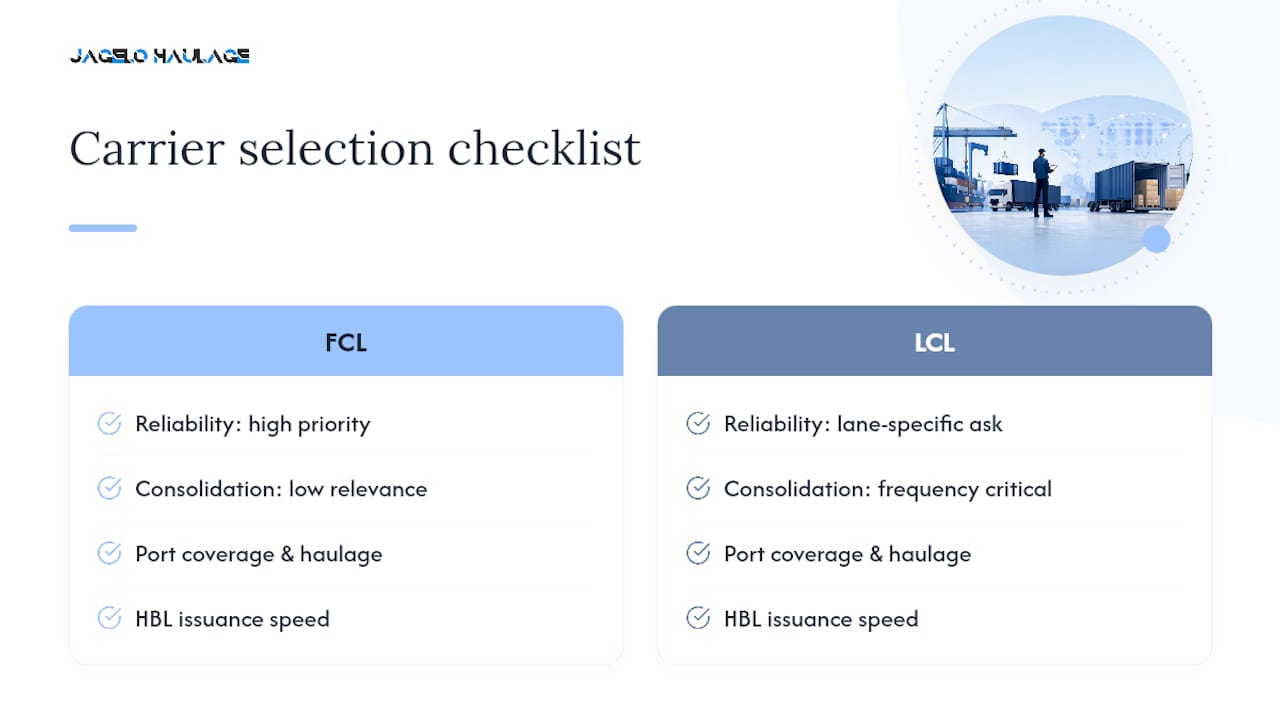
Carrier selection criteria differ slightly by mode, but several factors apply across both. Reliability of transit time matters more for FCL, where you are paying for a dedicated schedule, so ask any carrier for their on-time performance on your specific lane rather than a general average. For LCL, ask about consolidation frequency, how often the carrier or consolidator actually sails a given lane, since infrequent sailings mean your cargo could wait longer at origin than the quoted transit time suggests.
Port coverage and destination handling capability matter for both modes. A carrier or forwarder with established relationships at your destination port, and ideally a haulage partner already operating there, reduces the coordination gaps where cargo sits idle. Documentation accuracy and communication responsiveness are worth probing directly: ask how quickly a carrier issues the HBL after cargo receipt, since delays here cascade into customs clearance delays at destination.
Cost transparency rounds out the list. A carrier who itemises CFS handling, documentation and accessorial fees upfront, rather than bundling them into a vague “all-in” figure, makes the break-even calculation covered earlier actually possible to run accurately. For UK-based freight forwarders working with a dedicated haulage provider on the final leg, this same transparency standard applies to drayage quotes as much as ocean freight.
Insurance: what changes between the two modes
Cargo insurance principles are broadly similar across FCL and LCL, but the practical risk profile shifts the coverage decisions you should make. Both modes typically use marine cargo insurance covering loss or damage in transit, and neither mode is inherently exempt from needing it. The difference lies in what’s likely to trigger a claim.
LCL’s multiple handling touches at CFS stuffing and destuffing raise the statistical likelihood of physical damage claims, simply because cargo passes through more hands. This is one reason stronger packaging and clear carton marking reduce claims frequency on LCL bookings specifically. FCL’s sealed, single-shipper transit generally lowers physical handling risk, but concentrates value in one box, so a container lost or severely damaged in transit represents a larger single loss event than a proportional share of an LCL consolidation would.

Delay-related coverage is worth checking regardless of mode. Standard marine cargo policies often exclude pure delay costs (lost sales, contractual penalties) even when they cover physical loss or damage, and LCL’s exposure to consolidation delays and neighbour-related customs holds makes this gap worth discussing with your broker specifically for LCL bookings. Whichever mode you choose, confirm your policy’s treatment of delay separately from physical damage. The two are not automatically covered together, and assuming otherwise is a common and costly oversight.
The decision rule that actually holds up
The core rule genuinely is that simple: price by volume, decide by priority. Below roughly 13–15 CBM, LCL almost always wins on headline cost. Above it, FCL usually wins on cost and time together, and for anything fragile, high-value or time-critical, FCL wins regardless of volume because operational reliability, not headline price, is what actually protects your supply chain.
What I’d flag as the most underrated tactic in this whole comparison is refusing to trust a single quote near the pivot. Get both. It takes ten minutes and it routinely exposes a lane where the “obvious” mode is actually the more expensive one once CFS fees and destination accessorials are factored in properly. If you’re arranging containerised freight regularly on the same lanes, build that dual-quote habit into your standard booking process rather than treating it as an occasional check.
Beyond the pivot, treat FCL as the default for anything you genuinely cannot afford to have delayed by someone else’s paperwork. If you want lane-specific advice on how the FCL/LCL decision plays out for your particular port and volume pattern, get in touch and we’ll work through it with you.
— Vytautas
How Jagelo Haulage supports both FCL and LCL execution
Whichever mode you land on, the port-to-door leg still needs a haulage partner who can execute it without adding delay to a decision you’ve already worked hard to get right. A specialist haulage provider supports the final stretch of containerised freight moving through UK ports.
- A tracked fleet of trucks and trailers, fitted with GPS monitoring for real-time visibility on every move.
- Coverage across major UK gateways.
- 24/7 support for time-sensitive collections and returns, which matters most when demurrage-free time is running down.
On FCL moves, that means timed container collection and return to keep detention and demurrage charges off your invoice. On LCL cargo, it means coordinating the final delivery leg from CFS to door with the same reliability, working alongside your consolidator or NVOCC rather than adding another layer of friction. Freight forwarders juggling documentation and consolidation schedules can also lean on our guide to how forwarders and hauliers divide responsibility when clarifying who owns which part of the move, and businesses evaluating third-party fulfilment alongside container logistics may find MoreShores’ fulfilment services a useful complementary resource.
If you’ve run the numbers on your next shipment and know which mode you need, request a tailored all-in lane quote and we’ll handle the port-to-door leg from there.
Sources
- Understanding ocean freight — Maersk
- FCL vs LCL: How to Choose (CBM Break-Even) | Platton
- FCL vs LCL — DP World