Freight forwarder vs haulier UK: how to choose

A freight forwarder is defined as a third-party logistics coordinator who arranges international and multimodal shipments on behalf of businesses, handling customs documentation, cargo insurance, and carrier negotiations. A haulier, by contrast, owns or operates vehicle fleets that deliver goods directly by road, focusing on national and regional transport. When UK businesses need to choose freight forwarder vs haulier, the decision turns on shipment complexity, destination, and the level of logistics management required. Bodies such as BIFA (British International Freight Association) and Logistics UK set the professional standards that distinguish credible operators in both categories.
What does each service actually do?
Freight forwarders and hauliers occupy different positions in the supply chain. Understanding those positions is the fastest way to identify which service fits your operation.
Freight forwarder services
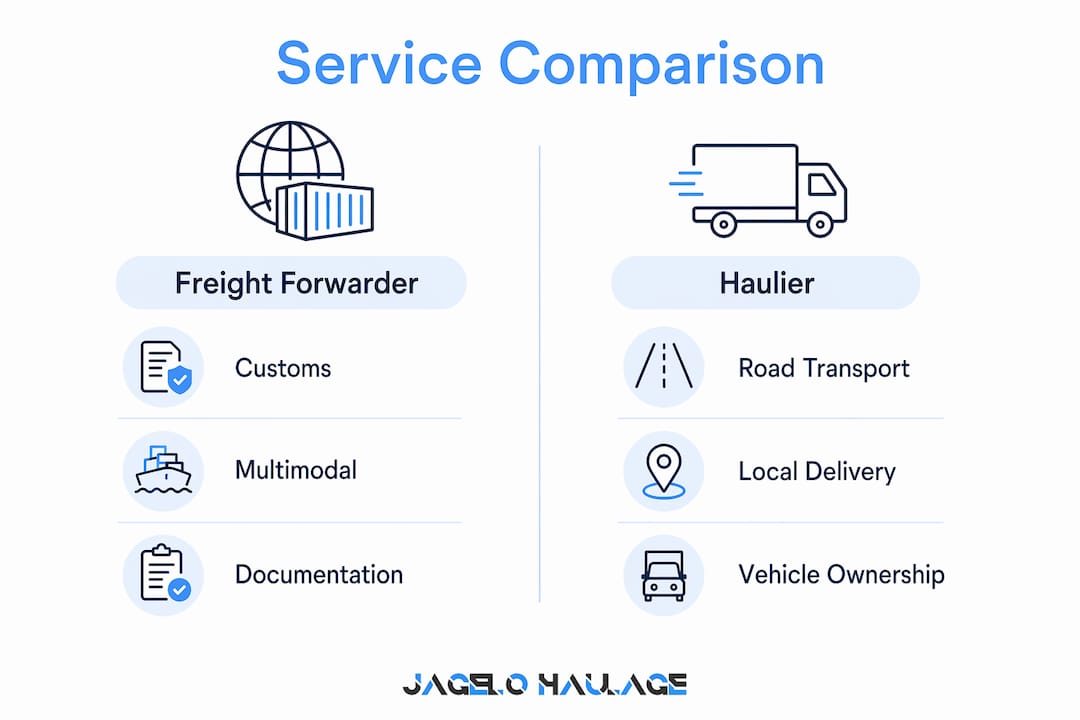
A freight forwarder acts as the architect of a shipment. The forwarder does not typically own the trucks, ships, or aircraft. Instead, the forwarder selects and books the most suitable carriers across multiple transport modes, then manages the entire process from origin to destination. Freight forwarders provide customs brokerage, export and import documentation, cargo insurance, and international shipment management as standard services. That breadth means a single point of contact can handle a container moving from a factory in Shenzhen to a distribution centre in Birmingham, covering sea freight, port clearance, and final road delivery.
Forwarders also carry significant commercial weight. A forwarder handling 500 containers monthly negotiates far better carrier rates than a shipper managing ten. That volume advantage translates directly into lower freight costs for clients who lack the scale to negotiate independently.
Haulier services
A haulier’s role is more direct. Hauliers own or operate vehicle fleets and deliver goods by road, typically within the UK. Their strength is speed, reliability, and physical control over the cargo from collection to delivery. A specialist container haulier, such as Jhaulage, collects loaded or empty containers from ports like Felixstowe, Tilbury, Southampton, and Liverpool, then transports them directly to the customer’s premises or a designated depot.
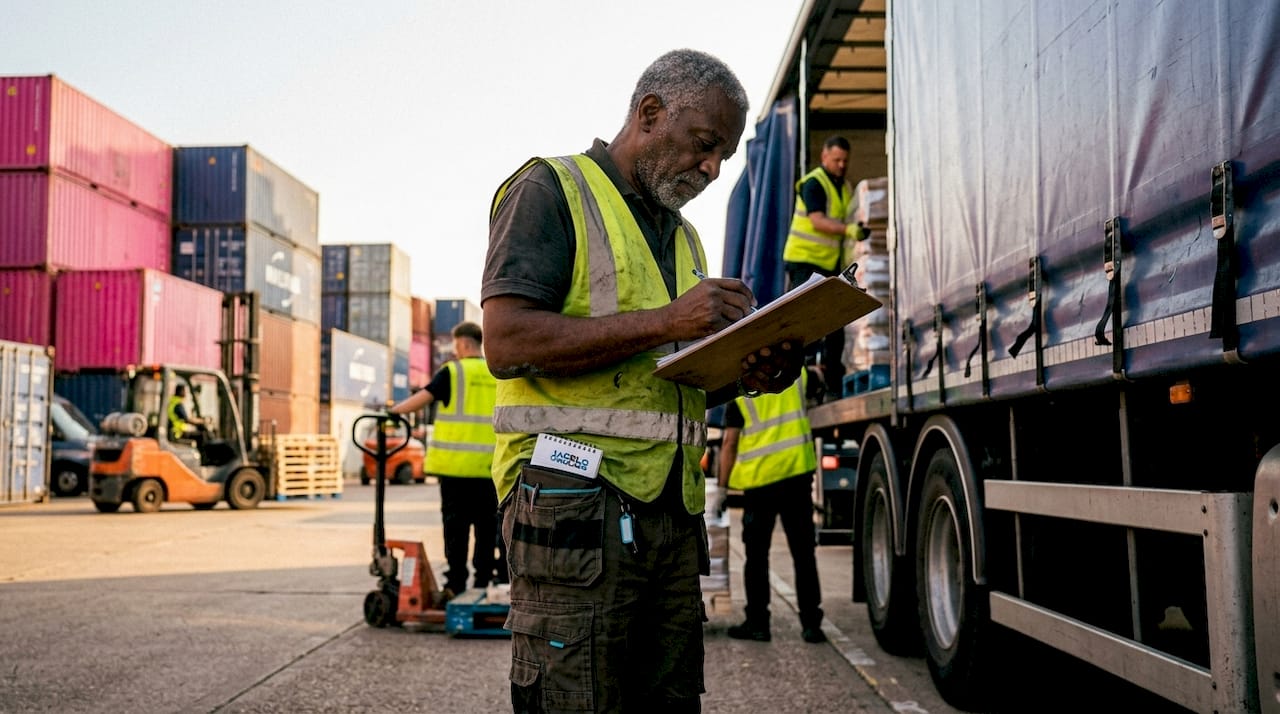
Hauliers do not arrange customs clearance or book sea freight. Their scope is road transport, and the best operators execute that scope with precision. For businesses moving containers between UK ports and inland destinations, a dedicated haulier removes the risk of port demurrage and detention costs that accumulate when containers sit uncollected.
Service scope at a glance
| Feature | Freight forwarder | Haulier |
|---|---|---|
| Customs brokerage | Yes | No |
| Multimodal coordination | Yes | No |
| Road transport | Subcontracted | Direct, owned fleet |
| Cargo insurance | Yes | Varies |
| Port-to-door delivery | Arranged | Core service |
| Real-time GPS tracking | Platform-dependent | Often included |
| Industry membership | BIFA, Logistics UK | Logistics UK, RHA |
How to choose between a freight forwarder and a haulier
The right choice depends on four practical factors: shipment destination, complexity, frequency, and the additional services your business requires.
-
Shipment destination. If your goods move internationally across multiple transport modes, a freight forwarder is the correct choice. If your shipments move within the UK by road, a haulier delivers faster and at lower cost.
-
Customs and regulatory complexity. Cross-border shipments require commodity codes, export declarations, and import duty calculations. Freight forwarders manage all of this. Hauliers do not, and attempting to bolt customs management onto a haulage contract creates gaps in accountability.
-
Additional services required. Businesses that need warehousing, cargo consolidation, or marine insurance alongside transport benefit from the freight forwarder advantages that come with a full-service logistics provider. Businesses that need reliable, time-critical road delivery benefit from a haulier’s direct operational control.
-
Location and fleet standards. Midlands-based hauliers reach London, Manchester, Leeds, and Liverpool within hours, making central UK locations a genuine operational advantage for time-critical deliveries. Also check Euro emissions compliance, particularly if your supply chain passes through Clean Air Zones in cities such as London, Birmingham, or Bristol.
Pro Tip: If your business imports containers through UK ports and needs them at a UK warehouse within 24 hours, a specialist container haulier with port access and GPS tracking will outperform a generalist freight forwarder on speed and cost for that specific leg.
How to plan and execute your freight partner selection
A structured selection process protects you from costly mistakes and locks in the right partner for the long term.
-
Map your current shipping profile. Document shipment volumes, frequencies, origins, destinations, and any specialist handling requirements such as temperature control or hazardous goods classification. This baseline prevents you from selecting a partner whose capacity or accreditations do not match your actual needs.
-
Request detailed quotes. Ask for itemised pricing that separates base haulage rates from fuel surcharges, port handling fees, and any demurrage liability. Vague quotes hide costs that appear on the invoice after delivery.
-
Verify credentials and memberships. BIFA membership signals that a freight forwarder adheres to a recognised code of conduct and carries professional indemnity insurance. For hauliers, check Logistics UK membership, operator licence status, and fleet maintenance records.
-
Conduct operational due diligence. Ask about average fleet age, contingency plans for vehicle breakdowns, and port coverage. A haulier with a modern fleet of over 40 GPS-tracked trucks, for example, carries far less operational risk than a small operator with ageing vehicles and no tracking capability.
-
Check technology provision. Real-time tracking is now an expected standard from credible freight partners. Shipment visibility reduces anxiety, speeds up problem resolution, and gives your customers accurate delivery information.
-
Establish communication protocols. Agree on escalation contacts, response time expectations, and reporting formats before signing any contract. The best freight partnerships run on clear communication, not goodwill.
Pro Tip: Ask any prospective partner for two or three client references in your sector. A haulier experienced in retail container movements will handle the rhythms of your supply chain far better than one whose background is bulk agricultural haulage.
Common mistakes UK businesses make when choosing freight partners
Selecting the wrong freight partner costs more than the difference in quoted rates. Poorly chosen haulage providers cause operational disruption, increased costs, and reputational damage with end customers.
The most frequent mistakes fall into a recognisable pattern:
-
Choosing on price alone. The haulage sector operates on tight margins, and underpriced services routinely compromise fleet quality and reliability. A missed port collection that triggers £500 in demurrage costs far outweighs a £50 saving on the haulage rate.
-
Ignoring Clean Air Zone compliance. Hauliers operating non-compliant vehicles face daily charges in designated zones. Those charges pass to you, either directly or through service disruption when drivers avoid restricted routes.
-
Selecting partners without sector experience. A freight forwarder with no background in perishable goods cannot manage the temperature-controlled documentation and carrier selection that a food importer requires. Match sector experience to your cargo type.
-
Neglecting contingency planning. Ask every prospective partner what happens when a vehicle breaks down en route to Felixstowe. If the answer is vague, the risk is yours.
“Businesses should prioritise partner strengths aligned to their specific needs over simply seeking the lowest quote. Misaligned partnerships create costly disruptions that erode the savings from a cheaper rate within weeks.”
Maintaining a strong freight partnership requires proactive communication. Review performance quarterly, share forward volume forecasts, and address service failures in writing with agreed resolution timelines. Treating your freight partner as a transactional supplier rather than an operational extension of your business is the single fastest route to service deterioration.
Key takeaways
Choosing between a freight forwarder and a haulier requires matching the provider’s core capability to your shipment type, destination, and service requirements.
| Point | Details |
|---|---|
| Define the role first | Freight forwarders coordinate multimodal and international shipments; hauliers execute direct road transport. |
| Match complexity to provider | Use a freight forwarder for customs-heavy cross-border moves; use a haulier for UK port-to-door container delivery. |
| Verify credentials | Check BIFA membership for forwarders and operator licence status for hauliers before signing any contract. |
| Avoid price-only decisions | Underpriced haulage compromises fleet quality and reliability, creating demurrage and delay costs that exceed any rate saving. |
| Demand tracking and communication | Real-time GPS tracking and clear escalation protocols are non-negotiable standards from any credible freight partner. |
My view on choosing the right freight partner
I have watched businesses make the same error repeatedly. They treat freight partner selection as a procurement exercise, score providers on rate alone, and then spend the next six months managing the consequences. The rate is the least interesting number in the evaluation.
What actually matters is whether the provider’s operational capability matches your specific supply chain requirement. A freight forwarder is the right answer when your shipment crosses borders, involves multiple carriers, or requires customs management. A specialist haulier is the right answer when your container needs to move from a UK port to an inland destination quickly, reliably, and without the overhead of a full logistics management layer.
The distinction between merchant haulage and shipping line haulage is a good example of the nuance that matters in practice. Businesses that understand this distinction retain control over their container movements and avoid the inflated costs that come with defaulting to carrier-nominated haulage. Most businesses do not know to ask the question.
Outsourcing to a freight forwarder is more cost-effective than managing complex international logistics in-house. That is true. But for the UK road leg of any container movement, a dedicated haulier with port relationships, a modern fleet, and 24/7 operational support will consistently outperform a generalist forwarder subcontracting the same work to an unknown carrier. Stability and sector expertise are worth paying for.
— Vytautas
Jhaulage: specialist container haulage across the UK
Businesses that need reliable, port-to-door container transport across the UK will find Jhaulage built specifically for that requirement.
Jhaulage operates a modern fleet of over 40 GPS-tracked trucks and trailers, serving major UK ports including Felixstowe, Tilbury, Southampton, and Liverpool. Every movement carries real-time tracking, 24/7 operational support, and full Euro-compliant fleet standards. Whether you need same-day port collection, full container load transport, or regular scheduled movements, Jhaulage delivers with the consistency that supply chains depend on. For businesses evaluating their container haulage options, Jhaulage offers the sector expertise and port coverage to make the UK road leg of your supply chain the most reliable part of it.
FAQ
What is the main difference between a freight forwarder and a haulier?
A freight forwarder arranges and coordinates multimodal and international shipments, including customs clearance and documentation. A haulier owns and operates vehicles that physically transport goods by road, typically within the UK.
When should a UK business use a freight forwarder?
Use a freight forwarder when your shipment crosses international borders, requires customs brokerage, or involves multiple transport modes such as sea freight combined with road delivery.
When is a haulier the better choice for UK logistics?
A haulier is the better choice when you need direct, time-critical road transport within the UK, particularly for container movements between ports and inland destinations where speed and operational control matter most.
How do I verify a freight forwarder’s credentials in the UK?
Check whether the forwarder holds BIFA membership, which confirms adherence to a recognised industry code of conduct and professional indemnity insurance coverage.
Does choosing on price alone cause problems in UK freight?
Choosing on price alone is a documented cause of service failures. The haulage sector operates on tight margins, and underpriced contracts frequently compromise fleet quality and delivery reliability, generating demurrage and delay costs that exceed any initial rate saving.
Recommended
- Jagelo Haulage Blog | Container Haulage News & Insights
- Merchant Haulage vs Shipping Line Haulage: A Strategic Comparison for UK Logistics | Jagelo Haulage
- Choosing a Reliable Container Haulage Contractor in the UK | Jagelo Haulage
- Choosing the Best Container Haulier for Your UK Logistics | Jagelo Haulage