Part of our guide to container haulage from Liverpool
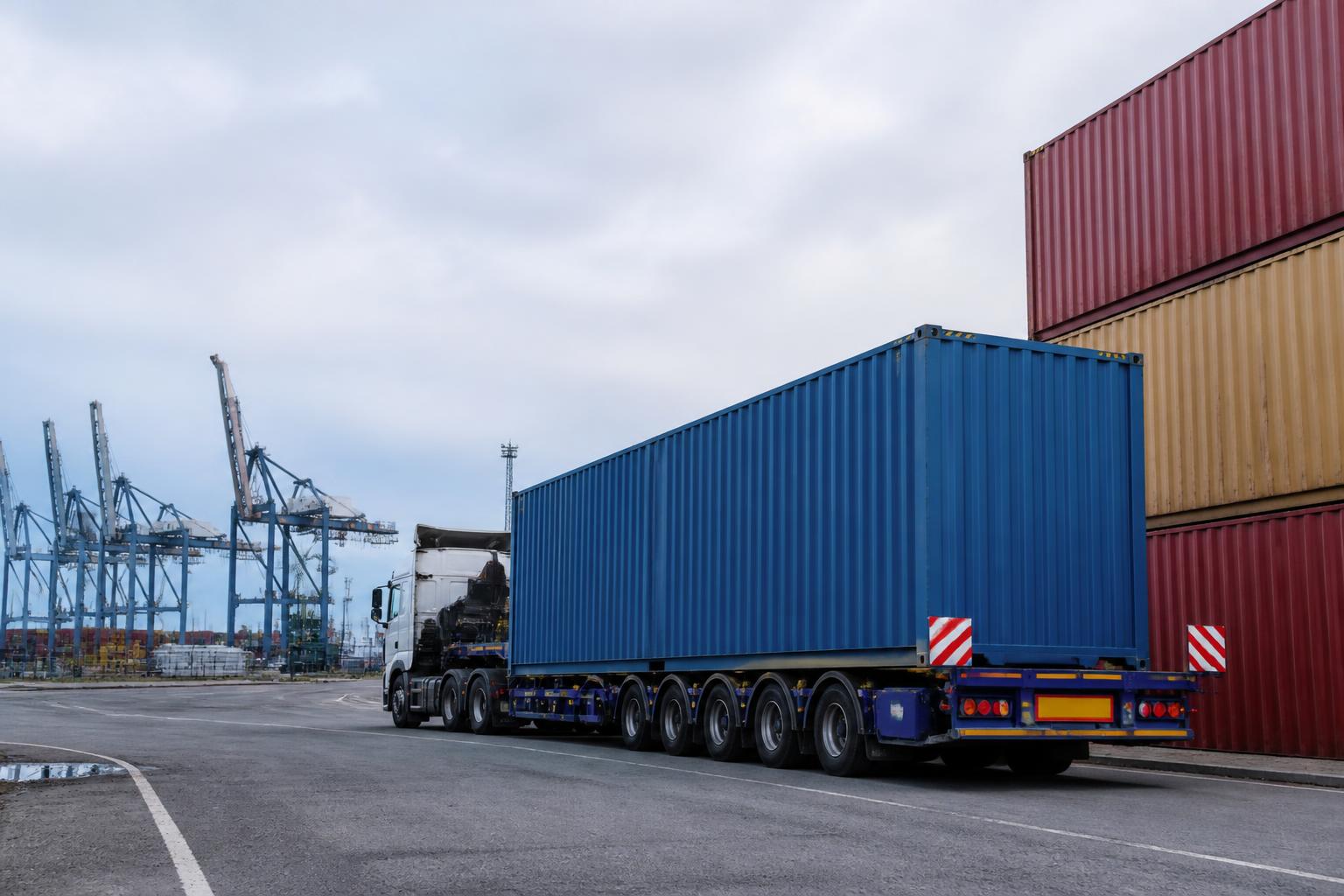
If you are comparing Liverpool hauliers for an oversize container move, the useful comparison is not who will quote quickest. It is who will identify, before the container is booked out, whether the box can actually be collected, what trailer it needs, whether the route works, and whether the delivery point can accept the vehicle safely.
That matters even more for oversize container delivery from Liverpool port because the failure points are usually known early. A standard import collection can often be planned from the container number, release, gross weight and delivery postcode. An oversize move usually needs more than that. The haulier has to check the physical envelope of the container and cargo, the trailer fit, the likely route restrictions, and whether the receiving site has enough space, access and unloading capability. If those checks are left until the day before collection, the risk shifts straight to missed slots, storage, demurrage and failed delivery.
What makes an oversize container move different from a standard Liverpool collection
An oversize move is different because the transport problem is no longer just the container type and destination. It becomes a dimensional and access exercise.
With standard ISO containers, a 20ft ISO Container, 40ft ISO Container or 45ft ISO Container within normal road limits can often be allocated against a suitable skeletal trailer with routine route planning. Once a Liverpool release is in place, customs are clear, and the port booking is secured through CARGOES VBS or another relevant system, the operational questions are familiar.
With an oversize unit, the first issue is what is actually oversize. That might mean the container itself is a specialist unit, or it might mean the cargo projects beyond the container footprint. For planning purposes, we need the true transport dimensions, not just the nominal container size. Length, width and loaded height all matter. So does where the overhang sits, front, rear, one side, or both sides.
Weight is the next issue. Gross container weight on its own is not enough if the load distribution creates axle concerns or limits trailer choice. A box can be legal in total weight but still unsuitable for a particular trailer configuration. That is why we ask for the declared gross weight and, where relevant, any information on cargo position inside the unit.
Trailer fit then becomes critical. A haulier quoting oversize work without discussing trailer type is only pricing the idea of the move, not the move itself. Some collections will work on a standard skelly, some need a different trailer arrangement, and some require a very specific setup to support the unit safely and legally.
Site access is the other major difference. A standard container delivery can still fail on a poor access road or a tight yard, but oversize work increases that risk sharply. A receiving point might have enough room for a normal articulated vehicle and not enough for the actual trailer and turning path needed for the oversize box. Width restrictions, parked vehicles, gate positions, soft ground, overhead cables and unloading reach all become more important.
So when we compare Liverpool hauliers for this work, we are not really comparing linehaul only. We are comparing planning discipline.
How to compare hauliers before the box is even booked out
The best time to compare operators is before the booking out instruction is sent and before anyone promises a delivery date to the consignee.
At enquiry stage, we would expect the following information as a minimum:
- Container number, if available
- Container type and size
- Whether it is FCL or an LCL movement requiring particular timing
- Shipping line and release status
- Customs position
- Gross weight
- Cargo dimensions if there is any overhang or abnormal height
- Delivery postcode and delivery site details
- Whether the site has unloading equipment, and what that equipment is
If the container is not yet released, that does not stop planning, but it changes what can be committed. A good haulier should distinguish between planning the move and confirming a collection slot. If the line release is still pending, if a hold remains open, or if customs are not fully clear, the operator should say so clearly rather than implying the move is secured.
For Liverpool specifically, we also look at timing against free time. A cheap quote is not cheap if it ignores the realistic booking window and leaves the box exposed to storage or demurrage. We have covered that wider issue in our piece on container haulage that cuts port storage risk.
Delivery point constraints need checking just as early as the port side. We want to know whether the site is a warehouse, factory, farm, construction location or open yard. We ask whether there are width limits on approach roads, whether there is room to turn, whether unloading is side, rear or top, and whether there are fixed booking times on site. If the consignee says “artics come here all the time”, that is useful but not enough. An oversize container move can still fail where standard inbound trailers do not.
For some loads, we also need to know whether the cargo is temperature controlled or subject to a special handling requirement. A Refrigerated Container is a separate planning question again, because power, timing and handover arrangements can matter as much as dimensions. If that is relevant, our article on moving a reefer from Felixstowe without avoidable port cost covers the kind of detail that should be checked early.
Which questions expose failed-collection risk fastest?
If you want to compare Liverpool hauliers properly, ask the questions that force an operational answer, not just a rate.
The fastest questions are these:
What exact loaded dimensions are you quoting on? If the answer comes back to nominal container size only, that is a warning sign. For oversize work, the operator should want the actual transport dimensions.
What gross weight and load distribution have you allowed for? This shows whether the haulier is matching the trailer to the load or simply assuming a standard setup.
Have you checked whether the box is released and customs clear, or are you quoting subject to that? This exposes whether the quote is based on a real collection position.
Which trailer type do you expect to use? A serious operator should be able to explain the likely trailer arrangement, even if final allocation depends on the confirmed dimensions.
Have you checked the route for width, height, bridge or turning restrictions? If the answer is “we will look at that later”, you know where the risk sits.
What do you need from the delivery site before you confirm the move? The right answer is not “just the postcode”. It should include access, unloading method and any site limitations.
Do you collect on your own fleet, and if not, who stays responsible? This matters on any move, but more so on oversize work where handover between parties can create gaps.
What freight liability applies? Do not assume standard cover is enough for a high value cargo simply because it is in a container.
If the first planned collection slot fails because of port, release or document issues, what happens next? A useful answer will explain rebooking, communication and cost exposure.
These questions quickly separate hauliers who plan oversize container delivery from Liverpool port as a real operation from those who treat it as a standard merchant haulage collection with a note in the margin.
Trailer choice, route checks and delivery site fit
Trailer availability is one of the biggest practical comparison points. If a haulier does not control the right equipment, the move may still be possible, but the timing becomes less certain.
We run 40 vehicles and 40 trailers of our own on operator licence OF2023521, and we use vetted partner hauliers on their own operator licences when volume or geography requires it. For oversize work, the important point is not just that a trailer exists somewhere in the market. It is whether the haulier can match the right trailer to the container and delivery plan within the required collection window.
Route checking is just as important. Liverpool collections for oversize deliveries need route planning that goes beyond sat nav mileage. Bridge heights, weak structures, width restrictions, tight urban turns, roadworks and local access bans can all affect viability. In Great Britain, route planning is a domestic road compliance issue, not an EU one, and the practical restrictions are often local rather than national. The legal route and the workable route are not always the same thing.
That is why we do not treat the port leg and the inland leg as separate problems. A Liverpool collection can be technically bookable and still commercially wrong if the inland route or receiving site makes delivery unworkable.
Site fit deserves the same level of checking. We want to know:
- Is the entrance wide enough for the planned vehicle?
- Is there room to swing in and out?
- Are there overhead cables, trees or canopies?
- Is the yard level and load bearing?
- Can the unloading equipment reach safely?
- Is the unload from ground level, dock, side or top?
- Does the site require a smaller shuttle vehicle for final access?
If those answers are uncertain, we would rather say so early. A failed delivery with an oversize box usually costs more than a delayed decision. For readers comparing general Liverpool service levels as well as oversize capability, our article on collecting from Liverpool for next day delivery explains what has to line up for a port move to work on time.
Freight liability, subcontracting and who stays responsible
This is where many comparisons become too superficial.
On container work, buyers often ask first whether a haulier uses subcontractors. The better question is how subcontracting is controlled and whether responsibility remains clear. There is nothing inherently wrong with subcontracting in port haulage. It is common across the sector. The issue is whether the load is passed on casually or managed properly.
At Jagelo Haulage Limited, we operate our own fleet and also use vetted partner hauliers on their own operator licences when needed. For the customer, the key point is that the movement remains under our control and the cover does not drop because a partner vehicle is used.
Our freight liability is £6,500 per tonne under RHA 2024 conditions, which is five times the usual RHA level of £1,300. The same limit applies to subcontracted loads. For higher value freight, up to £10,000 per tonne is available by arrangement. If you are comparing operators for oversize container work, ask for the liability basis in writing and ask whether the same limit applies when the load is subcontracted.
That matters because oversize cargo is often awkward, specialist or valuable, even where it is not formally abnormal load work. A low standard liability limit may not reflect the commercial exposure.
You should also check who is dealing with communication if the move changes on the day. If the port slot shifts, the release is delayed, or the delivery site says the unloading plant is not available, who is making the call and who has authority to reset the plan? A chain of brokered instructions is where avoidable errors tend to appear.
When Liverpool is the right port move to compare and when it is not
Sometimes the right comparison is genuinely between Liverpool hauliers. If the container is already routed through Liverpool, the release is under control, and the question is whether the box can be collected and delivered safely inland, then the job is to compare planning quality, equipment access and communication.
Sometimes, though, Liverpool is not the real issue.
If the receiving site cannot take the required vehicle, the problem is inland delivery design, not port collection. If the cargo dimensions are so restrictive that route options are poor from any major port, the problem is not specific to Liverpool. If the shipment has not yet been routed and your consignee is in a part of Great Britain better served from another port, then the real decision may be port choice, not just haulage choice.
We collect from Felixstowe, London Gateway, Tilbury, Purfleet, Southampton and Liverpool, so we see this distinction regularly. Some importers ask for a Liverpool quote when what they really need is a view on whether Liverpool is the best discharge point at all. Others assume changing port will solve an inland access problem that would still exist from any gateway.
If you are still at the stage of deciding whether Liverpool collection is the right move, start with the inland delivery facts. Confirm the loaded dimensions, weight, trailer requirement and site access first. Then compare the port options against free time, booking availability and road practicality. If Liverpool remains the right gateway, the next comparison is not who can “do oversize” in general, but who can plan your specific move properly.
For a wider view of our Liverpool coverage and how we handle port collections there, see our page on Liverpool container haulage and delivery planning. If your load may need a broader UK port comparison, our guide on who can move oversized containers from UK ports sets out the national planning points in more detail.
The practical test is simple. Before the box is booked out, the haulier should already be asking enough questions to tell you where the risk is. If they are not asking about dimensions, weight, trailer fit, route and site access, they are not yet planning the move. They are only pricing it.
What counts as oversize container delivery from Liverpool?
Usually a container move where dimensions, weight or delivery access make it non-standard. That can mean overheight, overwidth, overlength cargo within or on the container, or a box whose gross weight and site conditions need special planning.
Is the cheapest quote usually the best option for an oversize move?
Not necessarily. On oversize work, a low quote can cost more if the haulier has not checked trailer fit, route restrictions, port booking or delivery access and the move fails or incurs avoidable port charges.
What information should I send for a Liverpool oversize container quote?
Send the container number if available, size such as 20ft ISO Container or 40ft ISO Container, gross weight, cargo dimensions, collection port, delivery postcode, site restrictions and any deadline linked to free time.
Does Jagelo Haulage Limited collect oversize containers from Liverpool?
Jagelo Haulage Limited collects containers from Liverpool as well as Felixstowe, London Gateway, Tilbury, Purfleet and Southampton, delivering within Great Britain.
Can subcontracted oversize loads carry the same freight liability?
With Jagelo Haulage Limited, yes. Freight liability is £6,500 per tonne under RHA 2024 conditions, including subcontracted loads, with up to £10,000 per tonne available by arrangement.