Part of our guide to container haulage from Liverpool
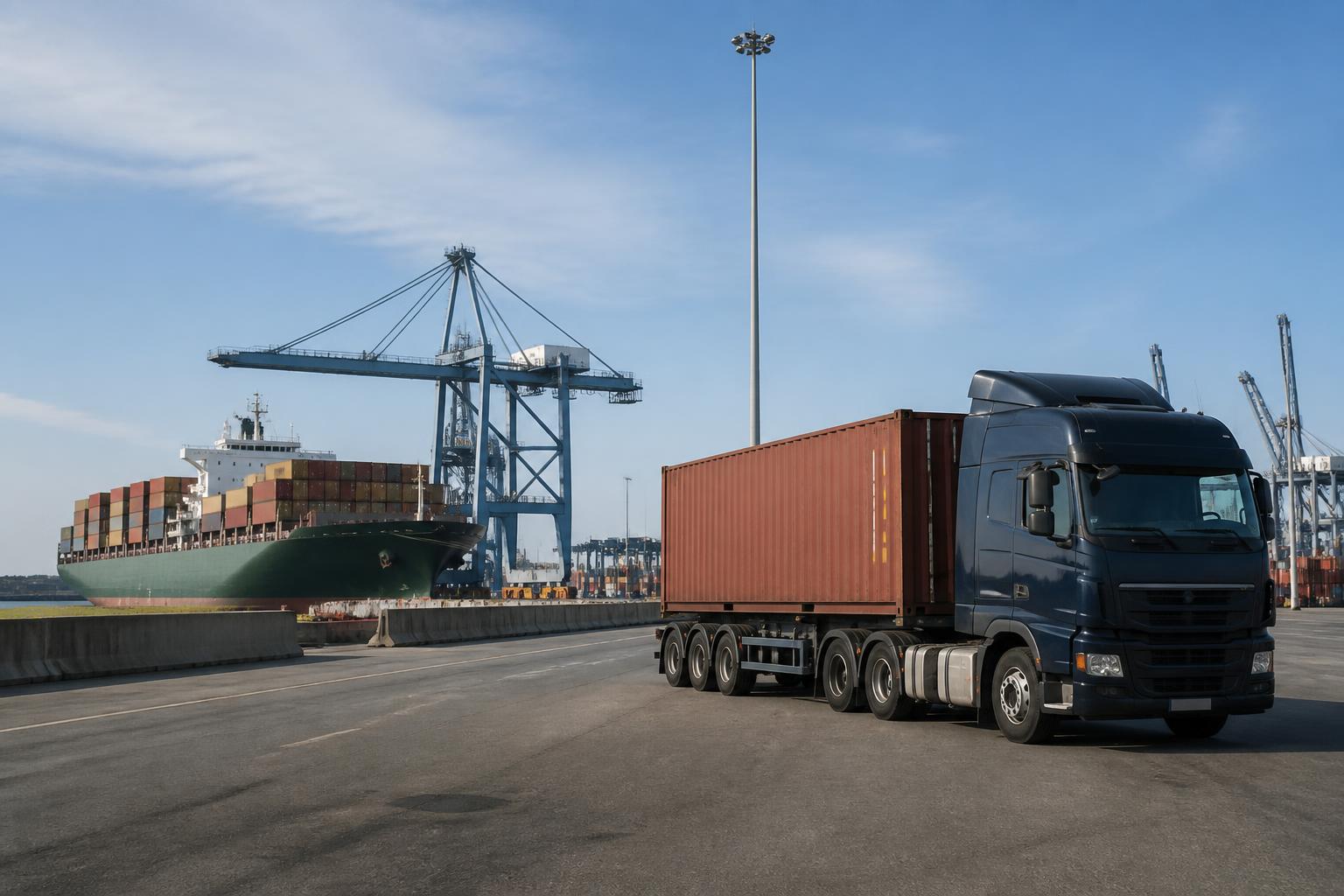
If you are booking container haulage from Liverpool, what usually matters is not just getting a truck to the port. It is getting the right box released, customs-cleared, booked, collected within free time, and delivered to a site that can actually take it. Most avoidable cost comes from timing failures between those steps, not from the road move itself.
We handle Liverpool collections as merchant haulage, booked directly by importers, freight forwarders and customs agents, with delivery throughout Great Britain. The job starts before the vehicle moves. We check release, customs status, line instructions, container size and weight, then plan the collection around port booking availability and the delivery site’s limits. That is how we reduce the risk of storage, wasted trips and missed free time.
What importers usually mean by container haulage from Liverpool
When readers ask about container haulage in Liverpool, they are usually referring to merchant haulage from the port to a delivery point in Great Britain. In practice that means we collect the loaded container from the terminal once the line and customs position allow it, then deliver to the consignee, warehouse, factory or transload site.
That scope normally includes:
- port collection from Liverpool
- haulage to the final delivery point in Great Britain
- port slot booking where the terminal requires it
- checking whether the box is actually collectable before dispatch
- planning around free time and delivery restrictions
- communication if there is a hold, delay or risk of extra cost
For most import jobs, we are not acting as the ocean carrier’s nominated inland leg. We are acting under merchant haulage instructions from the importer or forwarder. That means the booking party wants control over the inland move, the delivery timing and the communication around exceptions.
The traffic itself varies. We move standard dry ISO containers, including a 20ft ISO Container, 40ft ISO Container and 45ft ISO Container. We also handle a Refrigerated Container where the movement and delivery conditions are agreed in advance. Some jobs are straightforward FCL deliveries to one receiver. Others are part of a wider movement, such as port to devanning warehouse, onward distribution, or an LCL-related movement where the container itself is one leg in a bigger plan.
Liverpool often sits alongside other UK port flows. Many of our customers import through more than one gateway and want the same operational standard across them. We cover Felixstowe, London Gateway, Tilbury, Purfleet, Southampton and Liverpool, using our own fleet on operator licence OF2023521, with vetted partner hauliers for overflow volume where needed. That matters when a forwarder wants one process for updates, PODs and escalation, rather than a different approach at each port.
What has to be ready before a box can be collected
A container is not ready because the vessel has arrived. Before collection, we need the operational position to be clear enough that sending a vehicle is realistic.
The first point is release. We need to know the shipping line has authorised collection and that the relevant release reference or line instruction is in place. If line release is still outstanding, dispatching a driver is simply creating risk.
The second point is customs status. In the UK, import formalities must be in a collectable state before the box should be sent for. Depending on the movement, that may mean customs clearance is complete, any required entry has been accepted, and there is no live hold preventing out-turn. If there is an examination, document query or other intervention, we need that flagged early. The practical question is simple, can the terminal release the container to the haulier now.
We also need the core container details confirmed:
- container number
- size and type
- gross weight
- whether the unit is a standard dry box or Refrigerated Container
- commodity, where relevant to carriage restrictions
- collection terminal
- last free day, if known
- delivery postcode and any timed booking requirement
Container size matters operationally. A 20ft ISO Container at a high gross weight is a very different road move from a lighter 40ft ISO Container or 45ft ISO Container. Weight affects routeing, axle planning and whether the delivery site can unload promptly. If a box is heavy, we want the actual gross figure, not an estimate lifted from an early draft.
For UK domestic haulage, the road legality question is immediate and practical. We need enough information to judge whether the loaded container can move lawfully on the intended equipment and route. If there is any risk of an overweight position, we would rather identify it before the booking is made than have the box sit in port while options are worked through. We cover that in more detail in our article on moving overweight containers without port delays.
Delivery constraints also need checking before collection, not while the truck is on the motorway. We need to know whether the site can accept the container length, whether there are vehicle restrictions, whether unloading is by forklift, side loader, dock leveller or live devanning, and whether the receiver needs the driver to arrive within a narrow slot.
If the move involves controlled goods, waste, or products with specific carriage requirements, that must be declared at booking stage. We are an upper tier waste carrier and dealer, CBDU471791, and are registered with APHA to carry Category 3 animal by-products, animal feed in shipping containers, quay to premises, U1433815/TRANS. Those points matter only if they are relevant to the load, but where they are relevant they need to be dealt with before collection, not after.
How free time, demurrage and port booking affect the job
The avoidable port cost on Liverpool work usually comes from time running away between availability and collection. Once a container is discharged and released, the clock may be running under the shipping line’s free time terms. If the box is not collected in time, demurrage or related storage cost can follow, depending on the contractual setup and the line’s terms.
Our planning starts with one question, what is the actual collection window? That means checking:
- when the container is expected to be available
- whether line release is already in place
- whether customs clearance is complete
- what the last free day is
- whether the port has appointment constraints
- whether the delivery site can receive on the day the box should be collected
That sequence matters. There is no value in securing a collection plan for day one if the delivery point cannot unload until day four and there is nowhere lawful and sensible to hold the box in between.
Port booking is the next pressure point. Different ports and terminals have different operating patterns, and appointment availability can tighten quickly around vessel bunching, peak discharge periods and short working weeks. Readers who know Felixstowe will know CARGOES VBS. Elsewhere the terminology may differ, but the practical issue is the same, if the slot is not there, the box does not move when you wanted it to move. On some flows the relevant term may be Container Booking System or CBS, but whatever the local system is called, the planning discipline is identical.
At Liverpool, we plan collections against the actual booking position available at the time, not against an ideal schedule written before the box is released. If we can see a risk to free time because release is late, customs is still pending, or the site can only take delivery on a restricted day, we say so early. That gives the booking party time to decide whether to prioritise the collection, amend the delivery plan, or deal with the line before charges accrue.
This is where experienced merchant haulage makes a difference. The road leg is only one part of the job. The value is in joining up release status, booking availability and the receiver’s ability to take the container. That is the same discipline customers rely on across our other port flows, whether they need same-day collection from Tilbury without missed slots or a timed inland move from another gateway.
We also look at the risk of wasted trips. If the line instruction is unclear, the customs position is not final, or the delivery point has not confirmed unloading, sending a vehicle too early can create cost without moving the container. A missed collection because the box is not actually released is not a fast service. It is poor control.
What information a haulier needs to plan delivery properly
A workable delivery plan depends on practical detail. The more complete the instruction, the less likely the job is to fail at the gate or on arrival.
For Liverpool collections, we normally need the following:
- container number
- port or terminal of collection
- shipping line, if relevant to release handling
- container size and type
- gross weight
- commodity, where it affects handling or compliance
- customs status
- release status
- last free day
- delivery address and postcode
- requested delivery date
- site opening hours
- booking reference for delivery, if the receiver operates one
- unloading method
- contact name and phone number for the receiving site
- any vehicle access restrictions
- whether the move is FCL, LCL-related, or part of a wider movement
- whether the box needs to remain on wheels for live unload
- whether a Refrigerated Container needs any specific handling on arrival
Site access is often where preventable problems happen. We need to know if there are narrow approach roads, low trees, tight gate geometry, weight-restricted approaches, one-way systems, or mandatory PPE and induction rules. A warehouse that can receive a curtain-sider is not automatically suitable for a loaded container vehicle.
Unloading method is equally important. Some customers have a forklift and will strip on the vehicle. Some use a loading bay for floor-loaded goods. Some need the container delivered to a devanning contractor. Some want live unload only and cannot accept waiting time. If the site expects us to drop the box and leave, that is a different service from standard laden delivery and needs to be agreed as such.
Whether the load is FCL or linked to an LCL plan also changes the delivery logic. A straightforward FCL import to an established warehouse is usually the simplest case. An LCL-related movement, or a container going to a third-party devanner, may involve stricter booking windows, shared-site rules and time-critical unloading. If the Liverpool move is just one leg in a broader chain, we need to know that from the start.
Volume and dimensions inside the box can matter too. For some deliveries, especially where the receiver is planning labour or forklift capacity, the number of pallets or the CBM helps the site prepare. CBM does not usually determine the road move on its own, but it can affect unloading time and whether the receiver can turn the vehicle quickly enough to avoid delays.
Where cargo value is a concern, the right discussion is best had before dispatch. Our standard freight liability is £6,500 per tonne under RHA 2024 conditions, five times the RHA standard of £1,300, and subcontracted loads carry the same limit. Up to £10,000 per tonne is available by arrangement for high value freight. That is a practical point for the booking party, not a marketing extra. If the exposure is above standard terms, we need to set the cover correctly before the movement starts.
When Liverpool is part of a wider UK port coverage plan
Many importers and forwarders do not buy haulage port by port. They want one haulier that can cover Liverpool as part of a wider UK plan, with the same operating method across the main deep-sea and short-sea gateways they actually use.
That is usually the case when:
- the importer routes freight through more than one UK port
- the forwarder manages multiple customers with different discharge ports
- inland delivery points are spread across Great Britain
- the booking team wants one escalation route for release and collection issues
- reporting, POD handling and exception management need to be consistent
In those cases, the question is not only whether we can collect from Liverpool. It is whether we can apply the same control to Felixstowe, London Gateway, Tilbury, Purfleet and Southampton, while keeping communication simple for the person booking the work.
That is how we operate at Jagelo Haulage Limited. We run our own fleet of 40 vehicles and 40 trailers and add vetted partner capacity when volumes require it. Since 2019 we have moved more than 75,000 containers, mostly for importers and forwarders booking merchant haulage directly. The point of that scale is not a headline number. It is that the same process can be used across ports, whether the issue is release timing, weight, booking slots, delivery restrictions or a change after discharge.
If your Liverpool traffic is part of a broader UK import programme, it often helps to look at the port flows together rather than treat each one as a separate exception. Readers comparing options across gateways may also want our articles on reliable Southampton container delivery and moving containers from London Gateway to the Midlands.
For Liverpool specifically, the main point is simple. Good container haulage is not just a truck turning up at the port. It is release checked, customs status confirmed, collection booked at the right time, weight and equipment matched properly, and delivery planned around the receiver’s actual constraints. That is what keeps a routine import move routine, and what helps avoid port cost that did not need to arise.
What is merchant haulage in practice?
It means the importer or freight forwarder books the road move directly with the haulier, rather than taking haulage arranged by the shipping line. That gives more direct control over collection timing, delivery planning and communication when a container is at risk.
What usually delays a Liverpool container collection?
The common causes are missing release, customs holds, unclear line instructions, booking availability, weight or size issues, and delivery details arriving too late. A workable plan starts with checking those points before the collection is booked.
What details should I send when asking for a quote?
Send the port, container type, collection reference, delivery postcode, cargo weight, whether it is FCL or linked to an LCL movement, and any site restrictions. If the cargo may be regulated, send the UN number and class so the haulier can confirm whether it can take it.
Can one haulier cover Liverpool and other UK container ports?
Yes, many importers and forwarders prefer one operator for consistent planning across ports. Jagelo Haulage Limited collects from Liverpool, Felixstowe, London Gateway, Tilbury, Purfleet and Southampton.
Does the haulier book the port slot?
That is often part of the job. For merchant haulage, the haulier typically books the collection slot, checks the container can be collected and plans the move against free time so issues are raised early.