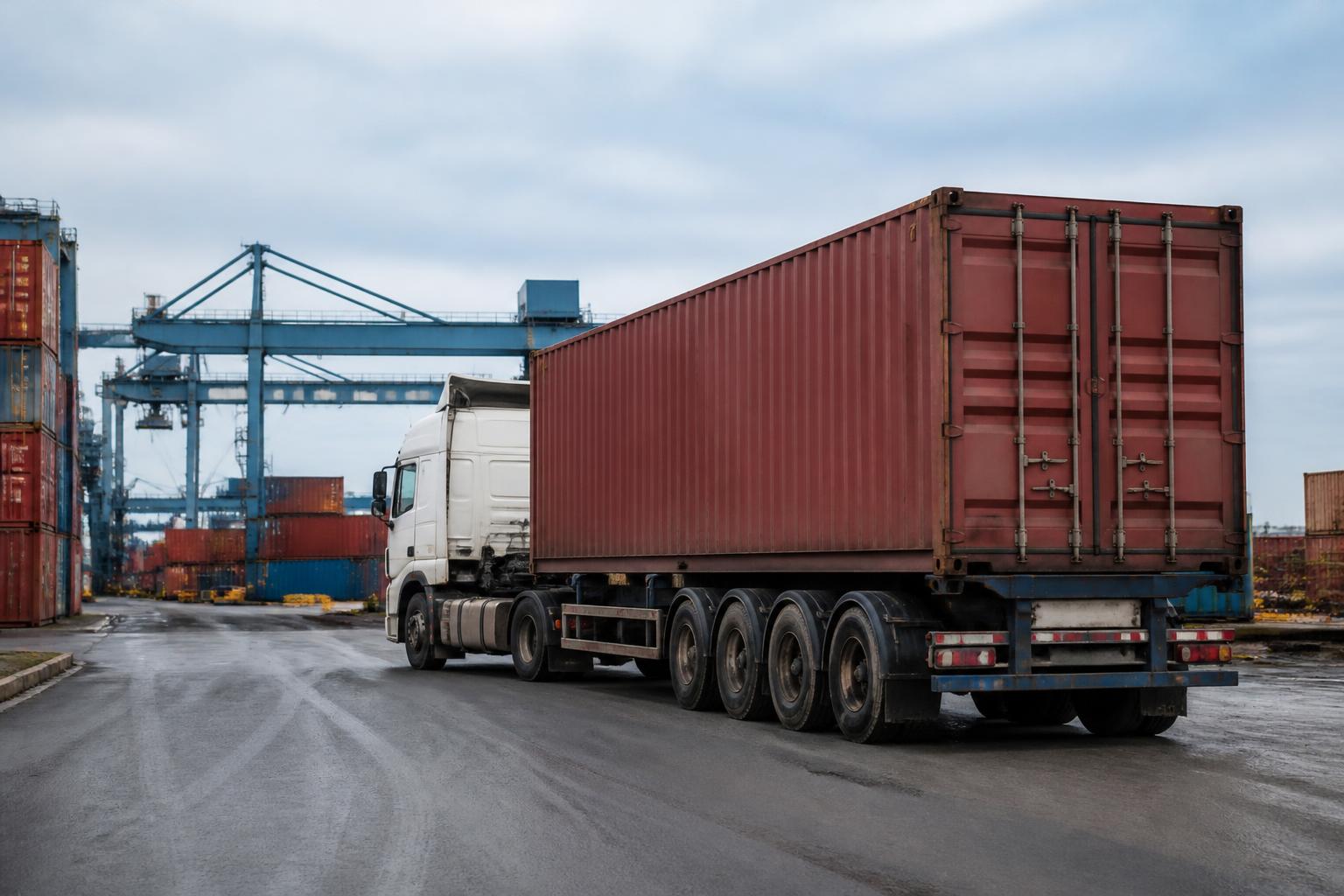
If you are booking port collections on merchant haulage terms, higher freight liability cover changes the conversation from “what is the minimum under the conditions” to “what is the realistic shortfall if something goes wrong on this load”. For many container moves, the standard RHA limit is enough. For others, especially dense or high value cargo, it can leave a large gap between the carrier’s liability and the invoice value of the goods.
At Jagelo Haulage Limited, our freight liability is £6,500 per tonne under RHA 2024 conditions, not the standard £1,300 per tonne. That same limit applies on subcontracted loads moved by vetted partner hauliers on their own operator licences, and for some high value freight we can arrange up to £10,000 per tonne in advance. For importers, freight forwarders and customs agents, that matters because the liability position should be checked before the port slot is booked, not after a problem.
What higher freight liability cover actually changes
Under RHA 2024 conditions, the standard liability limit is £1,300 per tonne. That is not cargo insurance, and it is not a promise to pay the full invoice value of every load. It is a contractual cap on the haulier’s liability, subject to the terms, exclusions and the facts of the incident.
A higher per-tonne limit changes the level at which that cap sits. If the agreed limit is £6,500 per tonne, the maximum recoverable amount under the haulier’s liability terms is materially higher than it would be under the RHA standard. On a 10 tonne cargo, the difference between £1,300 and £6,500 per tonne is significant. The same is true on a 20 tonne cargo, though the relevance depends on the value of the goods and whether the invoice value per tonne sits above or below the limit.
For importers, that changes the residual risk they carry themselves. If the cargo value is well above the liability cap, there is an uninsured exposure unless separate goods in transit or marine cargo insurance responds. If the cargo value is within the higher cap, the shortfall may be reduced or removed, depending on the circumstances and the applicable terms.
For freight forwarders, the issue is often contractual as much as operational. If you have promised a client a certain standard of handling, or if you are arranging inland transport as part of a wider FCL movement, you need to know whether the road leg liability is aligned with the cargo profile. A standard limit may be acceptable for one account and unsuitable for another.
For customs agents, the point is slightly different. You may not be the cargo owner, but you are often the party coordinating release, customs status and collection timing. If a box is selected, delayed, amended or re-booked, you want early visibility of any cargo characteristic that changes the haulage risk position. Liability is one of those characteristics, especially where the goods are compact, high value or mixed.
This is also where people often confuse liability cover with cargo insurance. They are not the same. A haulier’s freight liability sits within the contractual framework, here RHA 2024 conditions. Cargo insurance is a separate policy covering the goods themselves, usually arranged by the cargo interest or forwarder. In practice, sensible planning looks at both.
When standard cover is likely to be too low
The standard limit is most likely to be too low where the cargo value per tonne is high. That can happen in more scenarios than many people expect.
The obvious case is high value goods in a relatively light shipment. Electronics, specialist components, branded consumer products, medical items, or premium retail stock can carry a high invoice value without using much of the container’s weight capacity. If a 40ft ISO Container holds goods with a value far above £1,300 per tonne, the standard limit can leave a substantial gap.
Dense cargo is another common issue. A 20ft ISO Container is often used for heavy commodities because it cubes out less quickly and can take weight more efficiently than a 40ft ISO Container. But dense does not always mean low value. Metals, engineered parts, machinery components, chemicals in approved packaging, and some food ingredients can be both heavy and valuable. If the invoice value per tonne is above the liability cap, the exposure is immediate.
Mixed loads matter too. In LCL planning, people are used to looking at value by line item. On an FCL container, that discipline is sometimes lost because the load is treated as one booking. A mixed import might contain low value cartons on one side and high value pallets on the other. The average value across the whole box can hide the fact that a loss affecting a concentrated part of the load would still be commercially painful.
Another scenario is when the cargo is compact and the invoice value is high relative to weight. This is where a per-tonne liability model can look particularly thin. A shipment can occupy only a modest number of CBM, weigh little, and still carry a high invoice value. In those cases, a higher per-tonne limit may still not match the full cargo value, but it narrows the gap.
The same logic applies to some specialist container types. A Refrigerated Container may carry chilled or frozen product with a value profile that justifies closer checking. We cover reefer collections as part of our wider port work, and where the cargo profile needs extra attention it is better to confirm that before booking. If reefer planning is part of your regular flow, our guide to reefer container haulage without extra port cost covers the operational side.
Overweight or near-limit loads are another area where people focus on axle weights, routeing and port handling, but forget liability. A heavy box may be entirely routine from a transport point of view and still carry goods whose value per tonne pushes above the standard limit. If your regular work includes heavy imports through Tilbury, it is worth checking both transport feasibility and liability at the same time. We set out the transport side in our article on Tilbury overweight container haulage without avoidable delay.
None of this means every shipment needs enhanced cover. Many do not. Standard consumer goods, low value raw materials, and cargo where separate insurance already deals with the commercial exposure may sit comfortably under standard terms. The point is to check the value-to-weight relationship of the actual load, not assume that “a container is a container”.
How to compare hauliers on liability, subcontracting and terms
If you are comparing hauliers, ask for the exact liability basis in writing. “Covered” is not enough. You need to know whether the move is under RHA 2024 conditions, what the per-tonne limit is, and whether any different terms apply to particular cargoes or routes.
Start with five practical checks.
First, confirm the liability limit. Ask whether the quoted figure is the standard RHA amount or an enhanced amount. If it is enhanced, ask whether that applies to all loads by default or only when specifically agreed.
Second, confirm the terms. RHA 2024 conditions should be named directly if that is the basis. You should also ask whether there are any additional exclusions, declared value requirements, packaging assumptions, or commodity restrictions that affect the liability position.
Third, ask about subcontracting. Many container hauliers use partners at peak times or on out-of-area work. That is normal. The issue is whether the same liability limit follows the load when it is subcontracted. At Jagelo Haulage Limited, subcontracted loads carry the same £6,500 per tonne limit, and our partner hauliers operate on their own operator licences after being vetted by us. That consistency matters more than a sales statement that only applies when the company’s own vehicle turns up.
Fourth, check whether the limit applies across the whole move you are booking. A port collection can involve more than one operational stage, even when it is one road movement from quay to premises. You want to know that the same liability basis applies whether the box is collected from Felixstowe, London Gateway, Tilbury, Purfleet, Southampton or Liverpool, and that there is no unexplained change because of location, booking method or subcontractor use.
Fifth, ask how higher value loads are handled. If a shipment exceeds the standard enhanced limit, can a higher level be arranged in advance, and what information is needed to do it? With us, up to £10,000 per tonne is available by arrangement for high value freight. That conversation needs to happen before the move is booked.
Also check the operational terms around release and waiting risk, because they affect responsibility and timing even when they do not alter liability for cargo loss. Ask who books the port slot, who monitors release status, and how customs holds or VBS changes are handled. At Felixstowe, for example, booking through CARGOES VBS needs to align with release and customs clearance. Elsewhere the relevant system may be the Container Booking System or CBS, depending on the port and terminal process. The name matters less than whether the haulier is actually managing the booking against the live status of the box.
What to ask before booking a port collection
The best time to deal with liability is before the collection is put into the booking queue. Once a slot is booked and the job is moving, changes are harder to absorb cleanly.
We suggest confirming the following points before asking us to book the collection.
Cargo description. Be precise. “General cargo” is rarely enough if the goods are high value, regulated, fragile, feed-related or otherwise non-standard. If the box contains animal feed in shipping containers or Category 3 material, say so early. We are an upper tier waste carrier and dealer, CBDU471791, and are registered with APHA to carry Category 3 animal by-products, animal feed in shipping containers, quay to premises, U1433815/TRANS.
Container type and size. Confirm whether the move is for a 20ft ISO Container, 40ft ISO Container, 45ft ISO Container or Refrigerated Container. If it is open top, bulk or another specialist type, that should be identified from the start because planning, routeing and equipment allocation may differ.
Gross weight. We need the actual weight, not a rough estimate. Weight affects vehicle planning, road legality, and whether a collection is straightforward or needs additional checking. It also affects how the liability cap should be assessed against value.
Invoice value or value per tonne. If you need higher cover, tell us the value early enough for it to be arranged. The simplest working question is whether the goods are likely to exceed £6,500 per tonne in value. If yes, flag it before the slot is booked.
Load profile. Is it one commodity, mixed goods, palletised cargo, loose cartons, machinery, food ingredients, feed, or another specific profile? Mixed loads often justify a closer look even where the total value is not exceptional.
Release status. Confirm that the box is or will be released by the shipping line. A haulier can book only against the status available. If the release is pending, say when you expect it to complete.
Customs position. Is the entry cleared, on hold, under query, or awaiting documents? In the UK, this is a practical booking issue, not an academic one. A box that is not customs-cleared at the point of collection can miss its slot or sit in uncertainty while free time runs down.
Free time and last free day. We always want this visibility before booking. It drives urgency, slot choice and escalation. The same applies whether the collection is from Felixstowe, London Gateway, Tilbury, Purfleet, Southampton or Liverpool.
Delivery constraints. Confirm site hours, booking-in requirements, forklift availability, tipping restrictions, and whether the container is live-unload or grounded. A port slot that works for the quay is no use if the delivery point cannot receive.
Document pack. The practical minimum is container number, booking reference if applicable, release details, delivery address, contact names, and any customs or commodity notes that affect the move.
If your traffic team wants better visibility after the booking is live, our article on container tracking without adding avoidable cost explains how to keep the inland leg visible without complicating the move.
Where higher cover fits into UK container haulage planning
In UK container haulage, liability should sit near the front of the planning process, alongside release, customs status, weight and free time. It is not just an insurance detail to tidy up later.
That is especially true on merchant haulage, where the importer or forwarder is directly instructing the road leg and wants the haulier to control the collection from the port side. We collect containers from Felixstowe, London Gateway, Tilbury, Purfleet, Southampton and Liverpool, delivering across Great Britain, and most of our work is booked this way. In that model, early risk visibility is part of the service. If the box is at risk because the release is late, the customs position is unclear, the free time is tight, or the cargo needs higher cover, we need to know before the booking becomes urgent.
This is one reason we ask for the actual cargo details, not just the container number and discharge port. A 20ft ISO Container of low value materials and a 20ft ISO Container of compact high value goods may look the same in the booking screen, but they do not carry the same risk profile. The same is true of FCL versus cargo assembled from multiple value lines, or loads where the invoice value per tonne is much higher than the transport buyer first assumed.
Operationally, this planning sits alongside the booking systems used by the port or terminal. Whether the slot is booked through CARGOES VBS, a Container Booking System, or CBS, the principle is the same. We want the release, customs and risk position clear enough that the booking is made on a realistic basis. That reduces missed slots, avoidable storage pressure and last-minute changes.
Scale matters here as well. Since 2019 we have moved more than 75,000 containers, about 13,000 a year, using 40 vehicles and 40 trailers of our own on operator licence OF2023521, with vetted partner hauliers covering additional volume. That gives us the operational base to plan collections properly, not just react once the box is already close to last free day.
If you regularly move specialist cargoes, the same discipline applies. Feed, reefer, open top and overweight work all benefit from deciding the liability position at the same time as the transport plan. For example, if you are planning feed imports, our guide to feed container haulage without avoidable port cost sets out the wider checks that should be done before collection.
Choosing container haulage with higher liability cover is not about buying the biggest number available. It is about matching the liability basis to the cargo, making sure the same limit applies if the load is subcontracted, and confirming that the terms are clear before the port slot is booked. When that is done early, the inland move is easier to manage and the commercial risk is clearer for everyone involved.
What does £6,500 per tonne mean in container haulage?
It is the haulier’s freight liability limit per tonne under the agreed terms, not the full cargo value automatically. If the goods are worth more per tonne than that limit, there may still be a shortfall unless higher cover is arranged.
Is standard RHA cover enough for most container loads?
Not always. It may be adequate for lower-value cargo, but dense or high-value goods can exceed the standard limit quickly. The right answer depends on the cargo value per tonne, not just the container size.
Does the same liability limit apply if the load is subcontracted?
That should be checked before booking. Jagelo Haulage Limited states that its £6,500 per tonne freight liability applies to subcontracted loads as well, which is an important point to confirm with any haulier.
Can higher cover than £6,500 per tonne be arranged?
Yes, in some cases. Jagelo Haulage Limited can offer up to £10,000 per tonne by arrangement for high-value freight, so the cargo details need to be discussed before the move is booked.
Why does liability matter if the haulier is only doing merchant haulage?
Because merchant haulage still leaves the road leg exposed to loss or damage risk. If a claim arises, the liability terms and per-tonne limit will shape what can be recovered from the haulier.