Part of our guide to container haulage from Southampton
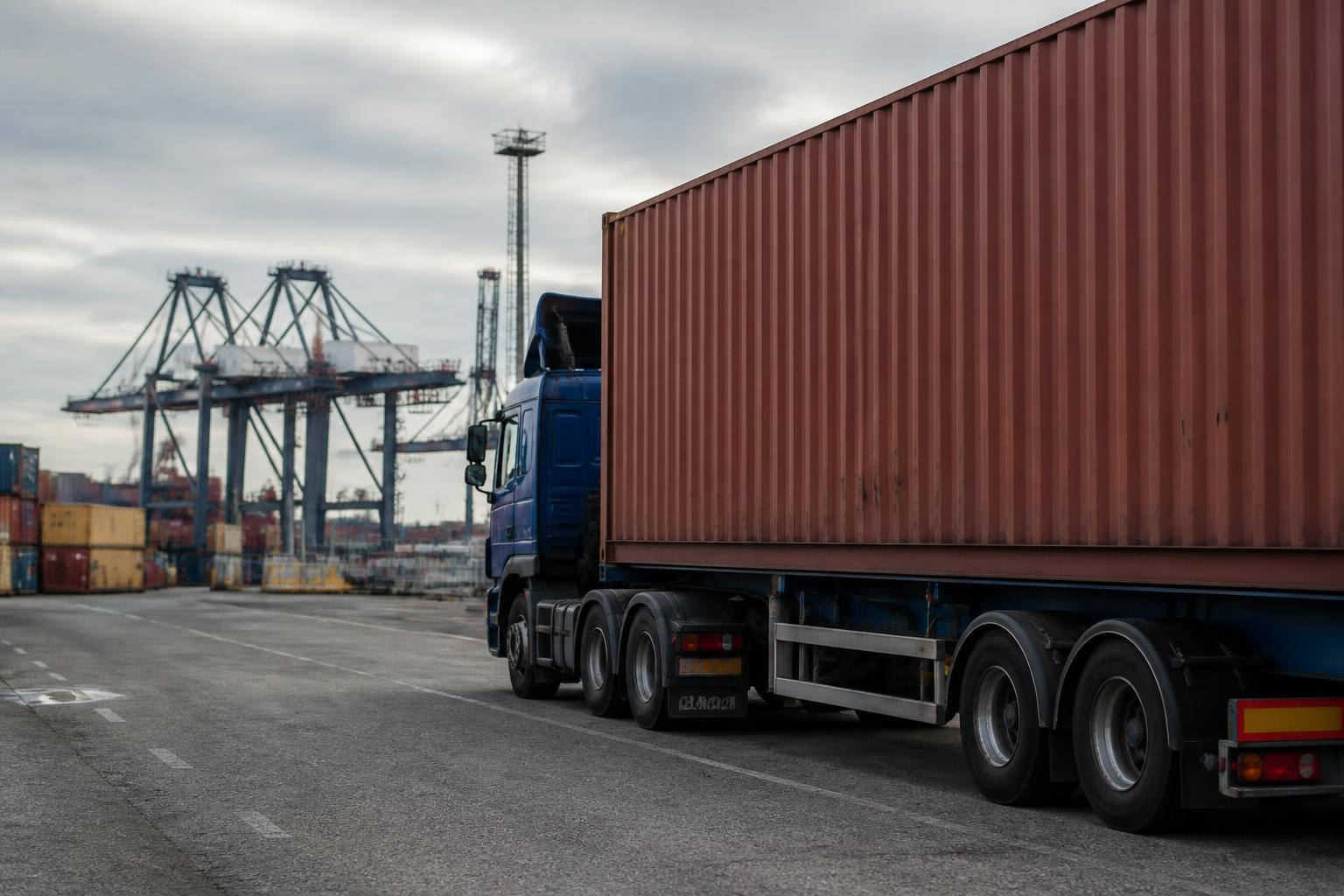
Booking Southampton haulage successfully is usually decided before the driver leaves the yard. The common failures are not dramatic road issues, they are basic readiness problems at the port end. A container is still on customs hold, the line release is not in place, free time has been assumed from vessel ETA instead of the last free day, or the delivery point cannot actually take the box when it arrives. By the time that becomes obvious, the slot has been wasted and port cost is already building.
When we book Southampton collections, we plan around collectability and free time, not hope. That means checking whether the container can be collected in practice, whether the delivery can be done within the same operating window, and whether any issue is likely to push the move into storage or demurrage. For importers, forwarders and customs agents, that is the difference between a routine port move and an avoidable cost problem.
Why Southampton bookings go wrong before the lorry even moves
Most delayed Southampton jobs go wrong because somebody treats vessel arrival as if it means the box is available. It does not. A vessel can be alongside and the container can still be uncollectable for several reasons.
The first is missing release. The shipping line or carrier release has not been issued, or it has been issued but not correctly reflected in the port or line system. If the release chain is incomplete, the haulier cannot collect, however urgent the delivery is.
The second is customs status. In the UK, a container can be physically present at Southampton but still not cleared to move inland. That may be because the import entry is not accepted, there is an inspection hold, or the box is pending further intervention. A customs agent may be waiting on documents, commodity detail, or a decision on the routing. Until that is resolved, a booked collection is only provisional in real terms.
The third is unclear free time. This is one of the most expensive misunderstandings on port work. Free time is not a rough guide. It is the commercial deadline that determines whether demurrage starts. Different lines apply different terms, and the count may not align with what the consignee expects from the ETA. If nobody confirms the last free day and what event starts the clock, planning becomes guesswork.
The fourth is late handover between parties. We often see a container become operationally ready only after the useful booking window has narrowed. The importer is waiting on the forwarder, the forwarder is waiting on customs, customs is waiting on paperwork, and the haulier gets the job once the same day collection has become unrealistic. Southampton is not unusual in that respect. The issue is not the port itself, it is the delay in passing a complete set of instructions to the party expected to move the box.
The fifth is delivery site readiness. A warehouse may say it can receive, but not state whether it can accept a 40ft ISO Container or 45ft ISO Container, whether the booking is strict, whether a side-loader is needed, whether the load is overweight for local access, or whether unloading is same day. A container that can be collected is still not a viable move if the receiving point cannot lawfully or practically take it.
What to line up before you book Southampton haulage
A Southampton booking works best when the haulier gets the operational facts in one pass. Not a chain of partial updates over several hours, and not an instruction that says only “please collect urgently”.
At booking stage, we need the core container details. That means container number, size and type, whether it is a 20ft ISO Container, 40ft ISO Container, 45ft ISO Container or Refrigerated Container, and whether the move is standard dry freight, temperature controlled, waste, feed, or another controlled load type. If it is FCL, that is straightforward enough, but for LCL devans or part cargo positioning we also need to know the actual delivery requirement, not just the port collection reference.
We also need the release position. Has the line release been issued, and if so by whom? Is the box customs cleared, or still subject to hold? If there is a known inspection risk, we would rather know that at booking than after a wasted slot. The best handover is a clear statement of what is already in place and what is still pending.
Delivery information matters just as much as the port side. We need the full delivery postcode, contact name, site restrictions, booking reference if one is already required, and any timing constraints. If the site only tips between certain hours, if it closes for lunch, if it refuses arrivals after a set time, or if it cannot handle a vehicle of full artic length, that changes the collection plan.
Weight is not an afterthought. Gross container weight and estimated cargo weight should be stated early. A heavy 20ft ISO Container may require a different planning decision from a light 40ft ISO Container. Bridge limits, local road restrictions, axle implications and delivery site surface conditions all matter. “General cargo” is not enough if the payload puts the move close to legal or practical limits.
For some cargoes, supporting details are also needed upfront. Hazardous cargo classification, waste status, or APHA-sensitive loads should be identified at booking, not discovered later in the chain. We are an upper tier waste carrier and dealer, CBDU471791, and we are registered with APHA to carry Category 3 animal by-products, animal feed in shipping containers, quay to premises, U1433815/TRANS. That only helps if the movement requirement is declared at the start.
If the consignee is working from carton counts or pallet counts rather than container detail, it also helps to include the basic shipment profile, such as total pallets or CBM, so the receiving point and unloading expectation are properly understood.
How to plan the collection around free time rather than ETA
The practical way to plan Southampton haulage is to work backwards from the last free day and the point at which the container is actually collectable. ETA is useful, but only as one input. It is not the collection trigger.
Start with the commercial deadline. Confirm the last free day from the shipping line terms applying to that container. Then confirm what has to happen before the box can be collected. Is the release already live? Has customs cleared? Is there any exam risk? Has the delivery site confirmed it can receive within the required window? Only once those points are in place do you have a real collection date.
From there, plan the move in reverse. If the last free day is tight, the booking should be made as early as possible with a realistic readiness date, not a hopeful one. If the box is not yet released, say that clearly and flag the earliest likely collectable day. If the warehouse cannot receive on that day, you may need to decide whether to deliver to an interim point, move on a different date and accept cost, or challenge the line terms before the clock expires.
This is where communication between importer, forwarder, customs agent and haulier matters. A same day update can change whether a box should be slotted immediately or held for the next available collection. If the release lands late in the afternoon, a nominally “available” container may still be a next day move in practice.
The same principle applies whether the final delivery is local or inland. If the box is going to the Midlands, the North, or a constrained warehouse booking, the free time plan must include the delivery side reality. We cover Southampton and the main UK inland lanes, and the planning issue is always the same. A container is only safely within free time if both collection and delivery can be executed in the actual operating window. For examples of how that affects inland planning, see our guide to Southampton to Birmingham container haulage without avoidable port cost.
When merchant haulage is the better fit from Southampton
Merchant haulage is usually the better fit when the importer or forwarder wants control over timing, communication and exception handling. That is especially true when free time is tight, customs status is moving, or the delivery point has specific booking rules.
Under merchant haulage, we book the move directly for the customer rather than relying on a carrier-controlled arrangement. That gives clearer lines of responsibility. The party paying for the haulage can speak to the haulier actually planning the job, rather than trying to resolve a port cost issue through several layers of carrier process.
It also helps with slot booking and reprioritisation. If a release lands earlier than expected, or a customs hold falls away, a direct merchant haulage instruction can often be adjusted faster than a move sitting inside a broader carrier programme. The same applies when the opposite happens and the box is not going to be collectable in time. The earlier that is identified, the more chance there is to avoid wasting a booking and adding cost.
For forwarders, merchant haulage also gives better visibility across multiple consignments. If several Southampton containers are moving to different warehouses with different constraints, direct control of the haulage plan usually produces a cleaner result than treating every box as a generic port delivery.
That does not mean every movement must be handled the same way. But where the importer wants one point of contact, practical updates, and a haulier who will say early when a box is at risk, merchant haulage is often the better operating model. We have set out that approach in more detail in our article on when to book Southampton merchant haulage.
What a Southampton haulier should confirm early
A good haulier should test collectability before promising the move. That starts with the basic question, can the container actually be collected today or on the proposed date? Not “has the vessel arrived”, but “is the box released, customs clear, and available to be booked and gated in practice”.
The next check is access and equipment suitability. The haulier should confirm whether the receiving site can take the relevant vehicle and container length, whether any special unloading arrangement is required, and whether the job needs a particular trailer setup. Most standard port work is routine, but not all delivery points are. A 45ft ISO Container to a tight yard is not the same proposition as a straightforward warehouse drop.
Weight should be reviewed early as well. A container can be legal at the quay and still create inland planning issues depending on payload, route and destination constraints. If the weight is missing or uncertain, that should be challenged before the booking is treated as firm.
Timing is another early check that matters. If the delivery point only accepts in a short time window, the haulier should say whether that window is realistic from Southampton on the proposed day. If not, the customer needs that answer before the free time position gets worse.
The haulier should also look for signs that port cost risk is already emerging. Late release, unresolved customs status, narrow delivery bookings, or a same day request after the useful cut-off should all be flagged. Silence helps nobody. If a box is likely to miss free time unless something changes immediately, we say so.
At the port access level, booking systems matter too. Southampton collections may involve the relevant slot process and operational timing, and customers should expect the haulier to manage the booking side properly rather than leaving that uncertainty until the day of movement. In other ports, similar discipline applies whether the system is CARGOES VBS, Container Booking System or CBS. The names differ by port, but the planning principle is the same. A slot is only valuable if the container is genuinely ready to move.
Choosing coverage for Southampton moves without assumptions
Not all coverage is equal, and this is where assumptions cause problems. Customers should check what freight liability actually applies, whether subcontracted loads are covered on the same basis, and whether the haulier is operating the work on its own operator licence or simply passing it on without clear control.
At Jagelo Haulage Limited, we run 40 vehicles and 40 trailers of our own on operator licence OF2023521. We also use vetted partner hauliers on their own operator licences for extra volume. That matters because customers need to know who is responsible for the move and whether the same standards apply when a trusted partner is used.
The same goes for freight liability. Our freight liability cover is £6,500 per tonne under RHA 2024 conditions, which is five times the usual RHA standard of £1,300, and the same limit applies on subcontracted loads. For high value freight, up to £10,000 per tonne is available by arrangement. If you are moving higher value cargo, that is a point to settle before the job moves, not after a claim issue appears.
Operational coverage should also be checked in practical terms. Does the haulier regularly collect from Southampton, or is it an occasional add-on? Can it handle the inland lane you need? Does it understand the difference between a routine dry FCL and a controlled movement such as a Refrigerated Container or hazardous load? If your move is temperature-sensitive, our article on Southampton reefer haulage and port cost risk covers some of the extra planning points.
We collect from Felixstowe, London Gateway, Tilbury, Purfleet, Southampton and Liverpool, delivering across Great Britain, mostly as merchant haulage booked direct by importers and forwarders. That means the Southampton move is not being planned in isolation from the inland reality. It is being planned as one complete job, from collectability at the port to delivery at the receiving point, with the free time clock in view throughout.
That is the practical standard to look for in Southampton haulage. Not just a truck that can attend the port, but a haulier that checks the release, challenges the gaps, books the slot, confirms the delivery can actually happen, and flags the risks before free time runs out.
When should Southampton haulage be booked?
As soon as the shipment is visible and the delivery plan is known. The actual collection should then be worked around release, customs status and free time, not booked blindly off vessel ETA.
What details does a haulier need for a Southampton container collection?
Usually container number, size, weight, release status, customs position, delivery postcode, contact details, and any timing or site constraints. If the load may need special confirmation, send that early.
Is vessel arrival enough to assume the container can be collected?
No. A box can have arrived and still not be collectable because release is missing, customs is not cleared, or the booking timing does not work against free time.
Why do importers use merchant haulage from Southampton?
merchant haulage gives the importer or forwarder direct control of the road move, including who books the slot, how risks are flagged and how changes are handled before port costs build up.
Does Jagelo Haulage Limited collect from Southampton?
Yes. Jagelo Haulage Limited collects from Southampton, as well as Felixstowe, London Gateway, Tilbury, Purfleet and Liverpool, for deliveries within Great Britain.
What cover should be checked on a Southampton haulage booking?
Check the haulier's freight liability, including whether the same limit applies to subcontracted loads. Jagelo Haulage Limited states £6,500 per tonne under RHA 2024 conditions, with up to £10,000 per tonne by arrangement.