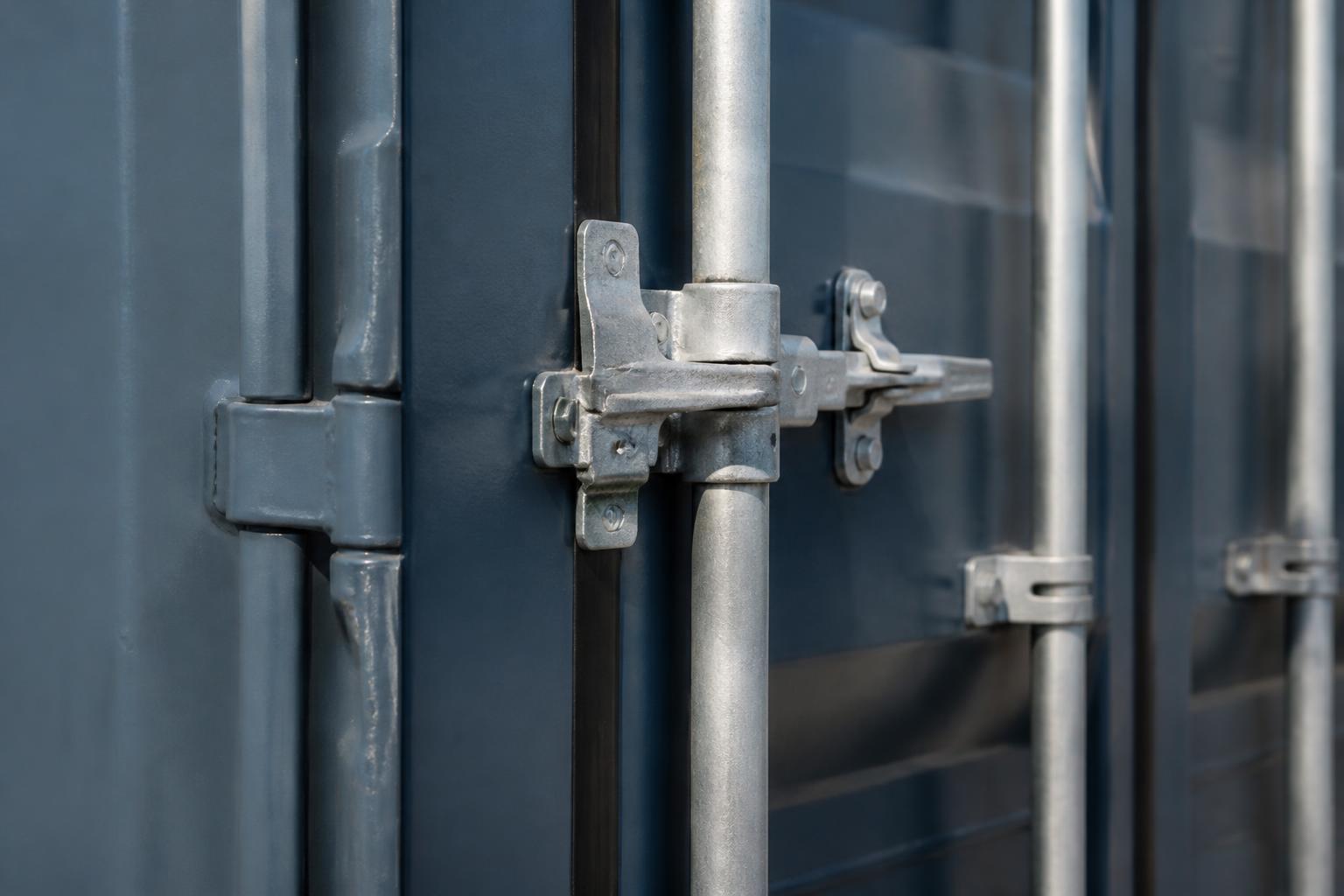
Choosing the right setup for Category 3 animal by-products in containers is usually less about finding the biggest box and more about matching the move to the product, the discharge point and the paperwork trail. Importers comparing category 3 animal by products haulage containers are normally deciding between ambient and temperature-controlled movement, checking whether the product is packed or loose within the container, and making sure the receiving site can lawfully and practically accept what is arriving.
In our work as a merchant haulage operator, the problems that cause cost are rarely the obvious ones. A container can be the right nominal size and still be the wrong operational choice if the product condition, cleanliness standard, APHA position, customs status, free time or delivery booking has not been checked early. That is why we plan these moves from release through to final delivery, rather than treating them as a standard port collection.
What importers are really comparing
When buyers compare container options for Category 3 ABP, they are usually comparing six things at once.
First, the box type. A standard ambient unit may be suitable for some packed Category 3 material, while other consignments need a Refrigerated Container because the product has to remain chilled or frozen through the inland leg. The correct answer depends on the commodity, how it has been loaded, and what condition it must arrive in.
Second, the product condition. There is a practical difference between sealed, palletised packaged goods and material that presents a higher risk of leakage, taint or odour. If the cargo is bagged or boxed and loaded cleanly on pallets, a dry box may be workable. If there is any realistic chance of fluid escape, contamination of the container interior, or temperature drift affecting the load, the setup changes.
Third, packaging and load security. With FCL movements, the importer may assume the container simply comes out as loaded. In practice, we still need to know whether the cargo is floor loaded or palletised, whether there is internal dunnage, whether there is any chance of load shift, and whether the consignee has unloading equipment suitable for the container type. A 45ft ISO Container can be efficient on volume, but not every receiving site wants one on its yard if turning space or dock arrangement is tight.
Fourth, cleanliness and previous use. For ABP work, the inside condition of the container matters far more than on many ordinary imports. Residue, strong odour, staining, punctures, damaged door seals or signs of previous cargo contamination all need checking before the inland move is committed.
Fifth, paperwork and regulatory fit. In Great Britain, APHA requirements, customs release, shipping line release and site acceptance all need to line up. If the cargo is moving under controls specific to animal by-products, the consignee details and destination use matter. A haulier that is not properly registered for the work can create a problem before the box even leaves the port.
Sixth, delivery point requirements. Some sites can take a live unload immediately. Others need pre-booking, specific arrival windows, a chilled chain maintained to the bay, or evidence of seal integrity on arrival. The best container choice is the one that works at the receiving site without creating a refusal, detention or redelivery.
That is why the comparison is not just 20ft against 40ft. It is the full operating setup, from quay release to final drop.
When a dry box works and when it does not
A standard dry container can work for Category 3 material, but only where the product and the movement genuinely suit ambient transport. In practice, that usually means packaged goods in sound condition, loaded in a way that prevents leakage and contamination, and moving over a route and timescale that does not compromise the product.
A 20ft ISO Container is often the practical choice where payload is the main factor, particularly if the cargo is dense. It can also suit sites with restricted space or unloading constraints. If the product is packed and heavy, 20ft can be the safer operational answer because axle weights, trailer setup and delivery access are easier to manage than with a longer unit. If weight is likely to be an issue, the container decision needs to be tied back to road legality before collection. We cover that in more detail in our guide to moving overweight containers without port delays.
A 40ft ISO Container is commonly used where the cargo is lighter by density and the importer wants a standard footprint that most sites can accept. For packaged Category 3 product with no temperature requirement, a 40ft box can be the straightforward option, provided the loading is clean and secure.
A 45ft ISO Container is usually a volume decision. It can make sense where cube matters more than weight and the consignee can handle the extra length. It is less forgiving on some delivery points, especially older sites, narrow approaches and yards with limited turning room. It also needs checking against trailer availability and the delivery postcode profile. We often find that a 45ft unit is operationally right only when the importer has already confirmed site suitability rather than assuming it will be treated like any other box.
A dry box does not work where the product must be kept chilled or frozen, where odour or leakage risk is material, or where the consignee or approval conditions require temperature control. It also becomes the wrong choice if there is any doubt over the interior condition of the container. With Category 3 ABP, it is not enough for a box to be merely serviceable. It needs to be appropriate to the cargo.
For some related traffic, importers also compare ABP and feed movements because the inland planning issues overlap. Our article on choosing feed container haulage without avoidable port cost is useful where the questions are really about release timing, booking discipline and site readiness.
Refrigerated Container versus ambient movement
The operational gap between a Refrigerated Container and an ambient box is wider than the hire line on the booking sheet suggests.
A Refrigerated Container protects the product condition during the inland leg. If the cargo is chilled or frozen, reefer movement maintains the intended temperature range from port pickup to delivery, subject to the unit being set correctly and the handover points being managed properly. That reduces the risk of product deterioration, rejection at destination and disputes over whether the issue arose at sea, in port or on the road leg.
Ambient movement is simpler and usually cheaper, but only where the product can lawfully and practically move that way. If the material is temperature sensitive, ambient haulage transfers the risk to the importer very quickly. A short road leg from Felixstowe or London Gateway may still be too long if the product needs controlled conditions and the receiving site checks pulp temperature or product state on arrival.
The compliance risk is different as well. With a reefer, the questions are about set point, power status, pre-trip condition and whether the consignee is ready to receive without delay. With an ambient box, the questions are more about suitability of the cargo for that mode, cleanliness, segregation and whether the goods can remain in acceptable condition throughout the move. Where a rule differs between the UK and the EU generally, the importer should work to the Great Britain position for inland delivery after import, not assume an EU handling norm answers the UK receiving requirement.
Cost drivers are also different. Reefer moves can involve higher basic haulage cost, more planning around collection and delivery timing, and stricter expectations at the delivery point. Ambient boxes avoid some of that, but the saving disappears if the wrong mode leads to rejection, container detention, wasted journeys or disposal issues.
For us, the key question is not whether reefer haulage costs more. It is whether ambient movement creates an avoidable risk. If the answer is yes, the cheaper option is not cheaper in real terms.
Container condition, cleaning and segregation checks
Before collection, we want the container condition checked as if the delivery point is going to inspect it closely, because many do.
The first check is residue. Any visible remains of previous cargo, whether dust, grain, powder, grease, fragments or liquid staining, can make the box unsuitable for Category 3 use. The second is odour. A strong taint from a previous load can be enough to cause rejection, even if the floor looks clean. The third is physical condition, including holes, split flooring, damaged door seals, defective locking gear and any sign the unit may not remain weather tight through the journey.
Leaks matter in both directions. We check for evidence that water can get in, but also for any realistic chance that product or fluid can get out. If the cargo presents leakage risk, the loading method and internal containment need to be right before the unit leaves the quay.
Previous cargo concerns are often overlooked. If the box previously carried something with contamination potential, the importer should not assume a routine sweep out is good enough. For ABP work, the standard has to match the risk of the commodity now inside the container, not the shipping line’s minimum reissue standard.
Segregation is another practical point. A containerised ABP move is not the same as carrying mixed groupage, but the haulier still needs to control how the job is handled operationally. The unit should not be treated as an ordinary traffic line where special handling notes are lost. Collection instructions, delivery notes, seal checks and destination restrictions all need to be attached to the move clearly. For LCL traffic, the issue can be more complex because the inland leg after devanning is a different operation entirely. For sealed FCL containers, the focus is on the integrity and suitability of the unit itself.
At delivery, the same standards apply. If the consignee notes odour, contamination, damage or a broken seal, the job can turn from a routine drop into a formal exception. That is why we would rather challenge a questionable box before leaving the port than argue about it after arrival.
Port collection planning and paperwork control
A well-planned merchant haulage move starts before the slot is booked. A reactive one starts when someone notices free time is nearly gone.
The first checkpoint is release status. We need to know the shipping line release is in place, customs is cleared or the position is understood, and any hold is identified before the driver is sent. Port collection fails expensively when the haulier is working blind on whether the box is actually collectable.
The second checkpoint is APHA-related paperwork. For Category 3 movements, the details need to match the consignment and the destination. If there are specific movement or destination controls, they need to be checked before collection, not after the container is already on wheels. The exact documents vary by consignment structure, but the principle does not. The haulier needs enough information to know the move is properly covered.
The third checkpoint is free time. Demurrage and storage exposure is rarely caused by one big mistake. More often it is caused by three small ones, late release, missed booking window and poor communication on holds. We plan around the shipping line’s free time and the port’s actual booking availability, because those are not the same thing.
At Felixstowe, booking discipline matters. Collections are managed through the Container Booking System, commonly shortened to CBS. If a slot is scarce, the practical value of early planning is obvious. A job that is fully documented, customs cleared and ready to move is much easier to protect against storage risk than one where key information is still being chased. For readers dealing specifically with port access and collection rules there, our guide to who can collect containers from Felixstowe port sets out the basics.
Other ports have their own systems and rhythms. London Gateway uses CARGOES VBS. Tilbury, Purfleet, Southampton and Liverpool each bring their own combination of booking process, traffic pattern and cut off pressure. The importer does not need a lecture on port systems, but they do need a haulier that actually works them every day and flags risk early.
A well-run move means we are checking release, customs status, booking availability, container availability and delivery readiness in one sequence. A reactive move means someone asks for collection first and discovers the problems one by one afterwards.
How to choose a haulier for Category 3 container work
The first thing to compare is whether the haulier is properly set up for the traffic, not whether they merely say they can collect from a port. For Category 3 work, check APHA registration for the relevant activity. If waste controls are relevant to the movement or the wider handling chain, check upper tier waste carrier status as well.
Our own position is straightforward. We are registered with APHA to carry Category 3 animal by-products and animal feed in shipping containers, quay to premises, U1433815/TRANS. We are also an upper tier waste carrier and dealer, CBDU471791. Our vehicles run on operator licence OF2023521.
The second point is actual port coverage. A haulier may be close to one port and weak everywhere else. If your flows move through Felixstowe one month and Southampton or Liverpool the next, you need a carrier that can cover those ports without treating the out-port move as an exception. We collect from Felixstowe, London Gateway, Tilbury, Purfleet, Southampton and Liverpool, and most of our work is direct merchant haulage for importers and forwarders.
The third point is communication on risk. Buyers in this sector do not need generic updates. They need to know early if the release is missing, the booking window is poor, the container condition is doubtful, the delivery point is not ready, or the free time position is tightening. Good communication is specific and early enough to do something useful.
The fourth point is fleet control and contingency. Category 3 work should not be left to chance resourcing. Ask whether the haulier is operating its own vehicles, how subcontracting is controlled, and whether the same standards apply on partner loads. We run 40 vehicles and 40 trailers ourselves, with vetted partner hauliers on their own operator licences taking extra volume when needed.
The fifth point is freight liability. This matters more than many buyers realise. Standard RHA cover may be lower than the value profile of the goods in the box. Our freight liability is £6,500 per tonne under RHA 2024 conditions, which is five times the usual RHA standard of £1,300, and the same limit applies on subcontracted loads. Where the cargo value justifies it, higher cover up to £10,000 per tonne can be arranged in advance.
Finally, compare experience in the work as it is really done, not just years in business on paper. Since 2019 we have moved more than 75,000 containers, with the team behind Jagelo Haulage Limited working in container haulage since 2015. For importers booking Category 3 container traffic, that matters because the difference between a smooth move and a costly one is usually not the drive from port to depot. It is the planning, the checks and the willingness to say early when a box is not set up properly for collection.
Can Category 3 animal by-products move in a standard shipping container?
Sometimes, yes. It depends on the product, packaging, condition and consignee requirements. A standard dry container may be suitable for some sealed or packaged loads, but not for every Category 3 movement.
When is a Refrigerated Container the better option?
A Refrigerated Container is usually the better option where temperature control protects product condition or where the shipper or receiver requires it. It can also reduce risk where ambient exposure would be unsuitable.
Does the haulier need specific registration for Category 3 ABP work?
Yes. For this work, the haulier should be registered with APHA for Category 3 animal by-products movements. If the load also falls within waste controls, relevant waste carrier registration may matter too.
What paperwork should be ready before port collection?
At minimum, the container release, customs clearance status and the documents needed for the specific Category 3 movement should be checked before booking collection. Missing paperwork can waste free time and slot availability.
Why does port planning matter so much on ABP container moves?
Because delays at the port can quickly turn into demurrage, storage or missed delivery arrangements. Good planning means checking release, holds, booking windows and delivery readiness before the box is collected.